The story begins months after the fire, in the office of a government agency where a file was being quietly closed. The report listed several deaths: Clara, her son, and a child presumed lost in the flames. No bodies were ever recovered, only fragments of jewelry and a melted ring that once belonged to Clara’s father. The case was filed under accidental fire, and the town was declared uninhabited.
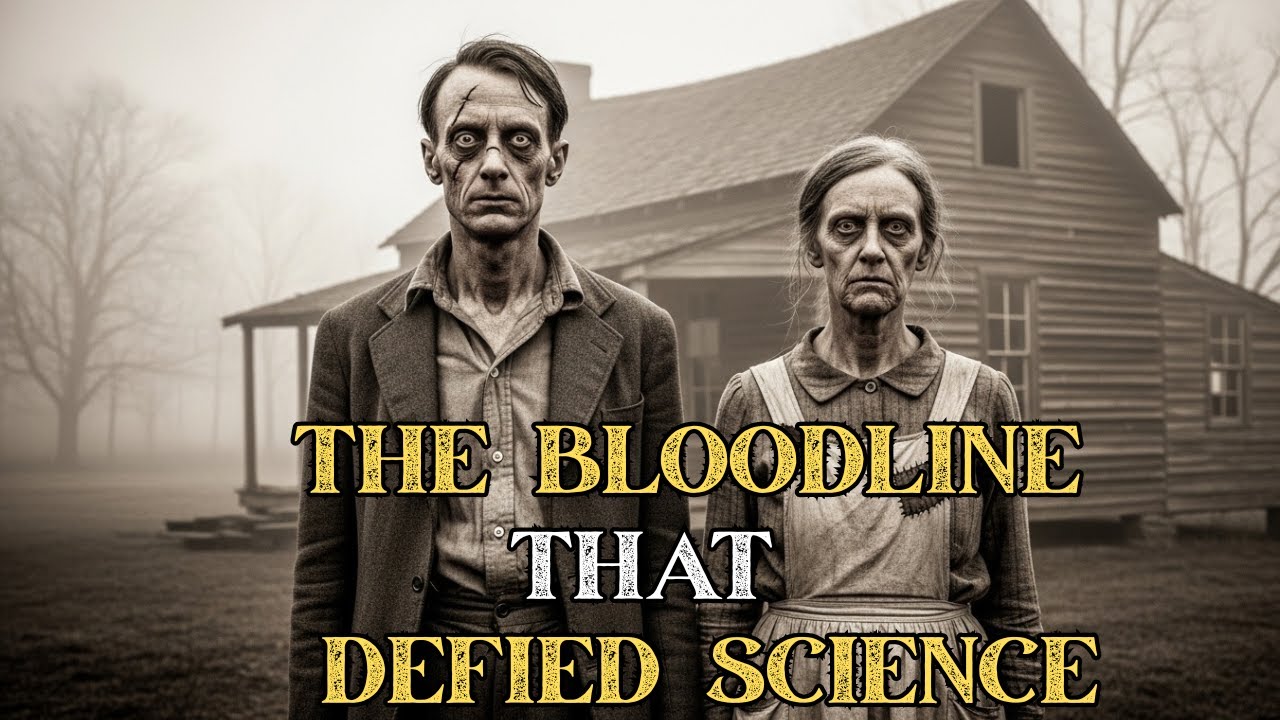
The names were sealed in forgotten archives, and the valley was left to be reclaimed by vines and rain. But the past never truly stays buried. Decades later, far from those mountains, a young man living in a southern city took a DNA test for reasons that seemed innocent enough. He was tracing his family roots, curious about where he came from.
What he found instead made him question who he was entirely. The results were flagged by the testing company as an anomaly, a genetic pattern so rare it defied classification. His DNA was so heavily condensed within itself that it appeared more inbred than any documented case in medical history. The markers revealed generations of interbreeding, a genetic spiral that could only come from complete isolation.
When the lab contacted him for verification, he thought it was a mistake. But when they traced his lineage through fragmented records and old census data, one name surfaced again and again: the town that was supposed to have been erased. His curiosity turned to obsession. He began searching public archives, finding pieces of the story others had tried to destroy.
Newspaper clippings half burned at the edges, a preacher’s journal filled with warnings, a single blurred photograph of a house engulfed in flames. The deeper he dug, the more the truth clawed its way out. He learned about Clara, about her son, about the child that vanished. The blood in his veins began to feel heavier, colder.
Every reflection in the mirror felt like looking at someone he didn’t recognize, someone older, someone watching. Doctors who examined him were unsettled by his features: symmetrical yet unnatural, his eyes mismatched in color, his pulse slower than normal. They said his genetic structure shouldn’t exist in a living human, that his body was an echo of something long extinct. Late at night, he began hearing things: faint voices that called his name, whispers that carried through the static of old recordings.
When he finally visited the ruins of the town, guided by what little remained of the old road, he found nothing but the outline of the farmhouse buried beneath the moss. Yet as he stood there, he felt something stir beneath the ground, a pull like recognition. The story the world tried to forget had survived not in words, but in blood.