On the night of Friday, February 26, 2010, Marie Osmond was backstage at the Flamingo Las Vegas, seconds from walking back on stage for the second half of the Donny & Marie show. Her 18-year-old son, Michael Blosil, called from his apartment in downtown Los Angeles. She did not answer. She planned to try him Monday.
She had promised him she would come. Two days later, Michael ended his life. The Los Angeles County Coroner’s Office ruled the death a suicide and confirmed that drugs and alcohol did not play a role. He was sober when he died.
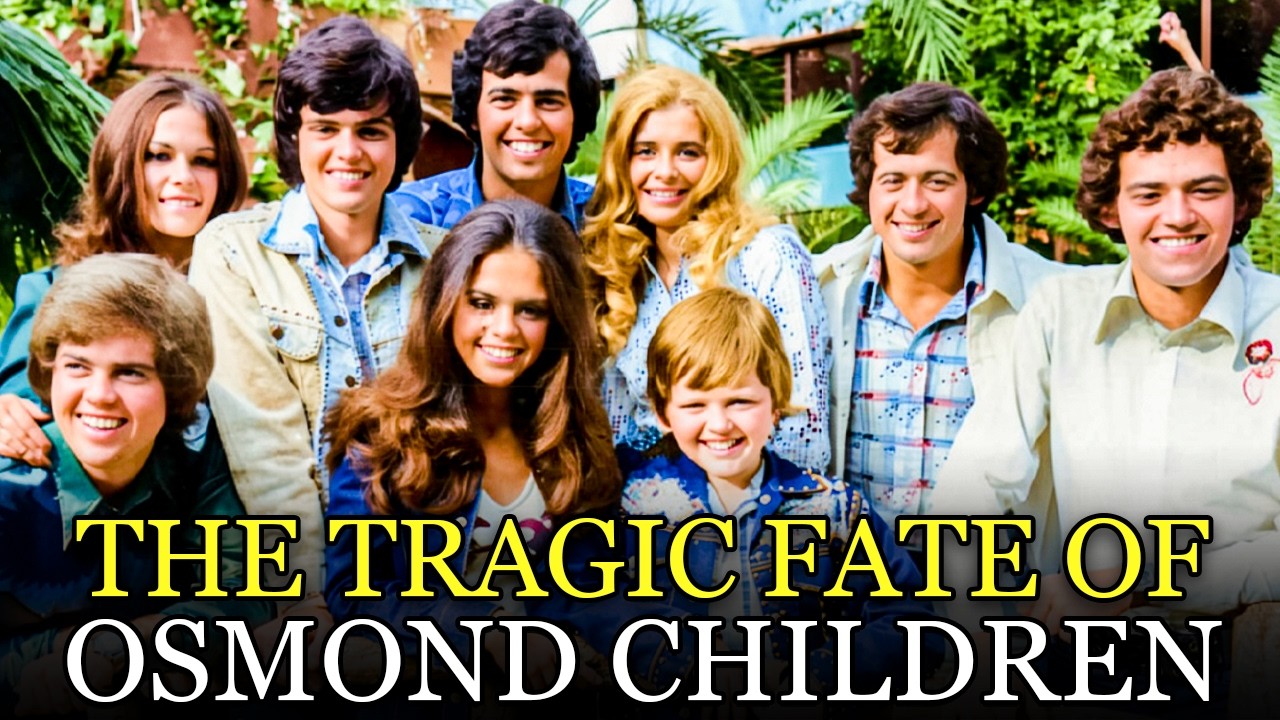
He left a note that referenced his depression. Marie Osmond, the only daughter among nine Osmond children, had spent five decades embodying America’s idea of a wholesome, faith-driven family. The image was real in its discipline, love, and belief, but it was not protection. The story of how that moment came to exist reaches back decades, into a performance culture where the family rule was simple: keep singing.
Born October 5, 1959, the eighth of George and Olive Osmond’s nine children, Marie was raised in Ogden, Utah inside the Church of Jesus Christ of Latter-day Saints. By her teens she had a number one country single with “Paper Roses. ” At 17, she was co-hosting a primetime variety show with her brother Donny on ABC from 1976 to 1979. In 2023, Marie described an incident from that era when a producer told her, still a teenager, that she was an embarrassment to her family because of her weight.
She said the remarks drove her into body dysmorphia and a dangerous weight drop she struggled with for years. She recalled looking at her skeletal reflection in a dressing room mirror and still not seeing thinness. The Osmond image was not a brand managed at a distance. For Marie, it was a living pressure system that reached into private experience.
She learned to perform wellness even when wellness was not what she felt, a habit that would shape every stage of her adult life. She married Stephen Lyle Craig in 1982 at age 22. Their son, Stephen James Craig Jr. , was born April 20, 1983.
The marriage lasted three years-end were over by 1985. In October 1986, Marie married Brian Blosil, a music industry professional. Together they built a household that grew to ten: two parents and eight children, some biological, some adopted. Jessica arrived in December 1987.
Rachel was born in 1989. Michael Bryan Blosil was born May 4, 1991 and adopted as an infant. Brandon arrived in 1996, Briana in 1997, Matthew in 1999, and Abigail in 2002. The household operated on logistics, not glamour.
School schedules, church commitments, rehearsals, and performances spanned children nearly two decades apart in age. Marie continued performing, touring, recording, and hosting throughout it. She co-founded Children’s Miracle Network Hospitals in 1983, an institution that raised billions for pediatric care. In 1999, after the birth of Matthew, her seventh child, Marie descended into a postpartum depression so severe she nearly ended her life.
In her memoir “Behind the Smile,” she described driving away from home one night with the bank card, believing her children would be better off without her. She came back, got treatment, and became a prominent public voice for postpartum depression awareness. The family was based primarily in the Provo, Utah area, rooted inside a church-shaped community where the eternal family was not metaphor but doctrinal commitment. The faith tradition carried both comfort and weight.
A family publicly identified with moral steadiness often found it easier to speak in the language of endurance and recovery than to look chaotic while a crisis was still happening. Michael grew up as the middle adopted son, warm, funny, and drawn to fashion and design. In a 2007 interview with ABC News, Marie acknowledged that Michael struggled with what she carefully called adoption issues. The phrase was restrained, but it pointed toward the distance between the family’s story about itself and his interior sense of belonging.
In March 2007, Marie and Brian Blosil announced their divorce after 20 years of marriage. The statement was controlled and amicable. The children, ranging from young adulthood to age four, absorbed the structural change from radically different positions. Brian largely disappeared from the public narrative after the divorce, leaving Marie as the visible anchor.
Later that same year, at age 16, Michael entered a rehabilitation facility. Marie spoke publicly with disciplined compassion, praising his courage without detailing the severity. She was back on national television that autumn competing on “Dancing with the Stars,” where she fainted on camera mid-routine, a moment the public read as exhaustion but which, in context, read as a body under more weight than it was designed to carry. By 2009, Michael appeared to be stabilizing.
Marie told People magazine he was doing well in his senior year with a strong GPA and scholarship opportunities. He wanted to study fashion, apparel manufacturing, and design. He enrolled at the Fashion Institute of Design and Merchandising in Los Angeles and moved to the city. He was 18, on paper doing exactly what an 18-year-old was supposed to do.
Nearly a decade after his death, in 2019 on “The Talk,” Marie added a layer of the story that had not been in the original public narrative. Michael had been bullied, heavily and persistently. The cruelest dimension: he was bullied because of his sobriety. Peers sent horrendous texts targeting him specifically for being clean.
Marie said she still had those messages, that she had kept them for nine years. On the night of the Flamingo show, the phone rang and Marie missed the call. She was seconds from the stage. She had spoken to him before.
He had told her he felt alone. He had told her he had no friends. She had promised she would come Monday. He jumped from his apartment building in downtown Los Angeles that night.
The boy who had been taunted for his recovery was clean at the end. The substances were not what killed him. The depression and loneliness were. The family released a statement expressing devastation.
Donny Osmond asked publicly for prayers. The show at the Flamingo was canceled in the immediate aftermath. The family retreated to Utah. Michael’s funeral was held March 8, 2010, in Provo.
Hundreds attended. Marie, who had reportedly not planned to speak, rose and thanked Michael’s birth mother for what she called the greatest gift: “those beautiful 18 years. ” It was an act of generosity performed in the middle of annihilation. The very next day, March 9, Marie returned to the Flamingo stage in a white feathered costume.
She told the audience that faith had carried her through the worst days of her life. She said the way Osmonds survive is by singing. She struggled visibly through the final number. Donny was beside her.
In November 2010, nine months after Michael’s death, Marie sat for an interview with Oprah Winfrey. She described Michael’s depression, the missed call, the promise for Monday, and the guilt that lives inside that gap. In a 2019 appearance on CBS Sunday Morning, she said grief never ends. It only changes shape.
She also published “The Keys to Love,” converting private pain into public purpose, the pattern that had governed her life since adolescence. The surviving children absorbed the loss from different positions and moved in different directions. Steven Jr. became the most visibly settled, marrying and becoming a father of four.
Marie remarried his father, Stephen Lyle Craig, in May 2011 at the Las Vegas LDS Temple, returning to the man she married at 22 after more than a quarter century apart. Jessica Blosil became a police officer in Provo and a crisis counselor, building a career oriented toward other people’s emergencies. In 2019, she married Sara Marie, a ceremony the family publicly celebrated with warmth and evident joy. Rachel moved into costume design and motherhood.
Brandon gravitated quietly toward music, keeping a low profile largely outside the public record. Briana became a makeup artist and mother of two daughters. Matthew served a two-year Latter-day Saint mission in Michigan, then continued into college. Abigail was seven when Michael died and grew up inside the aftermath rather than experiencing it from an established life.
The public record on several of the children is deliberately limited. The story must say so rather than invent intimacy where none exists. Some chose public-facing lives. Some chose privacy.
Some chose service. Some built families of their own. All of them chose, in one form or another, to keep living after a loss that no preparation, not faith, not fame, not the Osmond tradition of singing through pain, had equipped them to survive. Marie, now 66, has spoken about stepping back from the relentless public presence that defined her first five decades, prioritizing her husband, children, and grandchildren.
She pulled back from the stage that had demanded her presence since before she understood what it was demanding. Whether that quiet is healing or exhaustion or some late-life negotiation between the two is not something the public record can answer. What the family’s story reveals is not that fame is fake or faith is hollow. The Osmonds’ public image was real.
But it was not protection. Money, name recognition, church structure, and professional polish could insulate the family from embarrassment for a season. They could not insulate it from depression, from loneliness, from the terrible speed with which a private crisis can become permanent. The public saw a family that knew how to keep singing.
The private truth is that singing was never the same as safety.