Grand Duchess Olga Alexandrovna of Russia was born on June 13, 1882, at the Peterhof Palace in St. Petersburg. She was the youngest daughter of Tsar Alexander III and Empress Maria Feodorovna, and the sister of the future Tsar Nicholas II. She would go on to become the last surviving child of any Russian tsar, dying in Canada in 1960 after escaping the revolution that destroyed her family.
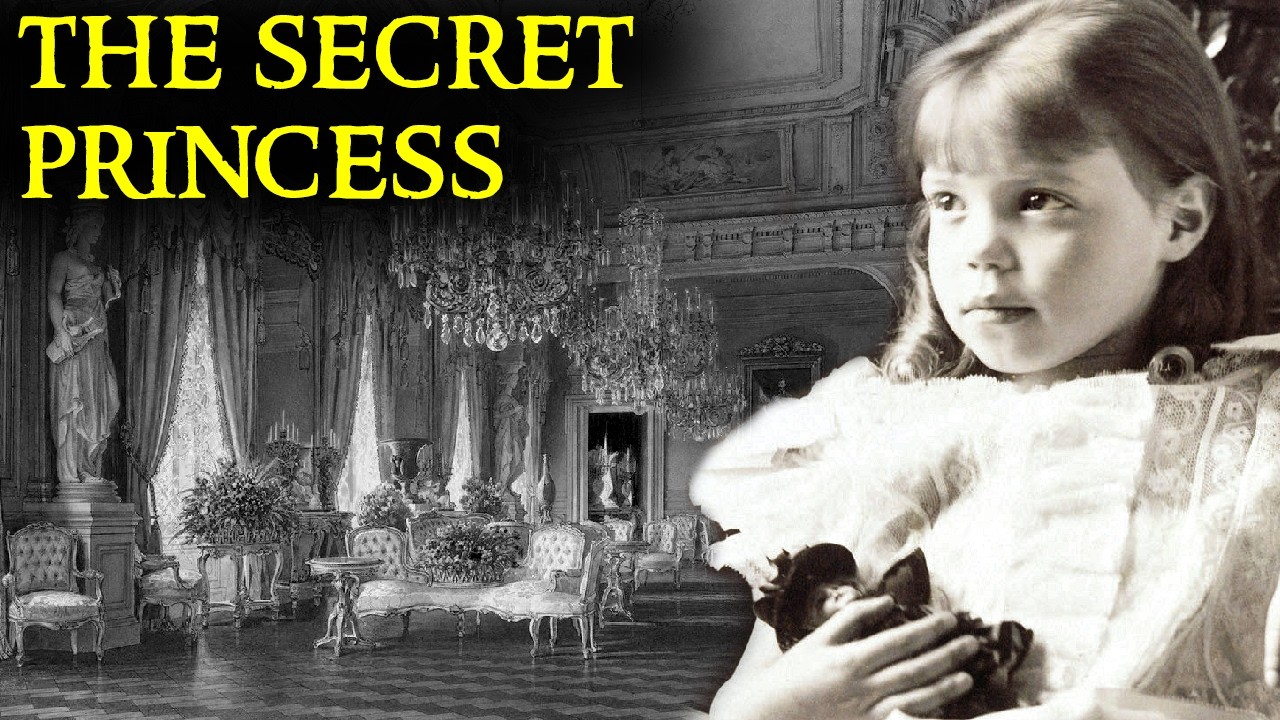
Her upbringing was deliberately spartan. The imperial children slept on hard camp beds, rose at dawn, washed in cold water, and ate simple porridge. Their education emphasized history, geography, classical studies, and European languages within a deeply conservative, religious household. The family lived primarily at the Gatchina Palace in the countryside, a move driven by security concerns after the assassination of Olga’s grandfather, Alexander II.
When Olga was six, the imperial family survived a train derailment in October 1888. Twenty-one people died in the crash, though the Romanovs escaped unharmed. Popular accounts claimed Alexander III held up the crushed roof to free survivors, while Empress Maria reportedly tore her clothing into bandages to help the wounded. Officials found no evidence of sabotage, though rumors persisted for years that the crash was deliberate.
In 1894, Alexander III died of kidney disease at age 49. Olga, then only 12, was devastated. She later described her father as “everything” to her. Her relationship with her mother was far more formal and reserved.
Her brother Nicholas, at age 26, became the new tsar, and the younger generation of the imperial family was suddenly pushed into the public life of the Russian court. Olga’s entry into society was marked by an unexpected engagement. In 1901, Duke Peter Alexandrovich of the House of Oldenburg proposed to her, astonishing Russian society. Peter was in his mid-30s, had shown almost no interest in women, and was widely assumed to be gay.
Olga was 19. The marriage was believed to have remained unconsummated, with some observers suspecting Peter sought the match to secure imperial money for his heavy gambling debts. The couple lived in a 200-room palace in St. Petersburg with separate bedrooms at opposite ends of the building.
The arrangement left Olga deeply unhappy. She fell into depression and even lost her hair, forcing her to wear a wig for a time. In 1903 she asked for a divorce, but Peter refused. During these years she remained close to her brother Nicholas and his family, doted on her nieces, and was especially devoted to her goddaughter, the youngest grand duchess, Anastasia.
Olga eventually began an affair with Nikolai Kulikovsky, a Russian military officer from a landed family. For years, Tsar Nicholas refused to accept the match due to Kulikovsky’s lower social station. However, in 1916, Olga divorced Peter on grounds of non-consummation and married Nikolai within weeks. The couple had two sons in quick succession: Tikhon, born in 1917, and Guri, born in 1919.
These births occurred amid a national catastrophe. World War I broke out in the summer of 1914, fueled largely by Russia’s rivalry with Austria-Hungary over influence in the Balkans. Russia allied with Britain and France against the Austro-Hungarian, Ottoman, and German empires. The war proved disastrous for Russia and for the leadership of Nicholas II.
Nicholas was overthrown in March 1917 during a conservative revolution, which was followed by a far more radical communist takeover in late October of that year. After the revolution, the Romanovs’ movements were restricted. In the early hours of July 17, 1918, Nicholas II, his wife, and their children were executed by the Bolsheviks in Yekaterinburg. In the bloody months that followed, other members of the dynasty and the Russian aristocracy were hunted down, killed, or driven into exile as the old empire collapsed.
Olga, her husband, her sister Xenia, and their families were placed under house arrest in the Crimean Peninsula, where rumors of impending execution spread and their fate seemed doomed to mirror that of Nicholas II and his family. They survived, however, saved by a sudden shift in power when Crimea fell under White Army control and then by foreign intervention that carried them away just ahead of the Bolshevik advance. In November 1919, with revolutionary troops closing in, the family fled at the last moment and found shelter at the residence of the Danish consul. They then moved through Constantinople and the volatile Black Sea region for months before reaching safety.
They settled first in Belgrade and later traveled north to Denmark, arriving in the homeland of Olga’s mother during the Easter holidays of 1920. There they were reunited with Empress Maria Feodorovna, who had been evacuated earlier and had come to Denmark via London with the aid of her British relatives. Olga would spend the next 28 years living in Copenhagen. The family initially lived at Amalienborg Palace before moving to a country estate that Maria Feodorovna and her relatives had acquired in 1906 as a summer residence.
After Maria’s death in 1928, the estate was sold and the proceeds divided among surviving family members. Olga used her share to buy a small farm called Knudsminde at Ballerup, just outside Copenhagen. There, the sister of the former tsar raised her family through hard physical labor, working in the fields, looking after the house, and painting to make ends meet. She also hosted many members of the Russian exile community who had fled across Europe as the Russian Civil War ended in communist victory in the early 1920s.
The family kept ties to European royalty, including holidaying in Sweden with the family of the future King Gustaf VI Adolf, whose younger children were close in age to Olga’s sons. In the 1920s, Olga also became caught up in the early stages of the legend surrounding her deceased nieces. Details of where the Romanov remains were hidden were not released by the Soviet regime until the 1970s. In the interim, theories circulated that one or more of the grand duchesses had escaped the Bolsheviks.
The most prominent claimant was Francisca Schanzkowska, who in early 1922 began claiming she was Nicholas’s youngest daughter, Anastasia. In 1925, Olga traveled to Berlin to meet her at a nursing home. Olga did not believe the woman was her niece. She noted that the woman spoke German, which Anastasia had not mastered years earlier, and that she seemed unable to speak Russian or English, both of which Anastasia had known.
She also felt that even nearly a decade of separation could not explain how different the woman looked. Rather than concluding she was an impostor, Olga believed the woman was psychologically disturbed. Schanzkowska was indeed unwell and spent much of her life in asylums, later living as Anna Anderson in the United States. In 1939, Europe was plunged into a fresh war.
Denmark and Norway were occupied by Nazi forces after a brief military operation in April 1940. The occupation strained the family, as Olga’s two sons were soldiers in the Danish army and both became prisoners of war for a time. As the war concluded in May 1945, Western Allied and Soviet forces spread across central Europe. The Soviets occupied the Danish island of Bornholm in the Baltic Sea, and Olga grew worried that Denmark might fall into the Soviet camp in the developing Cold War, putting her family in danger.
In the summer of 1948, the family left Denmark, traveling first to Britain, where they were hosted at Hampton Court by her cousin, King George VI. A few weeks later, they sailed for Canada. Olga would live the rest of her life there. Initially based in Toronto, the family later bought a farm near Campbellville, Ontario, hoping to recreate their Danish countryside life.
The move was not successful. Her sons soon started their own families elsewhere, leaving Olga and Nikolai to manage the farm as they approached their 70s. A postwar labor shortage made workers hard to find, and they sold the property and returned to Toronto in 1952, the year Olga turned 70. In her final years, Olga’s home was visited by old relatives and supporters of the Romanov dynasty.
In 1959 she was invited to attend when her cousin, Queen Elizabeth II, visited Canada in her capacity as head of the British Commonwealth. By then, Nikolai Kulikovsky was dead. After years of ill health that left him largely immobilized, he had died in August 1958. Two years later, as her own health deteriorated, Olga moved with friends to a small apartment in East Toronto.
She died on November 24, 1960, at age 78, after falling into a coma a few days earlier. Her funeral on November 30 drew a large crowd of mourners, and she was buried beside her husband in York Cemetery, Toronto. An artist to the end, she had painted relentlessly on paper, canvas, and ceramic, producing more than 2,000 works over her lifetime. Through her frugal lifestyle, she left an estate of over $200,000 Canadian dollars, equivalent to roughly $2 million US today.
Her sister Xenia had died in England seven months earlier, meaning that with Olga’s death, the last child of any Russian tsar had passed away. She was widely remembered as the last Grand Duchess of Imperial Russia, the final living connection between the modern world and the old Russian Empire of the nineteenth century.