In late 1957, a family trip through the Australian Outback ended in a triple murder that gripped the nation, and the man convicted of the killings was hanged for the crime. But more than half a century later, serious questions have been raised about whether the authorities executed an innocent man. Peter and Thyra Bowman, known as Sally, were a well-liked couple living in Adelaide with their two daughters, Marion and Wendy. Marion had suffered from encephalitis at a young age, leaving her with neurological disabilities.
In 1957, Peter’s brother Brian Bowman bought Glen Helen Station, a vast property about four hours west of Alice Springs in Australia’s Northern Territory. The property was too large for Brian to manage alone, so Peter, Sally, and their family made the 1,500-kilometer move from Adelaide to work there. Life was difficult: the station was extremely remote, and a drought made conditions harsher. Peter had previously worked in Adelaide with a young man named Thomas Whelan, a 22-year-old who had become a good friend.
Thomas agreed to visit the station, planning to spend three weeks with the family and return to Adelaide with them for Christmas. On Wednesday, December 4, 1957, they began the long drive back to the city, excited about returning to shops and amenities they had missed. At Alice Springs, the group split up. Sally, Thomas, and Wendy drove the family’s Vanguard sedan toward Adelaide with their two dogs, while Peter and Marion flew to spare Marion the long road trip.
Sally, Thomas, and Wendy made good progress on December 5, driving all day before pulling over to camp for the night. They made a fire, brewed tea, and settled down to sleep. Peter arrived in Adelaide with Marion and cooked a large meal on Saturday, December 7, expecting the rest of the family to arrive that day. When they did not show up, he was not initially concerned, but by the following afternoon he contacted the police.
The Royal Flying Doctor Service searched for the family’s vehicle from the air without success. Police asked travelers between Alice Springs and Port Augusta if they had seen a young woman, a young man, and a teenage girl traveling south in a Vanguard sedan. The last confirmed sighting was at Kulgera, near the South Australian border, where they had stopped for petrol. By December 10, the story of the missing trio was front-page news across Australia.
On December 13, a Royal Australian Air Force pilot spotted a car partially hidden in the bush near the deserted Sundown Station in northern South Australia. Police found the car empty, with a pool of blood in the back and smears on the inside door. An area near the driver’s seat looked as though it had been hastily washed. Footprints led from the car to the main road, and a second set of prints ran from the road to the car and back.
Officers followed tracks about 600 meters into the bush, where they found a mound covered by a green tarpaulin. Under the tarp were three decomposing bodies, later identified as Sally Bowman, Wendy Bowman, and Thomas Whelan. Blankets covered in blood were found with them. The victims were still wearing their jewelry, and nothing of value appeared to have been taken.
Investigators found patches of blood and drag marks near the campfire, and another area of disturbed ground where the family’s two pet dogs were discovered, both shot. Peter Bowman was informed of the brutal murders, and his brother Brian formally identified the bodies. Forensic examination showed that Thomas Whelan had been shot three times from behind and had fracture wounds on his forehead and face, injuries believed to have come from the butt of a rifle. Sally had been shot once in the back of the neck and had several fractures to the right side of her head.
Wendy had been struck twice on the left side of her head with the butt of a rifle and had also been shot. All three had been alive when beaten, with blood from their head wounds matching the pools found next to the campfire. Despite massive media attention and an investigation led by South Australian detectives, no arrests were made. Witnesses came forward, including one who claimed to have seen a black vehicle, possibly a Zephyr, towing a camper trailer near the area, but the case went cold.
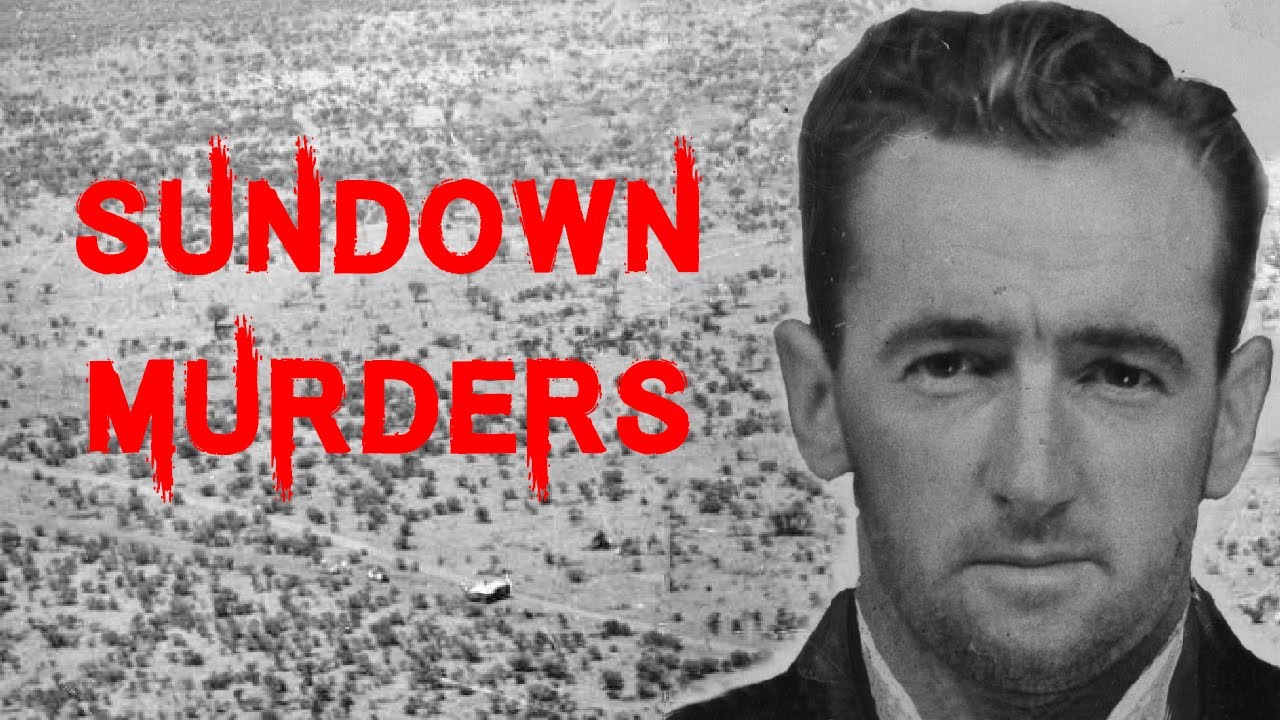
Then, on January 21, 1958, police in Mount Isa, Queensland, stopped a man driving a black DeSoto with South Australian license plates. He had an unlicensed firearm. The man was Raymond John Bailey, born December 3, 1932, in Gilgandra, New South Wales. A carpenter who had left school at 14, Bailey had moved around frequently and had driven north in September 1957 with his wife and young son to look for work, pulling a trailer.
During questioning by a young detective named Glenn Hallahan, Bailey was asked about his whereabouts on the night of December 5. He offered several accounts. Initially, he said he had seen the trio sitting up for dinner, stopped to speak with them, declined their invitation to join them, and driven a short distance to park for the night. He said everyone was alive when he left.
He later said he had gone for a walk with his rifle, found the family sleeping, was startled when one of the dogs jumped up and barked, shot at the dog, and then blacked out, unable to remember what happened next. After days of intense questioning, Bailey reportedly admitted to the murders. He described being startled, firing his rifle, and killing the two women because he feared they would report him, adding that the shooting of the young man was an accident. He said he loaded the bodies into the Vanguard car, drove it into the scrub, then returned to camp.
He claimed he had taken 25 pounds from the young man but thrown the money away. Based on his alleged confession, Bailey was charged with murder. His trial began in Adelaide on March 13, 1958. A witness, David Isles, testified that he had met Bailey near Oodnadatta in September 1957, that they had gone shooting rabbits together, and that he had sold Bailey a Huntsman rifle, which Bailey left town without paying for.
Ballistic experts testified that a Huntsman rifle had been used in the murders, but no fingerprints were found on any weapon. The prosecution’s case had inconsistencies. The car seen near the crime had been described as a gray Ford Zephyr, but Bailey drove a black DeSoto. Investigators had believed a female drove the car away from the scene because only female footprints led to it, but Bailey’s wife could not drive.
Bailey claimed he signed the confession only after detectives interviewed him at length, and after hearing his wife crying in an adjacent room, detectives told him that signing would stop her questioning. His defense argued that the evidence was circumstantial: the murder weapon had never been located, and his contact with the victims on the day of the murders could explain any tire tracks at the scene. The defense argued that while circumstantial evidence could form a circle, when the circle was not closed, the accused was entitled to the benefit of the doubt. The jury took just 96 minutes to find Bailey guilty of triple murder.
He was sentenced to death. The verdict was appealed without success. Bailey did manage to obtain a stay of execution after claiming he was not responsible for the murders. Instead, he said he had seen a man removing Mrs.
Bowman’s shoes, confronted him, and after a fight stabbed the man to death, burying the body about four miles north of where the victims were found. Police trackers were sent to Sundown Station to search for the alleged murderer’s body, but found no evidence to support this version of events. Raymond John Bailey was hanged on June 24, 1958. The case, however, did not end there.
More than 50 years later, doubts emerged about his guilt. In a 2012 book titled “The Most Dangerous Detective,” author Stephen Bishop suggested that Detective Hallahan may have fabricated evidence against Bailey. In 1989, Hallahan was found to have given fraudulent evidence to secure a conviction in a 1963 case. Bishop believed Hallahan may have done the same in 1958, potentially creating a false confession attributed to Bailey.
In February 2022, a petition was filed giving 20 reasons why Bailey should be pardoned. Among the inconsistencies: the confession said Sally was shot as she rushed toward him, but the autopsy showed she was shot in the back of the neck at close range as she lay face down. The confession said all three victims were shot at the campsite, but autopsies indicated they were shot in the back where they were found. The murder weapon was never recovered, and Bailey claimed he had sold it to a man near Cooper Creek just days before the murders.
The only rifle recovered from the crime scene belonged to the Bowman family, and while the victims had been beaten with it, it was not the weapon that shot them. Bailey’s shoe size did not match footprints found at the murder scene. Bishop’s investigation also found that Hallahan gave false testimony on more than one occasion. Hallahan claimed he knew nothing of the Sundown murders when he questioned Bailey, but the story had been national headline news and police had been advised to keep a lookout for a gray Ford Zephyr, making it unlikely he was unaware.
Hallahan also testified that Bailey’s wife was never questioned, yet Bailey made a statement describing hearing her being questioned in the next room. The prosecution had presented the case as a robbery gone wrong, but nothing was taken from the bodies, and a substantial amount of money was recovered from the car. No clear motive was ever established. Detective Hallahan died in 2016.
The question of what actually happened that night continues to be discussed, and the possibility remains that Raymond Bailey was not actually responsible for the murders for which he was executed.