On September 4th, 2025, at 8:45 in the morning, 18-year-old Sebastian Mendez Hernandez called his mother, Beatriz Uscanga, from the Nueva Central Camionera bus terminal in Tlaquepaque, Jalisco. He told her he was waiting for a vehicle that had been sent to pick him up and take him to a job interview. It was the last time she ever heard from him. His phone went dark, and his location vanished.
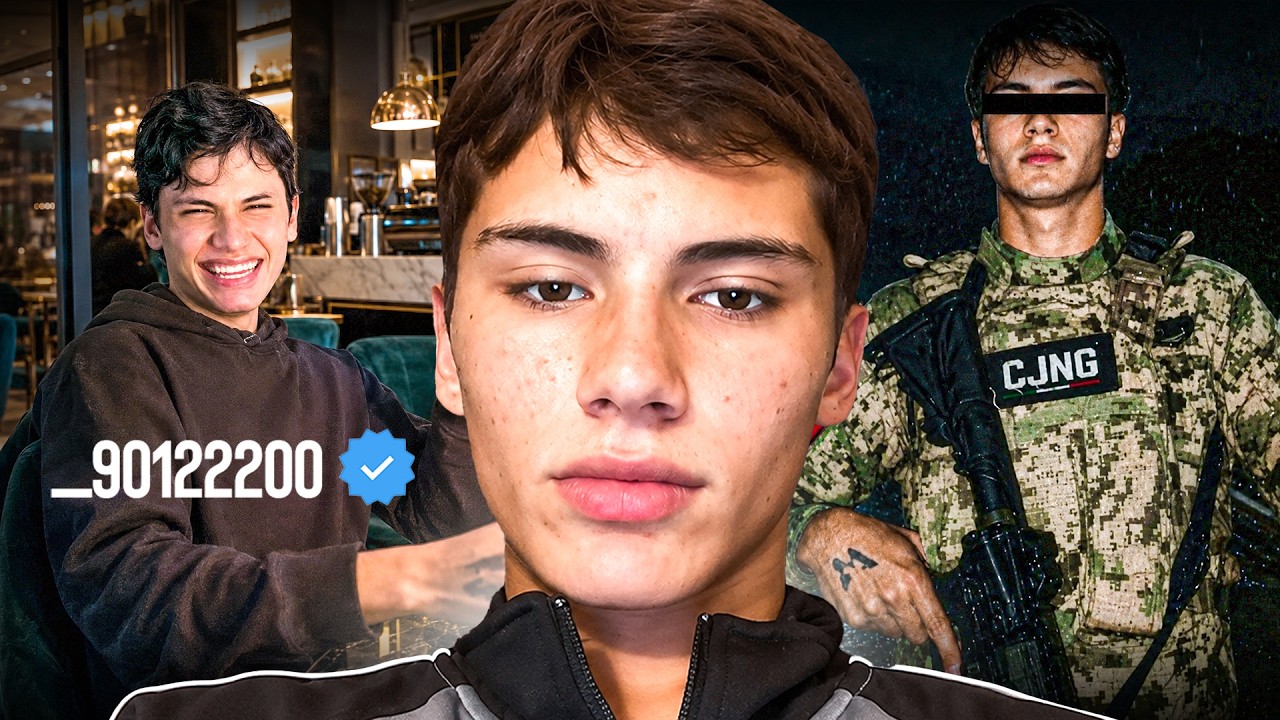
Sebastian had traveled from Querétaro to Jalisco through the ride-sharing platform BlaBlaCar, covering hundreds of kilometers for what he believed was a legitimate employment opportunity. The job offer had come through a personal contact, not a formal job board. According to his mother, he had temporarily paused his high school studies to work at a restaurant and save money, with plans to eventually return to his education. Originally from Veracruz, Sebastian had relocated to Querétaro, where he worked restaurant shifts and pursued a background in lower-division soccer.
He maintained an Instagram presence built around his athletic build and confident self-presentation. The label “Instagram model” became attached to him because of how his photographs read, though he had no formal modeling work. Those images would later become the raw material for a very different story. After his disappearance, Beatriz, from Cosamaloapan, Veracruz, traveled more than 900 kilometers to Jalisco to search for her son.
She connected with Madres Buscadoras de Jalisco, a collective of mothers searching for missing children, and gave interviews to reporters. She described the response of the Jalisco State Attorney’s Office as negligent. On November 16th, 2025, while searching alone in the center of Guadalajara, Beatriz was intercepted by a group of four or five people who surrounded her and beat her, leaving her with injuries to her back and a lost tooth. She received warnings to stop searching and leave Jalisco.
She did not stop. Reports connecting Sebastian’s case to a broader pattern of forced recruitment by the Jalisco New Generation Cartel began to emerge. The cartel had been documented using fraudulent job advertisements to lure young men, who were then transported to locations and given a choice that was not really a choice: participate or face the consequences of refusing. Investigators and human rights advocates described a pipeline that moved young men from fake job offers through isolation, training, and integration into the cartel’s operational structure.
Recruits were reportedly stripped of their phones and personal documents upon arrival, isolated from family contact, and given military-style instruction under conditions that made refusal dangerous. In some documented cases, recruits were forced to record videos stating they had joined voluntarily, a mechanism designed to prevent families from filing disappearance reports and to create a false paper trail of consent. Advocates used the term “carne de cañón,” or cannon fodder, to describe the position forced recruits occupy within criminal hierarchies: expendable personnel placed in positions of maximum risk because they are the most replaceable. The internet version of Sebastian’s story diverged sharply from the human rights account.
Viral posts, Reddit threads, and YouTube thumbnails claimed he had chosen this life. According to the most widely circulated account, he had been taken under the wing of Hugo Gonzalo Mendoza Gaitán, known as El Sapo, described as a key figure in the cartel’s training infrastructure. He was allegedly given command of an armed group, deployed to Zacatecas, and overseen the destruction of eight military trucks. The post that gained the most traction claimed to come from an eyewitness who had gone through the same initiation alongside Sebastian.
It alleged that in one of the cartel’s so-called terror schools, Sebastian had been forced to use the severed head of an injured fellow trainee like a soccer ball. The detail connected directly to his athletic background. Charges connected to Sebastian’s alleged activities carried the potential for a sentence reaching as much as 130 years, according to family and advocacy accounts. The documented pattern of forced recruitment described by military sources and human rights investigators starts with a lure, a job offer, followed by a vehicle that serves as the transition point.
In some documented cases, recruits were filmed stating they were there voluntarily. By early 2026, Sebastian’s last known location had been traced toward Zacatecas, a state that had become one of the most contested and violent battlefields in Mexico’s cartel wars. On approximately February 11th, 2026, five months after Beatriz received the last call from her son, Sebastian Mendez Hernandez was found. He was alive, but he was detained by authorities in Tepeji del Río, Hidalgo.
He had been registered by local authorities with an incorrect state of origin, listed as being from Sinaloa rather than Veracruz. The collective Buscando Te Luis Alan SM confirmed his localization and noted that he had been judged and detained without consideration of the fact that he had been deceived by a false job offer and allegedly forced into the organization. His family pushed for what advocates call a “defensa integral,” an integrated defense that would require the justice system to examine not just what Sebastian allegedly did, but how he came to do it. Beatriz’s argument is that her son was trafficked, and that the people who placed a fraudulent job advertisement, contacted him, transported him to Jalisco, and integrated him into a criminal organization under threat are the primary criminals in this story.
Human rights advocates have made this argument for years as forced cartel recruitment has escalated. In the first half of 2025 alone, approximately 7,400 people were reported missing across Mexico, with the majority of cases connected to forced recruitment by organized crime, according to researchers. The bus terminal in Tlaquepaque was not an isolated recruitment site. In July 2025, two months before Sebastian disappeared, authorities had pulled two young men out of that same terminal, one 20 years old and one 15, as they were allegedly being transported to Sinaloa under the pretense of a job offer.
Sebastian walked into the terminal because he had no way of knowing what was waiting for him. The phrase “Instagram model turned cartel hitman” assigns agency, suggesting a decision or ambition pursued. But the photographs that online audiences used as evidence of his cartel persona were taken before he had ever been to Jalisco, before the job offer, before the bus terminal, before the five months of silence, before his detention in Hidalgo. In the Rancho Izaguirre case investigated in connection with the cartel’s recruitment operations, authorities found identification documents belonging to people from multiple Mexican states at a single training location.
Military sources described a deliberate escalation pathway: fake job offer, arrival, isolation, basic surveillance duties as a halcón, and then armed participation as the organization gradually made exit impossible. Sebastian’s soccer background, physical fitness, and capacity for endurance made him exactly the kind of recruit that organizations running this pipeline looked for. The attributes that represented one possible future for him made him a more attractive target for people constructing a very different future. International frameworks for trafficking recognize that victims can be simultaneously victims and perpetrators of crimes committed during their exploitation.
Mexican law has provisions that could in theory account for forced recruitment in sentencing and prosecution. Whether those provisions are applied in Sebastian’s case depends on whether the justice system investigates the circumstances of his recruitment with the same rigor applied to his alleged crimes. Beatriz Uscanga is still fighting. Her son is alive, detained, and his case active.
The viral story has already decided who he is. The documented record tells something more complicated. Sebastian had tattoos, a black butterfly on his left hand, an inscription behind his right ear, Arabic lettering on both calves, a cross on his right arm, wavy dark brown hair, a scar on his right abdomen, freckles, and a mother who traveled 900 kilometers, got beaten, and kept going.