On December 9, 1864, a small party of Sihasapa chiefs walked through the front gate of Fort Sully in Dakota Territory. Between them stood a white woman, emaciated, her skin burned beyond recognition, dressed in what remained of Sioux clothing. She had not spoken English to a friendly face in five months. The commanding officer did not believe she was who she claimed to be.
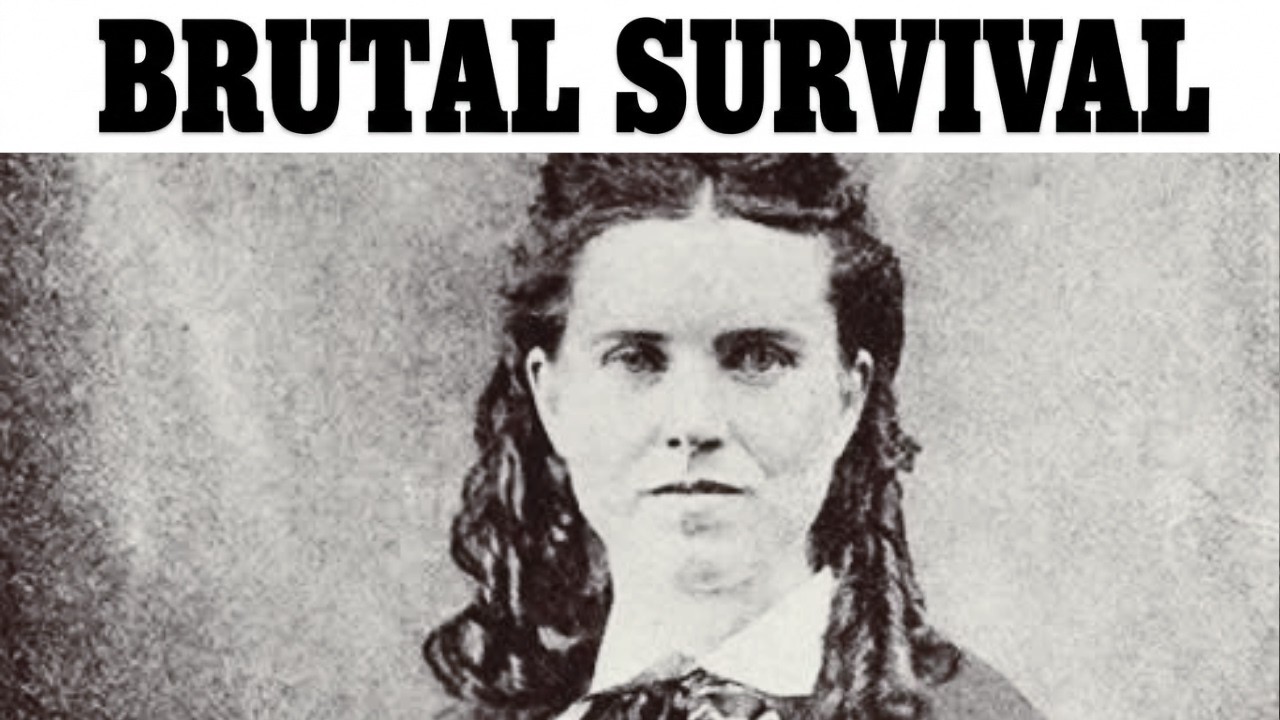
She had to prove her own identity. Behind the party, the gates swung shut. The soldiers closed them on purpose. They had been warned that this was not a peace offering but a trap.
The woman walking between those chiefs was the reason the trap failed. She had written the letter that saved the garrison. She was born Fanny Wiggins in 1845 in Orillia, Ontario, the daughter of Irish immigrants. When she was eleven, her family headed south into the United States, aiming for the new settlement of Geneva, Kansas.
Her father died of cholera on the trail, and the family buried him somewhere along the way and kept walking. In 1863, Fanny married Josiah Kelly, a farmer and discharged Union soldier at least fifteen years her senior. He was restless, in failing health, and wanted a new start in the gold country out west. The route was the Oregon Trail, straight through the northern plains.
They brought with them Fanny’s young niece, Mary Hurley, about seven years old. Fanny had adopted Mary and raised her as her own daughter. Mary called her mother. They also brought two black servants named Franklin and Andy, a neighbor named Gardner Wakefield, and a Methodist minister named Mr.
Sharp, who joined them along the way. A few weeks in, William and Sarah Larimer and their eight-year-old son Frank left a larger wagon train to travel with the Kellys. It was a small party, too small for the road they were on. The warnings came early, and they came from people who knew.
Military personnel at outposts along the trail told them small parties were being hit. The northern plains in 1864 were not contested territory. They were a war zone. Two years earlier, the Dakota uprising in Minnesota had killed hundreds of white settlers and triggered a chain of military reprisals that spread across the entire Sioux nation.
By the summer of 1864, Brigadier General Alfred Sully was leading punitive expeditions through Dakota Territory, burning Sioux villages, destroying winter food stores, killing men and women who had nothing to do with the Minnesota fighting. The Sioux did not distinguish between soldiers and emigrants. The Fort Laramie Treaty of 1851 had assigned the Sioux their territory, and white emigrant traffic cut directly through it. The Sioux had been promised the land.
The emigrants had been promised protection. Both promises were already broken before Fanny Kelly packed her first trunk. On July 12, 1864, the Kelly party crossed Little Box Elder Creek in what is now Wyoming when roughly 250 warriors appeared on the bluffs ahead. They were Miniconjou, Hunkpapa, and Oglala Sioux, painted for war, led by a chieftain named Ottawa.
By Fanny’s account, the emigrants tried to placate them. They offered provisions and shared food. One Sioux account tells a different version. The warriors had come to see the white man’s road.
They ate and smoked with the travelers, and then a messenger arrived with news that American soldiers had killed their relatives along the Missouri River. Some reports say the soldiers displayed the bodies. The mood broke in an instant. Mr.
Sharp, Noah Taylor, and Franklin were killed where they stood. Gardner Wakefield was hit with three arrows but stayed alive. Josiah Kelly, William Larimer, and Andy escaped into the scrub. The women and children did not.
Fanny, Sarah Larimer, young Frank Larimer, and Mary Hurley were seized and taken. That first night, in the chaos of a forced march on horseback, Fanny helped Mary slip off the horse into the darkness. The plan was simple: the child would hide on the prairie until the Sioux had passed, then follow the road back to a settlement. Fanny tried to follow her into the dark but was caught and beaten.
She never saw Mary again. A few days later, Mary’s body was found by her uncle. She had been scalped and riddled with arrows. She was buried near the creek where the attack began.
She was seven years old. Sarah Larimer and her son Frank escaped the following night, made it to Deer Creek Station, and returned to Kansas. Fanny did not escape. She was alone now, the only white captive among hundreds of Sioux, and no one was coming for her.
The five months that followed were a test of everything Fanny Kelly had. She was claimed as property by Chief Ottawa, whom she described as over seventy-five and partially blind. She was put to work catching pack horses, fetching water, preparing tobacco from red willow bark, sewing, and carrying weapons during marches. She was not a guest.
She was a captive laborer. She was nearly killed more than once. When she dropped and broke Ottawa’s ceremonial pipe, she diffused his rage by handing him banknotes and explaining their value. When she accepted a gift of stockings from a relative of the chief, an accidental insult in Sioux custom, the chief killed one of his brother-in-law’s horses in fury, and the brother-in-law turned his bow on Fanny.
A young man named Jumping Bear grabbed the weapon away from him. Jumping Bear had protected Fanny from the first night, and he would do so again and again. General Sully’s forces caught up to the village and attacked. Fanny was swept away with the women and children as the camp fled into the badlands.
She could see soldiers. She could hear gunfire. Freedom was yards away, and it passed her by. Sully’s men pursued for several days, then gave up.
When the Sioux returned and counted their dead, they turned their anger on Fanny. A council was held to decide whether to burn her at the stake. Ottawa spoke for her life. She was spared, but she understood that her survival was measured in days.
In September, a large band of Sioux attacked a wagon train led by Captain James Fisk. The attack was repulsed with losses on both sides. The Sioux forced Fanny to write letters to Captain Fisk, dictating demands in hopes of lowering the emigrants’ guard. But the Sioux could not read English.
Fanny wrote what they told her to write, and then she added her own words. She warned Fisk of the planned attack, told him she was alive and being held captive, and begged him to spread the news. Fisk could not ransom her, but he promised to notify the army. Fanny had turned her captors’ illiteracy into a weapon.
There were other betrayals on the path to rescue. A Sioux warrior named Porcupine arrived at the camp carrying a letter from Captain Marshall of the 11th Ohio Cavalry, detailing the army’s rescue attempts and offering a reward to help free her. Porcupine took the information and did nothing. The Sioux chief Man Afraid of His Horses met with Fanny and appeared sympathetic.
Josiah Kelly sent two expensive outfits of goods as ransom through intermediaries. Man Afraid of His Horses accepted the payment, then told Josiah he could not find her. He kept the ransom. Fanny was eventually traded from the Oglala to the Sihasapa band.
Whether she was held as a servant, a political commodity, or something worse is a question the historical record does not answer cleanly. Fanny’s memoir insists she was never violated. Other accounts, including one attributed to Sitting Bull, suggest she was taken as a wife by a Hunkpapa warrior named Brings Plenty, who was so pleased with her that he called her real woman. These accounts are difficult to verify and impossible to reconcile fully.
What is certain is that she was not free. Jumping Bear appeared again. He visited Fanny in the Sihasapa camp, reminded her that he had saved her life on the first night, and told her he wanted to be more than a friend. Fanny asked him to carry a letter to the commanding officer at Fort Sully.
He agreed. The letter warned the garrison that the Sihasapa intended to use her return as a ruse to gain entry to the fort and massacre the soldiers inside. She was gambling everything on a man whose motives were not purely selfless, but she had no other hand to play. Jumping Bear delivered the letter.
Fanny never saw him again. On December 9, 1864, the Sihasapa chiefs walked into Fort Sully with Fanny between them, and the gates closed behind them. The soldiers were armed and ready. They had read the letter.
They knew what was coming. The planned attack never happened because the woman they intended to use as bait had already warned the men behind the walls. Fanny Kelly walked out of captivity the same way she had survived it: by being smarter than the people who held her, and luckier than she had any right to be. Two months later, Josiah Kelly arrived at Fort Sully.
He confirmed what Fanny already knew. Mary was dead. There was no body to bring home, no grave she could visit. Fanny and Josiah returned to Kansas, settled in Ellsworth, opened a hotel, and had a child.
On July 28, 1867, Josiah died of cholera. Fanny was twenty-two years old, widowed, with a newborn. Fanny moved to Washington and began writing her memoir. She finished a manuscript, and it was stolen.
Sarah Larimer, captured alongside her and escaped the second night, published her own account in 1870 using material that Fanny claimed was taken from her notes. Fanny sued. A court awarded her $285. She published her own book in 1871, Narrative of My Captivity Among the Sioux Indians.
It sold well, was reprinted, pirated, and argued over, and it remains one of the most detailed captivity accounts in American frontier literature. In 1870, Fanny traveled to Washington to petition Congress. She asked for compensation, not for her suffering, but for her service. Her warning letter had saved the garrison at Fort Sully.
Her hidden messages to Captain Fisk had alerted the army to Sioux movements that summer. Congress eventually awarded her $5,000. She accepted it because it was all they offered. She married William F.
Gordon, a journalist, in 1880, became a government employee and public speaker, and joined the women’s branch of the Grand Army of the Republic. General Alfred Sully, whose punitive campaigns had helped provoke the violence that destroyed Fanny’s family, never rescued her. He died in 1879 at Fort Vancouver, Washington Territory. Chief Ottawa, who protected Fanny when his own people wanted her dead, fades from the record after 1864.
Jumping Bear, who saved her life at least twice and carried the letter that ended her captivity, disappears entirely. The record simply stops. The site of the wagon train attack near Little Boxelder Creek in present-day Wyoming is marked. Mary Hurley’s grave is recorded, though the exact location of her remains is uncertain.
Fort Sully is gone, flooded by the construction of the Oahe Dam in the 1950s. Fanny Kelly died on November 15, 1904, of a cerebral hemorrhage. It was her fifty-ninth birthday. She is buried in Washington, D.
C. Two figures on the same horse, five months apart. A girl slipping off into the dark of a Wyoming prairie because her mother told her to hide. A woman walking through the gates of a fort in December because she wrote a letter no one expected her to be brave enough to send.
One of them made it home. One of them never left that creek bed. The gates closed behind them both.