Lyndon B. Johnson’s presidency was defined by the Great Society, civil rights legislation, and the escalating Vietnam War. Yet the two women who lived closest to that turbulent era were his daughters, Linda Bird and Lucy Baines Johnson, whose adolescence and young adulthood unfolded inside the White House under relentless media scrutiny and the weight of their father’s immense political ambition. As first daughters, they came of age during one of the most chaotic decades in American history, balancing public expectations with private challenges.
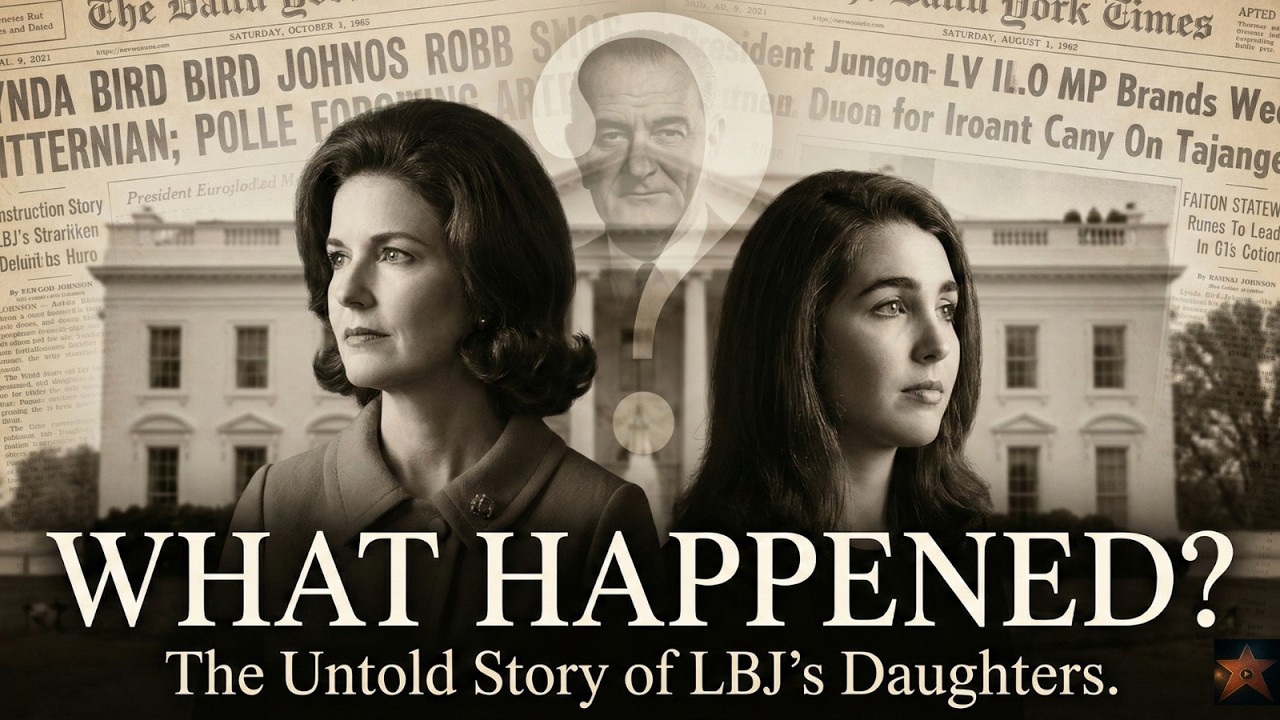
Their contrasting paths, one rooted in political partnership and advocacy, the other in entrepreneurship and independence, shaped how the Johnson legacy endured long after the White House years. Linda Bird Johnson, the elder daughter, was thrust into the spotlight almost immediately. Born on March 19, 1944, she spent her early years in the politically charged world of the Senate, where her father served before becoming vice president. The assassination of President John F.
Kennedy in November 1963 changed everything. At just 19 years old, Linda Bird was suddenly the first daughter of the United States, residing in the White House during the most volatile period of the decade. She stepped into the role of diplomatic hostess, working alongside her mother, Lady Bird Johnson, to manage the social schedule demanded by the Great Society agenda and the ongoing war in Vietnam. She became an essential bridge between her overwhelming father and the political realities he faced daily.
Her marriage in December 1967 to Marine Captain Charles S. Robb marked a defining moment. The wedding ceremony was held in the White House East Room and broadcast live on television, a global media event carefully engineered by LBJ to project normalcy and strength while anti-war protests gripped the nation. The marriage carried a clear political message, linking the Johnson family to a distinguished military background.
Charles Robb went on to a long political career, serving as governor of Virginia and later as a U. S. senator. Linda Bird remained an essential political spouse, navigating the complex landscape of Virginia politics while facing intense media scrutiny because of her father’s polarizing reputation.
Her personal commitment shifted toward advocacy. Inheriting her mother’s passion for literacy and civic beautification, she served as chairman of the board of the Children’s National Medical Center and later chaired the board of the LBJ Presidential Library. Through that role, she dedicated herself to preserving the historical record of her father’s Great Society achievements. Linda Bird’s public life remained largely free of scandal.
She was known for her political stability and diplomatic skill. Her lasting contribution lay in becoming the family’s chief diplomat, translating her father’s divisive legacy into decades of quiet and enduring public service through her marriage and her advocacy work. Lucy Baines Johnson, the youngest daughter, faced the same spotlight but chose a distinctly different path. Born July 9, 1947, she spent her entire adolescence, from the ages of 16 to 21, inside the White House during the Vietnam War and the civil rights movement.
She was known for her independent and outspoken spirit, a contrast to her elder sister’s composed demeanor. Her White House years were marked by two highly public decisions that cemented her image as the most independent daughter. In 1965, she converted to Catholicism, a choice that provoked significant reaction within her family’s Southern Baptist base and captured national attention. Her 1966 wedding to Patrick J.
Nugent, a Catholic military officer, was held in the White House and became a national sensation, reflecting the generational and religious changes sweeping through America. Her professional life developed away from politics. She channeled her energy into managing the family’s assets, particularly radio and media holdings in Texas. She demonstrated the same entrepreneurial drive as her father, becoming a prominent businesswoman and executive who successfully grew the family’s wealth and influence in the private sector.
Lucy Baines also became a lifelong advocate, particularly supporting the Lady Bird Johnson Wildflower Center, which her mother co-founded, and promoting the broader legacy of the Great Society. Her personal life, including a divorce in 1979 that drew heavy scrutiny, later stabilized when she married Ian Turpin. Her early controversial choices, faith, marriage, and divorce, were viewed through the lens of scandal. But her lasting success was as an independent entrepreneur and dedicated advocate who honored her father’s social justice mandate on her own terms.
She demonstrated that the Johnson legacy could be upheld through personal freedom and quiet, powerful leadership in business. The lives of Linda Bird and Lucy Baines spanned the political and social revolutions of the 1960s. They absorbed the immense pressure of their father’s controversial power and transformed it into decades of public service and civic commitment, each in her own way.