The inheritance decided matters more decisively than any will could have. It was, in the end, a measure of how much the victors despised the one they had beaten. On 31 March 1992, in a bedroom at Althorp House, the Spencer family settled the question. Two days earlier, the 8th Earl Spencer had died of a heart attack.
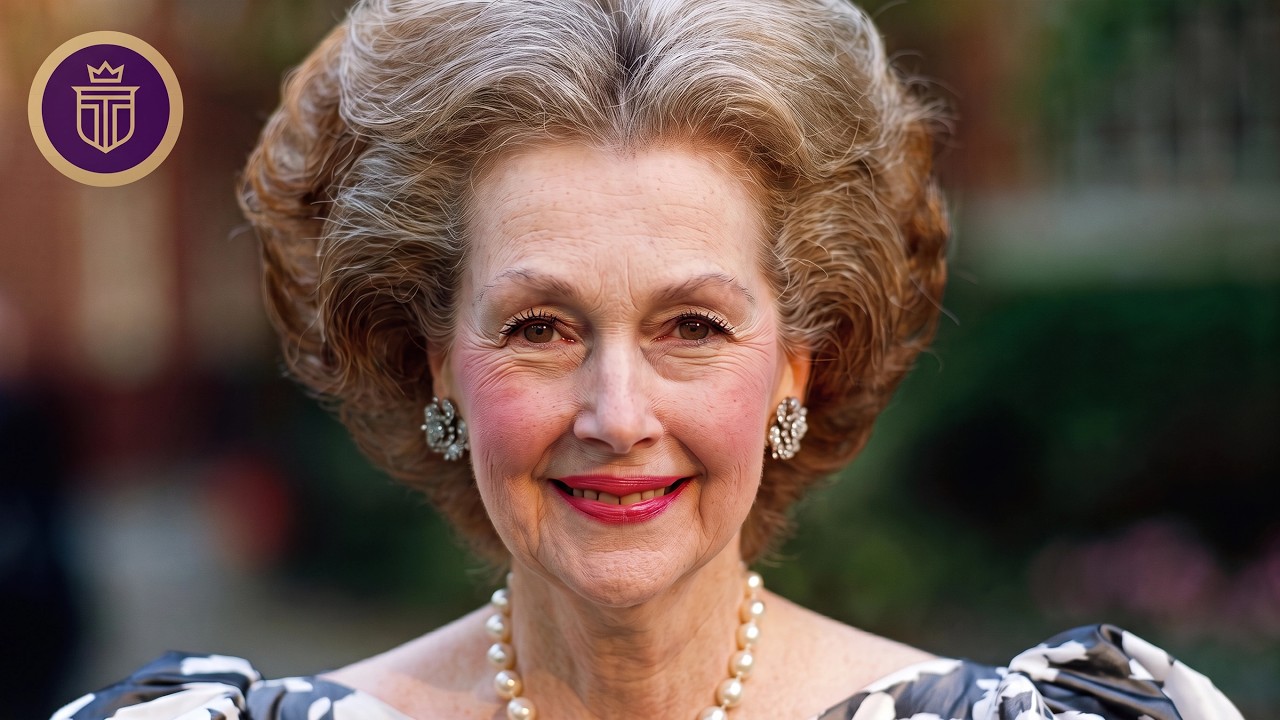
His will had asked his children to give his widow six months to arrange her life and leave. She received about 48 hours. A maid named Pauline Shaw knelt and folded the countess’s clothes into four open Louis Vuitton cases while Diana, Princess of Wales, stood guard at the door. When Diana noticed the embossed “S” on the locks, she decided the luggage itself belonged to the Spencers and could not leave the house.
So the clothes came out again—the furs, the haute couture, the evening gowns—and went instead into black plastic bin bags. The new 9th Earl, Diana’s younger brother Charles, then gathered the bags and kicked them down the stairs of the great saloon, the same staircase on which, three years earlier, Diana had pushed the same woman and watched her fall. The woman at the bottom of those stairs was neither destitute nor defeated. She had a house in Mayfair and an estimated £4 million from her late husband’s will.
She later married a French count. She sat on the board of Harrods. She outlived her stepdaughter by nineteen years. And by most realistic accounts, she was the one who had saved the very house from which she was now being expelled.
She had nursed the earl through a coma doctors expected him to die from. She had opened the house to the public, managed the accounts, funded roof repairs, and taken the blame for every painting removed from the walls to pay the bills. In return, all she got were the bin bags. Her name was Raine, Countess Spencer, born Raine McCorquodale in 1929, the only daughter of the romance novelist Barbara Cartland.
For nearly seventeen years she was the most hated stepmother in England. The children called her “Acid Raine. ” They sang a children’s rhyme at her and deliberately never finished it. Then, in one of the strangest reversals in the modern Spencer family story, the daughter who hated her most became the one who called her the mother she never had.
Raine’s own upbringing was preparing her for a world of performance. Her mother, who would eventually publish 723 novels, had wanted a son. She told the BBC in 1991 that she had been disappointed to have a daughter, that she would have preferred a dozen boys, and that she did not much like women. So she decided to shape the daughter she had.
Cartland drilled her in presentation, dress, and etiquette. When young Raine came home at the top of her class, her mother’s response was to point out a gravy stain on her shirt. Raine was built the way novels were built, from the outside in. At the age of eighteen she was presented at court, in 1947, and was named Debutante of the Year.
In 1948 she married Gerald Lascelles, later the heir to the earldom of Dartmouth. The marriage produced four children. It also produced a public image of the devoted wife, while privately the relationship left her ambitions largely contained. Raine had real administrative talents and tangible civic achievements.
She served nearly seventeen years in local government, and in the early 1970s she chaired the Covent Garden development committee, helping to stop the demolition of one of London’s oldest neighborhoods. The area that draws millions of visitors today exists as we see it partly because a Conservative councillor refused to let planners raze it. What she had not found was a stage large enough for her abilities, or a man willing to hand her the keys. In 1973 she met John Spencer, Viscount Althorp, the man who would become the 8th Earl and who was then described as the unhappiest man in London.
His first marriage had ended in one of the most brutal aristocratic divorces of the era. Diana later told Andrew Morton that her mother’s departure was the greatest shock of her childhood, and that she remembered her father slapping her mother while she hid behind a door. The four children inherited that wound. Raine married Johnny Spencer in a civil ceremony on 14 July 1976, weeks after her own divorce was finalized.
The wedding was so secretive that Johnny’s children were not told in advance and were excluded from the guest list. The Spencer children learned of their father’s remarriage by reading the newspapers the next day. Diana, then fifteen, said she slapped her father’s face and told him that was from all of them. It was the worst possible introduction for a stepmother, and it set the emotional foundation for the next sixteen years.
Raine arrived at Althorp, the Spencer seat in Northamptonshire, a 500-year-old house that had been in the family since 1508. One account says she took a single look at its quiet gloom and called it “the City of Dismay. ” She launched into the work she knew best: a complete transformation. She covered worn furniture in bright new fabric, replaced old Victorian lampshades with pink ones, installed vivid sofas, and spent an estimated £2 million redoing the interiors.
Her defense was simple. She believed she had done a wonderful job, that now there were bright sofas to sit on, and that one could still look at the Rubens paintings on the walls and feel lucky to live there. The family saw vandalism. Sarah, Diana’s elder sister, said she would prefer to stay at Lenin’s mausoleum and hug his corpse for warmth than accept Raine as a stepmother.
Decades later Charles Spencer wrote that the south drawing room, for generations a model of elegant English restraint, had become a riot of clashing pinks. The Independent said the “pouffed-up” choices had turned one of England’s finest historic houses into a madame’s boudoir. In a detail almost too neat to be true, Raine was said to have removed a painting of Robert, the first Baron Spencer, from above the main stairs and replaced it with a life-size oil portrait of herself as a young woman. There was another reading of the renovation that the family never allowed.
These houses are not managed on air. Raine cut the staff, opened the house to visitors, and filled the calendar with car launches, open days, dinners, and concerts to make the estate pay for itself. Johnny fully supported all of it. The touring visitors she invited were the same visitors who would one day pay to see Diana’s grave on the island in the lake.
Between 1976 and 1992, artworks and heirlooms quietly left Althorp, not through public auction rooms but through a network of Bond Street dealers. According to Charles Spencer’s later estimate, roughly a fifth of the house’s contents were sold in those years, more than 200 pieces valued at over £15 million. The list is painful. Eleven Van Dycks, one to the Getty Museum.
Four portraits of the Apostles by Van Dyck, which Charles called the most painful loss. A Stubbs, a Guercino, a Salvatore Rosa that went to the National Gallery. Charles’s real complaint was not only that sales happened but how they happened. In his telling, works were sent to London dealers in laundry baskets out the back door to avoid publicity, and in their determination to stay out of the press, his father and stepmother were cheated by the dealers.
The Salvatore Rosa became his proof. In 1982 it sold for $87,500; two years later the dealer sold it to the National Gallery for $612,500, seven times what the family received. Charles himself hinted that his father may have wanted the sales, that Johnny sold the collection partly in revenge against his own inheritance, a man who never felt loved as a child settling accounts with his legacy. If true, it meant Raine was the visible hand carrying out a grievance that predated her by a generation.
The family found it easier to blame the outsider. In 1978, two years into the marriage, Johnny Spencer collapsed at Althorp with a severe cerebral hemorrhage. He fell into a coma, and doctors gave his survival odds of no better than ten percent. Raine stayed by his bedside night and day, fiercely guarding his care.
She reportedly obtained an experimental drug from Germany not licensed in Britain and pressed the hospital to administer it. She also decided, according to biographer Penny Junor, that he needed no visitors, not even his own children, for the sake of peace and quiet. That decision, whatever its medical justification, became another item on the family’s indictment. The children were kept away during the weeks they feared he would die.
Against expectations, Johnny recovered. He never fully regained himself, but he lived another fourteen years. Even his most hostile relatives acknowledged Raine’s care had been decisive. For a brief moment, gratitude was real.
It did not last. On 29 July 1981, Johnny Spencer, still affected by the stroke his wife had nursed him through, walked his daughter Diana down the aisle of St. Paul’s Cathedral to marry the Prince of Wales. The seating arrangements told the story of the family without a word spoken.
Raine attended but did not sit with her husband. While the earl, Frances Shand Kydd, and the Spencer children sat opposite the royal family, Raine was placed among the general congregation. She did not appear later on the Buckingham Palace balcony. The most photographed moment in Spencer family history deliberately excluded the Countess of Spencer.
The nickname the children had invented, “Acid Raine,” and their jeering rhyme, “Rain, rain, go away,” settled into the language as if they had always been there. They deliberately never finished the line that asks the rain to come back another day. In September 1989, the family gathered at Althorp for the wedding of Diana’s younger brother Charles to Victoria Lockwood. At the top of the saloon stairs, the long cold war between Diana and her stepmother became physical.
Frances Shand Kydd had come from Scotland, and Diana was convinced Raine was not showing her mother enough respect in the house that had once been Frances’s home. Sue Howe, Raine’s personal assistant, later described it without softening. Diana, upset that her mother was being ignored, pushed Raine and she fell down the stairs. Raine was badly hurt and deeply distressed.
In a recorded conversation with her voice coach in 1992, published later, Diana said she had pushed Raine down the stairs and that it had given her an enormous feeling of satisfaction. She said she had wanted to strangle the stepmother who had brought her such unhappiness. Three years later, after Johnny’s death, the same stairs carried the bin bags. The woman who had once been pushed down them was carried out for good.
Johnny Spencer died of a heart attack on 29 March 1992, alone in a London hospital room. His will asked his children to allow Raine six months at Althorp to arrange her affairs and collect her belongings. His heirs chose to disregard it. On 31 March, Charles and Diana removed her from the house.
The evacuation was carried out with a precision that even sympathetic writers found hard to soften. Raine was not allowed to take anything unless she could prove it was hers personally. Her staff were dismissed without notice. Diana stood watching in the bedroom while the maid packed the countess’s wardrobe into Louis Vuitton cases.
Then, at the sight of the “S” on the cases, Diana declared the luggage belonged to the Spencers and ordered the clothes repacked into black bin bags. Charles kicked the bags down the same saloon stairs where Diana had pushed Raine three years earlier. Diana’s verdict at that moment was final. The woman was no longer her stepmother.
She was merely an “X. ”
The furs and the haute couture went out the back door in plastic garbage bags, and a sixteen-year marriage ended in rubbish sacks rolling down the stairs. The family’s position was that Raine deserved it, that the pink sofas and the missing Van Dycks had earned this exit. But the accounting does not resolve.
She had nursed the man who wrote that will out of his coma. She had managed the estate the heir was now inheriting. She had done the unglamorous work of keeping the house solvent for sixteen years. Her reward, forty-eight hours after the death of the husband she saved, was to be treated as a thief in her own house and expelled in bin bags.
Johnny’s will asked for six months and dignity for his widow. His children ignored it two days after his last breath. The war was never about the paintings or the sofas. It was about who owned the memory of the house.
What makes the ending so strange is that the hatred did not last. Raine remarried within a year, to a French count, in a wedding that lasted until divorce in 1995. But the real reversal came from the stepdaughter who had pushed her down the stairs. Around 1993, as Diana’s own marriage collapsed in public scandal, she reached out to Raine in a reconciliation that moved them both to tears.
Diana told her she knew Raine had loved her father deeply and was grateful for the years of happiness she had given him. The two women began meeting regularly for lunch and speaking on the phone almost every day. Diana’s butler, Paul Burrell, summarized it simply: in the end, Diana was an outcast, and Raine was an outcast too. Diana had learned through her own divorce and her estrangement from her mother exactly what it felt like to be cast out.
The woman she had once tried to strangle became, in Diana’s own recorded words, the mother she never had. Then the losses came. On 31 August 1997, Diana died in Paris. Raine, close to the Al Fayed family by then, was among the first people in the world to be told her stepdaughter had died.
Three years later, Barbara Cartland died in her sleep at ninety-eight, and so did the mother who had assembled Raine from the outside in. Raine joined the board of Harrods at Mohamed Al Fayed’s invitation. She worked on the shop floor, traveled to sixteen countries on business, and worked night shifts in a distribution centre wearing a packing apron into her eighties. She testified at the inquest into Diana’s death in 2007.
Charles Spencer never apologized. In a Vanity Fair article in 2010 he softened his tone, acknowledging his stepmother had been a strong and effective character in her own way, but he never expressed regret for the bin bags or the years of war. Raine, Countess Spencer, died on 21 October 2016 at the age of eighty-seven in her flat in Belgravia, from cancer she had hidden until the end. Weeks earlier she had hosted a farewell dinner for thirty friends without telling any of them it was goodbye.
She left an estate of roughly £5. 88 million, a quiet refutation of the family myth that she had drained the Spencer fortune. She left nothing to any member of the Spencer family, and none of them attended her funeral. The stepdaughter who had learned to call her “Mum” was long gone.
The others never learned to forgive her, which was the final measure of a woman who had won every practical battle in that house and lost, forever, the only war that mattered.