On the morning of 9 February 2002, a woman sat at a hospital bedside in London and watched her mother die. The world knew that mother as Princess Margaret, the glamorous and troubled younger sister of Queen Elizabeth II. Almost nobody knew the daughter, Lady Sarah Armstrong Jones, and that was exactly how she had wanted it. Born into the most watched royal marriage in Britain, a union that curdled into cruelty and cold silences, Sarah did what few in her family ever managed.
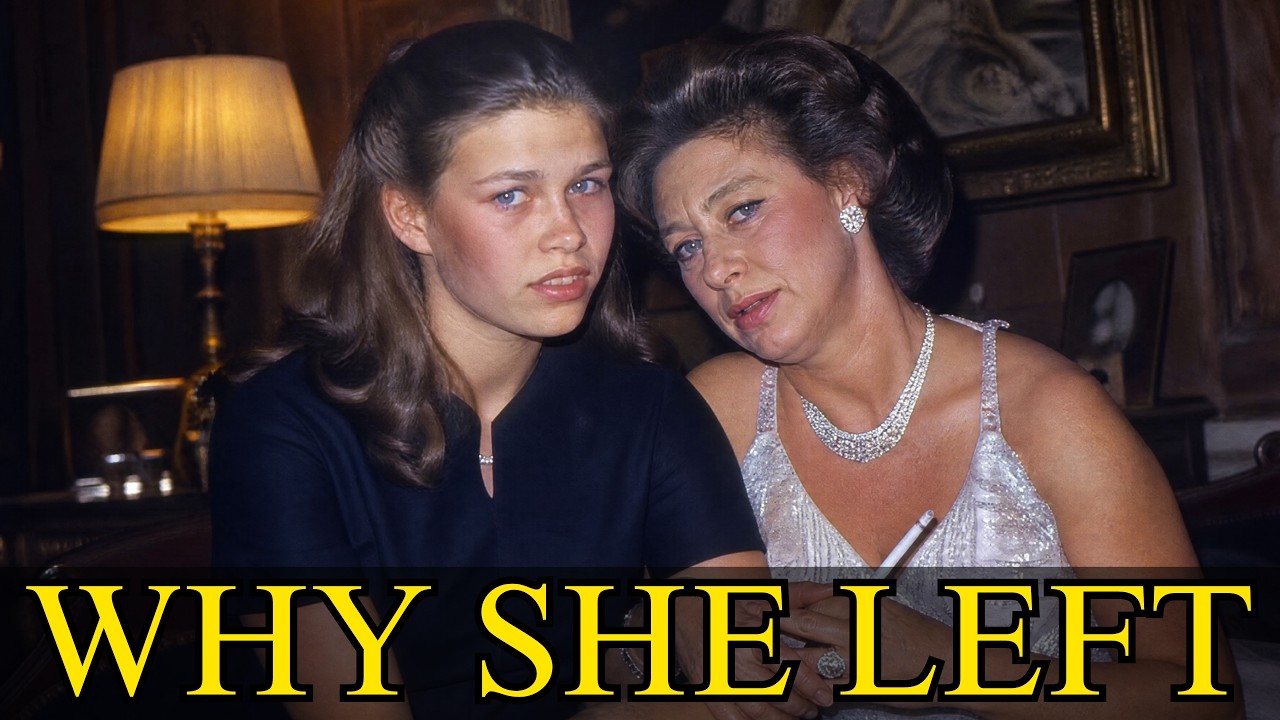
She did not perform the drama and she was not broken by it. She walked quietly out of the wreckage into paint, a private name, and a small church wedding, taking no title she did not need. In doing so, she became one of the most fiercely private figures in one of the most public families on earth. She arrived on the first morning of May 1964 at Kensington Palace, seventh in line to the throne, the only niece the Queen would ever have.
Her parents were Princess Margaret and Anthony Armstrong Jones, the Earl of Snowden, the brilliant photographer who had married a princess in front of an estimated 300 million people. That wedding at Westminster Abbey in May 1960 had been the first royal wedding broadcast on television, and it had promised a modern, glamorous future for the monarchy. The world adored the couple, and the country believed in the fairy tale. But the fairy tale was already rotting from within very quickly.
Within months of the wedding, the pattern of infidelity had begun. A daughter was born to another woman within the first year of the marriage. As the years passed, the biographers would describe drink, betrayals, and cruelty on both sides. Notes of hatred were hidden in the princess’s books, her glove drawer, and among her handkerchiefs.
The marriage was failing in private, and the two children, David and Sarah, grew up inside a home that presented flawless glamour to the cameras and something far colder within the walls. When Sarah was eleven, the private ruin became public. Photographs from the Caribbean island of Mustique showed her mother with a man seventeen years younger, a landscape gardener named Roddy Llewellyn. The tabloids branded Margaret a cradle robber.
A member of Parliament called her a royal parasite. The child was old enough to read every word. The separation was announced within weeks of the photographs, and in the summer of 1978, when Sarah was fourteen, the divorce was finalized. It was the first divorce of a senior royal in generations, the first in 77 years.
It was a historic rupture, and a fourteen-year-old was at its center. The documented record of how it affected her is almost blank: she was reportedly quite shaken. And then nothing. She has never spoken publicly about it, before or since.
While the press fought over her mother, Sarah quietly made her own choices. She attended Bedales, a progressive arts school, and left with a single qualification: one A level in art. Everything grander that her rank might have arranged for her, she let pass. In the early 1980s, she traveled to India with her father and took a job in the wardrobe department of the film Heat and Dust, folding costumes, uncredited, far from the palace.
On that set she met Daniel Chatto, a young actor from a family of actors, agents, and publishers. The romance grew slowly, and in 1987 she accompanied her mother on an official visit to China and Hong Kong. She was building a private life, but she never let go of her mother. She trained seriously as a painter, studying at Camberwell School of Art, Middlesex Polytechnic, and the Royal Academy Schools, where she completed a postgraduate diploma.
She won the Windsor and Newton Prize in 1988 and the Kreswick Landscape Prize in 1990. From 1995 she exhibited with the Redfern Gallery in London under the name Sarah Armstrong Jones. Never a grander title. The royal connection was kept out of every gallery label.
She painted landscapes and interiors, often for modest sums, refusing to trade on her bloodline. On 14 July 1994 she married Daniel Chatto in St Stephen Walbrook, a small Christopher Wren church in the City of London, before about two hundred guests. The ceremony was conducted by the founder of the Samaritans. There was no balcony, no broadcast, no new title.
She became Lady Sarah Chatto, and her husband, a commoner, received no rank at all. She walked out of the church with even less grandeur than she had entered it with. Her gown and jewels came from her mother, not from the state. The family she raised with Daniel was kept largely out of view.
Their elder son Samuel became a sculptor and ceramicist and studied in Japan. Their younger son Arthur served as a page of honor to the Queen, became a Royal Marines officer, and in 2020 rowed two thousand miles around Britain in just over forty-two days, raising money for charity. The two sons carried forward the strands their mother’s life had woven together: art and service. The last years of Princess Margaret’s life were a slow public subtraction.
In February 1998, she suffered a stroke on Mustique. She scolded her feet badly in a bath, and her mobility never recovered. Further strokes took her vision and paralyzed her left side. Through four years of wheelchairs and dark glasses, Sarah was there, present and attentive, without performing for anyone.
On 9 February 2002, at about six in the morning, Princess Margaret died in a London hospital, her two children in the room. Sarah has said nothing publicly about that morning, then or ever. Her silence about her own grief was the one thing she kept entirely private. The years that followed revealed something remarkable.
The woman who had asked for nothing had become the one the Queen wanted nearest. After Margaret died, the bond between Sarah and the Queen deepened. A royal editor called it a very close and unique relationship. When Prince Philip died, his pandemic-era funeral was limited to about thirty mourners, and Lady Sarah Chatto was among them.
She is godmother to Prince Harry and Lady Louise Windsor. The one who had stepped back from the machinery of royalty had quietly become one of the most trusted figures within it. Distance from the spectacle and closeness to the person had turned out to be the same act seen from two sides. The contrast between mother and daughter is complete in numbers.
Margaret married at Westminster Abbey before an audience of 300 million, and died at seventy-one after four years of public decline. Sarah was born seventh in line, drifted to roughly twenty-ninth, married before about two hundred guests in a city church, and was present among the few dozen mourners at a pandemic funeral twenty years later. One life moved toward the center and was consumed by it. The other moved toward the edge and was made secure by it.
Nobody blamed her for leaving, because leaving, done her way, was the most loyal act anyone in that family managed. The girl born at the heart of the storm ended her mother’s story where it began, sitting at a bedside saying nothing, the one who got the exit right.