When the head of the most powerful studio in Hollywood began to cry in front of him, Gregory Peck did not flinch. The actor, then relatively new to films, had been summoned to the office of Louis B. Mayer, the legendary and feared boss of MGM, who made one final dramatic attempt to persuade Peck to sign a seven-year contract. Mayer wept, claiming he was crying because Peck would not let him turn the young actor into the biggest movie star ever.
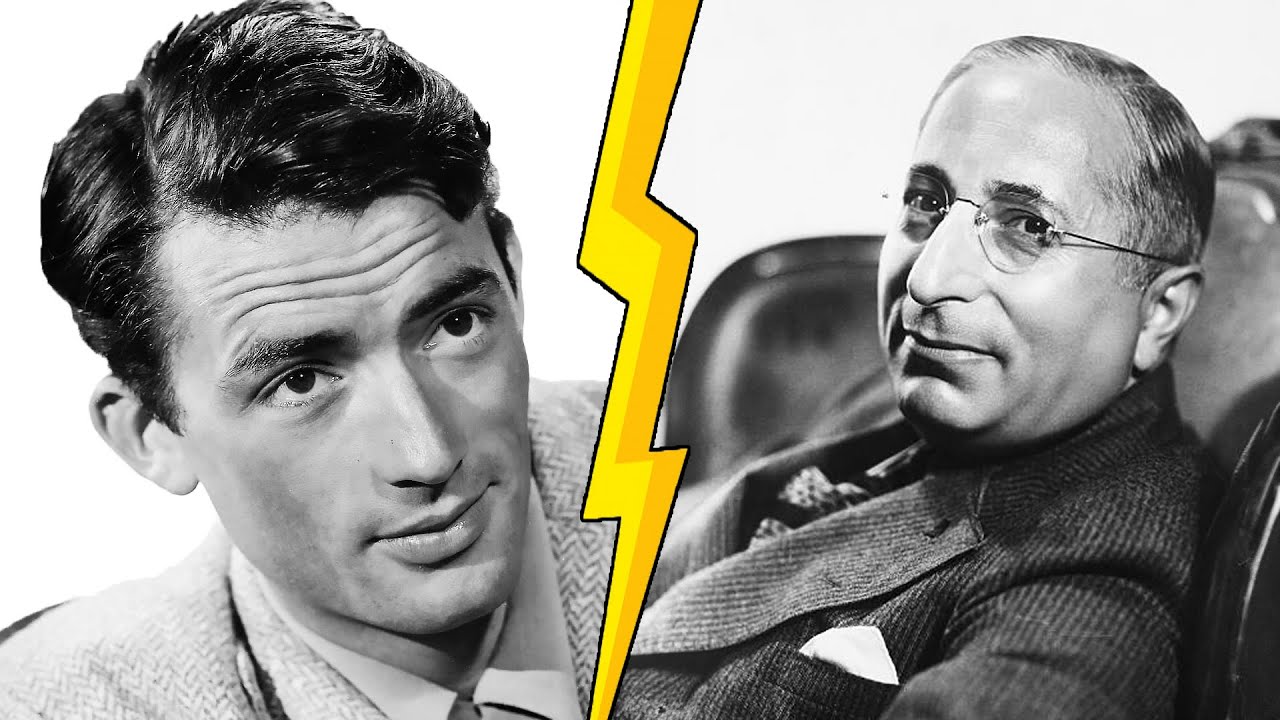
Peck held his ground, and the mogul, seeing his tears had failed, dismissed him from the room. As the actor left, the talent agent Leland Hayward, who was waiting outside, chuckled and told Peck that Mayer did that every day because he loved to cry. Peck later recalled the performance, saying, “My God, what a performance. ”
In the Golden Age of Hollywood, studio bosses held immense control over actors, writers, and directors.
To protect their investments, they required actors to sign contracts for up to seven years, the maximum allowed by law, with terms that overwhelmingly favored the studios. Some performers felt like they were living in luxurious slave quarters, bound by golden shackles. They were often unable to choose their own projects and had little say over their personal lives. The German-born star Luise Rainer, despite winning two Academy Awards in 1936 and 1937, saw her career decline when she was forced into mediocre films due to her MGM contract.
When she attempted to break it, Mayer reportedly threatened her with the warning, “We made you and we can kill you. ”
Peck’s refusal to sign with MGM came amid a heated competition for male actors during World War II. Many of Hollywood’s leading male stars, including Clark Gable, Tyrone Power, Jimmy Stewart, Henry Fonda, Robert Montgomery, Robert Taylor, and Douglas Fairbanks Jr. , had entered military service.
Studios were desperate to find young, reasonably good-looking men with some acting ability, and Peck had a particular advantage: a bad sacroiliac injury had disqualified him from military service, leaving him available for film work. The injury, however, was not something he wanted publicly known. It had actually occurred in a dance class, a detail that studio publicist Henry Rogers thought would undermine the actor’s rugged image. Rogers instead released a statement claiming Peck had hurt his back while rowing for his college crew team at Berkeley.
Leland Hayward, a prominent talent agent, had taken an interest in Peck after his name kept appearing on lists of rising performers. When Samuel Goldwyn, an independent producer, offered Peck a contract at $1,000 a week, Hayward countered with $3,000, skillfully maneuvering the negotiation. Hayward later described the struggle to sign Peck as the cause of one of the biggest feuds in years between himself and Mayer. The tension eventually healed over time, though Hayward noted it never turned into what he called “a passionate love affair.
” Hayward knew Peck was special, and after the actor arrived in Los Angeles and was put up at the Beverly Hills Hotel, the two developed an immediate liking for one another. Before all of this, Peck’s path to stardom was anything but guaranteed. Growing up in La Jolla, California, he came from what people called a broken home. As a young man, he considered becoming a truck driver and even drove a red Union Oil rig around town.
His girlfriend at the time, Betty Clow, pushed him to focus on his studies. When he moved to New York, he lived a hand-to-mouth existence, selling blood, eating at the Automat, and sometimes sleeping in Central Park. He later recalled that he was never hungrier and maybe never happier. The Neighborhood Playhouse, where he trained, was a hub of creativity, and its director, Sanford Meisner, taught an emotional realism that influenced a generation of actors.
Among Peck’s classmates were Tony Randall, Eli Wallach, and Ephraim Zimbalist Jr. ; Meisner later mentored performers like Joanne Woodward, Diane Keaton, Robert Duvall, and Grace Kelly. Peck’s chronic sacroiliac injury happened during Martha Graham’s movement classes, which involved demanding stretches. One day, Graham saw that the men were stiffer than the women and used her knee to push Peck further, resulting in a loud snap.
The next morning, he could not move. Because of the injury, Peck was classified 4-F and did not serve in the war. This created a public relations problem, as Americans watched soldiers being wounded and killed on the newsreels, and a seemingly fit actor sitting out the war could be viewed as a coward. The fabricated rowing story helped protect his tough image.
Despite his talent, Peck faced criticism early in his career. During a Philadelphia tryout for the play “The Morning Star,” a critic wrote that he looked more like a wax dummy in a tailor shop than an actor headed for Broadway. His mentor Katharine Cornell even doubted his screen potential, telling French actor Jean-Pierre Aumont, “Poor Greg, I like him a lot but he’ll never make a picture to save his life. One of his ears is larger than the other.
” On stage, his towering height and broad shoulders made him an impressive figure, but up close his features were described as sizable, uneven, and somewhat hollow. In the parlance of the business, he lacked bulletproof camera angles. Later, Gracie Burns, wife of George Burns, offered a different assessment of his appeal: “It’s just his eyes nose and mouth but what an assembly job. ”
At the time, many traditional theater actors looked down on film acting.
Cedric Hardwicke, who shared the stage with Peck in “The Keys of the Kingdom,” once joked that God felt sorry for actors, so he created Hollywood to give them a place in the sun and a swimming pool, with the price being the surrender of their talent. That was the prevailing attitude of the era. Peck, however, saw a different path. After some hesitation, he decided to accept Hayward’s urging and go to Los Angeles.
He had been enjoying success in the theater and was reluctant to leave it, worrying that Hollywood would turn him into just another pretty face. But the money was too good to pass up, and Hayward was not the type to accept no. Peck later said he was thinking about whether he would ever work again if he failed, wondering what he would do with himself if he did not make it. His Broadway roles were short-lived, and doubt was creeping in.
By deciding to work as a freelancer instead of signing a long-term exclusive contract, Peck positioned himself to choose any role that appealed to him. This decision eventually led to the role of a lifetime: Atticus Finch in “To Kill a Mockingbird. ” Peck earned five Best Actor nominations at the Academy Awards over his career and won for that performance in 1963. He said in interviews that he felt a connection to the character because the book resonated with his own experiences growing up in California.
In the wider context of the studio system, Peck’s refusal was significant. Cary Grant was the first actor to go independent, and he paid a price for it, being viewed as an outsider and a foe of the traditional system. Grant also held a grudge against the studios, believing they refused to give him the Oscar recognition he felt he deserved, which he thought cost him and the studios millions in box office profits. Peck’s decision to remain independent made him, in the eyes of some, a less valuable asset to the studios, regardless of his talent.
But in the end, his gamble paid off, allowing him control over his career and his public image. Throughout his long career, Peck recounted the story of Mayer’s tears repeatedly. It became a defining moment for him, a signal to himself and to the mogul that regardless of the future, he would be his own man.
He was perceptive enough to realize that the power of the studio moguls was gradually weakening, and he demonstrated his courage by not signing on the dotted line in the face of Mayer’s formidable powers of persuasion, bullying, and contempt.