It is difficult to believe today that Afghanistan was once at peace, a nation far removed from its recent turbulent history. In fact, few are aware that the Afghan army was once nicknamed the "Prussia of Asia" by none other than Germany itself. This raises two questions: what role did Afghanistan play in World War II, and what did its armed forces actually consist of?
For centuries, Afghanistan served as a buffer state. It was one of a series of mountainous kingdoms along the border of British India, which the British turned into dependent states to create a distance between the Indian subcontinent and Tsarist Russia, and later the Soviet Union, as well as Imperial and then Republican China. The other states in this chain included Nepal, Sikkim, Bhutan, and Tibet.
Britain fought three Afghan Wars between 1839 and 1919, long before anyone had heard of Osama bin Laden or ISIS. These conflicts were sparked by British interference in Afghanistan's internal politics. The results were mixed, much like the later 20-year intervention in the country. Afghanistan earned a well-deserved reputation as the "graveyard of Western armies."
Eventually, a fragile peace prevailed. Following the Third Anglo-Afghan War in 1919, the British strongly defended their Indian border with Afghanistan. From that point, Afghanistan was largely free of foreign interference. It became a kingdom in 1926 and entered a period of peace and growth that lasted about 50 years, first under King Amanullah and then under King Zahir Shah.
This era continued until a coup in 1973 overthrew the monarchy and declared a republic. After that, the country descended into tribal warfare and was eventually invaded by the Soviet Union in 1979. The Soviet-Afghan conflict ended with the Russian withdrawal in 1989, and by 1996, the Taliban, a militant Islamic group, had taken control of most of the country.
In 2001, America attempted to succeed where the British and Soviets had failed, invading the country with British assistance. The outcome of that venture is well known to all.
Between 1926 and 1973, however, Afghanistan experienced something of a golden age. It had a stable government, reforms and modernization, diplomatic relations with major powers, and a well-organized military force: the Royal Afghan Army.

Afghanistan had long been a strong military nation due to its ancient tax system. Provinces, towns, and small villages had a choice. They could either pay taxes in cash to the king's treasury in Kabul, or provide armed soldiers to form the king's army. The second option was more common, meaning local tribesmen trained for warfare for hundreds of years and were constantly armed. The common firearm was the matchlock jezail, which remained in service well into the 20th century.
During World War I, Afghanistan remained neutral. But after the 1919 war with Britain, it began purchasing modern rifles from the British, specifically the Pattern 14 Enfield. This bolt-action, five-round rifle in British .303 caliber remained the standard rifle of the Royal Afghan Army until the 1950s. They also bought surplus Martini-Henry M2 rifles, which were much older weapons, many of which were later passed down to police forces.
The Royal Afghan Army of World War II looked distinctly German. Germany and Afghanistan had enjoyed good relations dating back to the late 19th century. In 1916, during World War I, a treaty of trade and friendship was signed, as the Germans sought to undermine British influence in the region. The Germans promised to supply the Afghans with rifles and artillery, but were unable to do so due to the deteriorating war situation.
In 1926, another friendship treaty was signed between the German Weimar Republic and Afghanistan, and a German embassy opened in Kabul that same year. King Amanullah even visited Germany in 1928 and met with German President Paul von Hindenburg.
After Adolf Hitler came to power, Afghanistan established even closer ties with Germany. A weekly air service was set up between Berlin and Kabul. The Todt Organization, the Nazi civil engineering body, was sent to Afghanistan to oversee modernization projects and develop the armed forces. Hitler provided Afghanistan with 15 million Reichsmarks to improve its military. A small German military intelligence section also operated in the country to monitor British and Soviet activities in the region.
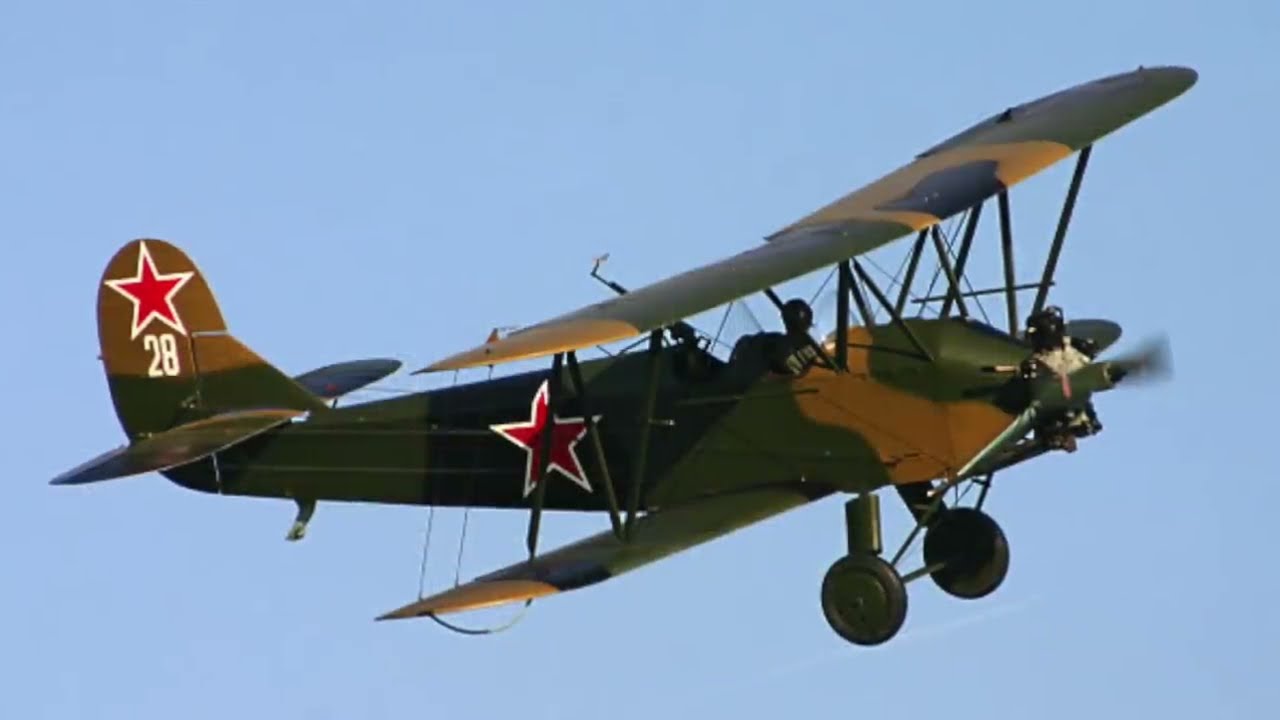
Afghanistan also possessed an air force. The Royal Afghan Air Force was founded in 1924. It initially consisted of just two British Bristol F.2B aircraft flown by two World War I veteran pilots. In 1925, the Soviet Union, seeking Afghan goodwill, presented the Afghan Air Force with a full squadron of R-2 bombers and agreed to train 50 Afghan pilots to operate them.
Italy was another nation seeking influence, sending 25 Afghan students to a military college in Rome in 1928. However, during the political unrest the following year, almost all aircraft in Afghanistan were destroyed.

Nevertheless, in 1937, a large order for new aircraft was placed. From Italy came eight Breda 25 trainers and 16 Ro.37 reconnaissance aircraft. From Britain came eight Hawker Hart light bombers. By 1939, the Afghan Air Force had expanded to include 20 Hawker Harts and eight Hawker Hinds, along with the Italian aircraft, distributed across three squadrons.
The German character of the Royal Afghan Army was confirmed by its headgear. The Germans supplied Afghanistan with huge numbers of surplus World War I M18 steel helmets in the 1930s. The German look became synonymous with the Royal Afghan Army in the 1930s and 1940s, especially for the elite Royal Guard unit with its long coats and military boots. Nazi observers at the time described them as the "Prussians of the Orient." This appearance was retained into the 1950s.
A smaller number of German M40 helmets from World War II were also supplied and remained in use until the 1973 coup. They likely came from China after the Chinese Nationalist Army switched to American M1 helmets later in World War II.
The sidearms used by the Royal Afghan Army were primarily British Webley revolvers, or so-called Khyber Pass copies. Machine guns were rare. Sources indicate that Czechoslovak ZB26 machine guns were purchased in the 1930s.
During World War II, London and Moscow were concerned about German influence in Afghanistan and pressured the king to expel the Germans and Italian fascists. Afghanistan seriously considered joining the Axis powers in 1940 and 1941 in exchange for German economic aid and military equipment.
What prevented this was Operation Barbarossa, the German invasion of the Soviet Union in June 1941, which made the Soviet Union an ally of Britain. Afghanistan now found itself sandwiched between two Allied powers. Its army, though competent, could not have repelled a joint Anglo-Soviet invasion, as happened in Iran in August 1941, when British and Soviet forces jointly invaded and crushed a pro-German faction.
The invasion of Iran convinced the Afghan government to expel most German and Italian diplomats and spies in October 1941. The country remained neutral and did not join the Allied camp. At that time, the Royal Afghan Army numbered 103,000 officers and soldiers, supported by about 10,000 police.
The Royal Afghan Army had very limited armor and artillery during World War II. In 1935, the country bought nine Disston tanks, a very rare American design used only by the US Marine Corps, which operated 16 of them. It was a six-ton armored fortress on tracks, a cheap and handcrafted model. Surprisingly, the Disston tanks remained in service until the 1960s.
The best tank the Royal Afghan Army possessed in World War II was the Renault FT17. This French two-man, six-and-a-half-ton tank was used by several countries after World War I, including Poland. It was armed with a 37mm gun, and its armor only protected against rifle and machine gun fire. The Afghans received eight FT17 tanks from the Soviet Union in 1923 as a gesture of friendship. These tanks were originally Polish and had been captured in 1920 during a brief conflict between the two nations. The Red Army did not want them, so they gifted them to Afghanistan, hoping to win over the new king. Surprisingly, the Afghans kept these ancient tanks in service until the 1950s.
The Royal Afghan Army also used smaller armored vehicles. The Italian CV35 tankettes were widely sold globally, and several units served with the Afghans. These were practical three-ton, two-man vehicles armed with two 8mm machine guns. Again, they remained in service long after becoming obsolete, into the 1960s and early 1970s. Benito Mussolini also supplied the Afghans with a few Lancia 1ZM armored cars, four-ton vehicles armed with two machine guns and a crew of six.
As for artillery during World War II, old horse-drawn Schneider guns were the main field artillery available to the Afghans.
After the war, the Royal Afghan Army benefited from the vast quantities of surplus World War II weapons and vehicles on the international market. The army transitioned to British Lee-Enfield No. 4 Mk 1 rifles, then to Soviet M91/30 Mosin-Nagant rifles and DP light machine guns, before switching to the AK-47 in the 1970s.
Vehicles were significantly modernized, mostly with Red Army weapons systems from World War II. SU-76 self-propelled guns were supplied, and T-34-85 tanks replaced the antiquated FT17 tanks. Many modern Soviet guns also reinforced the horse-drawn Schneider guns.
However, this modernization of weapons did not prevent internal politics from toppling King Zahir Shah in the 1973 coup. He went into exile in Italy, though he returned to Afghanistan in 2002, a move welcomed by many ethnic groups in the country. Restoring the monarchy was proposed to provide a symbol that could unite all Afghans, but the United States rejected this step, preferring governance through President Hamid Karzai.
In 2007, the old king died at the presidential palace in Kabul at the age of 92 and was buried in a mausoleum east of the city.