The myth of the Wild West is a story built on deliberate omissions. The gunfights, the duels, the lawless towns where men settled every argument with a revolver in broad daylight—these images were assembled from real events through a careful process of selecting what to keep and what to discard. The discarded parts consistently contradicted the picture being constructed. Tombstone, Arizona Territory, a town whose name became synonymous with frontier chaos, had a municipal ordinance requiring every person entering the town to surrender their firearms to local law enforcement or a designated store.
This was enforced. The Clanton and McLaury families were in violation of it on October 26, 1881, and that violation was the specific legal justification that Virgil Earp relied on in the confrontation that led to the famous gunfight at the O. K. Corral.
The celebrated thirty seconds were not the product of chaos but of an attempt by law enforcement to enforce a gun control ordinance. Abilene, Dodge City, Caldwell—the cattle towns with the most fearsome reputations of the era—all had similar ordinances. You surrendered your weapon at the town limits and got it back when you left. The image of armed men freely roaming frontier streets was accurate only on the trails outside town.
Bank robberies were rare. The James-Younger Gang robbed banks. The Dalton Gang robbed banks. Butch Cassidy’s Wild Bunch robbed trains and occasionally banks.
These facts are documented. They are also the complete list of bank robberies the frontier produced on a scale sufficient to constitute a criminal enterprise. Bank robbery in the frontier era was an extraordinarily high-risk venture. Frontier banks were among the most fortified commercial establishments in those towns.
Vaults were formidable, armed guards were common, and the community response to a bank robbery was not the passive reaction of civilians accustomed to delegating their security to professional law enforcement. It was an armed, immediate, and personal response. The Northfield raid of September 7, 1876, when citizens of Northfield, Minnesota, shot the James-Younger Gang to pieces in the street, was not an exceptional response. It was the usual outcome.
The famous high-noon duel never happened. Not as a formal institution, not as a recognized way of settling disputes, not as a regular feature of frontier life in any documented form. The historical record preserves something far less cinematic. Most frontier gunfights occurred at close range, in confined spaces, between men who were near each other for reasons unrelated to violence—in saloons, at doorways, at gaming tables—and who drew their weapons on each other with a specific, unhurried deliberation.
Wild Bill Hickok’s documented fights did not occur at noon in the street. The O. K. Corral was not a duel; it was a law enforcement operation that turned into a close-range gunfight in an alley.
The exact combination of distance, ritual, and simultaneity required by a duel hardly ever appears in the documented record. The high-noon duel was invented by Owen Wister in his 1902 novel The Virginian and popularized by the films that followed. Life was mostly quiet. A homesteader who proved up a claim on the Dakota plains in the 1870s spent the vast majority of his days doing things no Western film depicts in detail because they do not support storytelling.
Plowing, planting, waiting, plowing more. Cowboys on cattle drives spent most of their weeks riding, watching, and riding more—fourteen-hour workdays that resembled the thirteen-hour day before and the fifteen-hour day after. Violence was real and documented, but it was an exception in a daily life whose defining feature was not danger but crushing boredom. The era was short.
The Wild West as a coherent historical period lasted roughly thirty years, from 1865 to 1895, from the end of the Civil War to the closing of the frontier announced by the Census Bureau in 1890 and confirmed by the end of the Ghost Dance campaign in 1891. The open-range cattle era, the core of the cowboy myth, lasted about fifteen years between the first great cattle drives of the late 1860s and the arrival of barbed wire and the blizzard of 1886 that ended open range as an economic reality. Cowboys were ethnically diverse. One in four cowboys on cattle drives during the 1860s and 1870s was Black, a figure documented in payroll records, trail boss accounts, and census data.
Mexican vaqueros were not merely present on the frontier; they were the source of the techniques, equipment, and vocabulary on which the Anglo cowboy tradition was built. The word lasso is Spanish. The word rodeo is Spanish. The leather chaps, the spurs, the specific method of working cattle from horseback—all of it derived from vaquero traditions that had been ranching in Mexico and the Southwest for generations.
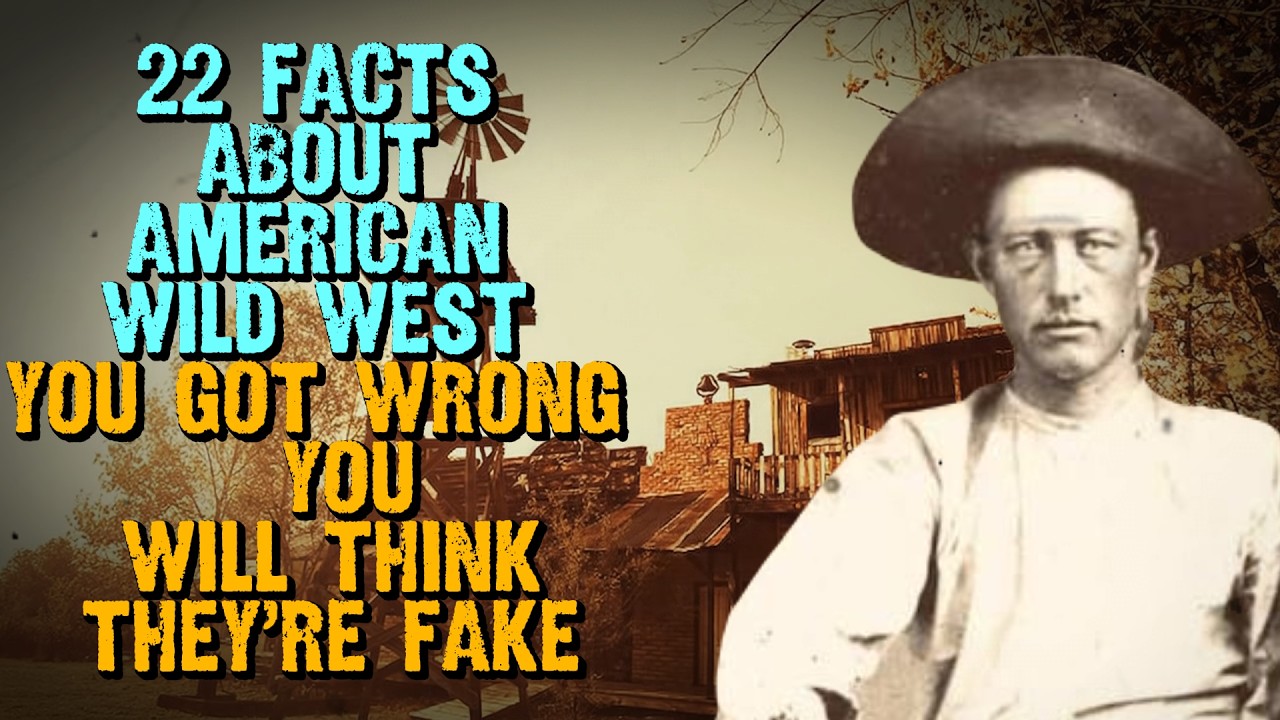
They did not wear cowboy hats. The bowler—the round hat with a curved brim, the urban working-class headwear of the era—was the most common hat among workers throughout the American frontier in the 1870s and 1880s. The documentary evidence is in the photographs. Not the posed portraits of lawmen and outlaws who knew they were documenting for posterity, but the candid images of working frontier towns, cattle drive camps, miners, and ordinary settlers.
John Stetson made his wide-brimmed felt hat and men who worked under the sun bought it, but it was never the universal symbol of frontier identity. It was just one hat among many. They were mostly children. The average age of a working cowboy on cattle drives in the 1860s and 1870s was between fifteen and twenty.
Not the grizzled, morally complex adult of the Westerns, but teenagers, often boys who came off farms in Texas, Missouri, or the post-war South with a combination of cattle experience and limited options. The physical demands of cattle operations—fourteen-hour days, river crossings, night guards, chasing stampedes—were tasks young bodies bore more easily than older ones. Disease killed far more people on the American frontier than violence did, by such a margin that the mythic focus on gunfights is statistically meaningless. Cholera, typhoid, and dysentery—diseases transmitted through water and direct contact, arising inevitably from poor sanitation in human settlements living in proximity without infrastructure to prevent contamination.
Cholera killed fast. A man drinking from a contaminated stream in the morning could be dead by the next morning. A frontier doctor in the 1870s worked at the intersection of real skill and catastrophic limitation. The germ theory of disease was gaining scientific acceptance during exactly those years, but it had not yet achieved the practical application that would have protected patients from the consequences of its absence.
Clean water and adequate sanitation were the two interventions that would have saved the most lives, and the frontier provided neither consistently. Dental care was a hazard. Dental care on the frontier was provided mainly by men whose primary profession was something else. The barber who cut hair also pulled teeth.
Not because the two skills were naturally related, but because the barber had the particular combination of hand tools and social standing that made him the most available practitioner. Instruments were not sterilized. Technique was not refined. Anesthesia was whiskey or nothing at all.
Doc Holliday was a trained dentist, holding a degree from the Pennsylvania College of Dental Surgery, which placed him in a small minority of formally educated practitioners in the field. His practice failed not from lack of skill but because the tuberculosis ravaging him caused coughing fits patients found incompatible with close-range dental procedures. Coffee was everything. The chuck wagon carried coffee as the most carefully managed commodity.
Men driving cattle a thousand miles through a Texas and Kansas summer judged the quality of the cook by the quality of his coffee before anything else he served. Coffee was hot when everything else was cold. Coffee was reliable when other road supplies were perishable and supply chains failed. The cook who ran out of coffee lost the good will of his men at the same time.
The chuck wagon carried more coffee by weight than any other commodity. This was not coincidence. Barbed wire changed everything. Joseph Glidden received a patent for barbed wire in 1874.
The invention reached the Texas plains in the late 1870s. By 1885, it had ended the open-range economy built over the previous twenty years. The fence-cutting wars that followed were not metaphorical. Men rode out at night with wire cutters, cutting miles of fence in single operations, leaving marks on fence posts warning against rebuilding.
When fence owners sent armed guards, the cutters organized into larger groups and shot at the guards. The Texas legislature eventually made fence-cutting a felony and made fencing public land illegal; both laws targeted both sides of the conflict at once. Barbed wire did not care about legislation. The open range did not die in a single dramatic moment but through the accumulated weight of ten thousand fence lines drawn across land that had been open and was now closed.
The whiskey served in frontier saloons was often not whiskey in any real chemical sense. Saloon owners, facing the logistical challenge of supplying alcohol to remote locations, fortified their stock with whatever chemicals were available: turpentine, tobacco juice, gunpowder, ammonia, hot pepper. These additions were documented in traveler accounts and frontier journalism with enough frequency to make them common rather than exceptional. The term rotgut was not an exaggeration; it was a medical description of what the substance did to the digestive systems of the men who consumed it in quantities the frontier social structure reliably produced at the end of a cattle drive or mining shift.
The professional gambler was not a marginal figure in frontier town society but was often among its wealthiest and most economically central residents. The operator of the main entertainment enterprise a frontier town offered its population of young, paid, restless workers. Doc Holliday was a professional gambler whose card earnings consistently exceeded any income from his dental practice. Bat Masterson ran a faro game.
Wyatt Earp’s primary source of income for most of his career was gambling operations, not law enforcement. The moral structure of the frontier myth placed the lawman above the gambler in the social hierarchy; the economic structure placed them in the same room, often at the same table. Isolation was torture. A homestead in the Dakota plains in January.
A sod house, a family, the nearest neighbor three miles away across land made impassable by blizzard. Darkness arrived at four in the afternoon and stayed until eight in the morning. The psychological impact of frontier isolation was documented in letters and diaries in the specific, restrained language of people recording something for which they lacked adequate clinical vocabulary. What they described—the overwhelming burden of weeks without human contact, the particular nature of a silence that the wind did not break but deepened—a contemporary psychiatrist would recognize as a documented symptom cluster of psychological distress caused by severe isolation.
The frontier did not produce the strong, independent, psychologically stable individual of myth. It produced people who endured psychological conditions that made the mythic celebration of independence impossible to acknowledge. The destruction of the American bison herd between 1870 and 1885 was policy, not a byproduct of westward expansion. General Philip Sheridan stated it publicly and without embarrassment: buffalo hunters were doing more to solve the army’s problem with Plains Indian resistance than army campaigns had accomplished.
Hide hunters who moved onto the southern plains in the early 1870s worked with industrial efficiency. Organized teams, relay systems, a wagon train shipping product east in volumes the industrial leather market could absorb. A skilled hunter in a good position could kill a hundred buffalo before the herd moved. The carcasses were left where they fell.
Thirty million buffalo in 1870. Fewer than a thousand by 1889. Nineteen years. The fastest large-scale animal extinction in recorded history.
It was not an environmental accident but deliberate commercial and military policy. The Code of the West was a literary invention, assembled from a selective reading of real events by writers who needed a moral framework for their stories. The actual moral landscape of the frontier was documented in the unglamorous reality of men making survival calculations in conditions where such calculations were made. Violence was utilitarian, not ceremonial.
Loyalty was conditional, not absolute. The laws the myth required—never shoot a man in the back, always give a man a fair chance to draw—were respected in specific documented cases and violated in others with nearly equal frequency. The frontier produced men of genuine courage and genuine integrity. It also produced men whose relationship to courage and integrity was entirely situational.
The myth sorted these men into heroes and villains. History documented them as human beings.