On December 5, 1978, twenty-year-old Merrily Lee Bruiser vanished from St. George, Utah. She was a young woman known for her bright energy and the kind of presence that made people notice her. The day she disappeared was unremarkable.
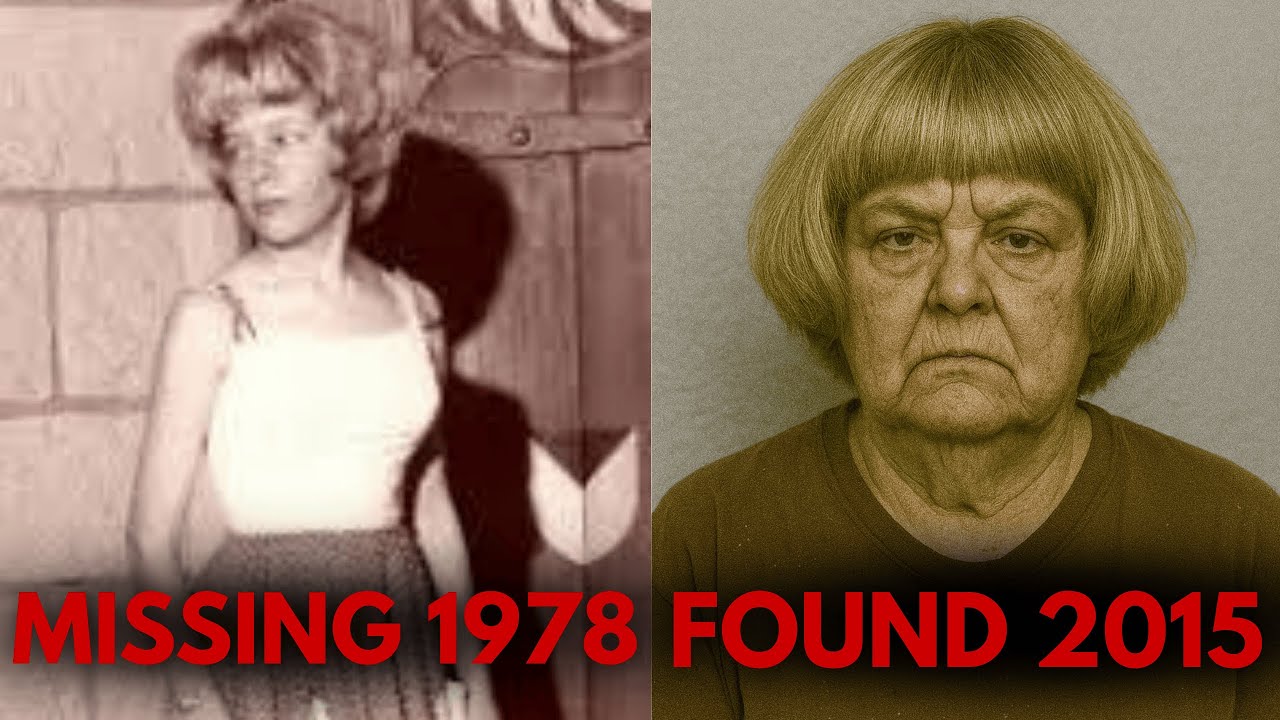
Locals went about their business, children played in the streets, and the desert sun baked the rooftops. No one saw her leave. No one knew where she was going. And no one could have predicted that the case would remain unsolved for nearly four decades.
When Merrily was reported missing, investigators combed St. George. They knocked on doors and questioned neighbors, friends, and acquaintances. Every corner of her life was examined.
Yet there were no definitive leads. Her family, desperate and terrified, posted flyers, made phone calls, and searched tirelessly. Each day she remained missing was filled with unanswered questions and the fear that something terrible had happened. As months became years, the trail grew colder, and the world seemed to move on without her.
Law enforcement was hampered by the limitations of the late 1970s. There were no national databases for missing persons, no DNA analysis, and no digital records. Investigators had to rely on sketches, witness statements, and incomplete leads. It was a time when many cases simply faded into obscurity, and Merrily’s disappearance became one of those haunting stories.
A bright young woman gone, leaving behind a family who never stopped searching and a community left with a mystery they could not solve. Years passed. The search continued, but the trail grew faint. Hints emerged of unidentified remains found in Utah, but none could be confirmed.
Merrily’s case slipped into the shadowy corners of cold case files. Rumors and speculation swirled in St. George. Neighbors whispered, friends theorized, and the mystery grew in the imagination of a town desperate to make sense of it.
Some suggested she had run away, though her close family insisted that was impossible. Others feared the worst, though no one could prove what had happened. In the background, law enforcement continued their painstaking work. They followed leads that led nowhere.
Witnesses who might have remembered crucial details either moved away or passed on. Photographs of potential sightings were analyzed, compared, and ultimately dismissed. Every thread seemed to vanish into a cold, unyielding void. But the world was changing.
In the early 2000s, cold case investigations began to benefit from advances in forensic technology. DNA analysis, once a futuristic concept, became a powerful tool for identification. Cases that had gone unresolved for decades suddenly became solvable, provided that physical evidence had been preserved. Merrily’s case, carefully preserved by law enforcement, became a candidate for these new techniques.
Investigators submitted whatever biological material remained for testing, hoping that even a fragment of DNA might provide the breakthrough that had eluded them for nearly forty years. The work was slow, meticulous, and fraught with frustration. DNA profiles were compared to national databases, genealogical resources were consulted, and investigators began piecing together family trees, tracing descendants and relatives in hopes of locating a match. Every lead required careful verification.
Every connection had to be confirmed before moving forward. Finally, after decades of silence, a pattern began to emerge. Using genetic genealogy, detectives identified potential relatives and cross-referenced their information with Merrily’s missing person’s report. Small hints turned into promising leads.
Hopes long buried began to resurface. By 2015, nearly thirty-seven years after her disappearance, the pieces fell into place. The DNA analysis confirmed what her family had always feared and always hoped. The unidentified remains discovered years earlier were indeed Merrily Lee Bruiser.
Her identity, lost for decades, was finally restored. For her family, the relief was profound, mixed with sorrow for all the years they had spent without answers. For the investigators, it was a triumph of persistence, science, and dedication to the principle that no missing person should be forgotten. But even with her identity restored, the questions remained.
What had happened to her in 1978? Who was responsible for her disappearance? And could justice ever be served? The investigators who had reopened her case turned their focus to understanding what happened to her.
They pored over the old files, missing person’s reports, witness statements, and photographs. They revisited old crime scenes and interviewed anyone connected to her life. But after so many years, much of the trail had grown cold. Memories faded, people moved away, and key details had been lost to time.
One of the most challenging aspects of Merrily’s case was the lack of physical evidence linking her disappearance to a suspect. Unlike modern investigations, forensic science in the late 1970s had limited tools. DNA testing did not exist, and fingerprint databases were rudimentary at best. Investigators had to rely on circumstantial evidence, witness recollections, and the few clues that had survived the passage of time.
The discovery of her remains years earlier provided some answers but also deepened the mystery. The condition of the body suggested foul play, but the evidence was insufficient to identify a perpetrator. It was a frustrating paradox. Her identity had been restored, but the key to justice remained elusive.
Modern investigators hoped that revisiting the case with fresh eyes might uncover new information. They reached out to former law enforcement officers, neighbors, and anyone who might have remembered unusual occurrences around the time of her disappearance. Some recollections offered minor leads—unconfirmed sightings or strange behavior in the community—but none were conclusive. Despite the uncertainty, Merrily’s identification sparked renewed attention.
Media coverage brought her story back into public consciousness, and her family could finally speak her name publicly. Advocacy groups for cold cases highlighted her case as an example of both the failures of the past and the potential for modern science to restore identity to long-lost victims. Merrily’s story also highlighted the human toll of unresolved cases. Her family’s grief, stretched across thirty-seven years, illustrated the enduring impact of a missing loved one.
Every year without answers magnified the pain, the questions, and the longing for closure. Families often move through life carrying invisible weights, hoping against hope that someday, somehow, the truth will surface. With her name restored, Merrily was no longer just a statistic. She became a real person again—a daughter, a sister, a friend—someone whose life mattered and whose story deserved to be told.
Her identity gave her humanity back, and her family finally had the chance to honor her memory in a way they could not for decades. In the end, Merrily Lee Bruiser’s story is a testament to patience, perseverance, and the relentless pursuit of truth. After disappearing in 1978, she remained a mystery for nearly four decades. But in 2015, modern forensic science finally restored her identity, giving her a name, a face, and a place in the world that had long forgotten her.
Her family, after decades of grief, could finally mourn openly, remember her life, and honor her memory. The relief was profound, mixed with the heartbreak of all the years lost and all the moments they would never share with her. Yet, even with answers about her identity, the questions about her disappearance remained. Who was responsible?
Why did it happen? Could justice ever be served? Those answers may never come. Still, Merrily’s story is far from one of defeat.
Her identification stands as a beacon for investigators working cold cases today and a reminder that even decades-old mysteries can be solved with persistence, technology, and unwavering dedication. Merrily Lee Bruiser may have been missing for decades, but now, thanks to modern science and human determination, she will never be forgotten.