In October 1944, a German artillery battery slipped into an orchard behind the front line. The commander had done everything by the book. He moved only after dark, the only safe way for any unit to travel. He picked a position with overhead cover, hid his guns under camouflage nets, erased the wheel tracks at the entrance, and forbade fires and movement in the open.
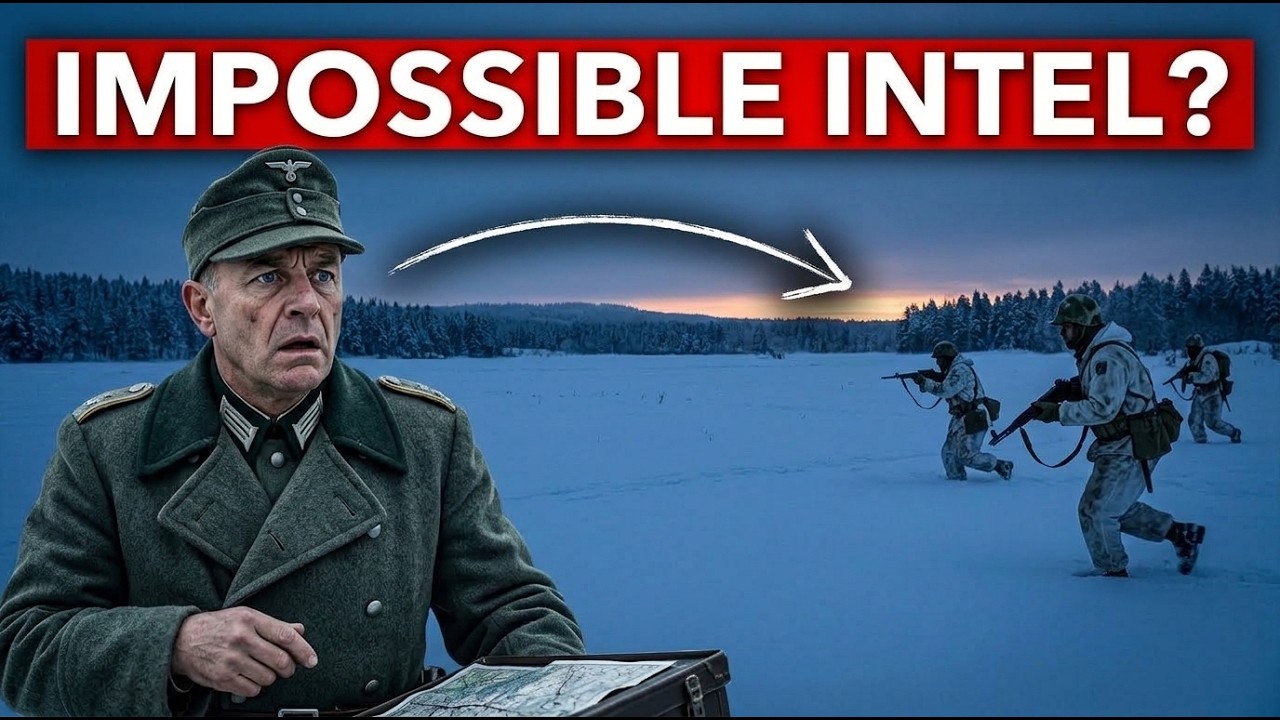
No one saw him arrive, and he was probably right about that. At first light, his battery fired a short registration shoot, a handful of shells to confirm the guns were aimed at a target he intended to engage later. Between eight and twelve minutes later, American shells landed on his position. It was not probing fire or a gradual adjustment creeping toward him from a hundred meters away.
It was a concentrated strike from multiple batteries, and the first rounds fell close enough that the survivors remembered them as landing right among the guns. He had been in position for six hours. He had fired for perhaps forty seconds. There were no aircraft overhead.
No patrol had approached him. That experience, in one form or another, appears again and again in German accounts of fighting in the West from 1944 onward. It produced a specific and corrosive belief among German Army artillerymen that the Americans somehow knew where the guns were before they revealed themselves, and that firing at all was suicide. There is a simple explanation for the eight-minute delay, and a more troubling one for why the Americans so often seemed to know things they should not have known before a single shot was fired.
Neither involved a spy. Both came down to industrial capacity. The first part, the eight-minute wait, comes down to counter-battery fire, the most visible and least understood part of the process. The American Army fielded units whose entire existence was based on locating enemy artillery by scientific measurement.
They were called observation battalions, and they used two techniques that together could fix the map coordinates of a gun that had fired. The first was flash ranging. A line of observation posts stretched along the front on high ground, surveyed so precisely that their positions were known to the meter. They watched for muzzle flashes at night and in low light.
When a gun fired, each post that saw the flash recorded an exact angle. Several angles from several known points intersect at one exact point, and that point is where the gun sits. The second was sound ranging. It was more elegant and more effective because it worked when no one could see anything at all.
A line of microphones ran across the front, again precisely surveyed, and was wired to a central recorder. When a gun fired, the sound of the blast reached each microphone at a slightly different moment. The recorder registered the arrival times on a moving trace. The differences in arrival time, fed into calculations, produced the location.
Sound ranging worked in fog. It worked at night. It worked when the gun sat behind a hill. It did not care about camouflage nets because it never looked at anything.
Both techniques demanded extremely precise surveying, and the American Army invested heavily in survey sections whose job was to lay an exact grid across the front. A third technique sat alongside them, the least technological investigation of the entire war: shell-hole analysis. When German shells hit American positions, the Americans went out to inspect the craters. A shell hole is not a random shape.
It has a directional pattern. The way the earth was thrown, the approach groove, the spread of fragments, all allowed a trained observer to determine the direction the shell came from with useful accuracy. Fragments recovered from the hole revealed the caliber and often the type of gun. The remains of fuzes could sometimes identify the batch.
Collected across dozens of craters in a sector, it gave directions from several known points, the same triangulation problem solved by flash ranging with a shovel and a notebook. American units were trained to do this and did it routinely, and the reports went into the same intelligence channels as everything else. It was not a clever machine but a standardized procedure ordinary men could execute reliably, feeding a system that converted it into coordinates on a map. Those coordinates then entered the fire direction system, the second half of the eight minutes.
An American artillery fire direction center could calculate firing solutions for multiple battalions and bring them all onto a single point simultaneously. The ability to mass many battalions on one target on demand was the signature capability of American artillery in the war. So the sequence ran: fire, record through microphones and observation posts, calculate, transmit to the fire direction center, then strike from every gun in range. Eight to twelve minutes is exactly how long that took.
There was nothing mysterious about it. It was trigonometry, surveying, telephone wire, and men with slide rules. An industrial process converting the sound of a German gun into map coordinates. The second part, knowledge before anyone fired, was the harder question.
German complaints were not only about counter-battery fire. They concerned American patrols and reconnaissance appearing at positions the Germans had occupied only hours earlier. They concerned attacks that struck precisely at the boundary between two units. And they concerned the feeling that the enemy had somehow read the orders in advance.
That came from four main sources. The first were patrols, the least glamorous and the most important. Every American infantry regiment had an intelligence and reconnaissance platoon, a small unit of men whose full-time job was going out at night to learn what was in front of the division. Behind them, infantry companies ran their own patrols constantly: reconnaissance patrols to observe, combat patrols to fight, and raid missions designed specifically to capture a live German for interrogation.
That work was continuous and costly, and it was how the Americans knew when the unit opposite had been replaced, that the men at the edge of the woods were now teenagers rather than veterans, and that the food supply team came over a certain path at a certain hour. The second was prisoner interrogation. An American division had trained interrogators working within hours of a soldier’s capture, while the information he held was still fresh. What they wanted was no great secret.
It was mundane information: your unit, your strength, when you were relieved, where your company command post is, when your food arrives, where the mines are. Individually trivial, but compiled from dozens of prisoners each week, it drew a map. The third was aerial photography. American and British tactical reconnaissance aircraft photographed the German rear constantly.
Behind them were photo analysis units, people trained to look at a stereoscopic pair of images and see what an ordinary person missed. The pattern of tracks in a field revealed a gun under camouflage netting. The shadow of a pile of fresh dug earth appeared as a difference between yesterday’s image and today’s. Camouflage could hide the gun itself, but not easily the evidence that something had been moved into a field overnight, and the analyst comparing two images taken a day apart was looking for exactly that difference.
The fourth was signals intelligence. At the tactical level, radio direction finding on German transmissions and traffic analysis inferred command locations and what was about to happen from the volume and patterns of broadcasts. At the strategic level, the Allies’ ability to read much high-level German correspondence shaped campaigns, though it rarely reached an infantry company itself. By 1944 there was a fifth entry the Germans could no longer largely counter: radar.
American gun-laying radar, originally designed to direct anti-aircraft fire, proved in the hands of experimenting units its ability to detect ground movement within useful ranges, vehicles on roads, and in certain conditions mortar shells in flight, allowing the launch point to be calculated backwards from the shell’s trajectory. The mortar was the infantryman’s most hated weapon precisely because it was invisible. It fired from behind cover, made little noise, and killed men inside their own trenches. The technology that located a mortar from the flight path of its round stripped away the last advantage that made using it safe.
Then came the piece binding it all together: the division intelligence section, whose job was to integrate all this information. Patrol reports, prisoner statements, photographs, and radio intercepts arrived separately and were cross-referenced and turned into periodic intelligence summaries sent down to the units. That was what the German battery commander was really facing. Not a spy, not luck, not one brilliant officer, but a pipeline drawing fragments from four different sources and producing exact coordinates.
The Germans could not match this system because they had invented many of these techniques themselves. Sound and flash ranging had reached maturity in the First World War largely through German and French artillery science. German signals intelligence was excellent. German patrols, when they had the men, were first-rate.
What they lost between 1943 and 1945 in the West was the ability to run the cycle. Start with the air. Tactically photographing the enemy rear requires flying over it repeatedly and returning safely. By 1944 in the West, German reconnaissance aircraft attempting it faced overwhelming Allied fighter cover.
The photographs stopped arriving, and with them went an entire source of input to the system. Patrols required men who could be spared, rested enough to be alert, who knew the ground. German infantry battalions in the West were chronically understrength, filled with large numbers of newly transferred personnel from other branches, and holding frontages far wider than doctrine allowed. A battalion holding a frontage meant for a regiment could not send out a patrol every night, and if it did, it sent exhausted men who did not know the terrain.
Sound ranging required laying wire, precise survey, and a stable front. A retreating army lost its survey grid every time it fell back, and had to build a new coordinate network on unfamiliar ground under fire, with signal units also asked to do everything else. Even when German sound rangers located an American battery, the response required ammunition, and German artillery ammunition was strictly rationed by late 1944. Locating a target you could not afford to shoot at was a theoretical exercise.
Then there was the human element on the other side of the line, rarely mentioned and enormously important in France and Belgium: the civilian population. An army advancing through a friendly country moved inside a distributed intelligence network it had not needed to build. People who had lived under occupation for four years knew which farm had been seized as a headquarters, which orchard the guns had moved into last night, which road the German trucks used after dark, and how many men were staying in the village. They told the Americans freely, often before being asked.
An army retreating through that same country faced the opposite problem. Every civilian watching a battery move into an orchard was a potential source of information for the enemy, and there was nothing to be done about it. A final element failed quietly: prisoners. Interrogation only worked if prisoners were taken regularly, and taking prisoners regularly required successful local attacks and offensive patrols, which required men, ammunition, and fuel.
An army in retreat, short of infantry, without aerial reconnaissance, rationing its shells, extending and re-extending its wire, gradually lost the capacity to see. The techniques remained in the manuals. The inputs faded away. There was one more mechanism that widened the gap rather than leaving it static.
Knowing where the enemy was and being able to fire on him were not independent capabilities. They reinforced one another. An army that could locate and destroy enemy guns made enemy artillery reluctant to fire. Artillery that would not fire could not support its own patrols, suppress attacks, or conduct counter-battery work, which made the first army’s guns safer, allowing them to fire more freely, which produced better support for its patrols, which produced more prisoners, which produced better intelligence, which produced better targeting.
Run that loop for six months and the two sides were no longer fighting the same war. The German battery commander in the orchard sat at the far end of that loop. He learned from his experience that to fire briefly was to be destroyed, so he fired less, and so did every commander. Firing less exposed his infantry, making American patrols easier, improving their intelligence, and making the next German battery easier to find.
No single decision in that chain was wrong. Every step was the correct local response to what came before it. The overall result was an artillery arm that learned not to fire. An American attack striking a boundary between two units was the most damaging expression of the title problem.
The seam between two units was the weakest point of any defensive line, where responsibilities overlapped, fire plans did not match, and requests for support had to move sideways through two headquarters instead of upward through one. Every army knew this. What mattered was whether you could find that seam, and American intelligence channels were exceptionally good at it. Prisoners taken from two different regiments in two different sectors on the same night told you, inadvertently, exactly where one regiment ended and the other began.
The investigator only needed to identify the prisoner’s unit and location, then compare a dozen such answers on a map. That was why German commanders kept reporting that American attacks always came at boundaries. They were not guessing, and the Americans had not read their orders in advance. They had interrogated eleven exhausted men over four nights and drawn a line between their answers.
The Americans did not have better scouts. They had better channels, and those channels were the product of decisions about survey sections, microphone arrays, photo interpretation schools, interrogation training, and telephone wire. Every input was ordinary. Men going out at night to watch the edge of a wood.
Microphones on wire. A stereoscopic scope and two photographs taken a day apart. A tired prisoner answering questions about when his rations arrived. A survey team using a theodolite to fix the exact position of a hilltop.
None of it was secret. Assembled and run continuously with communications that carried the information to the guns in minutes, it produced an effect the professional officers on the other side felt as something like clairvoyance. The German reaction, firing less, moving more, and staying hidden, was a tactically correct response and a strategic surrender, because an artillery arm that could not fire freely was not an artillery arm. The Americans did not outthink the Germans on intelligence.
The Germans had taught the world most of these techniques. But the Americans out-supplied them, with aircraft that could fly, wire that could be laid, survey teams with fuel, infantry in sufficient numbers for patrolling, and above all artillery ammunition that made every located target worth the effort of finding it. Knowledge was worthless unless you could act on it, and the Germans slowly lost both sides of that equation at once, with each loss making the other worse. The battery commander in the orchard was a composite figure, but the eight-to-twelve-minute counter-battery response, the American observation battalions with their flash and sound ranging, the massing of multiple battalions onto located targets, the intelligence and reconnaissance platoons, the prisoner interrogation cycle, and the collapse of German aerial reconnaissance over the Western Front are all documented.
The real result was not superior officers but superior supply, and an artillery force that learned, by hard experience, that silence was the only survival.