Born Meyer Suchowljansky in 1902 in Grodno, deep inside the Russian Empire, the man who would become one of the most powerful figures in American organized crime started with nothing. His Jewish family lived in the Pale of Settlement, a region marked by pogroms and poverty, and in 1911 they left everything behind for the United States. Settling on the Lower East Side of Manhattan, his father worked as a garment presser, and the young Lansky grew up in a neighborhood governed by its own brutal rules. He left school after eighth grade, learned tool and die work, became an auto mechanic, and on the side ran street craps games with a neighborhood kid named Benjamin Siegel.
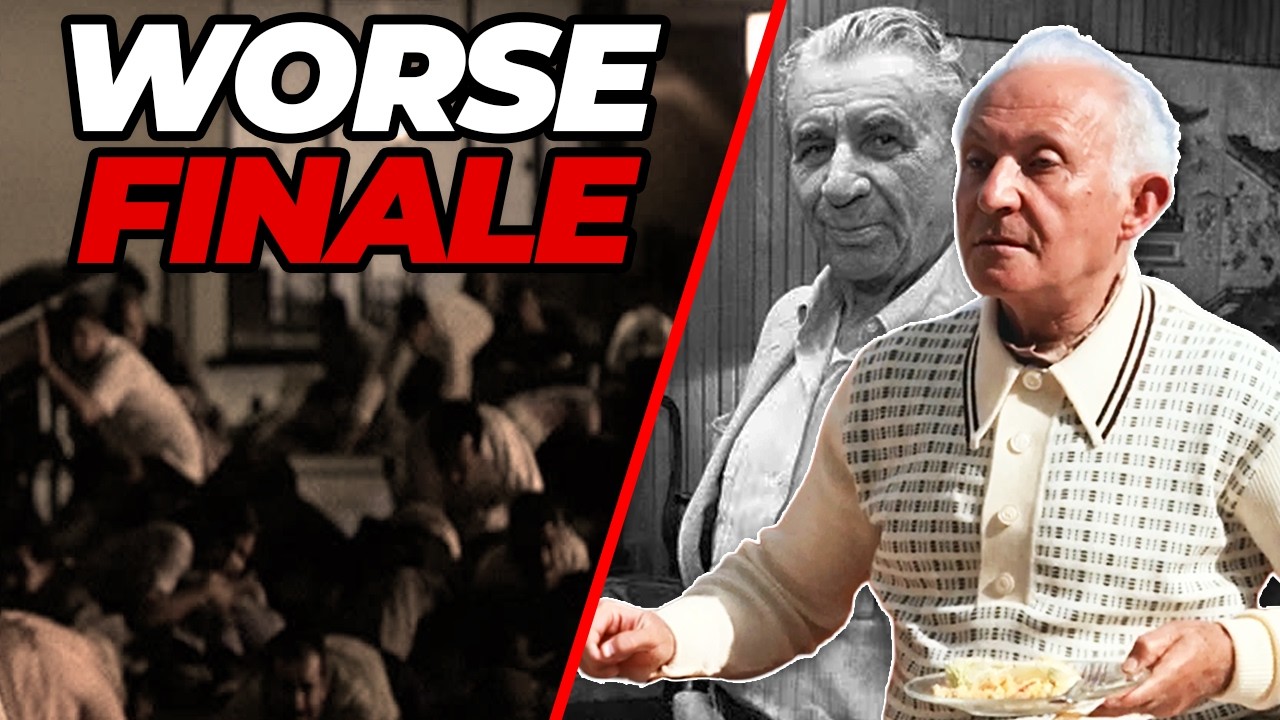
Siegel would later be known as Bugsy, though nobody called him that to his face. The two were inseparable almost immediately. They moved from dice games to auto theft and then into bootlegging once Prohibition arrived. By the early 1920s, they had formed what became known as the Bugs and Meyer mob, one of the most violent bootlegging outfits in the city.
It also operated as a murder-for-hire service that historians consider the prototype for what later became known as Murder Inc. Around the same time, Lansky crossed paths with another young hustler named Charles Luciano. The most repeated story goes that Luciano tried to shake Lansky down for protection money on his walk home from school. Lansky refused to pay, and Luciano, impressed by the kid who would not fold, became his friend instead.
Together, Lansky, Siegel, and Luciano spent the next decade transforming the mob from a collection of competing street gangs into an organized national operation. In 1929, Luciano organized a conference in Atlantic City with help from Lansky, Johnny Torrio, and Frank Costello. Out of that meeting came the foundation of what would later be called the National Crime Syndicate, a multi-ethnic network of Italian, Jewish, and Irish criminal organizations designed to pool resources, divide territory, and settle disputes without open warfare. Before this, the mob was a collection of warring gangs.
After this, it operated more like a business. Lansky ran the money side, and other bosses trusted him because he knew how to move cash and keep it hidden while it grew. The FBI once said he would have been chairman of the board of General Motors if he had gone into legitimate business. When Prohibition ended in 1933, the bootlegging money dried up, but Lansky had already seen what came next: gambling.
By 1936, he had operations running in Florida and New Orleans, and he had started looking ninety miles south at Cuba. Lansky built a relationship with Fulgencio Batista, the Cuban dictator, that worked like a straight business deal. Batista allowed Lansky and other mobsters to run casinos in Havana with almost no interference. In return, Batista took a large cut of the revenue.
Under this arrangement, Lansky owned or held financial stakes in at least three major casinos on the island: the Havana Riviera, the Hotel Nacional, and the Montmartre Club. Cuba became the center of his gambling empire, and he poured his energy and money into Havana for over a decade. When Fidel Castro came to power in 1959, nationalizing the casinos and outlawing gambling, Lansky lost the casinos, the political relationships, and the entire gambling network he had spent more than a decade building. He kept moving, returning to the Bahamas and building new casino operations on Grand Bahama and Paradise Islands throughout the 1960s.
The partnership with Siegel, however, had already come to a violent end years earlier in the Nevada desert. Siegel had gone west, first to Hollywood and then to Las Vegas, and Lansky backed him financially. In the mid-1940s, Siegel saw an opening. William Wilkerson, a Hollywood nightlife figure, had started building the Flamingo Hotel and Casino in Las Vegas.
Siegel pushed his way into the project and eventually took it over. The original budget was one and a half million dollars, but by the time the Flamingo opened in late 1946, the cost had hit six million, most of it syndicate money from the East Coast. Siegel had been skimming off the top, overspending on construction, and keeping records so bad that nobody could tell where the money was actually going. His girlfriend, Virginia Hill, was reportedly funneling stolen funds into European bank accounts.
The syndicate bosses were furious. A meeting was held in Havana in 1946 with Luciano himself attending from exile. The question was simple: should Siegel be killed? What happened next depends on who you believe.
Some accounts say Lansky argued against the execution, wanting Siegel to have more time and believing the Flamingo could still work. Other sources, including Britannica, say Lansky ordered the execution himself after Siegel kept burning through syndicate money. Either way, the result was the same. On June 20, 1947, Siegel was shot and killed through the window of his Beverly Hills home.
Shortly after, three of Lansky’s associates walked into the Flamingo and announced a change in management. The property eventually became a money machine for Las Vegas and generated income for Lansky and his partners for the next twenty years. But Siegel was dead at forty-one. Lansky said in interviews later in life that if it had been up to him, Siegel would still be alive.
For over two decades after Siegel’s death, Lansky stayed in the game without ever becoming a household name. He avoided the spotlight the way other bosses avoided indictment. But by 1970, the federal government had finally caught up. Lansky was indicted on tax evasion charges, and instead of standing trial, he ran.
He flew to Israel and settled in the coastal town of Herzliya Pituah. He applied to stay permanently under the law of return, which allows anyone of Jewish descent to settle in Israel. The Israeli government, under heavy pressure from Washington, denied his application. Lansky fought the decision in court, but in 1972, he was deported back to the United States.
He had wanted to be buried beside his grandfather on the Mount of Olives in Jerusalem. Instead, he was put on a plane back to the country that had been building a case against him for years. In real life, nobody killed Meyer Lansky. He came back to the United States, stood trial for tax evasion, and was acquitted.
Some of the remaining charges against him were dropped because of his declining health. After the trial, he went home to Miami Beach. The man the FBI had been chasing for decades moved into a second-floor apartment at the Imperial House on Collins Avenue and started living like a retired accountant. Every morning at six, when Collins Avenue was still empty, Lansky walked his dog along the sidewalk.
He drove a Chevrolet. He ate regularly at Wolfie’s, the deli on Collins Avenue where half of Jewish Miami Beach went for pastrami and cheesecake. He borrowed books from the public library. Time magazine described him as barely five and a half feet tall in elevator shoes.
The mob never came for him. He just got old. When Meyer Lansky died of lung cancer at Mount Sinai Hospital in Miami Beach on January 15, 1983, his total personal assets came to $58,401. 67.
That is not a rough estimate; that is what the estate records showed. His hospital bills at the time of death were $16,000, and the federal Medicare program covered most of it. The man the FBI once claimed was worth $300 million died on government health insurance. His second wife, Teddy, went on 60 Minutes in 1989 and called the $300 million claim preposterous and ridiculous.
Whether she was telling the truth or protecting hidden money is something nobody has been able to prove either way. Lansky’s eldest son, Buddy, had been born with cerebral palsy in 1930. The disease crippled him gradually over the years. He had worked for a while as a switchboard operator at a motel in Sunny Isles, just north of Miami Beach, but eventually the condition got too bad to work.
Lansky set up a trust to pay for Buddy’s care. Three years after Lansky died, the trust ran out of money. If there were hidden millions buried somewhere, nobody used them to keep Buddy Lansky out of a county nursing home. Buddy was moved to Arch Creek Convalescent Home, where his care was covered by social security and fifty dollars a month in county funds.
In 1989, six years after his father’s death, Buddy stopped eating. He turned his face toward the wall and refused food and water. Two days later, he was dead. He was buried beside his father at Mount Nebo Cemetery in Miami Beach.
The Godfather Part II took Lansky’s real history and squeezed it down. Cuba, which had been a decades-long operation for Lansky, became one deal in the film. Siegel, his lifelong friend and partner, was reduced to a single monologue. In the film, Hyman Roth is assassinated at the Miami Airport by one of Michael Corleone’s men, a violent public execution modeled after the killing of Lee Harvey Oswald.
The real ending had none of that. The real story was the library books, the deli food, the Chevrolet, and the son who turned his face to the wall. That is a story no screenplay could sell, because it is quiet and ordinary and genuinely sad.
None of it works as a final act in a movie about Sicilian revenge.