On the morning of November 20, 1944, near the German border in eastern France, Sergeant Francis Baker leaned inside the turret of his M4 Sherman tank. This was the upgraded model, fitted with the new 76mm gun that the Army Ordnance Department had promised would change everything. Through his scope, he watched a German Mark V Panther tank emerge from the trees about 800 yards away, its long gun slowly traversing in search.
Baker’s crew had trained on this new weapon system for weeks. The briefings were clear, even emphatic. This gun would handle anything the Germans had. There would be no more moments of helplessness watching shells bounce off enemy armor. No more suicidal flanking maneuvers that left American tanks burning in French fields.
Baker gave the order. The gunner, well-trained and steady, placed the first round precisely on the exposed side of the Panther, which was fully visible through the sight at that range. Baker watched, expecting the familiar secondary explosion and the distinctive smoke of a successful kill. Instead, to his astonishment and deep disappointment, he watched the armor-piercing round ricochet off the side of the German tank.
The gunner fired again and again. Six more rounds struck the Panther, hitting everything from the turret to the track. Every impact was visible, and every result was the same. Seven direct hits, seven failures. The German tank, apparently realizing it faced a more serious threat than the standard 75mm Sherman, withdrew from the engagement.
Baker sat in the commander’s position, watching the Panther leave after taking seven hits. From the newest American tank gun, the weapon that was supposed to restore parity to armored warfare in Europe, something had gone fundamentally wrong with the promises made to American tank crews.
This moment of astonishment, repeated in dozens of engagements during the fall and winter of 1944, marked more than a tactical setback. It represented the collapse of institutional promises made to men whose lives depended on their equipment performing as advertised. The 76mm gun had arrived in Europe wrapped in guarantees from the highest levels of Army command. Senior officers had staked their reputations on claims that this weapon would eliminate the deadly disadvantage American armor faced against German heavy tanks.
The story of the 76mm gun does not begin with its failure in combat, but with the desperate circumstances that called for its creation. By the spring of 1944, American armored forces preparing for the invasion of Europe realized they had a major problem. The standard M4 Sherman, the backbone of American armored doctrine, carried the M3 75mm gun that had proven adequate in North Africa against Panzer IIIs and early Panzer IV models.
The gun fired an acceptable high-explosive round for infantry support. Its armor-piercing ammunition could defeat most German armor encountered in the Mediterranean theater. Tank crews and their commanders had gained confidence in the weapon system through repeated successful engagements.
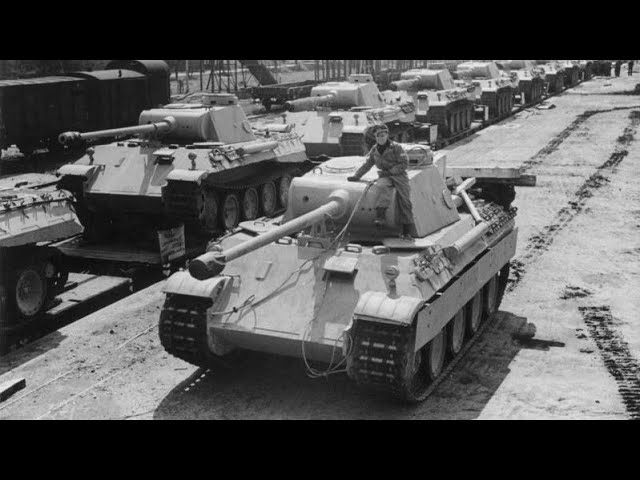
But intelligence reports coming from the Eastern Front and German-occupied Europe painted a troubling picture of enemy armor developments. The Germans had introduced the Tiger I heavy tank, armed with an 88mm gun behind armor up to 100mm thick on the hull front and turret. This vehicle outclassed every tank in the American arsenal in firepower and protection. More concerning were reports of a new medium tank, the Panther, which combined heavy armor protection with high mobility and a high-velocity 75mm gun that could penetrate American tanks from distances exceeding 2,000 meters.
American tank doctrine at the time focused on the Sherman as a mobile infantry support vehicle rather than a specialized tank destroyer. The Army maintained separate tank destroyer battalions equipped with specialized vehicles carrying more powerful guns, with the specific mission of defeating enemy armor. Shermans were expected to exploit breakthroughs, support infantry attacks, destroy fortifications, and engage enemy armor only when necessary, preferably from advantageous positions.
This doctrinal framework reflected both tactical theory and an honest assessment of the Sherman’s capabilities with its standard 75mm gun. The weapon excelled at its primary mission of supporting infantry operations, but it was of limited effectiveness against the frontal armor of German heavy tanks. The recognition of this shortcoming led to the development of an improved gun system.
American ordnance engineers designed the M1 76mm gun. It was essentially a high-velocity weapon with ballistics matching the 3-inch anti-tank gun already in service with tank destroyer units, but in a more compact form suitable for mounting in a modified Sherman turret. The new gun fired a longer, heavier projectile at a significantly higher muzzle velocity than the 75mm gun. The standard armor-piercing round for the 75mm M3 gun achieved a muzzle velocity of 2,030 feet per second. The 76mm M1 series fired its M79 armor-piercing round at 2,600 feet per second, an increase of over 25 percent that translated directly into improved penetration performance.
On paper, the improvement looked substantial. The 75mm gun could penetrate about 60mm of armor plate sloped at 30 degrees from vertical at 1,000 yards. The 76mm gun firing the same type of capped armor-piercing ammunition could penetrate about 109mm under similar conditions, nearly double the penetration capability. Army Ordnance conducted extensive tests at the Aberdeen Proving Ground, firing both guns at sample armor plates under controlled conditions. The test results supported the conclusion that the 76mm gun would be effective against German heavy armor at combat ranges.
Ordnance officials reported to senior commanders that the new gun would handle anything the Germans had in their arsenal. This assurance carried enormous weight with combat units preparing for Operation Overlord. Tank battalion commanders who received briefings on the new gun system heard categorical promises about its capabilities. The 76mm gun was supposed to defeat Tigers and Panthers. It would restore tactical parity in tank-to-tank engagements. It would eliminate the need for desperate flanking maneuvers that exposed American tanks to devastating German fire.
These promises shaped military planning and doctrine. Tank units expected the 76mm gun to radically change the tactical calculations of armored warfare in Europe. Crews trained on the new system gained confidence that upgraded Shermans could engage German heavy armor on equal terms. The psychological impact of these assurances proved as important as the intended tactical advantage.
The first 76mm-armed Shermans arrived in the European theater in April 1944. They were shipped across the Atlantic in time for final preparations before the Normandy invasion. These upgraded tanks featured a noticeably different silhouette from standard Shermans. The longer gun barrel extended further forward, creating a more aggressive appearance that suggested improved combat capability. The modified turret, enlarged to accommodate the bigger gun and its recoil mechanism, looked bulkier than the standard Sherman turret.
Tank crews examining the new tanks could immediately distinguish the upgraded models through these visible differences, but unit commanders displayed a curious reluctance to accept them despite their supposedly superior capabilities. This reluctance reflected considerations that seemed logical given the information available at the time. The 76mm gun fired a smaller high-explosive round than the 75mm gun. The standard 75mm HE round contained 1.47 pounds of explosive filler. The 76mm round contained only 0.86 pounds, roughly half the explosive power.
Since Shermans spent most of their combat time engaging non-armored targets, supporting infantry attacks, destroying fortifications, and eliminating German anti-tank guns, the reduced explosive performance represented a real tactical drawback that affected the tank’s primary mission more than the improved armor penetration affected its secondary role. Logistical concerns also influenced the decision-making process. Introducing a new gun system meant creating separate supply chains for different types of ammunition. Tank battalions would need to stock and distribute both 75mm and 76mm rounds, complicating the task of supplying front-line units during mobile operations.
Most importantly, many commanders believed the 75mm gun remained adequate for expected combat missions. American forces had not yet encountered German Tigers or Panthers in significant numbers. Briefings still focused on Panzer IVs, which the 75mm gun could engage effectively. Combat experience in North Africa and Italy suggested that well-trained crews could defeat German armor with existing weapons. The pressing need for improved anti-armor capability remained theoretical rather than proven through battlefield experience.
This argument convinced enough senior commanders that when Operation Overlord began on June 6, 1944, no 76mm-armed Shermans landed on the beaches of Normandy. The invasion forces deployed with standard 75mm Shermans, the reliable system that had served adequately in previous campaigns. Tank battalion commanders rejected the upgraded weapon, preferring familiar equipment over unproven improvements that carried real tactical drawbacks in reduced explosive power.
Even direct attempts to interest Third Army commander General George Patton on June 12 failed. After inspecting the new tanks, Patton’s subordinate commanders showed a collective reluctance to replace 75mm guns with 76mm guns in any significant quantity. The report of that meeting recorded the prevailing attitude clearly: all commanders were reluctant to see the 76mm gun replace the 75mm tank gun in any quantity. This represented a considered professional judgment from experienced officers who understood their tactical requirements and believed their existing equipment was adequate to meet them.
The German forces waiting behind the Normandy beaches deployed armor that bore little resemblance to what American tank crews had faced in the Mediterranean theater. The German Army had concentrated its most modern and capable tanks in France. Recognizing that the inevitable Allied invasion represented the decisive battle that would determine the outcome of the war in the West, Panzer divisions re-equipping after heavy losses on the Eastern Front received priority allocation of the new Tiger and Panther tanks. German commanders intended to defeat the invasion at or immediately behind the beaches through concentrated armored counterattacks using their strongest equipment.
American tank crews armed with 75mm guns, having rejected the improved weapon system designed specifically to counter this threat, would discover their terrible mistake within days of pushing inland from the landing beaches. The psychological aspect of this decision deserves particular emphasis. The institutional promises about 76mm gun capabilities created a safety net in planning assumptions. Even commanders who chose not to accept the upgraded tanks believed those weapons existed and could be requested if battle conditions proved more difficult than expected.
The availability of the 76mm gun as a reserve capability provided reassurance that influenced risk assessment and tactical planning. If Panthers and Tigers appeared in unexpected numbers, American forces could respond by deploying the weapon system designed specifically to counter them. This backup option meant the decision to deploy with 75mm guns carried acceptable risk within reasonable planning assumptions.
But this logic depended entirely on the 76mm gun actually performing as advertised. The institutional promises supporting these decisions assumed that Army Ordnance had accurately assessed the new weapon’s capabilities through rigorous testing against representative armor samples. Tank commanders making equipment decisions trusted that technical experts understood the challenges and developed appropriate solutions. The entire framework of planning, doctrine, and tactical confidence rested on the foundation that those promises would prove accurate when tested in combat.
American armored forces advancing inland from the Normandy beaches faced terrain that nullified many of the Sherman’s advantages while exacerbating its weaknesses. The bocage country of Normandy consisted of small agricultural fields surrounded by ancient earthen embankments topped with dense hedgerows, creating a maze of natural fortifications that channeled movement into predictable lanes and offered countless ambush positions for defenders. German anti-tank guns, positioned behind these barriers, remained invisible until the moment of firing, often at distances measured in tens of meters rather than hundreds.
In this nightmare terrain, American tank crews discovered that their 75mm guns could not penetrate the frontal armor of German Panthers and Tigers at any range. This realization came through repeated, costly engagements where American tanks would take position, achieve what seemed like optimal firing solutions, and then watch their armor-piercing rounds bounce harmlessly off German heavy armor. The psychological impact of this discovery was devastating. Crews had trained with complete confidence that their weapons could damage enemy tanks. Combat doctrine assumed that achieving surprise and firing first would produce decisive results.
The 2nd Armored Division received a particularly harsh lesson during the First Army’s breakout battles in July and August 1944. Tank crews learned through dire necessity how to fight Panthers and Tigers with their inadequate 75mm guns. The tactics developed from this harsh school required wide flanking movements, where one platoon occupied the enemy’s attention from the front while another attacked from behind. Damage could be inflicted on German heavy tanks from the sides and rear, where armor was thinner and angles less severe. But executing these flanking maneuvers under fire across terrain that restricted movement and visibility resulted in appalling casualties.
Statistics from that period reveal the human cost of fighting with inferior weapons. Between July 26 and August 12, 1944, one tank battalion of the 2nd Armored Division lost 51 percent of its fighting personnel killed and wounded. Seventy percent of its tanks were destroyed or evacuated for major depot-level repairs, requiring complete rebuilding. These losses did not result from overwhelming enemy numerical superiority or tactical incompetence. They reflected the physical reality of engaging German heavy armor with weapons that could not penetrate from the front, forcing American crews to take exposed flanking positions where German guns could destroy Shermans with terrifying efficiency.
The institutional response to these combat reports moved with a bureaucratic slowness that seemed merciless to the men dying in the hedgerows of France. Tank commanders submitted urgent requests for the 76mm-armed Shermans that had been rejected before the invasion. After-action reports documented the tactical problem with increasing urgency. Combat units needed improved anti-armor capability immediately, not after the campaign ended. But the logistics of shipping tanks across the Atlantic, distributing them to combat units, and integrating them into battalions already engaged in ongoing operations meant that the upgraded Shermans arrived gradually rather than in the massive emergency allocation front-line commanders demanded.
By November 1944, roughly half the Shermans in the 2nd Armored Division were equipped with the 76mm gun. The upgraded tanks arrived accompanied by renewed promises about their capabilities. Army Ordnance confirmed that tests had proven the 76mm gun adequate against German heavy armor. This weapon would restore the tactical balance. Crews could engage Panthers and Tigers with confidence that their ammunition would penetrate armor at combat ranges.
The first major combat test of American confidence in the 76mm gun came during Operation Royal River beginning in November 1944. The 2nd Armored Division, now equipped with substantial numbers of upgraded Shermans and limited quantities of newly issued HVAP tungsten-carbide ammunition, prepared to attack German defensive positions in difficult terrain. The new HVAP rounds, designated M93, achieved even higher velocities than standard armor-piercing ammunition. Army tests claimed this ammunition could penetrate the Panther’s front hull plate at 300 yards, with nearly a 1-in-4 chance of penetrating the sloped frontal armor at 200 yards.
The Battle of Bovendorf on November 17 proved particularly significant in exposing the gap between promised performance and actual results. German forces defending the town positioned their tanks in strategic locations that exploited terrain preventing the flanking maneuvers American tactics depended upon. The engagement became a tank-on-tank confrontation, with infantry on both sides pinned down by artillery fire that made coordinated joint operations impossible. This scenario represented exactly the situation where the 76mm gun’s improved penetration capability should have provided a decisive advantage.
The results were deeply troubling. Crews firing at Panthers observed hits that should have penetrated according to ammunition test data, but they instead watched their rounds fail to penetrate German armor. The 76mm gun could damage Panthers from the sides and rear, confirming that the weapon possessed adequate penetration power in absolute terms. But frontal engagements at the ranges where tank battles actually occurred produced inconsistent results that seemed to contradict the promises made about the weapon’s capabilities. Some hits penetrated, while others failed despite similar range and impact angle. Performance seemed erratic and unreliable, radically different from what tests had predicted.
This inconsistency reflected a problem in metallurgy that Army Ordnance either failed to detect during testing or failed to adequately communicate to combat units. American armor-piercing ammunition of that period used relatively soft-nosed projectiles. When these projectiles struck armor at certain velocities, the soft nose would shatter on impact rather than penetrate. This phenomenon, called the shatter gap, occurred within a specific velocity range where the projectile retained enough energy to theoretically penetrate but struck with enough force to cause catastrophic failure of the projectile itself before penetration occurred.
For the M62 armor-piercing round of the 76mm gun striking the driver’s plate of a Tiger tank, this shatter gap caused penetration failures between 50 and 900 meters. Within this distance range, which encompassed most typical tank battle ranges, the ammunition would fail unpredictably despite possessing sufficient energy to penetrate under ideal conditions. Technical specifications promised certain performance. Metallurgical reality delivered far less reliable performance.
American tank crews discovered this problem not through official briefings or technical bulletins, but through watching their rounds fail to penetrate German armor. They had been assured the weapon would deliver victory. The psychological impact of this discovery cannot be overstated. Tank crews entering combat with the 76mm gun had been promised a weapon that would handle anything the Germans had. They trusted institutional assurances that tests had validated these claims. The weapon’s failure to perform as advertised, especially in frontal engagements that represented the most dangerous and desperate combat situations, destroyed confidence in the Army’s technical expertise and created deep skepticism about whether any official claims regarding equipment performance could be trusted.
Sergeant Francis Baker’s engagement on November 20 represented one case among dozens where experienced crews fired upgraded weapons at targets within their theoretical effective range, only to watch American ammunition fail against German armor. Baker’s seven hits on the Panther, all striking the side where armor was thinner and angles less severe than frontal protection, should have produced at least one penetration. According to ammunition test data, the complete failure to inflict any damage with seven accurate hits proved that something was fundamentally wrong with either the ammunition, the testing methodology, or the institutional process that converted test results into combat capability assessments.
The introduction of HVAP ammunition, which was supposed to address the penetration problem through significantly higher velocity, arrived in such limited quantities that its tactical impact remained negligible. Tank destroyer battalions received allocation priority, leaving tank battalions with only a few HVAP rounds per gun. Crews hoarded these precious rounds for emergency use against the heaviest German armor, knowing that once expended, they would return to fighting with standard ammunition whose limitations had been thoroughly documented through bitter experience. The scarcity of improved ammunition reinforced the perception that the institution had promised capabilities it was unable to actually deliver.
The disconnect between institutional promises and battlefield reality reached the highest levels of American command during the summer fighting in Normandy. General Dwight Eisenhower, Supreme Allied Commander in Europe, received briefings on 76mm gun capabilities that matched the optimistic assessments Army Ordnance had provided to tank units. When combat reports began documenting that the new gun could not reliably defeat Panthers from the front, Eisenhower’s reaction revealed how deeply institutional failure had permeated command decision-making at every level.
General Omar Bradley, First Army commander during the Normandy campaign, recalled Eisenhower’s astonishment when the truth about the 76mm gun’s limitations became undeniable. The Supreme Commander had built operational planning on assumptions about American tank capabilities that combat had proven false. Eisenhower confronted Bradley in language stripped of the technical qualifications and bureaucratic hedging that usually characterized official statements. “You mean our 76 won’t knock these Panthers out?” Eisenhower demanded, his frustration evident. “Why, I thought it was going to be the wonder weapon of this war.”
The General’s next words carried a sense of betrayal that transcended mere tactical disappointment. “Why is it that I am always the last to hear about these things? Ordnance told me this 76 would take care of any German armor there was. Now I find out you can’t knock anything out with it.” This was not merely anger at a weapon system that failed to meet specifications. It was the realization that the entire institutional process of evaluating and equipping had produced assessments bearing no relation to combat reality. The Supreme Commander had made strategic decisions, allocated resources, and accepted operational risks based on technical assurances that proved completely inaccurate when tested against German armor.
The Army Ordnance Department’s response to these complaints revealed an institutional defensiveness that further eroded confidence. Technical experts pointed out that tests had been conducted under controlled conditions against representative armor samples. Testing methodology followed established protocols. The data supported the reported results. If combat results differed from test results, perhaps combat conditions introduced variables that testing could not simulate. This response, while technically defensible, missed the essential point that combat commanders desperately needed to understand. Tests that cannot predict actual combat performance have no value, regardless of how rigorously they follow correct methodology.
The practical reality faced by American tank crews by late 1944 combined inadequate weapons with declining German tank quality in ways that produced complex tactical situations. German armor production peaked despite intensive Allied bombing, with factories producing substantial numbers of Panthers and Panzer IVs even as resources grew scarce and facilities operated under constant aerial threat. But quality control suffered as Germany dispersed manufacturing to smaller facilities, employed increasingly unskilled forced labor, and used lower-grade material substitutes when strategic resources became unavailable. Some German tanks reaching the front suffered mechanical problems, poorly fitted components, and armor of inconsistent quality that sometimes failed at lower thresholds than tests predicted.
This variability meant American crews sometimes achieved penetrations that seemed to contradict the general pattern of ammunition failure. A Sherman crew might fire at a Panther and achieve a frontal penetration that destroyed the German tank, then engage another Panther under similar conditions and watch their rounds bounce harmlessly off seemingly identical armor. This unpredictability proved psychologically devastating because it prevented crews from developing reliable tactical understanding. They could not determine whether their weapons would be effective except by firing in actual combat, where failure meant death without opportunity to adjust their approach.
The institutional response to this crisis developed slowly through the fall and winter of 1944. The M26 Pershing heavy tank, armed with a 90mm gun capable of defeating German heavy armor, existed in limited initial numbers but faced resistance from senior commanders who questioned whether American forces needed heavy tanks given the tank destroyer doctrine that assigned anti-armor missions to specialized units. Production priorities favored Sherman variants that could be manufactured in greater quantities and maintained through existing supply chains, rather than introducing entirely new vehicle types that would complicate logistics.
This left American tank crews fighting through the final year of the war with weapons they knew were inadequate, relying on numerical superiority and tactical skill to overcome material disadvantages that should never have existed had institutional promises reflected actual capability. American tank crews, facing the grim reality of fighting with inadequate weapons, developed survival tactics born of necessity rather than doctrine. These methods emerged from the collective experience of men who realized that institutional promises had failed them, and that survival depended on adapting to material disadvantages through superior tactics, coordination, and acceptance of calculated risks.
Knowledge spread through informal channels as veteran crews passed lessons to replacements in conversations that bore no resemblance to official training manuals. Veterans taught newcomers the harsh lessons that made the difference between returning from a mission and burning inside a destroyed Sherman. The fundamental tactical principle became simple and brutal. Never engage German heavy armor from the front if any alternative existed. Crews learned to identify Panthers and Tigers at maximum visual range using distinctive silhouettes and the longer gun barrels that characterized enemy heavy tanks.
When these threats were spotted, a Sherman platoon would immediately attempt to maneuver for flank shots, using terrain, buildings, and vegetation to conceal their movements while circling to the sides or rear where German armor was thinner and less angled. One platoon would fix the enemy’s attention with harassing fire and constant movement, accepting the risk of return fire that could destroy Shermans with a single hit, while the second platoon executed the flanking maneuver that offered the only realistic chance of achieving destruction. This doctrine required exceptional coordination and communication between tank commanders, who often operated outside mutual visibility in terrain that restricted observation.
Artillery support proved essential in engagements where maneuver alone could not achieve favorable conditions. Tank commanders learned to request direct-fire missions against German armor using high-explosive rounds to damage vision devices, disable tracks, destroy external equipment, and suppress German crews even when armor penetration was impossible. A Panther immobilized by artillery fire became a stationary fortress rather than a mobile threat, changing the tactical calculus and allowing American tanks to maneuver with greater safety. A Tiger temporarily blinded by artillery strikes near its vision devices lost its primary advantage of long-range accuracy, forcing German crews to button up and fight with limited visibility while American tanks closed to distances where even 75mm guns could achieve damaging hits on vulnerable components.
Air support represented another vital capability American forces exploited to compensate for their armor deficiencies. Fighter-bombers armed with rockets and bombs could destroy German tanks that ground forces could not engage effectively. Tank crews learned to mark targets using smoke rounds or tracer fire, directing air strikes against Panthers and Tigers that dominated key terrain or blocked vital avenues of advance. Ground-air coordination evolved into a sophisticated system that exploited American superiority in air power to compensate for limitations in ground equipment.
The psychological consequences of fighting with inferior weapons manifested in multiple ways across American armored units. Crews developed fatalistic attitudes toward their survival prospects, recognizing that encountering German heavy armor often meant watching friends die in burning tanks while their own weapons were incapable of preventing the carnage. Replacement crews arriving at front-line units received brutally candid assessments from veterans about the tactical situation and their equipment’s limitations. The official optimism that characterized training in the United States vanished completely in combat units, where men realized that institutional promises meant nothing compared to the physical reality of German 88mm guns that could destroy Shermans from ranges where American return fire was ineffective.
Tank commanders accepted that accomplishing missions often required sacrificing tanks and crews to achieve objectives. The mathematics of attrition became a standard consideration in planning. If destroying one Panther required losing two or three Shermans, commanders calculated whether the exchange ratio justified the attack based on operational necessity. This was war reduced to its most brutal arithmetic, where human lives translated into acceptable costs measured against tactical requirements. The men making these calculations knew they were condemning specific crews to probable death. But the alternative of refusing engagement meant allowing German armor to operate freely, resulting in even greater casualties among American forces lacking adequate anti-armor capabilities.
The failure of the 76mm gun to deliver promised capabilities exemplified a broader pattern that characterized American equipment development and deployment throughout the war. The institutional processes of weapons testing, performance evaluation, and procurement decision-making produced assessments that diverged dramatically from combat reality in ways that harmed American forces and cost unnecessary lives. The specific case of Sherman armament illustrated systemic problems rather than representing an isolated technical error.
Understanding why the institution failed so comprehensively requires examining the incentive structures, organizational cultures, and decision-making frameworks that guided American military procurement during World War II. The Army Ordnance Department operated under tremendous pressure to deploy equipment rapidly while maintaining quality standards and incorporating lessons from ongoing combat operations. These competing demands created situations where technical experts provided optimistic assessments of weapon performance based on tests that could not fully simulate combat conditions.
Aberdeen Proving Ground tests, conducted against sample armor plates mounted on fixed frames and fired upon from measured distances under ideal conditions, produced data supporting specific penetration claims. But these tests did not account for variables such as ammunition quality, mass-production variation, metallurgical inconsistencies in armor plates, the shatter gap phenomenon that caused ammunition failure at certain impact velocities, or the complex angles and deflection characteristics that occurred in actual combat engagements. Institutional culture discouraged dissenting views that challenged official assessments. Officers who questioned advertised performance of new weapons risked accusations of defeatism or professional timidity. The bias toward optimistic assessment reflected both genuine patriotic desire to believe in American equipment superiority and organizational incentives that rewarded positive evaluations over skeptical caution.
Once senior commanders made decisions based on specific capability claims, subordinates faced pressure to validate those decisions rather than highlight problems requiring costly and embarrassing course corrections. The result was a systemic tendency toward overestimating performance and under-acknowledging limitations until combat forced the institution to confront uncomfortable realities. The contrast with German armor development illustrated a different approach to the same technical challenges. German engineers designed the Panther and Tiger with clear understanding that armor protection and firepower represented decisive advantages worth significant trade-offs in other areas. Both tanks were expensive to produce, mechanically complex, difficult to maintain, and consumed fuel at rates that strained German logistics. But they achieved the primary design goal of dominating tank combat through superior armament and protection.
German tank crews fighting against Shermans possessed justified confidence that their equipment enjoyed decisive advantages in the performance categories that determined combat outcomes. American military doctrine emphasized different values reflecting divergent strategic circumstances and industrial capabilities. The United States possessed enormous manufacturing capacity capable of producing Shermans in quantities that made numerical superiority compensate for individual tank performance deficiencies. American supply networks could sustain logistics chains that kept tanks operational despite mechanical complexity that would have paralyzed German forces. American training programs could produce sufficient tank crews faster than German forces could attrite them.
The strategic calculation rested on quantity and sustainability being more important than individual vehicle performance, and that attempting to match German heavy tank specifications would reduce production numbers and strain logistics in ways that negated tactical advantages. This calculation proved strategically correct, despite the terrible human cost borne by tank crews. By late 1944, German armor production, despite its remarkable resilience under bombing, could no longer replace losses at the rates needed to maintain army strength. Experienced German tank crews, increasingly irreplaceable after years of attrition, grew ever scarcer. German logistics struggled to provide fuel and supplies for the heavy tanks that remained operational.
American forces advanced steadily through France and into Germany despite their equipment deficiencies because they possessed overwhelming superiority in numbers, supply, air support, and trained personnel that German tactical brilliance could not overcome. The 76mm gun’s failure to deliver promised performance mattered enormously to individual crews who paid with their lives for institutional errors. But it did not matter strategically, because American victory never depended on achieving parity in tank performance.
Statistical facts support this harsh assessment. American factories produced approximately 50,000 Shermans of all variants. During the war, German industry built 1,347 Tiger I tanks, 492 Tiger II tanks, and approximately 6,000 Panthers. This numerical disparity meant that even with favorable exchange ratios, German armor faced inevitable defeat through attrition. American tank crews understood this strategic truth even as they fought daily tactical battles where their equipment deficiencies proved potentially fatal. Knowing that their side would ultimately win the war provided little comfort to men who might not live long enough to witness that victory because their institutions had failed to equip them adequately.
The human cost of fighting with inferior weapons is difficult to measure precisely, as casualties resulted from complex interactions of multiple factors rather than single causes. But the 2nd Armored Division’s losses between July and August 1944 provide a representative indicator of the price paid by American tank crews. Fifty-one percent casualties among fighting personnel, 70 percent of tanks destroyed or requiring depot-level repairs. These figures reflect the reality of fighting German armor with weapons that could not engage effectively from the front, forcing American crews into exposed flanking positions where German guns could destroy Shermans with confidence. How many of these losses could have been avoided had American tanks possessed weapons that performed as promised remains an unanswerable but haunting question.
The M26 Pershing heavy tank, armed with the 90mm gun capable of reliably penetrating German heavy armor from the front, finally reached Europe in the final months of the war. The first Pershings arrived at combat units in February 1945, roughly eight months after D-Day and only months before Germany’s surrender. This vehicle represented what American tank crews had desperately needed since Normandy, a tank capable of engaging Panthers and Tigers on equal terms without requiring desperate flanking maneuvers that cost lives. But the Pershing arrived too late and in numbers far too limited to significantly affect the war’s outcome or save the thousands of American soldiers who fought and died with inadequate equipment.
The delayed introduction of the Pershing illustrated the institutional resistance that had delayed heavy tank deployment throughout the conflict. Senior American commanders, influenced by the tank destroyer doctrine that assigned anti-armor missions to specialized vehicles rather than tanks, questioned whether American forces needed heavy tanks at all. Lieutenant General Leslie McNair, commander of Army Ground Forces, had specifically resisted Pershing development, arguing that the Sherman with the 76mm gun provided adequate capability and that tank destroyers would handle German heavy armor. McNair’s death in Normandy from friendly fire during Operation Cobra in July 1944 removed one obstacle to Pershing production. But institutional inertia and the complexity of introducing entirely new vehicle types into existing supply chains meant that even after approval, the tank did not reach combat units until most of the fighting was over.
Approximately 300 Pershings were deployed to Europe before Germany’s surrender. A tiny fraction of the American armored force. Most Sherman crews fought through the entire European campaign with 75mm or 76mm guns. They never received the equipment that could have restored tactical parity with German armor. The men who survived to see Pershings arrive at their units felt a kind of bitter vindication mixed with anger about how many lives could have been saved had the institution prioritized heavy tank development years earlier. The Pershing’s excellent combat performance in its limited engagements proved exactly what American tank crews had been denied.
The institutional failure represented by the false promises of the 76mm gun transcended the specific technical shortcomings of a single weapon system. It revealed fundamental problems in how the American military evaluated equipment, communicated capabilities to combat units, and responded to field feedback about performance gaps. Army Ordnance conducted tests, made specific capability claims, and assured senior commanders that the 76mm gun would handle anything the Germans had. When combat proved these assurances wrong, the institution responded defensively rather than acknowledging error and urgently developing solutions. This pattern of over-promising, under-delivering, and evading responsibility cost lives throughout the war across various equipment categories and theaters of operation.
The human dimension of this failure deserves final emphasis. Tank crews were not merely statistical figures or replacement ratios. They were young men, most barely out of their teens, who trusted that their country would equip them adequately for the dangers they faced. Sergeant Francis Baker, watching his seven hits fail to damage a Panther, felt a genuine betrayal of that trust. Every tank commander who ordered his crew into combat knowing his gun could not reliably penetrate enemy frontal armor carried a psychological burden that transcended tactical considerations. Every ammunition loader who handed 76mm rounds to the gunner knew the ammunition might fail despite official assurances of its effectiveness. Every driver who felt his Sherman shudder from enemy hits wondered whether his armor would protect him after institutional promises about other equipment had proven false.
These men fought bravely despite their equipment deficiencies, developing tactics and coordination that partially compensated for material shortcomings. They won their battles through courage, skill, and overwhelming numerical superiority that made American victory inevitable despite institutional failures in supply and testing. But victory achieved through unnecessary sacrifice carries a bitter taste that lingers for decades after the fighting ends. The 76mm gun represented American industry’s attempt to respond to a tactical problem. Its failure to deliver promised performance represented an institutional failure that cost unnecessary lives and created justified skepticism about whether official assurances could be trusted.
The broader lesson extends beyond World War II to every conflict where soldiers depend on institutions to provide equipment that works as advertised. Testing methodology must simulate combat conditions as accurately as possible. Performance claims must honestly acknowledge limitations. Procurement decisions must prioritize combat effectiveness over administrative convenience or rigid military doctrine. And institutions must respond to battlefield feedback with urgent action rather than defensive denial. These principles seem obvious, yet their violation appears repeatedly throughout military history, suggesting that organizational incentives and cultures consistently produce overly optimistic assessments that harm the soldiers who depend on accurate information.
The American tank crews who fought across France and Germany with 76mm guns accomplished their missions despite institutional failures, not because of institutional support. Their success reflected personal courage and professional competence that overcame material disadvantages they should never have faced. The story of the 76mm gun’s false promises honors their achievements while acknowledging the unnecessary costs imposed by institutions that promised capabilities they could not deliver. On that November morning in 1944, Sergeant Baker watched seven rounds bounce off a Panther and understood a truth no official assurance could obscure. The wonder weapon had failed, and survival would depend on tactics, luck, and the courage of men who fought knowing their weapons were inadequate for the threat they faced.