The photograph seemed to settle everything. John F. Kennedy Jr. kissed Carolyn Bessette’s hand outside a small island church, and America saw the ending it had wanted: a prince, a bride, and a private commitment free of scandal. Three years later, after their deaths, the same marriage was presented differently. It became a story of ruin, told through claims of cocaine, betrayal, violence, and an impending divorce. Which version was true? The image, or the tabloid books that followed?
Carolyn had a life of her own long before she sat beside America’s most talked-about man. Born in White Plains, New York, and raised in Greenwich, Connecticut, she grew up in a comfortable environment with her mother, stepfather, and twin sisters. That world was not the world of presidential myth. She studied elementary education at Boston University, a choice that showed no plan to marry a star.
After college, Carolyn proved herself in the fashion world. She joined Calvin Klein as a salesperson and later worked with high-profile clients, publicity, and show production. Colleagues described her as someone who understood people, could dress a client, and made powerful figures feel that her attention was entirely theirs. She was not just a pretty employee standing beside famous customers. She was building a reputation inside one of America’s most influential fashion houses.
Her success meant that meeting John did not rescue her from obscurity. It threatened to cover her hard work with a title. After her death, even her ordinary ambitions were reframed as evidence of a calculated rise. Her job became a hunting ground. Her confidence became manipulation. The fact that famous people liked her was treated as proof that she was looking for the most famous one of all. Those interpretations depended largely on hindsight.
Carolyn knew enough about fame to fear it. She had seen celebrities come and go at Calvin Klein, each one bringing extra attention, demands, and rumors. What she had not understood was the strange force around John Kennedy, whose face carried his father’s death, his mother’s legend, and decades of public expectation. Dating him was not like changing dinner plans. It gave strangers the right to define her.
That may explain the first mystery of their story. It is not how Carolyn won John. It is why a capable woman so aware of privacy accepted a relationship that threatened to consume her identity.
John had spent his entire life under observation. As a child, he saluted his father’s coffin before millions. As an adult, every romance was treated as a national audition. Journalists compared the women beside him to Jacqueline Kennedy, to political fantasy, and to a future First Lady role John never promised to create. His relationship with actress Daryl Hannah was long, public, and uncertain. It ended and restarted so many times that it is hard to say exactly when Carolyn entered his life.
Accounts of their first meeting differ. Some say they met during a Calvin Klein fitting. Others say they were introduced at a social event or through mutual friends. Later versions made the meeting seem almost destined. Harsher accounts portrayed Carolyn as someone who tried to get noticed, but there is no reliable evidence of a secret seduction plan. What is consistent is that John was interested, he wanted Carolyn, and Carolyn hesitated.
Their romance is generally dated to 1993 or 1994, while the aftermath of his relationship with Hannah was still unresolved. That uncertainty later gave writers an easy opening. If the beginning seemed complicated, the whole marriage could be described as deception. For Carolyn, being loved by John was both flattering and alarming. He offered warmth, humor, and entry into a dazzling world. But every step toward him moved her further from the ordinary privacy she wanted to protect.
Complication is not conspiracy. Carolyn entered a relationship where privacy depended more on John’s fame than on her wishes. A dinner could become a photograph in an instant. An argument could become a judgment of character. A bad week could be preserved forever by cameras waiting on the sidewalk.
On February 25, 1996, that danger became visible. A photographer captured John and Carolyn arguing in a Manhattan park. The footage is uncomfortable. John grabs her hand, tries to remove her ring, and the struggle becomes physical. At one point, he appears to push her. This scene was not invented by a tabloid writer years later. It happened in public, and the camera caught it.
What the camera could not capture was an agreed explanation. What started the argument, what the ring meant, and how typical this behavior was remain matters of dispute. Some later reports called the footage evidence of a violent relationship. Others described it as a terrible conflict between two people under abnormal pressure. A few minutes of video cannot prove either interpretation. The honest conclusion is more limited and more uncomfortable. John behaved aggressively in that moment. Carolyn was not merely performing distress for the media.
Still, one recorded fight cannot define every private day before or after it. It does not tell us whether aggression was part of their pattern, whether apologies were offered, or whether the couple saw the event the way outsiders did. Evidence of one incident is not a full picture of a marriage.
The footage also complicates the simple roles later assigned to them. Romantic versions made Carolyn a fragile woman destroyed by press pressure. Critical versions made her a controlling wife who disrupted John’s destiny. The footage supports neither clear image. It shows a woman in a posture of resistance and a man losing control. It also shows how quickly their most painful moments became public property.
Carolyn’s hesitation about John now seems less like drama and more like awareness. Loving him meant joining a system that rewarded open access and punished boundaries. John had learned to move through that system through experience. He could smile at photographers, joke with reporters, and walk at his own pace. Carolyn never acquired that skill. Her refusal was read as disdain, and her discomfort gave cameras more reason to wait.
Seven months after the park fight, the public saw a different scene. There was no shouting, no struggle, no visible fear. There was only John leaning toward Carolyn’s hand outside a church. One image did not erase the other, but for a time it dominated everything.
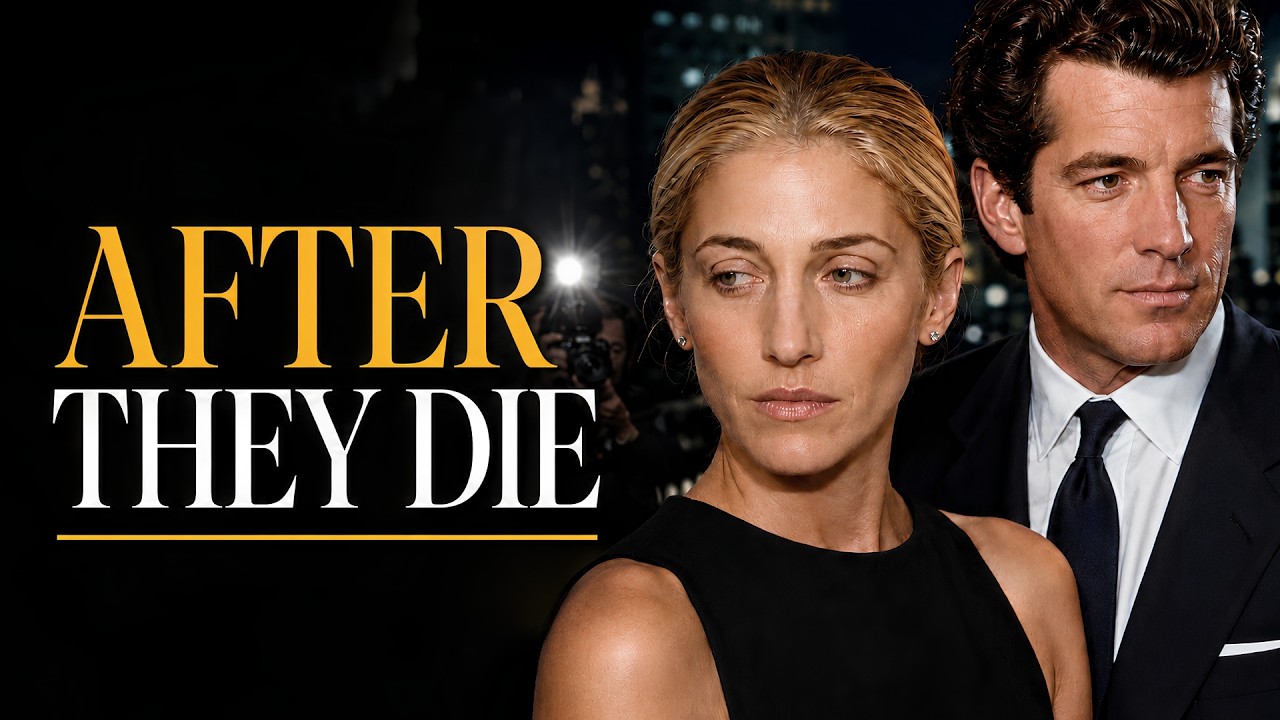
John and Carolyn married on September 21, 1996, at the First African Baptist Church on Cumberland Island, Georgia. About forty guests attended. The location was remote, the arrangements were tightly controlled, and the ceremony stayed hidden from the press until it was over. For a man whose family events had long been public property, this secrecy was a victory.
Photographer Denis Reggie captured the defining image of the day. Carolyn emerged from the small wooden church in a silk dress designed by Narciso Rodriguez. John took her hand and kissed it. The photo seemed spontaneous, and in some ways it was. But it was also a carefully chosen moment from a private event the couple had fought to keep personal. Guests later remembered intimacy more than grandeur: candlelight, a simple church, and relief that helicopters had not interrupted the vows.
For Carolyn, that quiet may have felt like proof that life with John could include rooms the public could not enter. The media presented them as American royalty. John was the heir to Camelot. Carolyn was the unknown woman who had won the prince. That idea did not come from the couple, and not all Americans accepted it. But it was too attractive to abandon. It gave magazines romance, glamour, beauty, and mystery on a single page.
The wedding arrangement contained a trap. John and Carolyn proved they could protect an intimate moment. In doing so, they created an image so appealing that demand for the next moment became even stronger. What happened inside the church belonged only to them. What the photos promised belonged to everyone, and that promise was hard to keep.
After the wedding, if Carolyn looked uncomfortable, she seemed to be failing the fairy tale. If she avoided interviews, she was called cold. If the couple argued, the marriage was assumed to be collapsing. The private wedding gave the media no drama, but its beauty ensured that searching for cracks in the relationship became even more valuable.
The couple’s home at 20 North Moore Street in Tribeca offered no protection like a secluded estate. Photographers regularly gathered outside the building, waiting for John or Carolyn to emerge. Even the walk to a car became a source of conflict. A glance, a raised hand, or an attempt to cover her face could be stripped of context and sold as a sensational story.
John publicly asked the media to give Carolyn some space. The request had moral weight but no practical power. Photos of the couple were valuable, and images suggesting tension often sold for more than images of ordinary happiness. Distress made a better story.
Carolyn refused to play the public role expected of her. She gave no major interviews to explain herself and did not build friendly relationships with photographers. Her silence protected her words but left her image in the hands of others. The “ice queen” label began to spread. Her clothing was analyzed in detail. Her facial expressions were treated as evidence, and her reluctance was interpreted as arrogance.
Friends later described how her anxiety increased when cameras were present and how she was reluctant to leave the apartment. Those memories deserve attention, but they do not permit a diagnosis from a distance. The attention itself seems to have pushed her toward severe distress. No clinical label is needed to explain why conditions outside her door were painful.
A natural question is why two wealthy people lived in an easily accessible building on a Manhattan street. The answer is not simple. Moving would not erase John’s identity, and a fortress might have created a different kind of imprisonment. Tribeca represented the free urban life they preferred. Still, John had money, connections, security knowledge, and a lifetime of experience with photographers. Carolyn had none of that. If he could not protect her, their marriage contained a problem that love alone could not solve.
Some accounts suggest John misjudged the difference between fame he was born into and fame that arrived in adulthood. He had learned to treat public curiosity like weather. For Carolyn, it felt like an invasion of personal privacy. When she protested, John may have seen it as the burden attached to his life. When he accepted it, Carolyn may have seen neglect. That tension is far more real than the cartoon of a vain woman who wanted fame and then complained about it.
By 1998 and 1999, external pressure was no longer a background issue. It affected their travel, Carolyn’s public appearances, and the interpretation of any tension. But it was only one pressure. John’s magazine was in crisis. His closest cousin was dying. And the Kennedy family carried obligations that were not merely ceremonial to Carolyn.
When John launched George in 1995, it was an attempt to build an identity outside elected office while staying connected to politics. It was stylish, provocative, and inseparable from his fame. But in the years after the wedding, George faced serious financial and business uncertainty. Advertising and circulation pressures were rising, and the magazine’s future with publisher Hachette was unclear. John was looking for solutions, including possible partners or new financial support.
The magazine’s troubles mattered for his personal life. George was not a hobby that could fail without consequence. It was a public answer to a question that had followed him since childhood. What would he do with the Kennedy legacy? If the publication collapsed, critics would use it as proof that looks or a famous name were not enough. Work pressure entered a home already strained by crowds of cameras.
At the same time, John’s cousin Anthony Radziwill was suffering from inoperable sarcoma. Anthony was not just a relative. He was one of John’s closest friends, and his illness brought John and Carolyn to the edge of a long, exhausting goodbye. Carolyn was very close to Anthony’s wife, Carole Radziwill, and the couple stayed by their side during the illness.
Timing matters here. When John’s plane disappeared on July 16, 1999, Anthony was still alive. He died less than a month later, on August 10. So before the crash, John was not grieving Anthony’s death. He was living in anticipation of an unavoidable loss, watching someone he loved move toward an ending that could not be prevented.
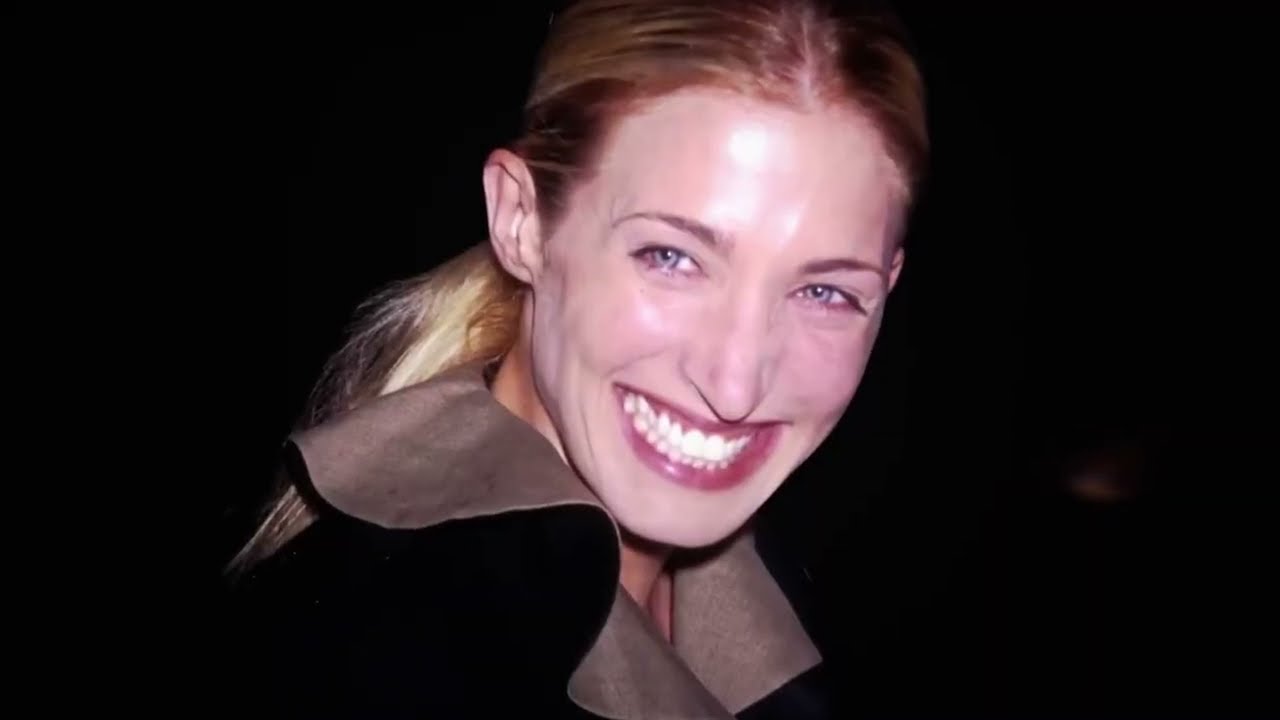
Later stories often presented Carolyn as an obstacle during this pressure. She was accused of being reluctant about family duties, of staying out of sight, and of pulling John away from those who expected his presence. Some relatives and acquaintances may have found her difficult. But other recollections emphasize her warmth, loyalty, and care for Anthony and Carole. The Kennedy family is not a jury that delivers a single verdict. And Carolyn was not solely responsible for the conflict between marriage and family tradition.
John knew what his family needed. Where he would live, how he would speak to the press, how much time he would give George, and how he would balance his wife’s needs against family expectations were his decisions. His love for Carolyn may have been genuine, but his ability to protect their private life was insufficient.
That does not mean the opposite image is accurate either. Friends and biographers described intense arguments, mutual frustration, and times when the couple exhausted each other. Carolyn could speak sharply. John could be dismissive. Not every disagreement was manufactured by photographers. The question is not whether the marriage had tension. The evidence strongly suggests it did. The harder question is what that tension meant in the final months.
People go to counseling because relationships deteriorate, and they also go to counseling to save them. A night away from home can be a sign of separation, or it can be a way to keep an argument from getting worse. For John and Carolyn, the same events were later used to prove opposite conclusions.
That ambiguity did not last long after their deaths. After the crash, every therapy session, separate bedroom, and personal complaint was arranged into evidence of a path toward divorce. But while they were alive, that road still had turns. In 1999, they began asking for help.
John and Carolyn attended marriage counseling in 1999. That fact proves serious problems existed. It does not clarify what the therapist heard, whether progress was being made, or what the couple planned next. Counseling can be a precondition for divorce. It can also prevent one. Several accounts say John spent at least one night at the Stanhope Hotel near the end of the marriage. Beyond that specific event, stories differ. How many nights, and for what reason, are disputed.
Some later reports said John was considering separation or divorce. Close friends of the couple rejected the claim that divorce was imminent. No confirmed divorce filing from that time resolves the debate. That absence does not prove they planned to stay together. Couples can discuss separation long before taking formal steps. It only means that personal frustration should not become a final conclusion without strong evidence.
Even the phrase “impending divorce” hides a prediction inside a description. A marriage can be on the edge of ending for months, then recover. Or it can seem stable until one conversation changes everything. Without knowing the couple’s final intentions, certainty depends more on the storyteller than on the evidence.
In their last weeks, John and Carolyn may have been trying to reconcile, delaying a separation, or swinging uncertainly between those emotions. People often do that. The surviving fragments show a marriage in crisis, not its unwritten final chapter.
Then came the claims that made uncertainty seem almost old-fashioned. In the darkest version, Carolyn was not just unhappy. She was using cocaine, returning to a former lover, and pulling John toward destruction. These claims required evidence. Often, they were supported only by appearances and repetition.
Tabloid reports and later books linked Carolyn to cocaine rumors. Her thinness, restlessness, and reluctance to face cameras were sometimes treated as visible proof. None of that proves drug use. A photograph is not a toxicology test, and distress has many causes. Official toxicology results were limited but important. Tests after the crash found no alcohol or illegal drugs. That result tells us what was not present at the time of death. It does not prove Carolyn never used cocaine at any point in her life. Treating it as a lifetime exoneration would be as irresponsible as diagnosing her from her appearance.
The affair claim rests mainly on Michael Bergin, who had been involved with Carolyn before John. In a 2004 book, Bergin claimed their physical relationship continued after her marriage. The claim received wide attention because neither Carolyn nor John could answer it. Carolyn’s close friends rejected his account, and no strong independent or contemporary evidence of the affair has surfaced. The fact that Bergin had financial interest in the story does not mean he lied. But it makes verification more important. A profitable accusation can be true, false, exaggerated, or partly true. The existence of a book deal confirms none of those possibilities.
So the responsible classification is simple. The affair claim remains unproven. The cocaine story is also not established beyond reports and recollections of questionable quality. Neither should be described as confirmed fact. At the same time, uncertainty should not be presented as certainty in the opposite direction. We cannot fully know what decisions the couple made in their private lives. A claim can survive as a possibility without being guaranteed as truth. That uncomfortable middle ground is where this story belongs, because no document closes the distance between accusation and proof.
What can be recovered with more confidence is the record of their final flight. Here investigators had physical evidence, radar data, training history, weather observations, and toxicology reports. That record does not explain their marriage. But it challenges sensational efforts to blame the crash on scandal.
On Friday, July 16, 1999, John planned to fly from Essex County Airport in Caldwell, New Jersey, to Martha’s Vineyard. Carolyn’s older sister, Lauren Bessette, would travel with them and be dropped off there. John and Carolyn planned to continue to Hyannis for the wedding of John’s cousin Rory Kennedy. Lauren was not just a third passenger on someone else’s marriage. She was a Morgan Stanley executive with a bright future. The crash killed both Bessette sisters, a loss often buried beneath the Kennedy tragedy.
Stories about the late departure became part of the marital myth. Carolyn was blamed for the delay, and Lauren was seen as a mediator. Other reports mentioned work, traffic, Lauren’s schedule, and John’s ankle injury. Official records contain no evidence that Carolyn alone caused the delay or that Lauren came only to save the marriage.
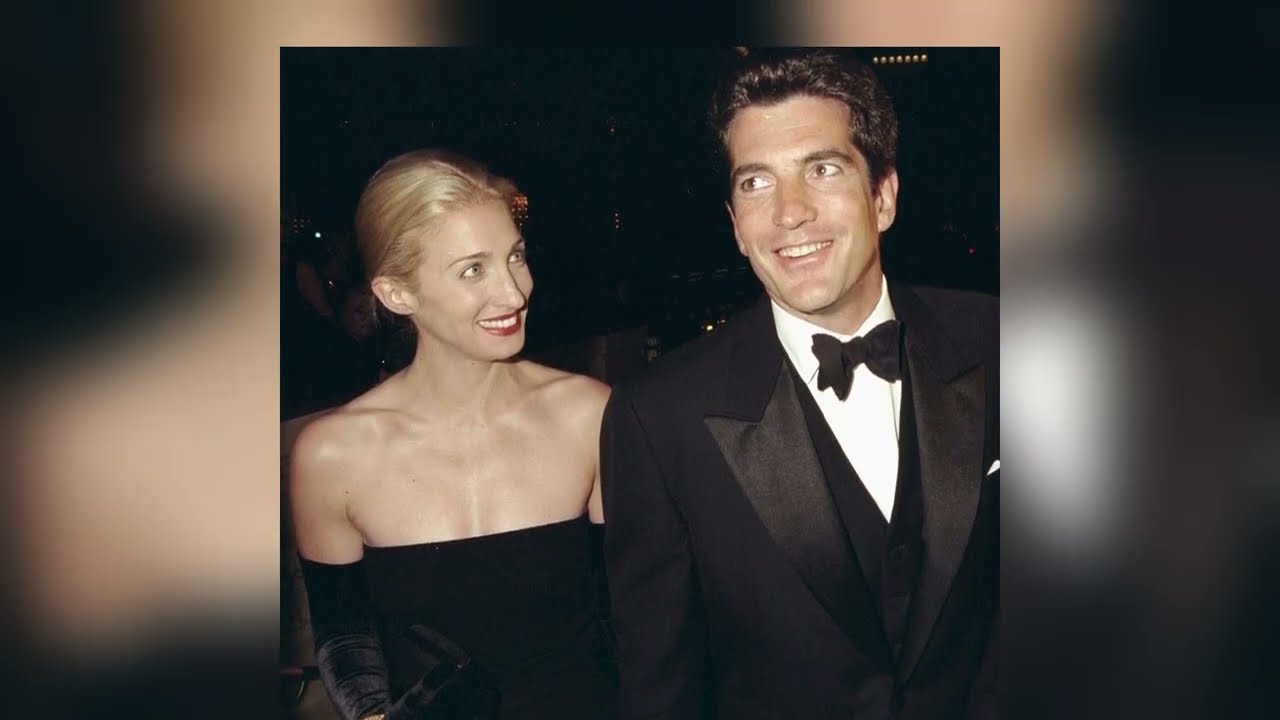
The plane departed at 8:39 that night. John had about 310 total flight hours, including 36 hours in the Piper Saratoga model. He had no instrument rating. Flying under visual flight rules was not automatically illegal, but it made him dependent on outside visual references that were difficult to see. His instructor had said John was not ready for an instrument rating evaluation and offered to go with him. John declined. Perhaps he thought he could handle the conditions or trusted his familiarity with the route. The record shows help was available. Why he refused it cannot be known from that record.
Officially, weather was favorable, but haze and darkness over water obscured the horizon. Other pilots reported difficulty distinguishing between the ocean and the sky. Without that reference, the body’s sense of balance can conflict with instrument signals. A pilot can feel like he is flying straight while actually turning. Spatial disorientation can overwhelm even a careful pilot quickly.
John’s ankle injury has also been exaggerated. A cam walker device was removed on July 15. The next day he was using a cane and had a slight limp, not a cast. The injury may have caused discomfort, but investigators did not identify it as the cause of the crash.
As the Saratoga approached Martha’s Vineyard, radar data showed the plane descending and turning in increasingly tight circles. John had lost control. The plane crashed into the Atlantic Ocean, killing John, Carolyn, and Lauren. The National Transportation Safety Board found that spatial disorientation during a night flight over water caused John to lose control of the aircraft. Haze and darkness played a role. Investigators found no engine failure, and toxicology reports showed no drugs or alcohol.
These findings provide no evidence of sabotage, murder, cocaine impairment, or a family curse. They do not even support the slogan that ego caused their deaths. John had limited experience for the conditions, and he refused help. Without speculating about his mental state, those facts are serious enough.
The couple may have argued, and Lauren may have tried to calm the situation. But no possibility explains the loss of control with certainty. The late departure meant they were over water in darkness, but who caused the delay remains disputed.
The Kennedy family lost John. The Bessette family lost Carolyn and Lauren. Search teams recovered their bodies days later. A private trip to a wedding became a public ritual of mourning. And again, the coverage centered on the Kennedy name. The investigation reconstructed the final moments of the flight, not the final moments of the marriage. Whether John and Carolyn boarded as a couple trying to heal or preparing to end things could not be determined.
That silence allowed a different kind of interpretation industry to grow. Death created a vacuum around John and Carolyn, and that vacuum was commercially irresistible. Books and articles reconstructed arguments that were never recorded. Private conversations became polished dialogue. Emotional moments were used as proof of decisions the couple never made public.
Writers like Edward Klein and Christopher Andersen published highly dramatic portraits. Michael Bergin brought forward the alleged affair. The fact that books sold does not mean their claims were false, but commercial success is not proof of truth. Every claim must be tested against eyewitness testimony, contemporary documents, or independent evidence.
Other voices offered a more complicated picture. Carole Radziwill wrote from her place of friendship with the couple during Anthony’s illness. Rosemary Terenzio recalled working with John. Historian Steven Gillon and biographer Elizabeth Beller gathered multiple testimonies. These sources can correct sensational accounts, but friendship does not always produce perfect memory. Loyalty, grief, distance, and the passage of time affect every witness.
A useful way to judge the story is to rank the evidence. Official findings and contemporary documents take priority for the questions they can answer. Then come named witnesses describing what they directly saw. Later memoirs require context. Anonymous claims and commercially arranged accusations demand more caution. Online comments may show what audiences believe, but they do not establish what happened.
Evidence can reduce uncertainty but not eliminate it. Repetition can hide weakness. Ten articles may confirm a rumor while all ten are actually repeating one book. A claim can become so familiar that it feels true, even when its original source is unknown or disputed. That is how a possible separation becomes a final divorce, and an accusation becomes a secret everyone supposedly knew.
The fairy tale and the nightmare share the same flaw. Both reduce two complex people to a single sellable identity. One version needed Carolyn to be a perfect bride. The other needed her to be a fatal flaw. Neither left room for a marriage that was loving, angry, burdened, imperfect, and changing from week to week.
That brings us back to the photograph outside the church and to what a photograph can honestly tell us. The wedding image only proves that John kissed Carolyn’s hand as they left the church. It captures one moment of tenderness. It cannot prove that every following day met the expectations viewers placed on that image.
The recovered evidence supports several hard truths. John and Carolyn had serious fights. They sought marriage counseling. John spent at least one night at the Stanhope Hotel near the end, though accounts of the circumstances differ. Media pressure, uncertainty about George, and Anthony’s terminal illness weighed on their lives. Carolyn struggled with the public role attached to the Kennedy name.
The same record has limits. No divorce filing was confirmed publicly. John and Carolyn were still planning to attend Rory Kennedy’s wedding. Their deaths resulted from a loss of control related to spatial disorientation, not from a proven conspiracy or drug use. We do not know whether counseling was working or whether the separation would have become permanent. We cannot diagnose cocaine addiction from photographs. And we cannot say whether Michael Bergin’s later account was fully true or fully false.
We also should not reduce Lauren to a marriage mediator or turn the plane crash into proof of a family curse. Perhaps John and Carolyn lived inside the most ordinary contradiction made extraordinary by fame. They loved each other and still hurt each other. They thought about leaving and still tried to repair the relationship. Carolyn suffered under the spotlight of the Kennedy family and still made decisions that deepened the conflict. John wanted to protect her and still failed, again and again, to understand what protection required.
Lauren deserves a place in that memory as well. She was not an accessory to Camelot. She was a daughter, sister, professional, and friend whose life ended the same night. The Bessette family lost two women, while public attention stayed on the Kennedy name. Any honest account should not let that overshadowing happen again.
The famous wedding photograph was not a lie. It was incomplete. So was the hotel stay. So was the counseling, the park fight, and every accusation published after the funerals. Each captured something. None could say what ending John and Carolyn would have chosen. What was buried with them was not a clear answer. It was their last chance to stop other people from turning guesses into facts.