On the afternoon of February 18, 1876, fourteen-year-old Carolina Olsson slipped on the ice while playing outside her home on the small Swedish island of Oknö, striking her head. The injury seemed minor at first, though she developed a toothache in the days that followed. Her family, poor fishermen living in one of the most isolated corners of southern Sweden, suspected something more sinister. In their small community, superstition ran deep, and when the toothache refused to fade, they came to believe that a local witch had cast a hex upon the girl.
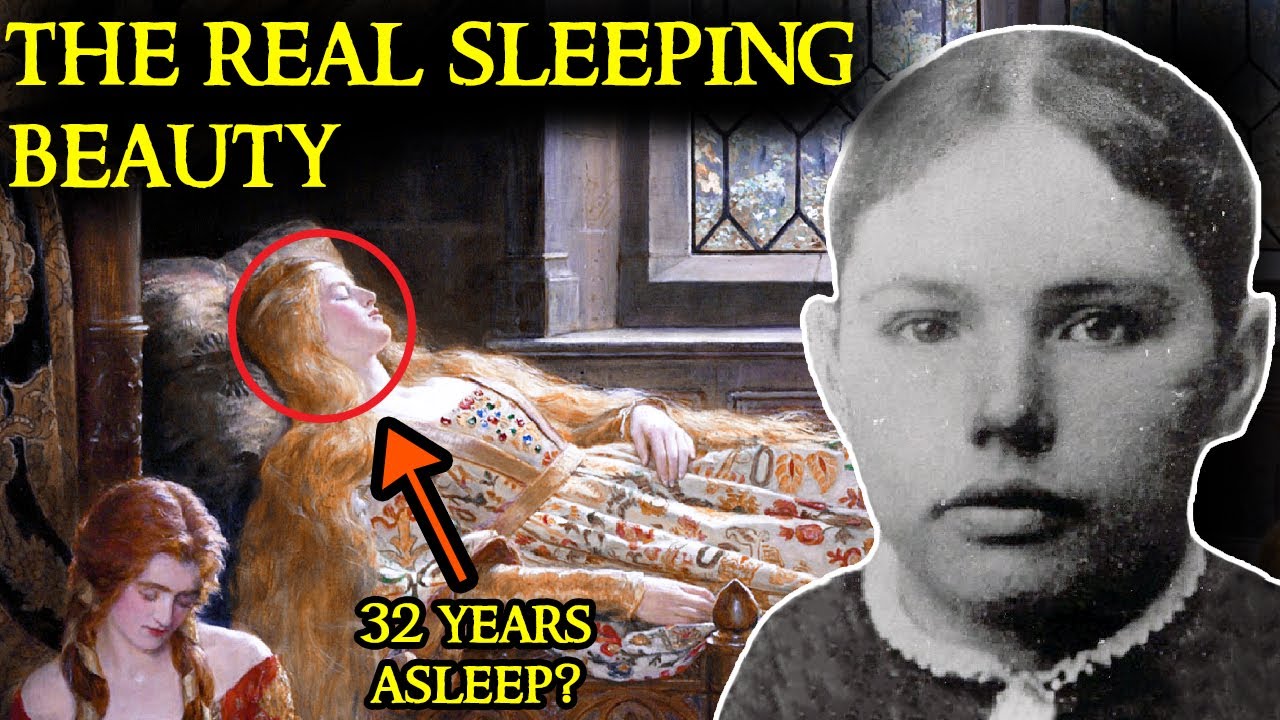
Four days after her fall, on February 22, Carolina went to bed. By every account that would follow, she did not wake up for thirty-two years. Carolina was the second eldest of five children, the only girl among four brothers. Her father made his living from the sea, a fisherman in a community that depended entirely on the waters around the island.
The family subsisted in poverty, and there was neither money nor knowledge available to explain what had happened to their daughter. No physician could be summoned from the mainland, so her mother turned to the island’s midwife and the traditions of local folk medicine. Every day, she forced glasses of sweetened milk and water into her sleeping daughter’s mouth, hoping either to wake her or simply to keep her alive until she did. Eventually the community pooled its resources and brought a doctor across the water to examine Carolina.
He determined that she was in a coma. Smelling salts did nothing. Needles jabbed into her skin produced no reaction. The best he could offer was a bottle of tonic, to be administered daily to keep her body functioning, and a promise to return each week to observe her condition.
As time passed, strange details emerged. On occasion Carolina was said to sit up in bed, her eyes still closed, and mumble prayers in a half-conscious state. At other times she appeared to sleepwalk. But she never reached full consciousness, and no one could rouse her fully.
The doctor, realizing he was out of his depth, began writing letters to newspapers across Sweden and to leading medical journals, hoping that a physician with greater training might recognize the case. The story of the mysterious sleeping girl soon spread, and she acquired a name that would stick with her for the rest of her life: Törnrosasömnen, or in the accounts that reached beyond Sweden, the Sleeper of Oknö. More doctors arrived on the island. None could wake her.
Theories multiplied. Some believed she had entered a peculiar state of hibernation. Others suspected a psychological disorder, though the field was still in its infancy. Some insisted she was acting, that the whole affair was an elaborate hoax perpetrated by Carolina and her family.
Others noted unusual features of her condition: despite years of lying motionless in bed, her hair and nails never seemed to grow, and she showed no signs of physical aging. By 1892, with Carolina now thirty years old and sixteen years into her sleep, she was taken to the mainland town of Kalmar and admitted to its hospital. Doctors there attempted electroconvulsive shock therapy. When even that failed, they gave up.
Carolina was returned to Oknö, and no further medical efforts were made. In 1904, twenty-eight years into her daughter’s slumber, Carolina’s mother collapsed and died, worn down by years of caring for her comatose child. Some accounts claim Carolina briefly woke enough to weep at the news, though the story may well have been embellished. Neighboring women stepped in to help watch over her while her father and brothers were out fishing.
Carolina’s mother missed the ending of the story by just a few years. On April 3, 1908, more than three decades after she had first closed her eyes, Carolina Olsson suddenly woke up. She was forty-seven years old. Her father, two of her brothers, and several neighbors were present, and all were astonished.
She was told that her mother had died, and that two of her brothers had drowned at sea during the years she had been asleep. When she looked in the mirror, she barely recognized the face staring back at her. She began to weep. The news of her awakening spread quickly, from Stockholm to London to Paris.
The Sleeper of Oknö, a name many remembered from the newspapers decades earlier, had finally arisen. Carolina agreed to undergo psychiatric evaluation and medical testing in Stockholm. The physicians found her mental faculties entirely intact. She had not perceived the passage of time at all and seemed to believe she was still a fourteen-year-old girl.
The doctors also noted that she looked remarkably youthful for her age, appearing no older than twenty-five. But they could not agree on what had caused her long sleep, and no diagnosis was ever settled upon. In the years that followed, most of the explanations proposed at the time were dismissed. Hysteria, dementia, coma, psychological disorder: none held up under scrutiny.
One modern possibility is that Carolina suffered from a severe case of Kleine-Levin syndrome, a rare disorder characterized by periods of excessive sleep lasting days, weeks, or longer. Those who suffer from it can sleep for twenty or more hours a day during episodes, and when they wake they may seem disoriented, lethargic, or irrational, which could explain Carolina’s periods of half-awake prayer and sleepwalking. The condition is often triggered by a head injury, which matches her fall on the ice in 1876. It can also slow the visible signs of aging, which would explain why she appeared so young when she woke.
The syndrome is still not fully understood today and was completely unknown in Carolina’s time. But another explanation has never been ruled out entirely. In 1910, Carolina met with a psychiatrist named Dr. Freudenström, who published a paper on her case in 1912.
He described her condition as an unclear case of hibernation but noted evidence that she had periodically woken during her long sleep, expressing sorrow and anger. He speculated that Carolina was a severe hypochondriac who, after her accident, convinced herself she was gravely ill and thereafter lay still with her eyes closed to elicit sympathy. Those who have argued that the whole episode was an elaborate hoax suggest that her mother aided the deception, and that after her mother died, one of her brothers took over the role. When that brother died in 1907, the theory goes, Carolina abandoned the act altogether and woke shortly afterward.
Neither the medical explanation nor the theory of deception has ever been proven. What is certain is that, following her period of testing, Carolina tried to return to Oknö and live with her father and two remaining brothers. But the fame of her case had made ordinary life impossible. The small cottage on the quiet island was flooded with visitors and newspapermen, and the family was forced to leave their home and settle elsewhere for a time.
Months later, they finally returned. Carolina lived out the rest of her long life on the island, occasionally visited by those curious enough to see the famed Sleeper of Oknö in person. She died on April 5, 1950, at the age of eighty-eight.
Her case has never been fully explained.