On August 6, 1961, a group of Freedom Riders reached the Mississippi State Penitentiary, a sprawling complex known as Parchman Farm, in the heart of the Mississippi Delta. They had been arrested in Jackson for the simple act of challenging segregated interstate travel. Instead of being held in the city, they were transported to a windowless, concrete unit the inmates called “Little Alcatraz,” where guards allegedly weaponized the summer heat, blasting cold air until the men shivered, then shutting it off completely until the cells became stifling. The state’s governor, Ross Barnett, had calculated that beating the riders would bring bad press, as it had in Alabama.
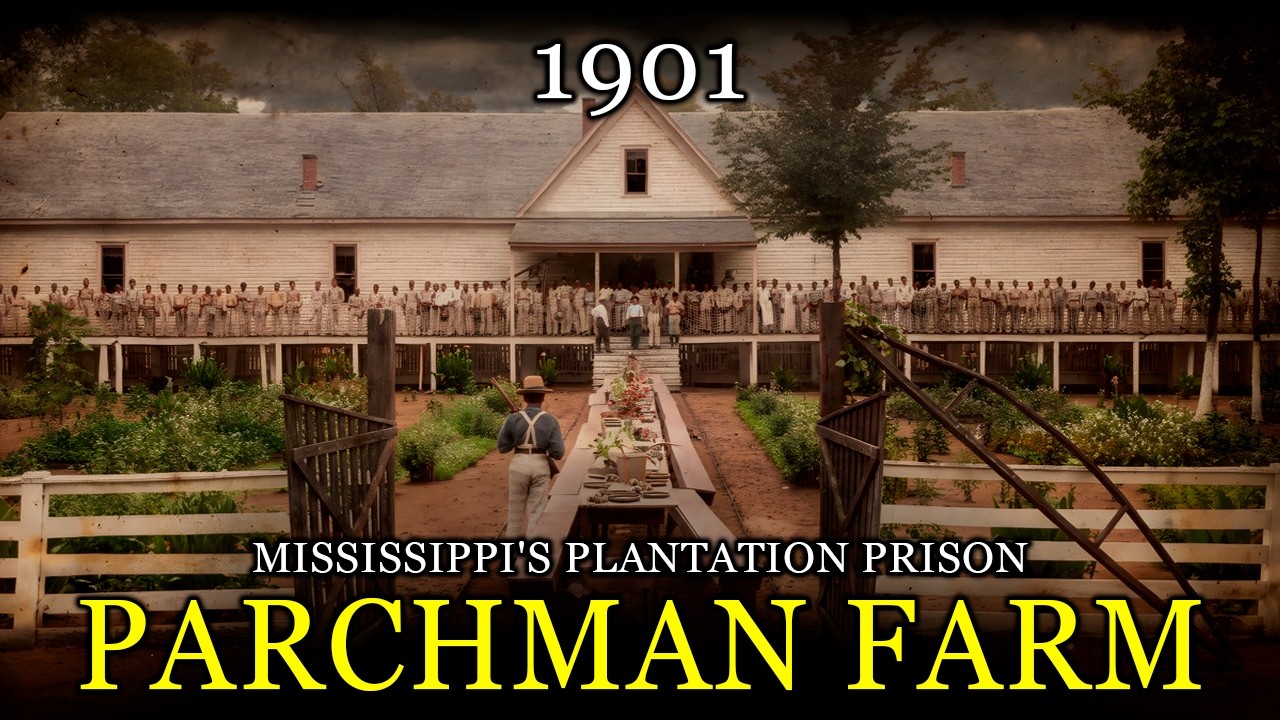
So he decided to arrest them quietly, hold them without bail, and hide them in a place so remote that no reporter would bother to follow. The land itself was the prison’s primary defense. Parchman Farm spanned twenty thousand acres of some of the most fertile soil in the world. There were no walls, no fences, and no watchtowers.
The state understood that a man who managed to slip past a guard on horseback still faced fifteen or twenty miles of open, flat farmland, drainage canals, and swamp before reaching anything resembling a public road. There was no cover, no shelter, and no way to move quickly without being spotted from a great distance. The plantation system, established when the state purchased the land in 1901, was designed to be its own containment device. It was, by all accounts, devastatingly effective.
Governor James K. Vardaman, who defended the institution, called it an “efficient slave farm,” and he meant it as high praise. The origins of this brutal arrangement lay in the years immediately following the Civil War. The Thirteenth Amendment, ratified in 1865, abolished slavery and involuntary servitude, with one explicit exception: as punishment for a crime.
Mississippi seized on that loophole more aggressively and for longer than almost any other state. The state’s prison system had been destroyed during the war, and the treasury was empty. In 1868, a businessman named Edmund Richardson contracted directly with federal authorities to hold the state’s convicts in exchange for their labor and the profits they generated. The convict lease system was initially intended as a temporary measure, set to expire on December 31, 1894.
But it was so profitable for both the state and private contractors that neither side was willing to abandon it. Historians have consistently described Mississippi’s version of the convict lease as among the most brutal in the South. The majority of the men leased were young Black men arrested disproportionately for minor offenses: vagrancy, loitering, petty theft. The state treated leased convicts worse than slaves, because a slave owner had a financial incentive to keep an enslaved person alive as a long-term asset, whereas a leased convict cost the state nothing to replace.
Historian David Oshinsky, author of the definitive study “Worse Than Slavery,” found that no leased convict in the Mississippi system survived long enough to complete a ten-year sentence. By the late 1890s, public disgust over the brutality of the convict lease system forced the Mississippi legislature to act, at least in theory. In 1901, the state began purchasing thousands of acres in Sunflower County, including a plot called Parchman Farm, named after the family that had farmed it. The convicts were moved in within months and ordered to clear the land, dig drainage canals, and build the first structures with their own hands.
The new prison was designed along the lines of the plantation system it was meant to replace. It was divided into numbered field camps, each with its own barracks, mess hall, and designated crop for the season. The daily experience of a prisoner depended largely on which camp he was assigned to, and the temperament of the trusty who ran it. The state realized it did not need walls or towers.
Instead, Parchman was administered by armed men on horseback, monitoring unarmed men working in the fields with hoes, exactly as Southern plantations had been managed before the war. The men carrying those guns were not free civil servants. They were prisoners themselves, selected because they were convicted of the most violent crimes, given shotguns and the explicit authority to shoot any other prisoner who tried to escape. These armed convicts, known as trusties or trusted shooters, lived in their own cells, enjoyed better food and lighter work, and in many documented cases effectively ran entire sections of the prison with almost no oversight from the few paid staff.
In 1947, one of these trusties, a man known as “Hog Jaw,” received a formal pardon from the state specifically for killing an escaping prisoner. The pardon was written recognition that murder was not only permitted but rewarded. Life on Parchman Farm followed a rhythm that survivors later described in language seemingly borrowed from antebellum slave testimony. Men worked six days a week from dawn until dusk.
Each man was expected to pick at least two hundred pounds of cotton daily, a quota enforced not through wage incentives but through corporal punishment. Men lived in large, isolated barracks, with 100 to 120 men crammed into a single filthy room, with no separation by severity of offense. A man convicted of a minor property crime could easily find himself housed next to a convicted killer for years. Malnutrition, heatstroke, and extreme physical exhaustion were treated as normal, expected conditions.
For any man who failed to meet his quota or was judged insufficiently obedient by a trusty or a free-world sergeant, the punishment was a leather whip called “Black Annie,” applied to bare skin. It was a routine measure used for infractions as minor as talking during working hours or walking too slowly between cotton rows. It was on these same cotton fields that one of the most important documentary projects in American music history began, almost by accident. In August 1933, folklorist John Lomax and his eighteen-year-old son Alan set out from Washington, D.
C. , on a sixteen-thousand-mile road trip across the South, carrying primitive recording equipment for the Library of Congress. They visited eleven prisons on that first trip alone, because prison farms contained something disappearing almost everywhere else: work songs and field hollers passed down nearly intact from slavery. At Parchman, they found something of lasting significance and kept returning, in 1936, 1937, 1938, 1939, 1947, 1948, and again in 1959.
The recordings they made, along with those of collaborators Herbert Halpert and Bill Ferris, would become one of the largest archives of African American folk music ever assembled. During one session, they recorded a prisoner named Booker “Bukka” White, who was serving a three-year sentence for shooting a man in the leg. After his release, White recorded two of his most enduring songs: “When Can I Change My Clothes” and “Parchman Farm Blues,” both of which functioned as coded warnings to every young Black man in the Delta about what awaited him on that land. In 1959, Alan Lomax recorded another inmate, James Carter, singing a religious work song called “Po’ Lazarus.
” The recording sat almost forgotten in the Library of Congress archives for four decades, until it appeared on the Grammy-winning soundtrack for the film “O Brother, Where Art Thou? ” in 2000. When researchers finally reached Carter and told him that his voice had been heard by millions, he was stunned. Influential blues musicians Son House and R.
L. Burnside also passed through Parchman at different stages of their lives. The women held at Parchman, the vast majority of them Black, worked separately from the men and faced their own forms of vulnerability. Their work songs preserved a unique musical thread that would otherwise have been lost.
The names of most of the women who sang for folklorists in 1936 and 1939 remain unknown. The struggle against the trusty system reached a turning point in 1970, when civil rights attorney Roy Haber began collecting sworn statements from Parchman inmates about abuses. In February 1971, Haber filed a federal lawsuit on behalf of four inmates: Nazareth Gates, Willie Holmes, Matthew Winter, and Zachary Holmes. The suit alleged that prison practices violated the First, Eighth, Thirteenth, and Fourteenth Amendments.
Judge William C. Keady expanded the case into a full class action on behalf of all Parchman inmates. By August 1971, the state of Mississippi was forced to admit many of the constitutional violations. In October 1972, after personally touring the prison, Judge Keady issued his ruling, describing Parchman Farm as a violation of “standards of decency.
” He banned whipping, shooting at prisoners, chaining men to fences for extended periods, stripping them and directing fans at them while wet, administering milk of magnesia as punishment, denying basic hygiene supplies, and forcing men to stand on boxes for hours. The barracks at the time still held 100 to 120 men in a single filthy room, and open trenches carried sewage and medical waste past the buildings where men slept. The ruling, known as Gates v. Collier, became a landmark in American constitutional law, the first case in which a federal court exercised this level of direct, ongoing supervision over an entire state prison system.
Its logic forced other states in the Fifth Circuit to dismantle their own trusty systems. In the years that followed, the state replaced the armed trusties with trained, paid officers, purchased automated tractors and cotton pickers, and implemented individual cell classification for the first time in the prison’s history. None of these changes came because Mississippi changed its mind. They came because a federal judge ordered them, and because continued federal oversight meant the state would face real legal consequences for backsliding.
The same land that produced Bukka White’s guitar strings and Judge Keady’s forty-page ruling continues to grow crops today, worked by men whose grandfathers may have worked the same rows under the same name. Parchman remains Mississippi’s oldest and largest prison. In late December 2018 and early January 2019, coordinated riots erupted across four Mississippi prisons, largely centered at Parchman. Five inmates were killed and dozens injured.
Three other inmates were found hanged in their cells during the same period. It took more than one hundred state troopers and deputy sheriffs to restore order. In January 2020, state officials transferred up to 375 inmates to a private prison in a nearby county in an emergency attempt to ease pressure. Violence continued intermittently for the next year.
One three-week period spanning late 2019 to early 2020 saw sixteen violent deaths, a rate that placed the prison among the deadliest facilities in the world relative to its population. In 2020, lawyers financed by Jay-Z’s entertainment company, in partnership with rapper Yo Gotti, filed a federal lawsuit on behalf of more than two hundred inmates, describing conditions resembling Judge Keady’s findings: rat droppings and cockroach contamination, collapsed sanitation, and men forced to treat their own wounds due to the absence of effective medical care. In 2022, the Department of Justice published findings that Parchman was in “egregious” violation of inmates’ constitutional rights under the Eighth and Fourteenth Amendments, through misuse of solitary confinement, chronic understaffing, and documented failure to provide adequate medical care. In February of this year, the Mississippi State Fire Marshal opened a new investigation into conditions at Unit 29 after inmates were left without heat for an extended period during a winter storm that knocked out power to the entire building.
The unit still houses around 700 people. This month, state Senator Juan Barnett introduced a bill to phase out Unit 29 over four years, but it was not brought to a vote. The state’s own fire marshal has publicly acknowledged that the unit may eventually have to be closed if conditions do not improve. Parchman is not a ruin.
It is not a museum or a public park. It is a twenty-thousand-acre parcel of some of the most fertile land in North America, still operating as Mississippi’s main state penitentiary. In 1904, just three years after the state bought the land specifically to end convict leasing, the Mississippi Board of Corrections quietly reinstated a version of the practice, leasing prisoners to private companies hungry for cheap labor. The terms used to describe the place have changed several times over a century and a quarter.
Governor Vardaman called it an efficient slave farm, and he meant it as praise. A federal judge called it a violation of standards of decency. The lawyers for a rap mogul called it a perpetual state of systemic failure. And this year, the state fire marshal is still deciding whether to allow a specific unit to operate through another Mississippi winter.
The land itself has never stopped being what it was purchased for in 1901. The trusties on horseback are gone, prohibited by a federal court order more than fifty years ago. But the soil that produced the cotton yields this year’s crop just the same, worked by men whose fate remains tied to the same earth.