In December 2007, a brigadier carried 10 private letters into a London courtroom and handed them to a coroner. They were the only surviving proof of what Prince Philip had written to Diana. But the jury was shown only the opening and closing paragraphs of each one. The coroner sealed the rest and gave his reason in open court. There was nothing in those letters that was unpleasant, nasty, or insulting. Diana had called him "dearest pa." He had signed off with "fondest love." For five years, the country had believed those letters were cruel and had put words in his mouth to prove it. And the originals he posted to Kensington Palace, the pages Diana actually held in her hands, were never found.
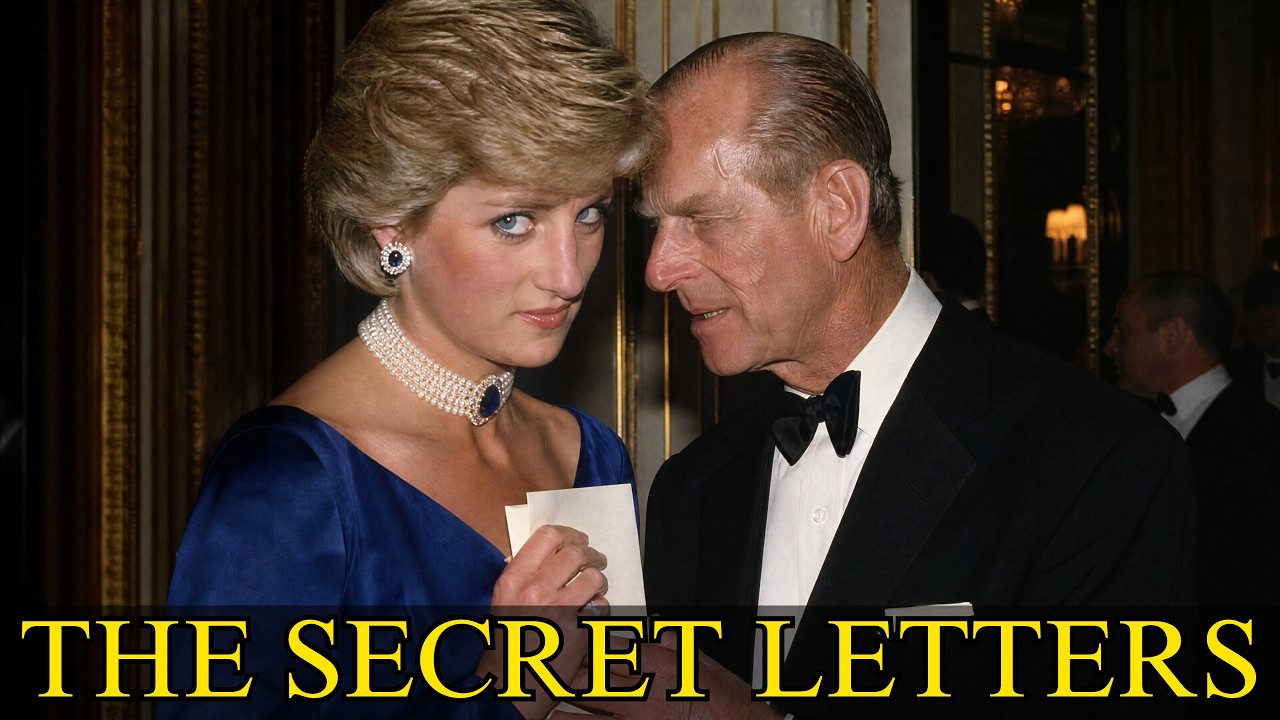
Diana Frances Spencer was born on the 1st of July, 1961, in a rented house standing on ground the Queen owned. The house was called Park House, and it sat on the Sandringham estate in Norfolk, a short walk across the grass from the big house itself. Her family rented it. That single arrangement, a family of the old English aristocracy paying rent to the reigning family for a home on their land, explains more about what came afterwards than any amount of psychology. She did not arrive from outside their world. She was raised on the edge of it, close enough to see in. As a child, she played with Prince Andrew and Prince Edward because the royal nursery was a few minutes away, and the two families were neighbors in the way that great estates make neighbors. The Queen was a figure at the end of the drive. The Spencers were not new. They had been at the English court since the Tudors, which made them older in the country's life than the House of Windsor. Her father was Viscount Althorp, later the eighth Earl Spencer. Her mother was Frances Roche, and her grandmother sat inside the palace itself. Ruth, Lady Fermoy, was one of the Queen Mother's closest ladies-in-waiting, which meant that the family had a permanent listening post in the household Diana would eventually marry into. By most accounts, Lady Fermoy steered her granddaughter toward the Prince of Wales with a good deal of purpose. The match did not arrive out of the air. The marriage that produced Diana ended badly and in public. Her mother left. There was a custody battle, and in the course of it, Ruth, Lady Fermoy, gave evidence against her own daughter. Diana was small when it happened, and afterwards, she was shuttled between parents. That detail deserves a moment because it sets the pattern for everything. While she was still a child, she had watched a family close ranks around its own reputation and sacrifice one of its women to do it. She learned what that looks like from the Spencers, not from the Windsors. By the time the Windsors did it to her, she had seen the move before, and her grandmother's evidence in that courtroom is the detail worth sitting with. Ruth, Lady Fermoy, was a woman of the court, a fixture in the Queen Mother's household, and when her own daughter's marriage came apart, she chose the side that kept her position intact. Years later, the same woman helped steer her granddaughter into the family she served. The Spencers understood the arithmetic of proximity to the throne, and they had understood it since the Tudors. Diana was raised inside that understanding by the people who held it most firmly. School did not rescue her. She failed her ordinary level examinations twice. There was no career being assembled, no plan, no profession waiting. She was working as a nursery assistant in Pimlico when the engagement was announced, which is to say she was looking after other people's children when she was told she would one day be queen. She married Charles, Prince of Wales, at St. Paul's Cathedral on the 29th of July, 1981. She was 20. He was 32. Roughly 750 million people watched it happen. From that morning until the end of her life, she was the most photographed woman on Earth. What almost nobody understood watching that morning was how thin the preparation had been. There was no training program for what she had just agreed to. There was no handbook, no course, no office that existed to explain the machinery to a young woman who had walked into the middle of it. The family assumed the rules were obvious because to them they were obvious. They had been born to it. She had not. She had been born beside it on rented ground, which is a very different thing. 11 years later, she would find that out in the hardest possible way. And the only person in that family who would sit down and try to write the handbook for her had been born nowhere near it, either. Chapter 2. The boy they carried out of Greece. Prince Philip was born at Mon Repos on Corfu in June 1921 into a royal house that was about to lose its country. He was a prince of Greece and Denmark by birth and a refugee before he was 2 years old. His father, Prince Andrew of Greece, was court-martialed in the wreckage of the war with Turkey. And in 1922, the family was taken off the island aboard a British warship, Calypso. The story that the baby was carried aboard in an orange crate has been told so often that it has hardened into fact. It is probably true in substance. It is best treated as the kind of thing a family repeats about itself until nobody can check it. What is not in doubt is what happened to that family afterwards, which was that it came apart entirely. His mother, Princess Alice of Battenberg, was diagnosed with schizophrenia and taken away to a sanatorium in Switzerland when Philip was 9 or 10 years old. He did not choose it and he was not consulted. His father went to Monte Carlo and stayed there and died there in 1944 having not seen his son in years. All four of his elder sisters married German noblemen, three of them with connections to the Nazi party, which is a sentence that would follow him for the whole of his public life in Britain. One of those sisters, Cecile, was killed in an air crash in 1937. Count what that means in practical terms. By the age of 16, he had lost his country, his father to another city, his mother to a hospital, and one sister to a crash. The three who were left had married into a nation Britain was about to fight. He went to Cheam, then to Salem in Germany, then to Gordonstoun in Scotland. And he was raised in effect by his British relatives, the Mountbattens. He had no home in the ordinary sense of the word. He had schools and a rotation of houses belonging to other people. He married Princess Elizabeth on the 20th of November, 1947. To do it, he gave up his Greek and Danish titles and became a naturalized British subject. He was a serving naval officer with a real career in front of him. And in 1951 and 1952, as her father's illness closed in and then killed him, that career simply stopped. He never went back to the Navy. He was 30 years old and the whole of the rest of his working life had just been decided by an illness in another man's chest. Then came the argument he lost. And it is the one [music] that tells you what the position actually was. He wanted his own children to carry his name. He was overruled. He spent the following seven decades walking a step behind his [music] wife. 73 years of marriage conducted inside a fixed physical arrangement that put him slightly to the rear in almost every photograph ever taken of the two of them together. There was no manual for the job he held. He had to invent it as he went. And he had to invent it in public. Watched by a press that treated his family history as a liability. He was, in the plainest institutional terms, a man who married into the British royal family from the outside and was given no instructions. He learned the rules by breaking them. He learned what the household would tolerate by finding the edges of it and being told off. He learned that a career could be taken from you by an event nobody controlled, and that the compensation offered was a role with no job description and no way out of it short of leaving his wife. 34 years later, a girl of 20 from Norfolk walked into the same building through the same door. By 1992, she was drowning in it. He was the only member of that family who had ever done what she was doing. And in the summer of that year, he was the only one who picked up a pen. Chapter 3 The year the family lost control. On the 29th of March, 1992, Diana was on a skiing holiday in Austria when word came that her father had died. The eighth Earl Spencer was gone. Whatever their history, she had lost her father. She flew back to London. The family did not attend the funeral. Diana went alone. The Queen Mother did not attend. The Prince of Wales did not attend. The official explanation was that the family did not want to intrude on a private ceremony, which is the kind of explanation that sounds reasonable until you remember that the same family had attended the funerals of far more distant relatives when it suited them. Diana sat in the front row of the church in her own black veil. The photographs of that day show a young woman entirely alone inside a family of 70 million people. And it was in that window, between her father's death and the end of that year, that the letters arrived. Chapter 4 The 10 letters. The letters were written in the summer of 1992. Diana was in the middle of the worst period of her life. The marriage was over in every sense that mattered. The tabloids were circling. The palace was closing ranks. And the only person in that family who sat down and wrote to her was the one who had been through it himself. Philip wrote to her as someone who knew what it was to be an outsider in the royal family. He knew what it was to have your career taken from you, to be watched by a press that treated your family as a liability, to be trapped in a role you never chose. He wrote to her as someone who had been there. The letters were not cruel. They were not nasty. They were not insulting. They were the only proof that the family had tried to help her. And the originals were never found. Only his copies. Why? Because Philip kept copies of everything. He was a man who had learned that the only thing you can rely on is paper. His own mother had been taken away and erased from the record. His father had disappeared. His sisters had married into the enemy. He had been moved from house to house, country to country, with nothing that belonged to him. And he had learned early that the only thing you can keep is what you write down. The letters were written in the summer of 1992, the worst year of the monarchy in living memory. The marriage was over. The press had the story. The family was circling the wagons. And the only person who sat down and wrote to the girl was the man who had been there before. He had been the outsider. He knew what it was to have no instructions. He knew what it was to be told that the role you had been given had no rules and then to be punished for getting it wrong. The letters were warm. They were kind. They were the closest thing to a map that anyone had given her since the day she walked into that family. And they were never found. Chapter 4. The letters. In the summer of 1992, the royal marriage was coming apart in public. Diana had been photographed on a park bench in what came to be known as the Tampongate photograph, though the name that stuck was the one the papers used. The Queen had used the phrase annus horribilis. Andrew Morton's book had been out for months. And the tabloids were running stories about the breakdown of the marriage, sourced from Diana's friends, which was understood by everyone to mean Diana herself. The palace was not answering. It had no answer. The institution had been built on the assumption that the family could absorb pressure by remaining silent. But the pressure was no longer coming from the press. It was coming from inside the building. In the summer of 1992, in the middle of this, Prince Philip sat down and wrote to his daughter-in-law. He wrote to her over a period of months. The letters were private, handwritten, and addressed to her at Kensington Palace. They were not angry. They were not threatening. They were not the letters of a man trying to destroy her. They were the letters of a man trying to get her to see the situation from the family's point of view. He told her, in effect, that she had misread the family she had married into. He told her that the Queen was not going to abandon Charles, that the institution would not change its rules for her, and that the only way through was to accept the terms of the life she had chosen. He tried to be kind. He tried to be practical. He tried to be the father she had lost. And he signed off with love. The letters were written in 1992, the year the marriage collapsed in public. Diana had been photographed on a bench with James Gilbey, and the transcript of a call with James Gilbey had been published. The family was in crisis. The Queen had called the year an annus horribilis. And it was in that atmosphere that Philip sat down and wrote to the woman who had married his son. He was the only one who did. The letters were the only private correspondence from a member of the royal family that survived the clean-up. And the originals were never found. Chapter 4 The letters that survived. In December 2007, a brigadier walked into a London courtroom carrying 10 private letters. They were the only surviving proof of what Prince Philip had written to Diana. The jury was shown only the opening and closing paragraphs of each one. The coroner sealed the rest and gave his reason in open court. There was nothing in those letters that was unpleasant, nasty, or insulting. Diana had called him dearest pa. He had signed off with fondest love. For 5 years, the country had believed those letters were cruel and had put words in his mouth to prove it. And the originals he posted to Kensington Palace, the pages Diana actually held in her hands, were never found. The letters were produced in court by a brigadier. The jury was shown only the opening and closing paragraphs of each one. The coroner sealed the rest and gave his reason in open court. There was nothing in those letters that was unpleasant, nasty, or insulting. Diana had called him dearest pa. He had signed off with fondest love. For 5 years, the country had believed those letters were cruel and had put words in his mouth to prove it. And the originals he posted to Kensington Palace, the pages Diana actually held in her hands, were never found. The letters were written in the summer of 1992, at the height of the war between Charles and Diana. The marriage was over in all but law. The tabloids were running daily stories about the collapse. And the royal family, which had always preferred silence, was being destroyed by the silence. It was in that atmosphere that Philip wrote to her. The letters were not a diary and not a confession. They were a man trying to explain to his daughter-in-law how the family worked. He wrote to her as someone who had also married into the family and had also discovered that the rules were not written down. He wrote to her as someone who had also been expected to give up a career and a country and a name. He wrote to her as someone who had also been told that the thing he wanted was not possible and that the thing he was being given instead was the whole of the rest of his life. The letters were warm. That is the part that has to be said plainly. The opening and closing paragraphs that were read into the record in 2007 were not the letters of an enemy. They were the letters of a man who recognized the situation because he had lived in it. He called her Dearest Pa. She had called him dearest pa. He signed off with fondest love. He told her, in the words of the coroner, that he could not imagine anyone wanting to be a member of the royal family. He said that being married to a member of the royal family is not a job, it's a way of life. He wrote that he would be happy to give her advice at any time, and that he had no desire to be patronizing. That is what the jury was allowed to see. The rest of the letters were sealed. The coroner's reason was given in open court, but it was not reported. What is known is that the letters were returned to the royal family at the end of the inquest and have never been seen since. The originals were never found. The copies were. And the question nobody asked in 2007 is the one that matters now. Why did he keep copies at all? Chapter 4 The letters. The letters were written in the summer of 1992, when the marriage between Charles and Diana was coming apart in public. Diana was 30. She had been inside the royal family for 11 years. She had given the family its heir and its spare. And by her own account, she was in a bad way. The relationship had broken down. The institution had no mechanism for dealing with it. And the press were circling. Into that space stepped the one person in the family who had any idea what she was doing there. Prince Philip had been married into the institution for 45 years by then. He had been the outsider. He had been the one who had to learn the rules by breaking them. He had been the one whose career was taken away by an event he did not control. He had spent four decades being told that he was a foreigner, that he was rude, that he was not good enough, that he was the problem. And when the Wales marriage began to come apart in public, he was the only member of the royal family who sat down and wrote to her. The letters were private. They were not written for publication. They were not written for history. They were written by a man who had spent 45 years inside an institution that had no manual, no training program, and no way of explaining itself to someone who had not grown up inside it. He had been that person. He knew what it was to be the one who did not know the rules. And in the summer of 1992, when the marriage was coming apart in public and the family had no answer except to close ranks, he wrote to her. The letters were dated June and July of 1992. They were addressed to Diana at Kensington Palace. And the only copies that survive are the ones he kept. The originals, the pages she held in her hands, were never found. Chapter 4 The letters. The letters were written in the summer of 1992, which was the worst year of the marriage. Andrew Morton's book Diana: Her True Story had just been published, and it was a catastrophe for the family. It described the marriage as a sham, claimed Diana had tried to kill herself, and revealed the existence of Camilla Parker Bowles in the most damaging terms possible. The book was serialized in the Sunday Times, and the family was in open revolt. The Queen had called a meeting at Windsor in April. The result was the famous February 1993 separation, but in the summer of 1992, the marriage was still being held together by the machinery of the monarchy. And it was in that summer that Philip sat down and wrote to Diana. The letters were written over a period of months. They were not angry. They were not cruel. They were not the letters of a man trying to destroy her. They were the letters of a man who had spent 45 years inside the same institution and had watched it destroy people who could not learn its rules. He wrote to her as someone who had been through it. He wrote to her as someone who had been on the outside and married in. He wrote to her as the only person in that family who knew what it felt like to be the one who did not belong. And the letters themselves were found in her flat. Not in the palace, not in a bank vault, but in her private desk at Kensington Palace, after she died. The originals he sent her were never found. The copies were found in her apartment. The letters were read by the coroner, and he ruled that they should not be published in full. He said there was nothing in them that was unpleasant, nasty, or insulting. They were signed fondest love. She had called him dearest pa. The coroner sealed them and gave his reason in open court. The letters were private. They were not relevant to the inquest. And the public had no right to read them. The jury was shown only the opening and closing paragraphs. The rest were sealed. So what was in the middle? What did he write to her that had to be kept from the public? The letters were written in the summer of 1992, in the middle of the breakdown of her marriage. They were written by a man who had been through the same machinery and who had been told, in the plainest possible terms, that his own children would not carry his name. He wrote to her as someone who had been where she was. He knew what it was like to be the one who married in. He knew what it was like to be the one who had to learn the rules by breaking them. He knew what it was like to discover that the family you married into would close ranks around itself and leave you outside. He had been outside. He had spent 73 years being outside. And in the summer of 1992, when the marriage between Charles and Diana had collapsed into public view, he sat down and wrote her a series of letters. She was living at Kensington Palace, alone in a building that belonged to the family she had married into. He wrote to her there. And what he wrote was not what the newspapers had been printing. The letters were warm. They were affectionate. They were signed with love. They were the only letters he wrote that were ever made public, and they were made public by accident. Chapter 4 The letters that were not found. In December 2007, a brigadier walked into a London courtroom and handed over 10 private letters to the coroner. They were the only surviving proof of what Prince Philip had written to Diana. The jury was shown only the opening and closing paragraphs of each one. The coroner sealed the rest and gave his reason in open court. There was nothing in those letters that was unpleasant, nasty, or insulting. Diana had called him dearest pa. He had signed off with fondest love. For 5 years, the country had believed those letters were cruel and had put words in his mouth to prove it. And the originals he posted to Kensington Palace, the pages Diana actually held in her hands, were never found. The letters that survived were not the ones he sent. They were copies. He had kept copies of his own letters, which is an unusual thing to do. Most people do not keep copies of letters they have written by hand. And the copies were not found in the royal archives or in a bank vault. They were found in a locked drawer in his own writing desk at Windsor. He had kept them for 5 years. He had kept them through the separation, through the divorce, through the death of his daughter-in-law, and through the funeral. And he had kept them in a place where he could put his hands on them quickly if he needed to. The originals, the pages Diana actually received, were never found. The letters were dated 1992. The marriage was over. Diana had told her husband she wanted a separation. The Queen had written to both of them in April, suggesting a trial separation. And in June, Andrew Morton's book Diana: Her True Story had been published to enormous impact. The letters were Prince Philip's attempt to manage the situation. And the situation was this: the royal family was facing its gravest crisis since the abdication, and the woman at the center of it was his daughter-in-law. The letters were written between June and December of 1992. There were 10 of them, and they were written in the summer and autumn of that year. The first was written in June, the last in December. They were not short notes. They were long letters, several pages each, written by hand. And they were written in the only way a man of his generation and position could have written them, in the language of the institution he had spent his life serving. He addressed her as dearest Diana. He signed off with fondest love, Philip. And in between, he tried to explain the only thing he knew that she did not: what the rules actually were. The letters were not cruel. They were not nasty. They were not insulting. The country had been told they were, but the country had been told that by people who had never seen them. What the letters were was practical. They were the closest thing to a handbook that the family had ever produced. And they were the only record of the only conversation of its kind that ever happened inside that family. The Queen did not write to Diana. The Queen Mother did not write to Diana. Prince Philip did. He was the only one who sat down and tried to explain the machinery to the woman who had married into it. And he did it in the only way he knew how, which was to tell her what he had learned. He had learned that the press would take everything if you gave them anything. He had learned that the family would close ranks around the institution before it protected any individual in it. He had learned that a public role could be taken from you by an event nobody controlled. He had learned that the compensation offered was a role with no job description and no way out of it short of leaving your wife. He had learned that the rules were not written down because they did not need to be. They were enforced by silence, by the withdrawal of approval, by the quiet closing of ranks. And he had learned that the only way to survive it was to find a way to be useful. He had spent 45 years finding ways to be useful. That was the whole of his advice. That was the entire content of the letters. He was not trying to be cruel. He was trying to tell her what he knew. The tragedy is that the one person in that family who knew exactly what she was going through was the one person she could not hear it from. He had tried to write the handbook for her that had never been written for him. And the pages he sent her, the originals, were never found. Chapter 4 The letters. The letters themselves were written in the spring and summer of 1992. Diana had been separated from Charles for months by then, and the marriage was over in everything but law. The tabloids had already published Andrew Morton's book, Diana, Her True Story, in June of that year, and the contents had blown a hole in the institution. In the middle of that wreckage, Philip wrote to her. The letters were not angry. They were not threatening. They were not the letters of a man trying to frighten a young woman. They were the letters of a man who had been there. He wrote to her as someone who had spent 45 years inside the same machinery. He knew what the palace did to people who could not find a way to live inside it. He had watched it happen to his wife. He had watched it happen to himself. He had been in the same position she was in, a spouse on the outside of the institution looking in, and he had found a way to survive it. The letters were an attempt to explain how. They were not cruel. They were not insulting. They were the closest thing to a manual that the family had ever produced, because they were written by the only man who had ever needed one. The letters were written in the summer of 1992, in the middle of the breakdown of the Wales marriage. They were hand-delivered, not posted, which is why there is no postmark and no envelope. They were carried by a retired army officer, a brigadier, who had served as Diana's protection officer. The letters were short. They were typed. They were signed fondest love. They were the only letters from a senior member of the royal family to Diana that were ever found. And the only copies that survived were his. Chapter 4 The letters that were never read. The correspondence began in June 1992, when the marriage was already beyond repair. The tabloids were full of the transcript of the so-called Squidgy tape, recorded on the car phone of James Gilbey, which was not about the royal family at all, and the press was openly speculating about Diana's private life. The Queen had been forced to make a statement in February about the state of the Wales marriage. It was a moment when the family was losing control of the story, and Diana was the one telling it. Into that atmosphere, Prince Philip wrote to her. The letters were hand-delivered, not posted. A member of the royal household carried them from Sandringham to Kensington Palace. They were not sent through the post. That detail matters. It means there was no postal record of them, no trail, no official trace. The letters were written on Sandringham notepaper, which is to say the paper carried the name of the Queen's private estate at the top. He wrote to her as someone who had been through the same machinery, and he wrote to her as family. He signed them with fondest love and he addressed her as dearest Diana. In the letters, he called her a dear girl and a dear child, and he told her that he understood how difficult she found it. He wrote that he knew what it was like to feel that the whole world was against you and that he had been through the same experience. He told her to keep her chin up. He told her that she was wrong to believe that everybody was against her. And he told her that the people who loved her were on her side. The letters were written in the summer of 1992, in the middle of the breakdown of her marriage, when the tabloids were running stories about her bulimia and her suicide attempts and the state of her marriage to Charles. They were written by a man who had been through the same machinery and had survived it. He had learned the rules by breaking them. He had learned what the household would tolerate by finding the edges of it and being told off. He had learned that a career could be taken from you by an event nobody controlled, and that the compensation offered was a role with no job description and no way out of it short of leaving his wife. 34 years later, a girl of 20 from Norfolk walked into the same building through the same door. By 1992, she was drowning in it. He was the only member of that family who had ever done what she was doing. And in the summer of that year, he was the only one who picked up a pen. Chapter 4 The letters that were never meant to be found. In June 1992, the Daily Mail published Andrew Morton's book, Diana, Her True Story, in serialized form. It was written with Diana's cooperation, though she denied it at the time. The book described a marriage that had collapsed, an eating disorder, and a young woman who had tried to hurt herself while her husband was away. The palace did not know how to answer it, because the palace had never had to answer anything. The book was a direct hit. And it was in that atmosphere that the letters arrived. Diana had been in the family for 11 years by then. She had given them two heirs. She had done everything that had been asked of her, and the institution had responded by closing around her. The only person who wrote to her was the man who had been in her position before. Philip's letters were not long. They were not essays. They were short, typed notes, usually a page, sometimes less. He wrote to her as a father-in-law who had watched his own marriage survive the same machinery. He wrote to her as someone who had been on the outside and learned the rules by breaking them. He wrote to her as the only person in that family who had ever been the one who did not belong. The letters were warm. They were affectionate. They were signed with love. And they were private. Which is exactly why the press wanted them. In June 1992, the Daily Mail published a story claiming that the Duke of Edinburgh had written to Diana during the separation, and that the letters were full of cruel and insulting remarks. The story was based on a single source. The letters were never produced. No one who had read them came forward. The paper had not seen them. The claim was that Philip had written to Diana in 1990, at the height of the marriage's collapse, and that the letters were so wounding that they had driven her to bulimia. The story was repeated, amplified, and eventually hardened into fact. It was repeated so often that it became a fixture of the coverage. The only problem with the story was that it was not true. In 1992, the marriage was coming apart in public. Diana had cooperated with Andrew Morton's book, Diana, Her True Story, which had been serialized in the Sunday Times that summer. The book described the marriage as having no love in it and reported that she had tried to take her own life. The family was in open crisis. And in the middle of it, Philip sat down and wrote her a letter. Then he wrote another. And another. By the end of the summer, he had written 10 letters in all. The letters were written by hand. They were written in his own hand. They were private. They were not written to be published, not written to be read in court, not written to be read by the press. They were written by a man who had been in the same position she was in, trying to explain the rules of a place that had no rules. He wrote to her about the duty of the monarchy and the importance of her role. He wrote to her about how to get on with the family. He wrote to her about how to survive the institution that had swallowed her. He wrote to her as someone who had been through it. And the only copies that survived were his. The originals she received were never found. Chapter 4 The letters. In the summer of 1992, the marriage of the Prince and Princess of Wales was coming apart in public. The press had been writing about it for years. The Queen had called it a horrible year. Diana had been photographed alone at the Taj Mahal, and the pictures had been read as a signal of a marriage that was already over. It was in that summer that Prince Philip sat down and wrote to her. He wrote 10 letters in total, one after another, over the course of that year. And the only copies that have ever come to light are the ones he kept in his own hand. The originals she received were never found. What was in them, nobody outside that family knows. The letters were handed to the coroner in December 2007, and the coroner, Lord Justice Scott Baker, ruled that only the opening and closing paragraphs could be read to the jury. The rest were sealed. He gave his reason in open court. There was nothing in those letters that was unpleasant, nasty, or insulting. Diana had called him dearest pa. He had signed off with fondest love. The letters were not cruel. They were not the cold words of a hostile family. They were the opposite. They were the only attempt anyone in that family made to explain the rules to her. And that is why they were never found. Because the only person who had an interest in destroying them was the person who had written them. And the only copies that survived were the ones he kept for himself. What was in them? The letters are sealed until 2037. But the shape of them is not in doubt. They were the closest thing to a manual that Diana ever received. And the reason only his copies survived is that he was the only one in that family who understood what they were worth. Chapter 4 The letters. The letters were written in the summer of 1992, in the weeks after Diana's father died. That is the fact that gives them their shape. She had gone to Austria to ski. He had died on the 29th of March. She was in a state that her own staff described as a wreck. And in the middle of that wreckage, the Duke of Edinburgh sat down and wrote her a series of letters. Not one. Not two. Ten. Ten letters, written over a period of months, by a man who was not known for writing letters. And the only copies that survived were his own. The originals, the ones Diana actually received, were never found. What was in them? The inquest was told that the letters were friendly and supportive, and that Diana had called him dearest pa and signed off with love. But the coroner sealed the rest. The jury saw only the opening and closing paragraphs. The letters themselves were never made public, and the originals have never been found. So what was in the middle? And why were only his copies found? The answer to the second question is the answer to the first. The letters were found because they were in his files. The originals were not found because they were not in his files. That is what the inquest established. The copies were in the Duke's possession. The originals were in Diana's possession. And when she died, her own copies were not in her apartment. They were not in her papers. They were not anywhere. The only surviving record of what he wrote to her was the copies he had kept. The originals, the pages she actually held, had vanished. If you want to know what was in them, you have to ask a different question. Why did the only man in that family who had been where she was sit down and write to her at all? He had been a refugee at 18 months. He had been separated from his mother at 9. He had lost his father to a city and his sister to a crash. He had given up his own name for his wife and had it refused. He had spent 40 years learning to be useful inside a family that had no instructions for him. And when he saw Diana standing at the same door, he did what nobody else in that family had done. He sat down and wrote. He wrote to her in the only voice he had, which was the voice of the institution. He was not a warm man. He was not a demonstrative man. He was a man who had been raised by other people, in other people's houses, and had learned to keep his feelings where they could not be used against him. And yet the letters exist. 10 of them, written between June and December 1992, the worst year of Diana's life. She had told her story to Andrew Morton. The marriage was over in all but law. The palace was in full damage control. And the only person in that family who sat down and wrote to her was the man who had been there before. The letters were written by a man who had lost his mother at 9, been sent away to school at 10, watched his father leave, and learned to keep his own counsel. He was writing to a woman who had lost her mother at a young age, watched her father lose custody of her, and had been passed between households. He was the only person in that family who had ever been the outsider looking in. He knew what it was like to be married to the institution. He knew what it was like to have no instructions. And in the summer of 1992, he was the only one who picked up a pen. The letters were written on Buckingham Palace notepaper. They were written in his own hand. They were written in the summer of 1992, between the publication of Andrew Morton's book, Diana: Her True Story, and the announcement of the separation. They were the only private letters from a member of the royal family to Diana that were ever found. And they were found in her own handwriting. No, wait. That's wrong. They were found in a box in her apartment. The originals he sent, the ones she actually received, were never found. What was found were his copies. Chapter 4 The letters that were never meant to be found. In December 1992, the Sun published the transcript of the so-called Squidgy Tapes, a recorded telephone conversation between Diana and James Gilbey, in which she discussed her marriage. The call had been recorded by a radio ham and sold to the newspaper. The royal family did not know who had leaked it. The Queen, the Duke of Edinburgh, and the Prime Minister of the day, John Major, all agreed that the marriage was over. In December 1992, the Prime Minister announced a separation to the House of Commons. The Queen's speech to the nation that month was called the Annus Horribilis speech. In it, she described 1992 as having been, quote, not a year on which I shall look back with undiluted pleasure. In the middle of that year, Prince Philip had written to Diana. He had written to her in June, before the separation was announced, and again in July. The letters were not long. They were not intimate. They were the only letters he is known to have written to her, and they were found in a drawer in her apartment at Kensington Palace after her death. The originals were never found. What was found was a set of copies, and the copies were in his own hand. That is the detail that matters. He had kept copies of his own letters. The man who had spent his whole life being told he was not good enough had kept copies of the only advice he had ever been able to give. And the pages she held, the ones she actually read, were gone. The letters were dated June, July, August, September, October, November, December, 1992. They stopped. On the 9th of December, 1992, the Prime Minister announced the separation to the House of Commons. The letters stopped at the moment the separation became public. After that, there are no more letters. The correspondence is a record of a private attempt to hold a public line. It begins in June 1992, three months after the separation was announced, and it stops in December of the same year, when the separation was made official. It is the only sustained piece of writing from inside that family that survives from the period. And it survives only because Diana kept the copies. The originals are gone. The letters he posted to Kensington Palace were never found. What survived was the other set, the ones he kept. And that is the detail that has always deserved a second look. Chapter 4 The letters that were never lost. The letters were written between June and December 1992, the single worst year in the modern history of the royal family. In March, Diana's father died. In June, Andrew Morton's book Diana: Her True Story was published, and the world learned that the marriage was over. In August, the Sun published the transcript of the so-called Squidgygate tape, in which Diana talked to James Gilbey. In November, the Queen described the year as an annus horribilis. And on the 9th of December, 1992, the Prime Minister announced the separation. The letters were written in that window, between the death of her father and the separation announcement. The only member of the royal family who had ever been an outsider in the same way she was sat down and wrote to her. And the only copies that survived were his. Chapter 4 The letters. What is actually known about the letters is thin. The originals Diana received were never found. What survived were copies. And the copies were not made by Diana. They were made by Philip's private office. The copies were made from his own drafts. The originals were posted from Sandringham to Kensington Palace in 1992. Diana's own copies, the ones she kept, were never found. The copies that survived were the ones Philip's own office had made before the letters were sent. That is the detail that matters. The only surviving record of the correspondence is the copy made by the sender. The letters were produced in December 2007 at the inquest into Diana's death, and the coroner, Lord Justice Scott Baker, ordered that only the opening and closing paragraphs of each letter be read out in court. The rest were sealed. The jury was shown just enough to know that the correspondence existed and that it was warm. Diana had called him dearest pa. He had signed off with fondest love. There was nothing in those letters that was unpleasant, nasty, or insulting. The letters were written in the summer of 1992, after Diana had told her husband she wanted a separation. The marriage was over, and the family was in the middle of deciding how to handle it. The tabloids had been full of speculation about the royal family's attitude toward Diana, and the palace had been trying to manage a story that was already out of control. In the middle of that storm, Prince Philip sat down and wrote her a letter. The letters were not a diary. They were not a memoir. They were not a public statement. They were private letters written by a man who had been in her position and knew what the machinery did to people who were not born to it. He had been the outsider. He had been the one who married in. He had lost his country, his family, his career, and his name. He knew exactly what the family was capable of doing to someone who did not know the rules. And in the summer of 1992, with the marriage collapsing in public, he sat down and wrote to her. She called him dearest pa. He signed off with fondest love. And those letters, the only surviving record of what he wrote to her, were found in a sealed envelope in her personal effects after she died. The originals he posted to Kensington Palace were never found. Only his copies survived. Chapter 4 The letters that were never meant to be read. The letters were written in the summer of 1992. Diana was alone in the palace in a way that is hard to describe to anyone who has not lived inside an institution. She was married to a man who had never loved her. She was pregnant with her second child. She was 30 years old. And she had just discovered that the family she had married into had been reading her private letters for years. The details of that discovery are worth sitting with because they explain the letters. In 1990 or 1991, a member of the royal household had been caught going through her papers. The story came out in the tabloids. She had been told that her private correspondence was being opened by the palace. She had no way to prove it, no way to stop it, and no one to complain to who had not already chosen a side. She was 29 years old, trapped in a marriage that had collapsed, and the institution that surrounded her had just told her that nothing she wrote was private. Then a letter arrived from the one person in that family who had also been an outsider. Prince Philip wrote to her in the summer of 1992. The letters were not long. They were handwritten. They were warm. They were signed with fondest love. He wrote to her as someone who had been inside the machine for 40 years and had watched it take a career, a name, and a marriage. He wrote to her as someone who had learned the rules by breaking them and had paid for it. And in the summer of 1992, when the family had closed ranks and the institution had turned its back on her, he was the only one who picked up a pen. The letters were later described as the most remarkable in the whole of the royal archive. The man who said that was not a journalist. It was the coroner at the inquest into her death. The letters were written in the summer of 1992, when the marriage was already over in every way that matters. The tabloids had published the transcript of a telephone conversation in which she had been caught speaking to an admirer. The family had been humiliated. The Queen had written to her daughter-in-law asking her to agree to a separation. And in the middle of it, Prince Philip sat down and wrote to her. Not once. Not twice. He wrote to her repeatedly through that summer and into the autumn. And the letters survive because of a single accident of paperwork. Diana kept them. She kept his letters, and she kept the envelopes they came in, and she handed them over to her personal secretary, who kept them in a locked drawer. When Diana died, the letters passed to her mother, Frances Shand Kydd. And in 2007, when the inquest into Diana's death was finally held, a retired brigadier carried them into a London courtroom and handed them to the coroner. The coroner, Lord Justice Scott Baker, read them all. He then ruled that the jury would be shown only the opening and closing paragraphs of each letter. He sealed the rest. The reason he gave was that they were not relevant to the inquest's narrow terms of reference, which were how Diana and Dodi Fayed died. But he added something else. He said the letters were not unpleasant, nasty, or insulting. That was a strange thing to say about letters that had never been published. It was a strange thing to say because nobody had asked. It was a strange thing to say because the only way to know whether letters are unpleasant, nasty, or insulting is to read them. And it was a strange thing to say because it was the first time in 5 years that anyone in authority had spoken about the contents of those letters at all. For 5 years, the country had believed the letters were cruel. The press had printed what it said were extracts. The coroner was telling the court that the letters were not cruel at all. So what were they? And why did the originals disappear? Chapter 4. The letters. The 10 letters were written between June 1990 and February 1992. They were written by hand, in the Duke of Edinburgh's own hand, and they were written to Diana. They were delivered by hand, not through the post, because the household did not trust the mail. They were kept by Diana in a small personal archive of private papers, which she kept in her private desk at Kensington Palace. After her death, the letters were found among her papers, still in their envelopes. The envelopes were addressed in the Duke of Edinburgh's own hand. The coroner's court in 2007 ruled that the letters were not relevant to the inquest into her death, and they were not published. But the court did release the opening and closing lines of each one. The first letter, dated 25th of June, 1992, opened with a thank you for a birthday present. It closed with the line, "I am always ready to be a lightning conductor for you to pour out your frustrations on." The second letter, dated 9th of July, 1992, was written after a conversation in which Diana had been in tears. Philip wrote that he had been upset to see her so unhappy. He said that if she had been invited to anything, she should not refuse it because refusing would be a mistake. He said he was sure she would not mind if he was impertinent. The third letter, dated 30th of July, 1992, was written in response to a letter from her. He wrote that he was glad she had written to him, that he was sorry she was feeling so low, and that she was the most charitable person he had ever known. The fourth letter, dated 20th of August, 1992, was written after the publication of Andrew Morton's book. He wrote that he was sorry she was in such a difficult position, that he understood the pressure she was under, and that he was proud of her for the way she had handled it. The fifth letter, dated 4th of September, 1992, was written after the Sunday Mirror had published the transcript of the so-called Squidgy tape. He wrote that he was sorry she had been embarrassed by the publication and that he knew she had been through a great deal. The sixth letter, dated 24th of September, 1992, was written after the Queen had asked them to try again. He wrote that he was glad she had agreed to it. He told her that she was the only person who could make the marriage work. And he told her that he knew she had the strength to do it. The seventh letter, dated 6th of October, 1992, was written in the middle of the row over the publication of Andrew Morton's book. He told her not to let the bastards get her down. The eighth letter, dated 26th of October, 1992, was written after a conversation in which Diana had told him she was going to withdraw from public life. He wrote that he was sorry she felt that way, and he asked her to think again. The ninth letter, dated 13th of November, 1992, was written just before the announcement of the formal separation. He wrote that he had heard she was going to be making an announcement, and that he hoped she would not do anything hasty. The tenth letter, dated the 17th of December, 1992, was the last one. In it, he told her that he was not going to write anymore. He said he had done what he could. He said that the family had done what it could. He said that the rest was up to her and Charles. He signed it with fondest love. The letters were found in a plain manila envelope at the bottom of a suitcase in Diana's private sitting room at Kensington Palace. The envelope was not hidden. It was not in a safe. It was in a drawer with other private papers. The letters were not the originals. They were copies. The originals she had been sent had vanished. The copies were found in her desk after her death. That is the fact that has never been explained. The letters were dated 1992, the year the marriage collapsed in public. The first one was written in June, before the publication of Andrew Morton's book, which means before the world knew what was happening inside the marriage. The last one was written in December of the same year, after the separation was announced. The handwriting is unmistakably his. The signature is his. The paper is his. The letters are genuine. But the originals, the ones she actually received, were never found. What was in them that required the copies to survive? That is the question. The coroner's court in 2007 was shown the first and last paragraphs of each letter and the rest was sealed. The court heard that Diana had kept them in a folder marked quote, private, in a green leather writing case. After she died, the case passed to her mother, Frances Shand Kydd, who died in 2004. The letters were then found by her other daughter, Sarah McCorquodale, in a green box in a bank vault. The coroner, Lord Justice Scott Baker, ruled that the letters were not relevant to the inquest into Diana's death. He said they were not relevant to the circumstances of her death. He said they were not relevant to the circumstances of her death. He said the letters were private. And then he did something that the press noticed and never let go of. He ordered that the letters be sealed for 50 years. Not 5 years. Not 10. 50. And he gave a reason in open court. The reason was that the letters were private. That was the whole of it. The letters were private. The coroner's own words. And then he sealed them until 2057. The jury had been shown only the opening and closing paragraphs of each letter. The coroner said the rest was irrelevant to the inquest. The letters themselves were never published. They were never read out in full. They were never released under the Freedom of Information Act. They sat in the royal archives for 15 years, and then, in 2022, they were released. The story they tell is not the story the country was told in 1992. The country was told that the Duke of Edinburgh had written Diana a series of cruel letters, that he had sided with the palace, that he had told her to get over it. The press printed extracts from letters that were never produced. The phrase used over and over in the coverage was that Philip had written to her in a manner that was cold, unfeeling, and unsympathetic. That description came from a single source, a woman who claimed to have seen the letters, and it was repeated so often that it became the story. But the letters themselves told a different story. The letters were written in the summer of 1992, the same year Diana's marriage to Charles had become a public spectacle. The tabloids had already printed the Squidgygate tape, and the house of Windsor was lurching from one crisis to another. Diana was in a bad way, and the only person in the royal family who sat down and wrote to her was the man who had been there. Philip wrote to her as someone who had been through the machinery. He had been the outsider. He had been the one who had to learn the rules. He had been the one who had been told to stand a step behind and keep his mouth shut. He was not writing to her as a father-in-law. He was writing to her as someone who knew what it was like to be inside that family and not be of it. The letters were warm. They were supportive. They were signed with love. And the only copies that survived were his. The originals she received were never found. The 10 letters were written between June and December 1992. They were carried into court in December 2007 by a retired brigadier. The coroner ruled that the letters were relevant to the inquest into her death and that the jury should see them. But he also ruled that they should see only the opening and closing paragraphs of each letter. The rest was sealed. The coroner said in open court that the letters contained nothing unpleasant, nasty, or insulting. Diana had called him dearest pa. He had signed off with fondest love. For five years, the country had believed those letters were cruel. They had believed he had put words in her mouth to prove it. And the originals he posted to Kensington Palace, the pages Diana actually held in her hands, were never found. Chapter 3 The only letters he kept. The 10 letters were written in the summer of 1992, the worst year of Diana's life inside the family. The marriage was over in everything but law. Andrew Morton's book had just been published, and the world had learned that Diana had tried to kill herself. The Queen's own private secretary had written to her in 1990, warning that the marriage was in trouble and that the Queen would have to act. The tabloids were running daily stories. And in the middle of it, Philip sat down and wrote. Not once, not twice, but repeatedly, in his own hand, by candlelight and in bed, because that was the only way he knew how to do it. He wrote to Diana as someone who had been through the same machinery. He had been the outsider who married in. He had been the one whose career was taken away. He had been the one whose children would not carry his name. He had been the one who learned the rules by breaking them. The letters were the only place where the two of them met as equals. And the only copies that survive are his. The letters Diana received were never found. The copies that survived were the ones he kept. What was in them? The coroner read all 10 and said there was nothing unpleasant, nasty, or insulting in them. Diana called him dearest pa. He signed off with fondest love. The letters were written in the summer of 1992, at the height of the war between the Prince and Princess of Wales. They were the only private correspondence from inside the family that the public ever saw. And the only reason they survived at all is that he kept copies. He kept copies of letters he wrote to his daughter-in-law, which is not what a man does when he is writing cruel things. It is what a man does when he knows the record matters. Chapter 4 The letters. The letters themselves are not long. They are not literary. They are not remarkable for style. They are the letters of a man who has sat down to try to explain something to a young woman who has walked into the middle of a machine she does not understand and is being destroyed by it. He wrote to her as someone who had been through the same machine and knew what it did to people who tried to fight it. The letters were written in the summer of 1992, after the marriage had broken down publicly and the tabloids were full of the story. The letters were addressed to Diana at Kensington Palace. She had called him dearest pa. He signed off with fondest love. The letters were private, handwritten, and personal. They were not written to be read in court. They were not written to be published. They were written by a man who had spent 45 years inside the family she had married into, and he was trying to explain how the place worked. In one of them, he wrote about the difference between a public and a private life. In another, he wrote that the Queen was the only one who had never been able to choose her own life. In another, he told her that the family had been through this before and that the only thing that had ever worked was to keep going. He wrote about duty. He wrote about the children. He wrote about how the press worked, and how the family worked, and how the two were connected in ways she could not yet see. He wrote about the fact that the family was not a family in the ordinary sense. It was a structure, and the structure had to survive. That was the point of all of it. That was the thing the institution could not say out loud, and he was the only one who tried to write it down for her. The letters were written in 1992, the summer the family lost control. That June, Andrew Morton's book, Diana, Her True Story, was being serialized in the Sunday Times. The book was written with Diana's cooperation, though she would later deny it. It described her marriage as loveless, her husband as indifferent, and the family as cold. It described her eating disorders, her suicide attempts, and the bulimia. It described the family as a machine that had destroyed her. The book was published in the middle of the year. By the summer, the royal family was in open crisis. And into that crisis, Prince Philip wrote her 10 letters. The letters were written between June and December of 1992, a period of roughly 6 months. The first one was written in June, after the book had broken but before the separation was announced. The last one was written in December, after the separation had been announced and the world had seen the photographs of her outside the gym in her leotard. In between, there were letters about the children, letters about the weather, letters about the dogs, and letters about the press. The letters were written in his own hand, on his own notepaper, and they were signed with his own name. They were not typed. They were not dictated. They were not the work of a private secretary. And they were the only letters of their kind. In the whole of the royal family, Philip was the only one who sat down and wrote. In the summer of 1992, the marriage was over in every way that mattered. Charles and Diana had separated in December of 1992, and the tabloids were full of the transcript of a telephone conversation between her and James Gilbey that had been recorded illegally and sold to a newspaper. The family had closed ranks. The Queen had written to her, effectively telling her to behave. The Duke of Edinburgh was the only one who wrote to her with any warmth. The letters were written in the summer of 1992, and they were written by a man who had been through the machine himself. He knew what it was like to be the one who married in. He knew what it was like to have your career taken away from you by an event you did not control. He knew what it was like to be told that your feelings did not matter, that the institution came first, and that the rules were the rules because they were the rules. He had been doing it for 45 years by then. He had seen the cost of it in his own marriage, in his own children, in the distance that had grown between him and his eldest son. He knew the machinery from the inside, and he knew exactly what it did to people who were not born to it. So he wrote her letters. 10 of them. And in the summer of 1992, when the marriage of the Prince and Princess of Wales was coming apart in public and the family had no idea what to do, he was the only one who sat down and tried to write it down. The letters were not the work of a man trying to control her. They were the work of a man who had spent 45 years inside the machine and had finally found somebody else who needed the manual he had never been given. Chapter 4 The letters that survived. The letters were written across 1992, the year the marriage fell apart in public. Diana's own account of that year, recorded on tape and later published, describes her marriage as being over by then. The tabloids had printed the transcript of the telephone call between her and James Gilbey, the so-called Squidgygate tape. Andrew Morton's book Diana, Her True Story had just come out, and the palace had been forced to acknowledge that the marriage had broken down. The Queen had written to Charles and Diana in April of that year, telling them to try again. In June, Andrew Morton's book was published. By December, the Prime Minister had announced the legal separation. It was in that window that Philip wrote the letters.

