In May 1862, Abraham Lincoln stood on a rebuilt railroad bridge in Virginia that Confederate soldiers had burned to the ground just nine days earlier, and told his cabinet something they could barely believe. The bridge, four hundred feet long and eighty feet high, had been constructed from nothing but beanpoles and cornstalks. It sounded like a joke. It was not.
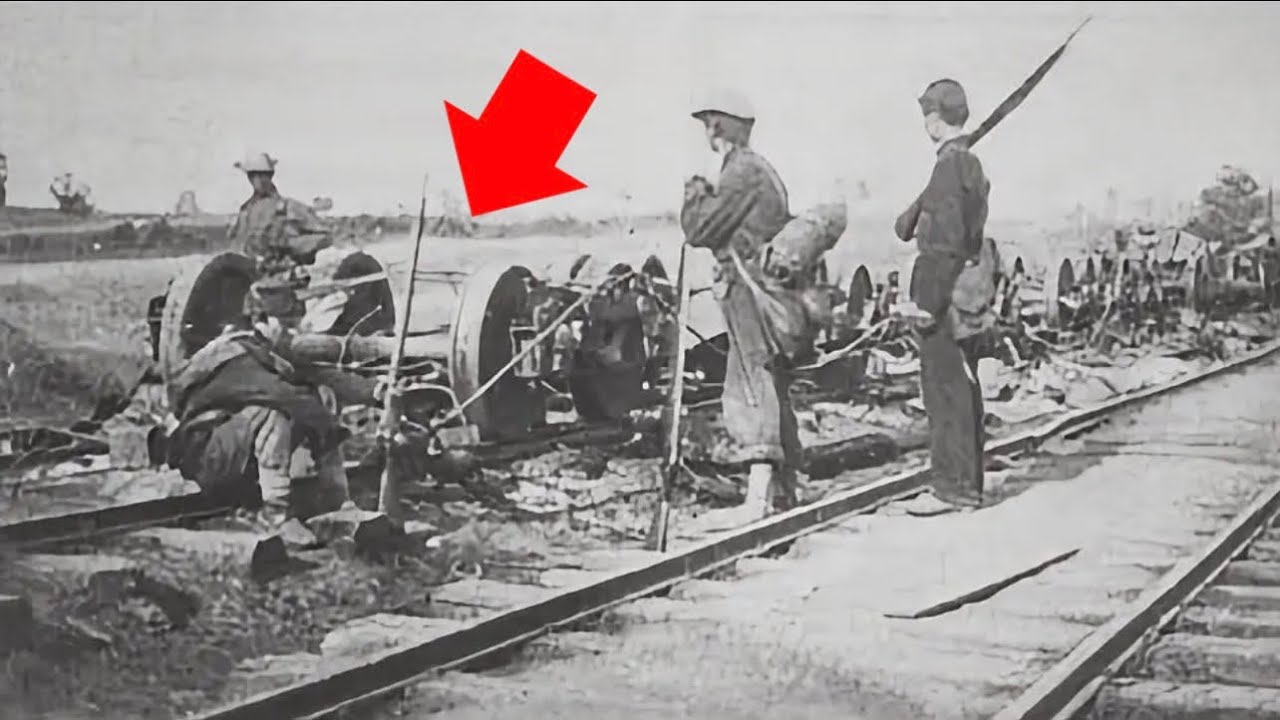
What Union engineers actually accomplished in those nine days helped shape the course of the entire war, yet almost no one today knows their names. This is the story of a construction corps that rebuilt more railroad lines and bridges than any army had ever rebuilt before, working faster than the men trying to destroy what they built. Confederate cavalry burned bridges, ripped out miles of track, and twisted iron into permanently unusable scrap, over and over again, throughout four years of war. Union engineers followed them and had trains running again within days, sometimes within hours.
The man behind that bridge was Herman Haupt, a Pennsylvania engineer who had built railroads before the war. Lincoln personally appointed him in 1862 to solve a problem that was quietly threatening to lose the Eastern Theater for the Union. Armies in the 1860s could not sustain themselves through foraging alone, not at the level the Civil War required. A single corps of twenty thousand men needed a constant supply of food, ammunition, and horse fodder, which no wagon train could deliver fast enough over any real distance.
Railroads were the only technology capable of moving that volume of material quickly enough to keep an army fighting more than a few days from its base. Whoever controlled the railroads and kept them running under active sabotage held a strategic advantage no cavalry or infantry charge could match. Confederate leaders understood this as well as anyone in the Union army and built their entire raiding strategy around it. Cavalry commanders like Jeb Stuart, and the Confederate raiders who followed throughout the war, made railroad destruction a primary objective whenever they operated behind Union lines, and they became genuinely skilled at it.
Burning a wooden bridge was simple enough. Destroying the rails themselves required more care, because rails that were simply pulled up could be reinstalled in hours. Confederate soldiers developed a method that solved that problem with brutal efficiency. They heated iron rails over fires built from wooden crossties until the metal glowed, then wrapped the softened rails around trees or telegraph poles, twisting them into shapes known, with dark humor on both sides, as Sherman neckties, after Union soldiers later used the same method against Confederate lines.
A rail bent that way could not simply be straightened and reused. It had to be melted down and reforged from scratch, which made Confederate raiders reasonably believe that a well-executed strike could knock a railroad out of service for weeks. They were wrong, and the reason is the heart of this story. Haupt did not merely repair what Confederate raiders destroyed.
He redesigned the entire process of railroad construction and repair around a single principle never before applied on this scale: standardization. Instead of building each bridge as a unique engineering project tailored to its location, as was customary, Haupt’s construction corps developed prefabricated truss designs that could be assembled from interchangeable, pre-cut wooden components. Crews did not need to design a bridge on site. They only needed to know the span length and height, select the appropriate standard components, and assemble them using techniques the corps practiced repeatedly until the process became closer to disciplined military drill than traditional construction work.
The bridge Lincoln joked about, the Potomac Creek bridge, rebuilt in nine days after Confederate forces burned it, demonstrates exactly what this standardization made possible. The original bridge, built by traditional nineteenth-century methods, had taken months. Haupt’s crew rebuilt a structure of similar size and load capacity, four hundred feet long and tall enough for locomotives to cross eighty feet above the stream, using undried timber cut directly from nearby forests, in nine days, with a workforce that included soldiers who had received no previous training in bridge building before joining the construction corps. The mathematics behind the achievement made it so astonishing to contemporaries.
A traditional bridge of that size, using properly seasoned timber and conventional carpentry methods, represented months of skilled craftsmen’s labor. Haupt’s crews compressed the same structural result into just over a week by replacing traditional workmanship with a repeatable, teachable process. Standard components solved only part of the problem, because a bridge was useless without tracks leading to it, and Confederate raiders excelled at destroying railroad lines over long distances rather than focusing only on individual crossing points. This is where Haupt’s second major innovation emerged, one no less important than the first, involving something almost no one outside the construction corps had seriously considered: the supply chain behind railroad repair itself.
Haupt insisted that repair materials, replacement rails, spikes, prefabricated bridge trusses, and tools be ready and packaged for transport before damage occurred, rather than manufactured or gathered reactively after raids. Repair trains were kept stocked and distributed at forward depots, specifically so a construction crew could move immediately upon learning a section of track had been destroyed, carrying everything they needed, instead of waiting days for materials to be found and shipped to the damage site. It is easy to overlook this logistical preparedness in a story about burned bridges and rails, but it was unquestionably the most important factor in the speed of Union crews. Confederate raiders, however skilled, operated on their own schedule, striking when opportunity arose and withdrawing before Union cavalry could respond.
Union repair crews, by contrast, worked within a system designed specifically to minimize the gap between damage and restoration, with materials prepositioned based on which lines were most vulnerable to raids at any stage of a campaign. The Confederates improvised destruction. The Union executed a planned, premeditated response to destruction that was anticipated before it happened. The men who did this work deserve particular attention, because the construction corps did not employ the kind of staff most people imagine when they think of Civil War engineering units.
A large part of the workforce consisted of formerly enslaved men who had escaped to Union lines and found work with railroad construction crews, alongside soldiers from infantry regiments and civilian contractors hired for their prewar railroad experience. Haupt trained this diverse workforce into units capable of executing complex bridge assembly under time pressure that would have been considered extraordinary even in peacetime. Crews practiced assembling standard truss sections over and over until the process became almost mechanical. That repetition was what allowed them to work at the speed they ultimately achieved under real combat conditions.
Sometimes they rebuilt track while Confederate skirmishers were close enough to pose a genuine security threat to the work crews. Sherman’s campaign against Atlanta in 1864 provided the clearest large-scale demonstration of what this system could accomplish once fully developed. Sherman’s advance depended entirely on a single railroad line running back to Chattanooga and on to Louisville, a supply line attacked repeatedly throughout the campaign by Confederate cavalry under Nathan Bedford Forrest and Joseph Wheeler, who recognized that severing Sherman’s rail connection could force his entire army to retreat regardless of how battles went. Sherman’s construction crews, organized according to the same principles Haupt had developed earlier in the war, repaired damage quickly enough that Sherman later wrote in his memoirs that he had come to regard Southern raids on his railroad as more of a nuisance than an actual threat to his campaign.
That level of confidence would have been unthinkable for any Union commander earlier in the war. One specific incident from that campaign captures the psychological impact this speed had on Confederate soldiers watching it happen. Confederate forces destroyed a section of track and a bridge along Sherman’s supply line. According to the account Sherman himself told and clearly enjoyed repeating, Confederate soldiers watching from a distance saw Union repair crews arrive and begin reconstruction almost immediately.
One Confederate soldier, according to the story Sherman later repeated, pointed to the men around him and said there was no point in destroying Sherman’s railroad anymore because Sherman apparently carried spare tunnels in his pocket. The comment was almost certainly exaggerated in the retelling, the kind of story that sharpens with each repetition, but the sentiment behind it reflected something real. Confederate soldiers who had spent years believing destroying a railroad meant weeks of disruption for their enemy were now watching the same destruction repaired within a single day, sometimes while the raiding party that caused it was still close enough to see the smoke of new construction. The psychological dimension mattered as much as the practical one, because Confederate raiding strategy depended on more than just physical damage.
It depended on forcing Union commanders to divert resources toward defending railroads, on disrupting Union operational timing, and on proving to Confederate soldiers and the Southern public that Union supply lines remained vulnerable no matter how far Union armies advanced into Confederate territory. Every time Union crews restored a damaged line faster than raiders thought possible, that entire strategic logic weakened a little more. Raids that failed to produce meaningful disruption were not worth the risk cavalry commanders took in carrying them out. By the final years of the war, some Confederate cavalry officers were openly questioning whether railroad raids were still worth the resources they consumed, given how quickly Union crews had learned to respond.
The contrast with the Confederate railroad situation is where this story becomes as much about industrial capacity as engineering ingenuity. The Confederacy could not have replicated Haupt’s system even if its leaders had identified the same principles. The Union construction corps depended on a steady supply of prefabricated components, which required operating sawmills, iron foundries capable of mass-producing spikes and fittings, and a dense railroad network fast enough to move those components wherever repair crews needed them. The Confederacy had almost none of this at the required level.
Confederate railroads deteriorated steadily as the conflict continued, already operating with incompatible gauges between different states and companies before the war began, with worn rails left unreplaced and locomotives breaking down for lack of local manufacturing capacity to produce spare parts. A Confederate engineer facing the same repair challenge Union crews solved routinely had to search for seasoned timber, hammer out replacement iron components by hand, and coordinate transport across a rail network that was itself collapsing from ordinary wear, all without the industrial base that made standardization possible in the Union. This disparity meant that even when Confederate forces successfully damaged Union railroads, causing genuine short-term disruption to Union supply schedules, the strategic value of that damage kept shrinking steadily as the war progressed, while the reverse was never true for the Confederacy’s fragile rail network. When Union cavalry raids or Sherman’s deliberate destruction campaigns targeted Confederate railroads later in the war, the damage proved far harder for the Confederacy to repair because the underlying industrial capacity for rapid rebuilding simply did not exist south of the Mason-Dixon line at any level approaching what the Union had developed.
Sherman’s March to the Sea in late 1864 exploited this disparity deliberately, with Union soldiers destroying railroad infrastructure in Georgia using methods designed specifically to be difficult to repair, knowing full well the Confederacy lacked anything like Haupt’s construction corps to respond. Haupt’s relationship with the Union military command was not the smooth partnership this story might suggest so far, and this friction deserves understanding because it explains why his methods almost never got a chance to prove themselves. Haupt was a civilian engineer who repeatedly clashed with military officers unaccustomed to receiving operational direction from someone outside the traditional chain of command, and his insistence on running railroads according to strict engineering discipline rather than deferring to generals’ preferences created tension throughout his tenure. On multiple documented occasions, Haupt refused to allow military officers to seize trains for purposes that would have disrupted carefully scheduled repair and supply operations, arguing that undisciplined use of railroad capacity would ultimately cost the army more than any officer’s immediate convenience was worth.
This made him unpopular with some commanders accustomed to giving orders and having them obeyed without question, and it ultimately contributed to Haupt’s resignation from his position in 1863, frustrated with a military bureaucracy that valued rank and compliance over the specific technical expertise that had made his construction corps so effective in the first place. What makes this worth including in the story is what happened after Haupt left. The standardized systems and methods he built survived his personal involvement because he had spent his tenure training the construction corps to operate according to documented, repeatable procedures rather than relying on his presence and individual judgment. The prefabricated bridge designs, the pre-stocked repair depots, the trained assembly techniques, all continued to function under his successors because Haupt built an institutional system rather than simply solving problems personally whenever they appeared.
The distinction between solving a problem and building a system capable of solving it repeatedly without the person who originally solved it is part of why the construction corps continued performing at the level it achieved during the final years of the war, long after the man who created it had moved on to other work. The United States Military Railroad, the organization that grew from Haupt’s early work, became one of the largest railroad operations in the world by the final years of the war, controlling and managing more miles of track than most established commercial railroad companies of that era, supported by a workforce estimated in the tens of thousands, running trains on precisely coordinated schedules that amazed even experienced railroad men from the prewar civilian industry. Grant’s Overland Campaign in 1864 and the long siege of Petersburg that followed depended on railroad supply lines that had to operate continuously across hundreds of miles of contested Virginia territory, feeding an army so large that its daily supply requirements exceeded anything any previous American military campaign had ever demanded. Without a construction and repair system capable of keeping those lines operational despite Confederate efforts to cut them, Grant’s entire strategy of sustained pressure against Lee’s army would have been logistically impossible to execute for anything approaching the duration it actually lasted.
City Point, Virginia, the massive Union supply depot that supported the siege of Petersburg, demonstrates how sophisticated this system had become by the war’s final year. Union engineers built an entirely new railroad connection specifically to link City Point’s docks to the siege lines around Petersburg, and built it quickly enough to become operational while the siege was still in its early weeks, moving supplies directly from ships arriving on the James River to Union positions miles inland without the wagon transport that had caused bottlenecks in earlier campaigns. That single piece of infrastructure, built essentially from nothing within weeks, represented exactly the kind of rapid, standardized construction capability Haupt had pioneered two years earlier at a burned bridge outside Fredericksburg, now scaled up to support the largest siege operation in American military history. Historians who study military logistics have long argued that this kind of applied capability, the organizational systems that convert raw material advantage into usable battlefield effect, tends to receive far less attention than tactics and strategy, even though it often determines which side can actually sustain the tactics and strategies its commanders design.
Grant understood this instinctively, even if he rarely discussed it in those terms, designing his entire 1864 campaign around continuous pressure precisely because he trusted the railroad system behind him to keep working regardless of what Confederate raiders tried to do against it, a level of confidence that would have been considered reckless under any previous Union command. The men who did this work rarely appear in popular memory of the Civil War the way generals and battle soldiers do, and this omission says something about how military history is usually remembered. No one built monuments to the construction corps crews who rebuilt the Potomac Creek bridge in nine days using green timber and repeatable procedures. No regimental histories celebrate the emancipated slaves whose efforts kept Sherman’s supply line running through Georgia while Forrest’s cavalry repeatedly tried to cut it.
Popular memory gravitated toward the dramatic and the personal, the charge, the stand, the individual act of courage under fire, while the systems that actually made sustained Union campaigns possible faded into the margins, mentioned briefly if at all. But the soldiers who fought in the Wilderness, at Spotsylvania, and at Petersburg ate because that system worked. They had ammunition because that system worked. Grant was able to sustain a campaign of continuous pressure against Lee’s army for eleven months, something no previous Union commander had achieved for more than a few weeks at a time, precisely because the railroad supply lines behind him kept functioning despite everything Confederate cavalry threw against them.
Herman Haupt built something that outlasted his tenure, survived the friction with military commanders who opposed his methods, and ultimately withstood the Confederacy’s entire strategy of using cavalry raids to disrupt Union logistics. He did it with prefabricated bridge trusses, pre-stocked repair depots, and a workforce trained to execute complex construction under time pressure most peacetime engineers considered impossible. Lincoln’s joke about beanpoles and cornstalks captured a genuine truth about the construction corps, one that more serious descriptions entirely missed. The materials themselves were nothing special: green timber cut from nearby forests, iron spikes cast in Northern foundries, techniques any trained crew could learn and repeat.
What made the difference was never the materials. It was the system built around them, a system that transformed railroad reconstruction from a slow, improvised craft into a disciplined, repeatable military operation. That is the part of the Civil War that rarely appears in popular accounts, and it is arguably one of the most important parts. The war was not decided only by which army fought harder on a given afternoon.
It was decided in large part by which side could keep its army fed, supplied, and moving long enough to fight that afternoon in the first place, thanks to the forgotten engineers and emancipated laborers who made sure the supply line kept working faster than anyone trying to cut it could tear it down.