Ernst Kaltenbrunner was not the most famous name in the Nazi hierarchy. He was not Himmler, not Heydrich, not Göring. But when the war ended and the prosecutors at Nuremberg began assembling their cases against the surviving leaders of Nazi Germany, one name stood out among all the rest as the man who had held in his hands the machinery of terror itself. He was the head of the Reich Security Main Office, the RSHA, the organization that controlled the Gestapo, the SD, the Kripo, and the entire apparatus of Nazi surveillance, arrest, torture, and extermination. He was the man who, after the assassination of Reinhard Heydrich in 1942, stepped into the shoes of one of history's most feared killers and ran that empire of darkness all the way to Germany's collapse. And yet, even now, his name is less well known than those of the generals and politicians who sat alongside him in the dock at Nuremberg.
Ernst Kaltenbrunner was born on October 4th, 1903, in the small town of Ried im Innkreis in Upper Austria. His father, Hugo Kaltenbrunner, was a lawyer, a respected member of the provincial bourgeoisie who provided his family with a comfortable, ordered existence. His mother, Theresia, was the daughter of an Austrian civil servant. The household was solidly middle-class, Catholic in its cultural sensibility, and keenly aware of status and respectability. Young Ernst was a physically imposing boy from an early age. He grew tall and broad-shouldered with a lean, angular face marked by high cheekbones and deep-set eyes beneath a prominent brow. His most distinctive feature was a set of vivid dueling scars on both cheeks, acquired during his student years when fraternity dueling was still a common practice among Austrian university men. These scars would remain with him for the rest of his life, giving him a menacing, almost theatrical appearance that was remarked upon by virtually everyone who encountered him. Allied interrogators after the war described him as physically intimidating, even in defeat, a large man whose scarred face and cold gaze projected an air of contained violence even when he was attempting to cooperate. His height, reportedly around 6 ft and 2 in, made him tower over many of his SS colleagues, and he cultivated a physical bearing that emphasized his natural dominance. After completing his early schooling in Linz, where the family had moved when Ernst was a boy, he followed his father into the law, enrolling at the Graz University of Technology in 1921 to study law and chemistry. Linz is a name worth noting in the context of Austrian Nazi history, because it was also the city where Adolf Hitler had grown up, walking the same streets, attending schools in the same provincial capital, growing up under the same gray Austrian skies. Whether Kaltenbrunner ever reflected on this geographical coincidence is not recorded, but it was Linz that shaped both of them in their formative years, that industrial city on the Danube where the discontents of the declining Habsburg world were felt perhaps more keenly than anywhere else. The German nationalist sentiment that pervaded Linz in the late 19th and early 20th centuries was the air that young men like Kaltenbrunner breathed, and it left its mark. By the time he reached university age, Kaltenbrunner was already developing political views that would draw him increasingly toward the most extreme expression of that nationalist tradition. At Graz, Kaltenbrunner was a competent, if not exceptional, student, eventually earning his law degree in 1926. But it was his extracurricular activities that defined his university years. He became deeply involved in the German nationalist fraternities that dominated student life at Austrian universities in this period, organizations that combined the social rituals of the dueling core with an increasingly explicit commitment to pan-German nationalism, and by the mid-1920s with the emerging ideology of National Socialism. It was in these circles that the young Kaltenbrunner absorbed the foundational ideas that would guide his entire subsequent career, the belief in German racial superiority, the virulent anti-Semitism that attributed every social and economic ill to Jewish influence, the conviction that Austria's destiny lay in union with a greater German Reich, and the readiness to use violence as a political tool. These were not abstract philosophical positions for Kaltenbrunner, they were the lived beliefs of his social world, reinforced daily by the company he kept and the organizations he joined. His formal entry into the Nazi movement came in 1930 when Kaltenbrunner joined the National Socialist German Workers' Party, receiving party membership number 300,179. Austria in 1930 was a country in deep crisis, buffeted by the economic catastrophe of the Great Depression, divided between a conservative Catholic establishment represented by the Christian Social Party and a powerful Social Democratic movement centered in Vienna, with the Nazis representing a third force of growing menace. For Kaltenbrunner, joining the party at this relatively early stage was not yet the obvious choice it might appear in retrospect. The Austrian Nazi Party was still a minor political organization in 1930, operating largely in the shadow of its German counterpart, dependent on money and guidance from Munich, and regarded by many Austrians as a dangerous foreign import. That Kaltenbrunner joined in this early period speaks to the depth of his ideological commitment. He was not an opportunist jumping aboard a rising train, he was a true believer who had found in National Socialism the perfect political vehicle for beliefs he already held. The following year, in 1931, Kaltenbrunner took the additional step of joining the SS, the Schutzstaffel, Heinrich Himmler's elite paramilitary organization. His SS number was 13,039, a relatively low number that reflected his early entry into an organization that would eventually number in the hundreds of thousands. The SS in 1931 was still in the process of its transformation from a bodyguard unit for Nazi leaders into the vast ideological and security empire that Himmler envisioned. For a young Austrian lawyer with nationalist convictions, a physically imposing presence, and the kind of cold, calculating intelligence that impressed Himmler's recruiters, the SS was a natural home. He was exactly the type of man Himmler wanted, educated, ideologically committed, physically formidable, and willing to do whatever the organization required. His rise through the ranks began immediately. By the end of 1931, he held the rank of SS-Sturmführer, and he continued to advance steadily through the years that followed. The political situation in Austria through the early 1930s was one of mounting tension and episodic violence. The Austrian government, under Chancellor Engelbert Dollfuss, was growing increasingly authoritarian, and by 1933 and 1934, it was moving to suppress both the Social Democrats and the Nazis with equal determination. For Kaltenbrunner, this meant operating in increasingly dangerous conditions. The Austrian SS was officially banned by the government in 1933, but continued to function underground, and Kaltenbrunner became one of its most important figures in the region around Linz and Upper Austria. He organized cells, recruited members, maintained communications with the German SS across the border, and engaged in the clandestine political violence that characterized the Nazi underground in Austria during these years. This was genuinely dangerous work. The Austrian security services were active, and members of the illegal SS faced arrest, imprisonment, and in some cases physical beatings at the hands of the Heimwehr paramilitaries, who served as an unofficial arm of the Dollfuss government. In May 1934, Kaltenbrunner's luck ran out, and he was arrested by Austrian authorities for plotting against the state, accused of organizing an effort to acquire explosives and overthrow the government. He was imprisoned for 6 months, and during his time in prison, he was dismissed from his position as a lawyer in the Linz court system. It was a setback, but not one that derailed his trajectory. If anything, his imprisonment and dismissal only strengthened his commitment to the Nazi cause. He emerged from prison in 1935 with his ideological convictions intact and his determination hardened. He continued his work with the illegal SS, and by 1937 he had risen to the rank of SS-Standartenführer, the equivalent of a colonel, in the Austrian SS. His organizational skills, his ideological reliability, and his ability to operate effectively in the dangerous conditions of the Nazi underground had all been noted by his superiors, and his star was clearly on the rise. The year 1938 brought the Anschluss, the annexation of Austria by Nazi Germany, and with it the transformation of Kaltenbrunner's fortunes. The Nazi underground in Austria emerged from the shadows, and Kaltenbrunner, who had been one of its most effective operatives, was rewarded for his loyalty and service. In March 1938, immediately following the Anschluss, he was appointed to the position of State Secretary for Public Security in the Austrian government, a position that gave him control over the entire police apparatus of the newly absorbed Ostmark. It was a rapid rise, but it was only the beginning. Over the next few years, Kaltenbrunner's career would follow an arc that carried him from regional police commander to one of the most powerful men in the Nazi security state. The story of that rise, and of the crimes committed under his authority, is the story of how a provincial lawyer from Upper Austria became the man who controlled the machinery of terror across an entire continent. His advancement through the SS hierarchy in the years after the Anschluss was rapid. In 1938, the year of the German annexation of Austria, Kaltenbrunner was promoted to SS-Brigadeführer, and by January 1943, he had reached the rank of SS-Obergruppenführer, a four-star general in the SS, and had been appointed to the position that would define the rest of his career, Chief of the Security Police and the SD, and head of the Reich Security Main Office. He had succeeded Reinhard Heydrich, the man whom Hitler himself had called "the man with the iron heart," and who had been assassinated by Czech agents in 1942. Kaltenbrunner was not the first choice to replace Heydrich, but he was the one who ultimately got the job, and he held it until the very end of the war. The Reich Security Main Office, or RSHA, was the central institution of Nazi terror. It combined the Gestapo, the secret state police, the SD, the security service of the SS, the Kripo, the criminal police, and the entire apparatus of Nazi intelligence and surveillance into a single, unified command structure. Under Kaltenbrunner's leadership, the RSHA continued to function as the beating heart of the Nazi police state, coordinating the arrest, imprisonment, and murder of political opponents, the deportation of Jews and other victims to concentration and extermination camps, and the brutal occupation policies in the conquered territories of Eastern Europe. Kaltenbrunner was not just an administrator of this system, he was a true believer in it. He was a man who had joined the Nazi Party in 1930, who had risen through the ranks of the SS through a combination of ideological commitment, personal loyalty to Himmler, and a willingness to do whatever the organization required. He was not a reluctant participant in the machinery of mass murder, he was an enthusiastic and efficient executor of its policies. His role as head of the RSHA made him, in effect, the chief of police for the entire Nazi empire, responsible for the Gestapo, the SD, the Kripo, and the entire apparatus of surveillance, arrest, torture, and extermination that defined the Nazi security state. The crimes that were carried out under his authority were not abstract policy decisions made by distant bureaucrats. They were direct, personal, and horrifying. The RSHA, under Kaltenbrunner's leadership, was responsible for the deportation of Jews from all over Europe to the death camps in the East. It was responsible for the murder of hundreds of thousands of people in the occupied territories of the Soviet Union through the activities of the Einsatzgruppen, the mobile killing squads that followed the German army into the East. It was responsible for the brutal suppression of resistance movements across occupied Europe, for the torture and murder of captured Allied agents, for the operation of the concentration camp system, and for the coordination of the Holocaust itself. As the head of the RSHA, Kaltenbrunner had direct authority over the entire apparatus of Nazi terror. He was the man who signed off on the orders that sent countless thousands of people to their deaths in the concentration camps, who directed the Gestapo in its relentless pursuit of enemies of the regime, who oversaw the murder of Allied commandos and downed airmen, and who, in the final months of the war, was one of the most powerful men in the entire Nazi state. He was, in the words of one historian, the most powerful man in the entire Nazi state after Hitler and Himmler, and arguably more powerful than Himmler in the final months of the war. And yet, when the war ended, he was not the most famous name at Nuremberg. He was not Göring, whose colorful personality dominated the proceedings, not Hess, whose bizarre behavior captured the world's attention, not even his nominal superior Himmler, who escaped justice by suicide. Kaltenbrunner was something different, something perhaps even more disturbing to the Allied prosecutors who encountered him. He was not a flamboyant ideologue or a self-aggrandizing showman. He was a bureaucrat of terror, a man who had risen through the ranks of the SS by demonstrating an almost total commitment to the Nazi project and a complete absence of moral scruple. He was the kind of man who could sit at his desk in the Prinz-Albrecht-Strasse in Berlin, signing orders that sent thousands to their deaths, and then return home to his family in the evening as if he had spent the day doing nothing more demanding than reviewing paperwork. The transformation of Ernst Kaltenbrunner from provincial lawyer to the head of the most feared security apparatus in history was not the product of a single dramatic event, but of a series of incremental steps, each one taking him deeper into the machinery of Nazi terror. His early career in the Austrian SS was characterized by a combination of ideological commitment, personal ambition, and a willingness to use whatever methods were necessary to advance the Nazi cause. He organized the illegal SS in Upper Austria, he built up intelligence networks, he maintained contacts with the German SS leadership across the border, and he demonstrated a capacity for organization and ruthless efficiency that did not go unnoticed by his superiors. The Austrian Nazi Party in the early 1930s was a movement under pressure, banned by the Dollfuss government, infiltrated by police informers, and divided between those who favored gradual legal penetration of the Austrian state and those who advocated violent overthrow. Kaltenbrunner belonged firmly to the latter camp. He was not a man who believed in patient political processes or legal strategies. He was a man of action, a true believer in the Nazi vision of a Greater German Reich, and he was willing to use whatever means necessary to bring that vision about. His arrest in 1934 and subsequent imprisonment only deepened his commitment. When he was released after six months, he returned to his underground activities with renewed determination, and his reputation within the Austrian SS continued to grow. The year 1938 was the turning point in Kaltenbrunner's career, as it was for so many Austrian Nazis. The Anschluss, the annexation of Austria into the German Reich, transformed the political landscape overnight. What had been an illegal underground movement became the official face of the new order, and the men who had risked imprisonment and worse for their Nazi beliefs were rewarded with positions of power and authority. For Kaltenbrunner, the rewards were immediate and substantial. He was appointed to the Austrian government as State Secretary for Public Security in the newly formed Nazi administration, a position that gave him control over the entire Austrian police apparatus. It was a significant promotion for a man who, just a few years earlier, had been operating as an underground SS organizer in the hills of Upper Austria. But it was only the beginning. The same year, 1938, Kaltenbrunner was appointed to the Reichstag, and in 1939, he was made the highest SS and police leader for the entire Austrian region, a position that made him the supreme SS authority in his home country. These were not honorary positions. They gave Kaltenbrunner direct control over the police and security apparatus in Austria, and he exercised that control with the same cold efficiency that would characterize his entire career. The Anschluss, the German annexation of Austria in March 1938, had been a moment of triumph for Austrian Nazis like Kaltenbrunner, who had spent years working for exactly this outcome. The enthusiasm with which the Austrian public greeted the arrival of German troops is well documented, and for men like Kaltenbrunner, the Anschluss represented the fulfillment of a lifelong dream. Austria was now part of a greater German Reich, and the Austrian Nazis who had fought for this outcome were rewarded with positions of power and influence. Kaltenbrunner's reward came in 1938 when he was appointed as the Austrian State Secretary for Public Security, a position that placed him at the head of the entire Austrian police apparatus. It was a significant step up, but it was only the beginning. In 1941, Kaltenbrunner was appointed as the commander of the SS and police in the Donau section, which included his native Upper Austria, and by 1943, he had reached the very top of the Nazi security apparatus. On January 30, 1943, he was appointed chief of the Reich Security Main Office, the RSHA, replacing the assassinated Reinhard Heydrich. It was a promotion that would place him at the very heart of the Nazi terror machine. The RSHA was the central security and intelligence organization of the Third Reich, a vast bureaucratic empire that brought together the Gestapo, the SD, the criminal police, and a range of other security and intelligence agencies under a single command. As its chief, Kaltenbrunner was directly responsible for the coordination and execution of the regime's most brutal policies. He was the man who controlled the machinery of the Holocaust, the man who oversaw the Gestapo's campaign of terror against all perceived enemies of the Reich, the man who directed the SD's intelligence operations across Europe and beyond. He was, in short, the man who held in his hands the entire apparatus of Nazi terror. His appointment to this position in January 1943, following the assassination of Reinhard Heydrich the previous year, was a testament to his reputation as a ruthless and effective administrator. He had spent the previous years as the Higher SS and Police Leader for the Donau region of Austria, where he had demonstrated his willingness to use any means necessary to suppress opposition to the Nazi regime. He was also a close associate of Heinrich Himmler, and it was Himmler who pushed for his appointment as head of the RSHA. The RSHA, or Reichssicherheitshauptamt, was the central security office of the SS, and it was the nerve center of the Nazi terror apparatus. It was responsible for the Gestapo, the secret state police; the SD, the Sicherheitsdienst or security service; the Kripo, the criminal police; and the entire apparatus of surveillance, arrest, torture, and extermination that the Nazis had developed over the previous decade. As its head, Kaltenbrunner was responsible for the implementation of the Holocaust across the occupied territories of Europe, the coordination of the Einsatzgruppen killing squads that had already murdered more than a million people in the East, the administration of the concentration camp system, the Gestapo's campaign of terror against all perceived enemies of the Reich, and the collection of intelligence that fed the entire Nazi security apparatus. He was, in effect, the highest-ranking police official in the Third Reich, with direct authority over the entire machinery of state security and terror. It was a position that made him, in the words of one historian, "the most powerful man in Nazi Germany after Hitler and Himmler," and it gave him direct responsibility for some of the most heinous crimes of the entire Nazi era. The RSHA, which he headed, was the central organ of Nazi terror, the organization that coordinated the activities of the Gestapo, the SD, and the criminal police in a single, unified apparatus designed to identify, isolate, and eliminate every real or perceived enemy of the Nazi state. Under his leadership, the RSHA would become even more efficient, more ruthless, and more deadly than it had been under his predecessor. But before we get to that part of the story, we need to understand how he got there, and the path that led him from the provincial world of Austrian law to the very heart of the Nazi security empire. The years between Kaltenbrunner's joining the SS in 1931 and his appointment as head of the RSHA in 1943 were years of steady, methodical advancement through the ranks of the Nazi security apparatus. After the Anschluss, the annexation of Austria into Nazi Germany in March 1938, Kaltenbrunner's career received a massive boost. As an Austrian Nazi who had been active in the underground movement, he was perfectly positioned to take advantage of the new order. He was appointed to the Austrian State Council and given the rank of SS-Brigadeführer, a general's rank in the SS. His task was to integrate the Austrian police and security services into the German system, a job he carried out with his characteristic efficiency and ruthlessness. The Anschluss was a turning point for many Austrian Nazis, but for Kaltenbrunner it was simply the beginning of his real career. He was now a senior figure in the SS security apparatus, and he was determined to prove himself. In 1938, he was appointed as the Higher SS and Police Leader for the Danube region, which placed him in command of all SS and police forces in the area around Vienna. It was a position of considerable power, and Kaltenbrunner used it to demonstrate his commitment to the ideological mission of the SS. He oversaw the construction of the Mauthausen concentration camp in Upper Austria, which would become one of the most notorious death camps in the entire Nazi system. Mauthausen was a camp of a special kind, a place where the SS sent those they classified as the enemies of the Reich, political prisoners, resistance fighters, Jews, Soviet prisoners of war, and those deemed to be racially or socially undesirable. It was a place of brutal forced labor in the granite quarries, where prisoners were worked to death in conditions of extreme cruelty, and where the SS conducted some of the most barbaric medical experiments of the entire Nazi era. Kaltenbrunner's connection to Mauthausen was direct and personal. He had been instrumental in its establishment in 1938, shortly after the Anschluss, and he maintained a close relationship with the camp throughout his career. He visited it on multiple occasions, including one infamous visit in 1943 when he watched the execution of prisoners by hanging and gas. This was not a man who merely signed documents in Berlin and averted his eyes from the consequences of his orders. This was a man who went to see the killing firsthand, who witnessed the machinery of death in operation and found nothing objectionable in it. It was this combination of ideological commitment, administrative competence, and personal brutality that would eventually bring Kaltenbrunner to the attention of the highest levels of the Nazi hierarchy. His rise through the SS ranks in the 1930s was steady and impressive. By 1935, he had been promoted to the rank of SS-Brigadeführer, and by 1938, he had become the leader of the SS and police in the entire Austrian region, a position that made him one of the most powerful men in the country. When Germany annexed Austria in the Anschluss of March 1938, Kaltenbrunner was perfectly positioned to benefit. He had been one of the most senior Nazis in Austria during the years of illegality, and his loyalty to the cause was beyond question. In 1941, he was promoted to SS-Gruppenführer and given command of the SS and police forces in the Donau section of the Reich, a position that placed him in charge of all SS and police operations in the region around Vienna. It was during this period that Kaltenbrunner first came to the attention of Heinrich Himmler as a man who could be relied upon to carry out the most difficult and brutal tasks without hesitation or moral qualms. He was known within the SS as a hard man, an uncompromising enforcer of Nazi policy, a man who could be counted on to do what needed to be done without the kind of moral scruples that plagued some of his colleagues. This reputation would serve him well in the years to come. The assassination of Reinhard Heydrich in 1942 was the event that would change Kaltenbrunner's life forever. Heydrich, the head of the Reich Security Main Office, had been the second most powerful man in the SS hierarchy, after Himmler himself, and his death at the hands of Czechoslovak agents in May 1942 sent shockwaves through the Nazi leadership. Himmler needed a successor who could be trusted to continue Heydrich's work without missing a beat, someone with the right ideological commitment, the right administrative skills, and the right willingness to do whatever was necessary to maintain the machinery of terror. Kaltenbrunner, by this point, had risen to become the senior SS and police leader for the entire country of Austria, a position of considerable power that had allowed him to demonstrate his abilities as an organizer, his ideological reliability, and his willingness to use violence without hesitation. He had also developed a reputation for personal ruthlessness that impressed his superiors. When Himmler looked for a new head of the RSHA, he wanted someone who could be trusted to continue the work that Heydrich had begun, and Kaltenbrunner seemed to fit the bill. On January 30, 1943, Ernst Kaltenbrunner was appointed Chief of the Security Police and the SD, head of the Reich Security Main Office, and thus one of the most powerful men in the entire Nazi security apparatus. He was 39 years old. The RSHA that Kaltenbrunner now commanded was not merely a police force. It was the central institution of Nazi terror, a vast bureaucratic empire that combined the state security apparatus with the party's own intelligence and security services into a single, unified machine of repression. Its various departments controlled the Gestapo, the secret state police responsible for hunting down political opponents and enemies of the regime; the SD, the Sicherheitsdienst, which served as the Nazi Party's intelligence agency and was responsible for assessing the ideological reliability of the population and identifying enemies of the state; the Kripo, the criminal police, which handled ordinary criminal investigations but also dealt with the so-called professional criminals and asocials who were among the first victims of the concentration camp system; and a vast array of other offices and departments responsible for everything from border security to espionage to the administration of the occupied territories. The RSHA was the beating heart of the Nazi terror state, and Kaltenbrunner was its head. To understand the significance of Kaltenbrunner's role, it is necessary to understand what the RSHA actually was. The Reich Security Main Office was created by Himmler in 1939 as a way of consolidating the various police and intelligence agencies of the Nazi state under a single command structure. It brought together the Gestapo, the secret state police responsible for political repression, the SD, the Nazi Party's own intelligence service, the Kripo, the criminal police, and the entire apparatus of the Sicherheitspolizei, the security police, into a single organization that reported directly to Himmler. The RSHA was the beating heart of the Nazi terror state, the organization that identified enemies of the regime, tracked them down, arrested them, interrogated them, tortured them, and ultimately murdered them. It was the RSHA that planned and coordinated the Einsatzgruppen, the mobile killing squads that followed the German army into the Soviet Union and carried out the mass shootings that killed more than a million Jews and tens of thousands of others. It was the RSHA that organized the deportation of millions of European Jews to the death camps, the logistics of the Holocaust, the roundups, the train schedules, the bureaucratic machinery of genocide. And it was the RSHA that ran the concentration camp system, the network of prisons and labor camps where the regime's enemies were held without trial, tortured, and in many cases murdered. When Kaltenbrunner took over the RSHA in January 1943, he was taking command of an organization that had already been responsible for unimaginable crimes. But he did not merely maintain the machinery of terror that his predecessor had built. He expanded it, refined it, and made it more efficient. He was, in the words of one historian, the man who ran the most powerful police state in history. The RSHA under his leadership was the central nervous system of the Nazi terror apparatus, and Kaltenbrunner was its chief executive officer. He oversaw the expansion of the concentration camp system, the coordination of the Gestapo's surveillance apparatus, the administration of the occupied territories in Eastern Europe, and the implementation of the Final Solution. The Holocaust was not a single event but a vast, complex, and bureaucratically organized process of mass murder that required the cooperation of countless individuals and institutions across the German state and military. It required logistics, planning, coordination, and the willing participation of thousands of ordinary men and women who staffed the killing squads, the death camps, the concentration camps, and the vast network of forced labor that sustained the German war economy. And at the center of this machinery of murder sat the RSHA, the Reich Security Main Office, which Kaltenbrunner headed from 1943 until the end of the war. The RSHA was the institution through which the SS ran the entire apparatus of Nazi terror. It was created in 1939 as a merger of the Security Police and the SD, and it brought together under one roof the Gestapo, the secret state police; the SD, the Nazi Party's own intelligence service; the Kripo, the criminal police; and a vast array of other offices and departments dealing with everything from border security to foreign intelligence. The RSHA was the beating heart of the Nazi police state, the organization that identified enemies of the regime, tracked them down, arrested them, interrogated them, and ultimately either imprisoned them in concentration camps or murdered them outright. It was the RSHA that organized the Einsatzgruppen, the mobile killing squads that followed the German army into the Soviet Union and carried out mass murder on an industrial scale. It was the RSHA that organized the deportation of Jews from across Europe to the death camps, coordinating the logistics of the Holocaust with the same bureaucratic efficiency that other government departments might apply to the postal service or the railways. And it was the RSHA that controlled the Gestapo, the secret state police, which had the power to arrest anyone, anywhere, without charge or trial, and hold them indefinitely in concentration camps. This was the organization that Ernst Kaltenbrunner was chosen to lead in January 1943, and he led it with a brutality and efficiency that would make him one of the most feared men in the entire Nazi hierarchy. His appointment came after the death of Reinhard Heydrich, who had been assassinated by Czechoslovak agents in Prague in May 1942. Heydrich had been the architect of much of the Nazi terror apparatus, and his death created a vacancy at the top of the RSHA that could not be filled by just anyone. Himmler considered several candidates, but ultimately chose Kaltenbrunner, a man he had known for years and whom he trusted to continue Heydrich's work. It was a fateful choice. Kaltenbrunner was not the intellectual equal of Heydrich, but he was intelligent, ruthless, and above all loyal to Himmler. He would need all of those qualities in the years that followed. The RSHA that Kaltenbrunner took over in January 1943 was the nerve center of Nazi terror. It was a vast bureaucratic empire that brought together under one roof the Gestapo, the Secret State Police, which hunted down political opponents and enemies of the regime; the SD, the Sicherheitsdienst, which was the Nazi Party's own intelligence service; the Kripo, the criminal police; and a vast array of other offices dealing with everything from border control to espionage to the management of the concentration camps. Under Himmler's overall command, the RSHA had been run by Reinhard Heydrich, the man whom Hitler himself had once called the man with an iron heart. Heydrich had been the architect of much of the Nazi terror apparatus, and his assassination by Czech agents in 1942 had created a vacancy that Kaltenbrunner, after a period of uncertainty, was chosen to fill. The choice of Kaltenbrunner was not accidental. He was a man who had proven his ideological reliability and his organizational competence in the Austrian SS, and he had the full support of Himmler, who saw in him a loyal lieutenant who would not challenge his authority. When Kaltenbrunner assumed the role of Chief of the Security Police and the SD in January 1943, he took over an organization that was already deeply implicated in the worst crimes in human history. The RSHA, which he now commanded, was the central nervous system of the Nazi terror apparatus. It was the organization that had planned and executed the Night of the Long Knives in 1934, that had organized the SS's role in the Anschluss of Austria, that had overseen the establishment of the concentration camps, that had coordinated the Einsatzgruppen killing squads during the invasion of the Soviet Union, and that had already begun the systematic mass murder of Europe's Jewish population. The machinery of the Holocaust was already in motion when Kaltenbrunner took command, and his job was not to create it from scratch, but to make it more efficient, more comprehensive, and more total. He was not a man to shrink from this task. The RSHA, the Reich Security Main Office, was the central institution of Nazi terror. It had been created in 1939 by Heinrich Himmler as a way of consolidating the various security and intelligence services of the Nazi state into a single organization that could coordinate the regime's war against its enemies both at home and abroad. The Gestapo, the secret state police, was responsible for identifying and neutralizing political opposition. The SD, the Sicherheitsdienst, was the intelligence service of the SS and the Nazi Party, responsible for gathering information on enemies of the state and monitoring public opinion. The Kripo, or criminal police, handled non-political crime but was increasingly drawn into the regime's racial policies. And the Sicherheitspolizei, the security police, coordinated the activities of these various agencies into a single integrated security apparatus. At the head of this entire structure sat the RSHA, and from 1943 onward, that head was Ernst Kaltenbrunner. His appointment to this position in January 1943 was not a reward for past service, though he had certainly served the Nazi cause with distinction. It was a promotion based on his demonstrated competence in the brutal world of Nazi security and policing. Kaltenbrunner had spent the years since the Anschluss, the German annexation of Austria in 1938, building his power base within the Austrian SS, and he had done so with a combination of ideological fervor and bureaucratic ruthlessness that impressed his superiors. He had been involved in the brutal suppression of dissent in Austria, the establishment of the concentration camp system in that country, and the integration of the Austrian police and security services into the German apparatus. His work had not gone unnoticed. In 1941, he was promoted to SS-Gruppenführer, a rank equivalent to lieutenant general, and in 1942, he was appointed as the head of the Reich Security Main Office, the RSHA, following the assassination of Reinhard Heydrich by Czech agents in Prague. This was the position that made him one of the most powerful men in the entire Nazi state. The RSHA was the central security agency of the Third Reich, the organization that coordinated the activities of the Gestapo, the SD, the Kripo, and the entire security apparatus of the Nazi state. It was the nerve center of the Nazi terror system, responsible for everything from political surveillance to the coordination of the Einsatzgruppen killing squads that followed the German army into the Soviet Union and carried out mass murder on an industrial scale. As head of the RSHA, Kaltenbrunner was directly responsible for the implementation of the Holocaust, for the coordination of the concentration camp system, for the suppression of all opposition to the Nazi state, and for the vast network of spies and informants that penetrated every level of German society. He was, in effect, the chief of police of the entire Nazi empire, and he answered only to Himmler, and through him to Hitler himself. The position was one of almost unimaginable power, and Kaltenbrunner wielded it with a cold efficiency that impressed even his SS colleagues. His rise to this position had been steady and methodical. After the Anschluss, the annexation of Austria into the German Reich in March 1938, Kaltenbrunner's career entered a period of rapid acceleration. He was appointed to the Austrian State Secretary for Public Security, making him one of the most powerful figures in the newly incorporated Austrian administration, and he was given the rank of SS-Gruppenführer, a major general's rank in the SS. Over the next several years, he continued to rise through the SS hierarchy, becoming the Higher SS and Police Leader for the Danube region in 1938, and then, in January 1943, he was appointed to the most important position of his career, Chief of the Reich Security Main Office, the RSHA, succeeding the assassinated Reinhard Heydrich. This made him the third most powerful man in the entire SS hierarchy, after Himmler and the head of the Waffen-SS, and it placed him at the very apex of the Nazi terror apparatus. The RSHA was the organization that controlled the Gestapo, the SD, the Sicherheitspolizei, and the Kripo, the entire machinery of Nazi state security and political repression. It was the organization responsible for the arrest and murder of political opponents, the rounding up of Jews and other victims of Nazi persecution, the running of the concentration camps, and the coordination of the Holocaust itself. Kaltenbrunner's appointment to head this organization in January 1943 was not a reward for past service, though his past service had been considerable. It was a recognition of his capabilities, his ruthlessness, his organizational skills, and above all his absolute ideological reliability. Himmler trusted him in a way that he trusted few others, and that trust was well placed. Kaltenbrunner would serve as the head of the RSHA for the remainder of the war, and during those years, he would become one of the most powerful men in the entire Nazi state, wielding authority over the lives and deaths of millions. The RSHA was not merely a police organization. It was the central instrument of Nazi terror, the institution through which the regime identified, arrested, tortured, and murdered its enemies. Under Kaltenbrunner's leadership, the RSHA controlled the Gestapo, the Secret State Police, which hunted down political opponents and racial enemies; the SD, the Sicherheitsdienst, which served as the Nazi Party's intelligence service; the Kripo, the criminal police; and the Einsatzgruppen, the mobile killing units that operated in occupied territories and were responsible for the murder of hundreds of thousands of Jews, Roma, and other civilians during the war. When Kaltenbrunner took over the RSHA in January 1943, following the assassination of Reinhard Heydrich the previous year, he inherited an organization that was already deeply involved in the machinery of genocide. But he did not simply maintain the status quo. He expanded the reach of the RSHA, extended its power, and made it even more efficient at its murderous work. Under his leadership, the RSHA became the central nervous system of the Nazi terror state, coordinating the activities of the Gestapo, the SD, and the Kripo in a seamless web of surveillance and repression that reached into every corner of German society. The Gestapo, the secret state police, was the most feared instrument of Nazi terror, and it operated under Kaltenbrunner's direct authority. The SD, the Sicherheitsdienst, was the Nazi Party's own intelligence service, and under Kaltenbrunner's leadership it expanded its reach across Europe and beyond. The Kripo, the criminal police, was responsible for investigating crimes that were defined by the state, which in Nazi Germany meant that it was responsible for pursuing those deemed enemies of the state, including Jews, Roma, homosexuals, political dissidents, and anyone else the regime chose to designate as a threat. And then there was the Einsatzgruppen, the mobile killing squads that followed the German army into the Soviet Union in 1941 and murdered over a million Jews, Roma, and other civilians in mass shootings. These were all under the umbrella of the RSHA, and they all fell under Kaltenbrunner's authority. When he took over the RSHA in 1943, he became the man in charge of the entire apparatus of Nazi terror. He was the man who reported directly to Himmler, and through him to Hitler, on the operations of the security police and the SD. He was the man who, in the final years of the war, had direct responsibility for the implementation of the Final Solution, the systematic murder of European Jewry. He was the man who oversaw the operations of the Einsatzgruppen, the mobile killing squads that followed the German army into the Soviet Union and murdered over a million Jewish men, women, and children in mass shootings. He was the man who signed off on the orders that sent millions to concentration camps, to forced labor, to the gas chambers. He was the man who, when the war turned against Germany, became one of the most powerful men in the entire Nazi state, with direct authority over the SS, the SD, and the Gestapo, and with the power of life and death over millions of people across Europe. He was, in short, the very embodiment of the Nazi security state, the man who made the machinery of terror function, and the man who bore direct responsibility for some of the most heinous crimes in human history. And yet, as we shall see, his story is not simply one of unrelieved evil. It is also a story of ambition, of bureaucratic ruthlessness, of the banality of evil that Hannah Arendt would later identify in the trial of Adolf Eichmann, and of the terrifying ease with which an ordinary man from a provincial Austrian town could become one of history's most prolific mass murderers. But we are getting ahead of ourselves. Before we can understand the crimes, we need to understand the man. And to understand the man, we need to understand the world that made him. So let's go back to the beginning of his story, to the Austria that shaped him, to the family that raised him, and to the political currents that would eventually carry him to the very heart of the Nazi terror state. Ernst Kaltenbrunner was born into a world that was already beginning to crumble, and the collapse of that world would define the course of his entire life. The Austria of his childhood was a place of deep contradictions, a multi-ethnic empire that was simultaneously one of the most culturally sophisticated societies in Europe and one of the most politically backward, a state where the old order was beginning to crack under the pressure of nationalism, socialism, and the dislocations of industrialization. His father's legal practice served the professional classes of Upper Austria, and the family's social position was solidly bourgeois, but the world that had produced this comfortable provincial existence was already dying. The First World War, which broke out when Ernst was 10 years old, would destroy the Habsburg Empire and everything it represented, leaving in its wake the chaotic, resentful, and politically volatile environment of the Austrian First Republic. For a young man of Kaltenbrunner's generation, the collapse of the old order and the humiliation of defeat were formative experiences that shaped the political consciousness of an entire generation of Austrians and Germans. The empire that had seemed permanent and eternal in his childhood was gone by the time he reached adulthood, replaced by a weak and unstable republic that seemed to many to be a betrayal of everything the nation stood for. The political parties of the new republic, the Social Democrats, the Christian Socials, the pan-Germans, and the increasingly assertive National Socialists, all competed for the allegiance of a population traumatized by defeat, inflation, and political violence. For a young man of Kaltenbrunner's background and temperament, the appeal of National Socialism lay in its promise of a radical break with the failures of the past and the creation of a new order based on racial purity, national unity, and the restoration of German greatness. It was a message that resonated deeply with the disaffected veterans, the embittered nationalists, and the ambitious young professionals who made up the core of the Nazi movement's early membership. Kaltenbrunner's career in the Austrian SS was marked by a combination of ideological fanaticism and bureaucratic competence that would serve him well in the years to come. He was not a military commander in any traditional sense, he was an administrator, a lawyer, a man who understood the power of institutions and the importance of controlling the machinery of state. His rise through the SS ranks was steady rather than meteoric, marked less by spectacular individual achievements than by a consistent record of reliability, ideological commitment, and willingness to do the organization's bidding without hesitation or moral qualms. He was the kind of man who could be trusted to carry out orders, no matter how brutal, and to do so without asking questions. In 1938, when Germany annexed Austria in the Anschluss, Kaltenbrunner's career received a massive boost. He had been working toward this moment for years, and when it came, he was ready to reap the rewards. He was appointed to the Austrian cabinet as State Secretary for Public Security in the new Nazi government of Austria, and within weeks of the Anschluss, he was promoted to SS-Brigadeführer, a rank equivalent to major general. From this position, he oversaw the integration of the Austrian police and security services into the German system, and he played a key role in the establishment of the Mauthausen concentration camp, which would become one of the most notorious sites of Nazi atrocity. The camp was located in Upper Austria, near his own home territory, and it was under his jurisdiction as the SS and Police Leader for the region. This was Kaltenbrunner's first direct involvement in the machinery of mass murder, and he embraced it fully. The camp at Mauthausen was not a minor operation. It was a massive complex that would eventually hold tens of thousands of prisoners, with a satellite system of subcamps spread across the region. Under Kaltenbrunner's authority, Mauthausen became one of the most brutal camps in the entire Nazi system, a place where prisoners were worked to death in the quarries, where executions were routine, and where the conditions were so appalling that the camp earned the nickname the Bone Mill from the local population. Kaltenbrunner's SS career continued to advance throughout the 1930s. He rose steadily through the ranks, and by 1935 he had been promoted to the rank of SS-Standartenführer, the equivalent of a colonel. His rise was aided by his close relationship with Heinrich Himmler, who had taken note of the young Austrian's organizational abilities and his ideological reliability. Himmler saw in Kaltenbrunner a man who could be trusted to carry out the most sensitive tasks without hesitation or moral qualms, and he rewarded him accordingly. In 1937, Kaltenbrunner was given command of the SS in Austria, a position of considerable importance given the growing pressure that Nazi Germany was placing on the Austrian government in the run-up to the Anschluss. In this role, Kaltenbrunner was responsible for coordinating the activities of the illegal Austrian SS, maintaining contact with Himmler's headquarters in Berlin, and preparing for the eventual union of Austria with the Reich. When the Anschluss finally came in March 1938, and Austria was absorbed into the German Reich, Kaltenbrunner was rewarded for his loyalty and his organizational abilities. He was promoted to the rank of SS-Brigadeführer, a rank equivalent to major general, and appointed as the senior SS and police leader for the newly incorporated Austrian territory. He was now one of the most powerful men in the SS hierarchy in Austria, with responsibility for the entire security apparatus in the region. It was in this capacity that he would first come into contact with the machinery of mass murder. In the months following the Anschluss, the SS began to implement the first stages of what would eventually become the Holocaust, and Kaltenbrunner was one of the senior officers responsible for overseeing the deportation of Austrian Jews. He was involved in the establishment of the SS concentration camp at Mauthausen, near Linz, his own hometown, and he was directly involved in the brutal treatment of the camp's prisoners. Mauthausen was a camp of exceptional brutality, classified as a category three camp, the most severe classification, meaning it was reserved for the "hardened criminals" of the concentration camp system, those deemed most resistant to rehabilitation. The conditions at Mauthausen were among the harshest of any camp in the Nazi system, and Kaltenbrunner, as the senior SS officer in the region, bore direct responsibility for what happened there. His involvement with Mauthausen was not abstract or distant, it was personal and direct. He visited the camp, he was briefed on its operations, and he gave orders that contributed to the deaths of tens of thousands of prisoners who passed through its gates. The quarry at Mauthausen, where prisoners were forced to work under brutal conditions, became one of the most notorious symbols of Nazi terror in Austria. It was in this context, as the SS leader in Upper Austria, that Kaltenbrunner first demonstrated his willingness to use extreme violence in the service of the Nazi state. He was involved in the suppression of the July 1934 Nazi putsch attempt, which was actually a failed coup attempt by Austrian Nazis, and he was arrested and imprisoned for his involvement. He was released in 1935 and continued his work for the SS, rising steadily through the ranks of the illegal Austrian Nazi underground. His organizational abilities, his ideological commitment, and his willingness to use violence made him increasingly valuable to the SS leadership in Berlin, and in 1937 he was given command of the entire Austrian SS with the rank of SS-Brigadeführer. This was a significant promotion, placing him in charge of the SS organization throughout the whole of Austria, and it brought him into increasingly close contact with the senior leadership of the Nazi movement in Germany. When the Anschluss came in March 1938, and Austria was absorbed into the German Reich, Kaltenbrunner was perfectly positioned to benefit from the union of the two countries. He had been one of the most important Nazi figures in Austria, and his loyalty to Himmler and the SS was beyond question. In 1938, he was rewarded with a promotion to SS-Gruppenführer, and in 1941 he was promoted again to SS-Obergruppenführer, a rank that made him one of the most senior SS officers in the entire Reich. His career continued its upward trajectory through the early years of the war. In 1941, he was appointed as the Higher SS and Police Leader for the Donau section of Austria, a position that gave him command over all SS and police forces in that region. This was a significant role in the machinery of Nazi terror, but it was only a stepping stone to the position that would make him one of the most powerful men in the entire Third Reich. On January 30th, 1943, Kaltenbrunner was appointed to the position that would define the rest of his life. He became the Chief of the Reich Security Main Office, the RSHA, replacing the assassinated Reinhard Heydrich. This made him the head of the entire Nazi security and intelligence apparatus, including the Gestapo, the SD, and the Kripo. It was, without question, one of the most powerful positions in the entire Nazi state, and it placed Kaltenbrunner at the very heart of the machinery of terror that sustained the Third Reich. He was also appointed as the head of the Security Police and the SD, consolidating in his hands the entire apparatus of Nazi state security. It was a position of almost unimaginable power, and Kaltenbrunner wielded it with a cold, bureaucratic efficiency that shocked even some of his SS colleagues. His immediate predecessor, Reinhard Heydrich, had been a man of legendary cruelty, a figure so feared that even Himmler was said to be intimidated by him. Kaltenbrunner was cut from a different cloth. He did not have Heydrich's icy, calculating brilliance, but he had something else, a kind of dogged bureaucratic relentlessness that was arguably even more dangerous. Where Heydrich had been a virtuoso of terror, a man who could charm and murder with equal facility, Kaltenbrunner was a plodding, methodical administrator who implemented the Reich's policies of racial terror with a cold, dispassionate efficiency. He was not a man given to introspection or doubt, and he pursued his work with the same matter-of-fact dedication that a competent civil servant might bring to a routine administrative task. This combination of ideological fanaticism and bureaucratic competence made him, in many ways, the perfect instrument of the Nazi terror apparatus. He was the man who could sit at his desk and sign the orders that sent thousands to their deaths without hesitation or apparent moral qualm, and then go home to his family in the evening as if he had spent the day reviewing tax returns. The transformation of Ernst Kaltenbrunner from a provincial Austrian lawyer into the head of the most feared security apparatus in history was not a sudden event, but a gradual process that unfolded over more than a decade. His rise through the SS was steady rather than meteoric, marked by competence, ideological reliability, and an increasing willingness to do whatever the organization required of him. By the mid-1930s, he had become one of the most senior SS officers in Austria, a position that placed him at the center of the Nazi underground's efforts to undermine the Austrian state from within. He was arrested multiple times by the Austrian authorities, though each time he was released, either through the intervention of influential friends or because the charges against him could not be sustained in court. These arrests, far from damaging his standing within the Nazi movement, actually enhanced his reputation. In the underground world of the illegal Austrian SS, imprisonment was a badge of honor, proof of one's commitment to the cause, and Kaltenbrunner's willingness to continue his activities despite the risk of arrest marked him as a man of genuine dedication. By the time of the Anschluss in March 1938, when German troops marched into Austria and the country was annexed into the Third Reich, Kaltenbrunner had risen to become one of the most senior SS officers in Austria. His rise had been steady, from his early days as a local organizer in Upper Austria through increasingly senior positions in the illegal SS, and by 1938 he was already a man of considerable standing within the Austrian SS, holding the rank of SS-Brigadeführer and serving as the SS's senior officer in the region. The Anschluss was a moment of triumph for Kaltenbrunner, as it was for Austrian Nazis generally. The country of his birth had been absorbed into the Greater German Reich, and the years of underground activity, of evading the Austrian police, of building the illegal Nazi infrastructure, all of it suddenly seemed justified. His career accelerated dramatically after the Anschluss. In 1938, he was appointed as the SS and Police Leader for Upper Austria, a position that placed him at the head of all SS and police forces in the region. In 1941, he was promoted to SS-Gruppenführer, a rank equivalent to major general, and in 1943, he received his most significant promotion yet, being named Chief of the Reich Security Main Office, the RSHA, succeeding Reinhard Heydrich, who had been assassinated by Czech partisans the previous year. This was the position that made Kaltenbrunner one of the most powerful men in the entire Nazi state. The RSHA was the central security and intelligence organization of the Third Reich, a vast bureaucratic empire that brought together the Gestapo, the SD, the Kripo, and a host of other agencies under a single command structure. As its chief, Kaltenbrunner was responsible for the entire apparatus of Nazi terror, from the concentration camps to the Einsatzgruppen, from the Gestapo to the SD, from the criminal police to the entire intelligence apparatus of the SS. He was, in effect, the second most powerful man in the entire SS hierarchy, answerable only to Himmler himself. And as the war ground on and Himmler's attention was increasingly taken up with other matters, Kaltenbrunner's personal authority over this empire of terror grew accordingly. He was the man who signed the orders that sent hundreds of thousands of people to concentration camps. He was the man who oversaw the operations of the Einsatzgruppen, the mobile killing squads that followed the German army into the Soviet Union and murdered over a million Jews, Roma, and political commissars in mass shootings. He was the man who, in 1944, after the failed July plot against Hitler, was placed in charge of the military tribunal that tried and executed thousands of German officers and civilians suspected of involvement in the conspiracy. He was the man who, in the final months of the war, was given authority over the entire German intelligence apparatus and used it to attempt to negotiate a separate peace with the Western Allies, behind Hitler's back, in the final days of the Reich. And he was the man who, when he was finally captured by the Allies in May 1945, was found to be carrying a letter from Himmler to the commander of the Western Allied forces, proposing negotiations for a separate peace with the Western powers. That letter would become one of the most damning pieces of evidence against him at Nuremberg. But we are getting ahead of ourselves. To understand the full scope of Kaltenbrunner's crimes, we need to trace his career through the 1930s, his rise within the SS, and the period when he became one of the most powerful men in the Nazi state. So let's continue with that rise. After his release from prison in 1935, Kaltenbrunner returned to his work as a lawyer in Linz, but he also returned to his political activities with renewed vigor. The Austrian Nazi Party had been banned, but its members continued to operate in an underground network that maintained contact with the German SS across the border. Kaltenbrunner's role in this underground was significant. He was one of the leaders of the illegal SS in Austria, responsible for organizing the clandestine structures that would form the basis for the SS's expansion once the Anschluss, the annexation of Austria into Nazi Germany, took place. He was arrested multiple times during this period, but each time he was released, and each time he returned to his political work with undiminished commitment. The Austrian authorities, for all their efforts, were never able to make the charges against him stick, and he continued to operate in the shadowy world of the Nazi underground throughout the mid-1930s. The Anschluss of March 1938, when German troops marched into Austria and the country was formally annexed into the German Reich, was the moment Kaltenbrunner had been waiting for his entire adult life. The Nazi underground in Austria emerged from the shadows, and Kaltenbrunner, who had been one of its most important leaders in the region, was rewarded with a series of rapid promotions. In the months immediately following the Anschluss, he was promoted to SS-Brigadeführer, a rank equivalent to major general, and given command of the SS and police apparatus in Upper Austria. He was also appointed to the Reichstag, the German parliament, as a representative from the newly incorporated Austrian territories, a largely honorific position that nonetheless carried significant prestige. The years that followed were ones of rapid advancement for Kaltenbrunner. He proved himself a capable administrator, a ruthless enforcer of Nazi policy, and, crucially, a man who could be relied upon to carry out orders without hesitation or moral qualms. His rise through the SS hierarchy was steady and impressive. In 1938, following the Anschluss, the annexation of Austria into the German Reich, he was promoted to SS-Brigadeführer and appointed to a senior position in the Austrian SS. The following year, he was given command of the Higher SS and Police Leader for the Danube region, a position that placed him at the heart of the Nazi security apparatus in his homeland. This was a significant promotion, one that brought him into direct contact with the most senior figures in the SS hierarchy and gave him his first real taste of the power that would eventually make him one of the most feared men in the Third Reich. It was during this period that Kaltenbrunner first came to the attention of Heinrich Himmler, the Reichsführer-SS, who was always on the lookout for capable, ideologically reliable men to fill senior positions in the security apparatus. Himmler saw in Kaltenbrunner a man who combined the ruthless efficiency of a trained lawyer with the ideological commitment of a true believer, and he began to groom him for higher things. The first major test of Kaltenbrunner's organizational abilities came in 1938, in the dramatic events surrounding the Anschluss, the German annexation of Austria. As the crisis reached its peak in the early months of 1938, Kaltenbrunner was one of the key figures in the Austrian Nazi underground, coordinating with Berlin, organizing the street violence that accompanied the Anschluss, and positioning himself as a leading figure in the Nazi seizure of power in his home country. When German troops crossed the border in March 1938 and Austria was absorbed into the Reich, Kaltenbrunner's loyalty and organizational skills were rewarded with a series of rapid promotions. He was appointed to the Austrian government as Secretary of State for Public Security, a position that gave him control over the Austrian police apparatus and made him one of the most powerful men in the newly annexed country. It was a meteoric rise for a man who, just a few years earlier, had been a provincial lawyer with a taste for underground political violence. But Kaltenbrunner's rise was only just beginning. The Anschluss, the annexation of Austria into Nazi Germany, was a transformative moment for Austrian Nazis, and Kaltenbrunner was positioned perfectly to take advantage of it. He was young, ambitious, ideologically committed, and he had proven his willingness to take risks for the cause during the years of illegal activity. He was exactly the kind of man that Himmler was looking to promote. In 1938, after the Anschluss, Kaltenbrunner was appointed to the Austrian government as State Secretary for Public Security, a position that made him the second most powerful police official in the country. In this role, he was responsible for the integration of the Austrian police into the German security apparatus, a task he carried out with characteristic efficiency and ruthlessness. The Austrian police were quickly brought into line, their existing leadership purged, and their operations integrated into the larger German security structure. For his efforts, Kaltenbrunner was promoted to SS-Gruppenführer, a rank equivalent to major general, and from that point on his rise through the SS hierarchy was steady and assured. The years between 1938 and 1942 were a period of consolidation and advancement for Kaltenbrunner. He served as the Higher SS and Police Leader for the Donau region of Austria, a position that made him one of the most powerful men in the Austrian security apparatus. In this role, he oversaw the brutal suppression of political opponents, the establishment of concentration camps on Austrian soil, and the coordination of the SS and police forces throughout the region. He was responsible for the arrest and imprisonment of thousands of Austrians, many of whom were sent to the Mauthausen concentration camp, which was located in his jurisdiction and which he visited on multiple occasions. Mauthausen, which would become one of the most notorious of all Nazi concentration camps, was under Kaltenbrunner's direct authority as SS and police leader for Upper Austria, and he bore direct responsibility for the conditions there, conditions so brutal that the camp became known as a place of deliberate, systematic murder. The Austrian historian Peter Black has documented how Kaltenbrunner's time in Austria established patterns of behavior that would define his entire career, a willingness to use extreme violence without hesitation, a deep personal commitment to the ideological mission of the SS, and a ruthless efficiency in carrying out the orders of his superiors. These were the qualities that would bring him to the attention of Heinrich Himmler, who was always on the lookout for exactly this kind of man. By the mid-1930s, Kaltenbrunner had risen through the ranks of the Austrian SS to become one of its most senior figures, and when the Austrian Nazi movement was banned and driven underground in 1934, he was one of the leaders who kept the organization alive, maintaining its structure, recruiting new members, and preparing for the day when the ban would be lifted. That day came in 1938 with the Anschluss, the German annexation of Austria, when the country was absorbed into the Third Reich. For Kaltenbrunner, the Anschluss was the culmination of everything he had worked for since joining the Nazi movement in 1930. Austria was now part of the Greater German Reich, and the Austrian Nazis who had suffered through years of illegality and persecution were rewarded with positions of power in the new order. Kaltenbrunner, who had been arrested and imprisoned by the Austrian authorities in 1934 for his Nazi activities, who had spent years in the underground while his political allies were beaten, imprisoned, and in some cases killed by the Dollfuss and Schuschnigg regimes, was now in a position to reap the rewards of victory. In the immediate aftermath of the Anschluss, the German annexation of Austria in March 1938, Kaltenbrunner was appointed to the position of State Secretary for Public Security in the Austrian government, a position that made him the senior police official in the newly incorporated Ostmark. It was a significant step up for a man who, just a few years earlier, had been a provincial lawyer with a sideline in illegal political activity. The Anschluss was the great turning point in Kaltenbrunner's career, as it was for so many Austrian Nazis. The union of Germany and Austria brought him into the inner circle of the Nazi power structure in a way that would have been impossible had he remained a provincial operative in Upper Austria. His work in the illegal Nazi underground in Austria had not gone unnoticed, and he was rewarded with a rapid series of promotions. In 1937, he had been made a colonel in the SS, and in 1938, immediately after the Anschluss, he was promoted to the rank of SS-Brigadeführer, a major general's rank, and given command of the SS and police apparatus in his native Upper Austria. It was in this role that Kaltenbrunner first came to the attention of the Nazi leadership in Berlin. His performance in Upper Austria, where he oversaw the integration of the Austrian SS into the German security apparatus and demonstrated a willingness to use whatever methods were necessary to consolidate Nazi control, impressed his superiors. In particular, he attracted the attention of Heinrich Himmler, who saw in the young Austrian a useful instrument for the expansion of SS power. Himmler was always on the lookout for men who combined ideological commitment with administrative competence, and Kaltenbrunner appeared to fit the bill. The years that followed saw Kaltenbrunner's steady rise through the SS hierarchy. By 1935, he was the head of the SS in Austria, the leader of the 8th SS Section, and he was building the networks of informants and enforcers that would make the SS the most feared organization in the country. He was involved in the planning and execution of the Anschluss, the annexation of Austria into the German Reich in March 1938, and his role in delivering Austria to the Nazis was rewarded with promotion to the rank of SS-Brigadeführer, a position that made him one of the most senior SS officers in the newly incorporated Austrian territories. His rise through the ranks of the SS during this period was nothing short of meteoric. By 1938, he was the highest-ranking SS officer in Austria, and when the Anschluss came, he was rewarded with a promotion to SS-Gruppenführer and the position of police president of Vienna. The following year, in 1939, he was promoted again, this time to the rank of SS-Gruppenführer and Lieutenant General of Police, and given command of the Higher SS and Police Leader for the Danube region. In this role, he was responsible for the entire apparatus of Nazi terror in his native Austria, the Gestapo, the SD, the criminal police, and the concentration camps that were being established on Austrian soil. It was a position of enormous power, and Kaltenbrunner exercised it with the same cold efficiency that would characterize his entire career. He was not a man who shied away from the brutal implications of his work. He understood that the Nazi revolution required enemies of the state to be identified, arrested, and neutralized, and he pursued that task with a lawyer's precision and an SS man's ruthlessness. The years from 1934 to 1938 were spent consolidating his position within the illegal Austrian Nazi underground, building up his own power base within the SS, and demonstrating his loyalty to the cause through his willingness to use violence and intimidation against the enemies of National Socialism. He was arrested multiple times by the Austrian authorities, though he was never convicted of any crime, and his periods of imprisonment served only to enhance his standing among his fellow Nazis. By 1935, he had been promoted to the rank of SS-Sturmbannführer, and he was becoming increasingly visible as one of the leading figures in the Austrian SS. The Anschluss, the German annexation of Austria in March 1938, transformed Kaltenbrunner's fortunes overnight. When German troops crossed the border and Austria was absorbed into the Third Reich, the Austrian Nazis who had spent years in the underground were suddenly the new establishment, and Kaltenbrunner was among the most senior of those underground figures. He was appointed to the position of State Secretary for Public Security in the Austrian provincial government, a position that gave him formal authority over the police and security apparatus in the annexed territory. It was a meteoric rise for a man who had spent the previous years as a minor underground organizer. But it was only the beginning. Over the next several years, Kaltenbrunner's career would follow the trajectory of the SS itself, as Himmler's organization expanded its power and reach across the entire apparatus of the German state. By 1938, he had risen to the rank of SS-Brigadeführer, and in 1941 he was promoted to the rank of SS-Gruppenführer, a senior general rank in the SS. His career reached its zenith in January 1943, when he was appointed to the most powerful position he would ever hold, chief of the Reich Security Main Office, the RSHA, following the assassination of Reinhard Heydrich by Czechoslovak agents in Prague the previous year. The RSHA was the central security and intelligence organization of the Nazi state, the institution that controlled the Gestapo, the criminal police, the SD, and the entire apparatus of Nazi terror. It was, in many ways, the beating heart of the Nazi security state, and its chief was one of the most powerful men in the entire Third Reich. Kaltenbrunner's appointment to this position was a significant promotion, one that placed him at the very center of the Nazi security apparatus, with direct authority over the Gestapo, the SD, and the entire machinery of Nazi terror. He was now, in effect, the second most powerful man in the entire SS hierarchy, subordinate only to Himmler himself. The RSHA that Kaltenbrunner took over was a sprawling organization with tentacles reaching into every corner of German society and occupied Europe. It was responsible for the Gestapo, the secret state police that hunted down enemies of the regime; the SD, the intelligence service that monitored political and ideological conformity; the Kripo, the criminal police; and a vast network of offices and departments that handled everything from border security to the administration of the concentration camps. Under Heydrich, the RSHA had become the central nervous system of the Nazi terror state, and when Kaltenbrunner took over, he inherited an organization that was already a well-oiled machine of murder. His task was not to build it from scratch, but to run it with sufficient efficiency and ruthlessness to satisfy his superiors. He did so with considerable success. As the war progressed, Kaltenbrunner's power grew steadily. He was appointed to the rank of SS-Obergruppenführer, equivalent to a full general, and in January 1943, he was appointed Chief of the Security Police and the SD, placing him at the very heart of the Nazi security apparatus. He was also given responsibility for the Gestapo, the secret state police, and the Kripo, the criminal police. In practice, this meant that Kaltenbrunner had direct authority over the entire machinery of Nazi terror in Germany and in the occupied territories. The Gestapo, the Geheime Staatspolizei, was the instrument of political repression that had been used to crush all opposition to the Nazi regime, and it was under his command. The SD, the Sicherheitsdienst, the intelligence service of the SS, reported to him. The Kripo, the criminal police, answered to him. And most significantly of all, the RSHA controlled the Einsatzgruppen, the mobile killing units that followed the German army into the Soviet Union and carried out the systematic mass murder of Jews, Roma, and political commissars. When we talk about the Holocaust, we are talking about the work of the RSHA. When we talk about the Final Solution, we are talking about the work of the RSHA. And when we talk about the RSHA, we are talking about the organization that Ernst Kaltenbrunner commanded from 1943 until the end of the war. This is the man whose hands were on the levers of the most extensive machinery of state-sponsored murder that the world had ever seen. He did not merely know about the Holocaust, he was one of the men at the very center of its implementation. He signed the orders, he directed the operations, he received the reports, and he reported directly to Heinrich Himmler on the progress of the extermination program. When the war ended, he was one of the few men in the entire Nazi hierarchy who could say with complete accuracy that he had blood on his hands, not metaphorically, but literally, in the sense that his signature appeared on documents that sent countless thousands to their deaths. But we are getting ahead of ourselves. Before he could become the head of the RSHA, before he could hold the power of life and death over millions of people across Europe, Kaltenbrunner had to survive the dangerous years of the Nazi underground in Austria, and then navigate the treacherous currents of the SS hierarchy after the Anschluss brought Austria into the Reich in 1938. His rise through those years was steady, methodical, and marked by a combination of ideological commitment, bureaucratic competence, and a willingness to do whatever the organization required. By the time the war broke out in 1939, Kaltenbrunner had established himself as one of the most trusted and effective figures in the Austrian SS, a man who had proven his loyalty through years of illegal activity, imprisonment, and organizational work. He had been arrested, imprisoned, and released, and he had continued to build the underground Nazi networks that would prove so valuable when the Anschluss finally came in March 1938. When German troops marched into Austria, Kaltenbrunner was among the most senior SS officers in the country, and his reward was rapid promotion. He was appointed to the Austrian provincial government as State Secretary for Public Security in 1938, a position that gave him control over the police and security services in his home region. It was in this role that he began to demonstrate the qualities that would make him so valuable to Himmler and so dangerous to everyone else, an absolute loyalty to the Nazi project, a willingness to use any means necessary to achieve his objectives, and a complete absence of moral qualms about the use of violence and terror. The years that followed saw Kaltenbrunner's steady rise through the ranks of the SS and the Austrian security apparatus. He was appointed Higher SS and Police Leader for the Donau region in 1938, a position that placed him in charge of all SS and police forces in a large area of Austria, and he served in this capacity during the Anschluss, the Nazi annexation of Austria in March 1938. The Anschluss was a moment of triumph for Austrian Nazis like Kaltenbrunner, who had spent years operating in the underground, and he moved quickly to consolidate his position in the new order. His rise continued through the late 1930s, as he built his power base within the Austrian SS and developed relationships with the Nazi leadership in Berlin. In January 1941, he was promoted to the rank of SS-Gruppenführer, a senior general rank in the SS, and in September 1942, he received the promotion that would define the rest of his career. He was appointed to lead the Reich Security Main Office, the RSHA, succeeding the assassinated Reinhard Heydrich. This was the position that made him, for all practical purposes, the second most powerful man in the entire Nazi security apparatus, answerable only to Himmler and ultimately to Hitler himself. The RSHA was not merely a police organization, it was the central nervous system of the Nazi terror state, the institution that coordinated the activities of the Gestapo, the SD, the Kripo, and the entire apparatus of surveillance, arrest, torture, and extermination that sustained the Third Reich. To hold this position was to hold the fate of millions in one's hands. And Kaltenbrunner, the scar-faced Austrian lawyer who had joined the SS in 1931, was the man to whom Himmler entrusted this awesome responsibility. It was a position he would hold for the rest of the war, and one that would place him at the very heart of the Holocaust and the broader machinery of Nazi terror. The story of how he got there, the rise through the SS hierarchy, the political maneuvering, the ruthless elimination of rivals, and the sheer bureaucratic competence that he brought to the task of organizing mass murder, is the story of how an ordinary Austrian lawyer became one of the most hated men in the world. And it is to that story that we now turn.
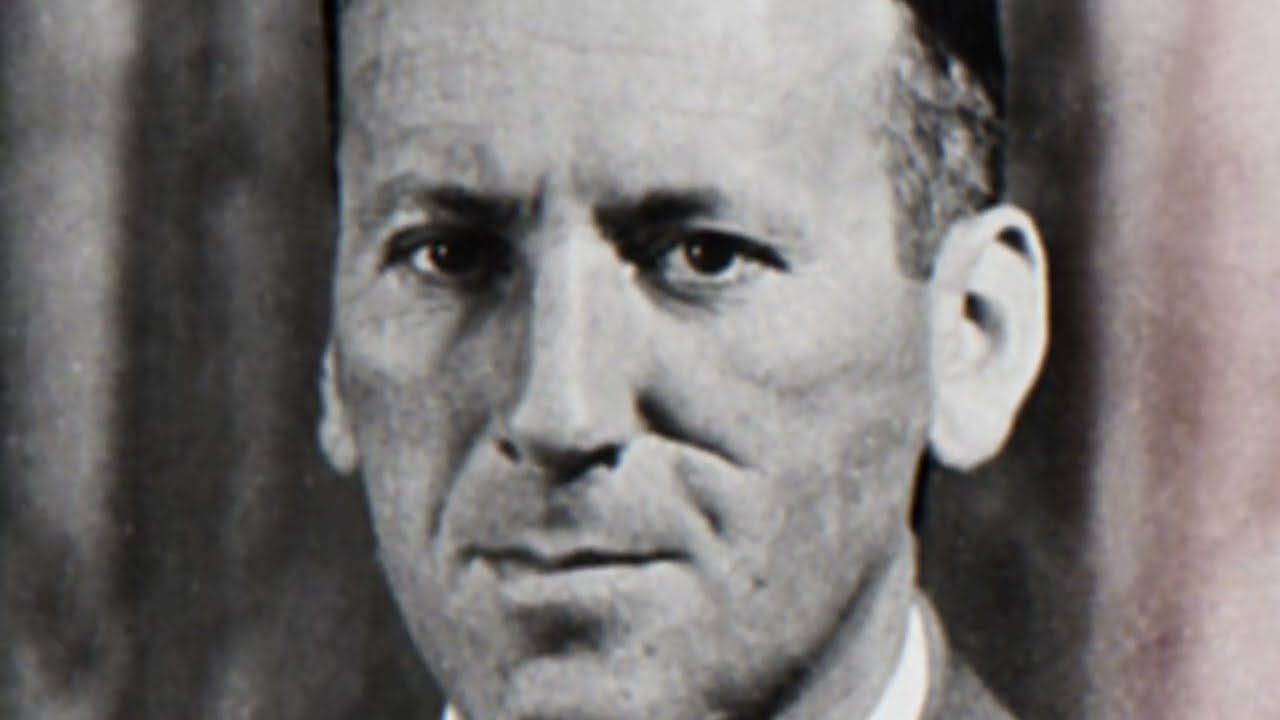
Ernst Kaltenbrunner's rise through the SS was rapid and relentless. By 1935, he was already a Standartenführer, and by 1938 he had become the SS-Brigadeführer in charge of SS Section VIII, which covered the entire Austrian territory. The Anschluss, the annexation of Austria by Nazi Germany in March 1938, was a moment of triumph for Kaltenbrunner. He had been one of the most important figures in the illegal Austrian Nazi movement, and he was rewarded with a series of increasingly powerful positions. In 1938, he was appointed as the Higher SS and Police Leader for the Danube region, and by 1941, he had been promoted to SS-Gruppenführer, a rank equivalent to lieutenant general, and was serving as the Higher SS and Police Leader for the entire Danube region, which included Vienna, the city of his birth. His rise through the SS hierarchy during the late 1930s was steady and impressive, driven by a combination of ideological commitment, administrative competence, and a willingness to do whatever the organization required. He was involved in the Anschluss, the annexation of Austria into the German Reich in March 1938, and he played a role in the subsequent Nazi consolidation of power in Austria, overseeing the arrest and imprisonment of the regime's political opponents in the immediate aftermath of the takeover. These were not abstract administrative tasks. They involved the real exercise of terror, the rounding up of people who had been identified as enemies of the state, the establishment of concentration camps on Austrian soil, and the integration of the Austrian security services into the broader SS apparatus. Kaltenbrunner was not a desk-bound bureaucrat in these early years. He was directly involved in the dirty work of Nazi consolidation, and he did it with an efficiency and enthusiasm that did not go unnoticed by his superiors in Berlin. By 1938, when Germany annexed Austria in the Anschluss, Kaltenbrunner had risen to the rank of SS-Brigadeführer, a general officer rank in the SS, and was the head of SS Section VIII, the organization responsible for the entire Austrian SS. The Anschluss was a moment of triumph for Austrian Nazis like Kaltenbrunner. The union of Austria with Germany had been the central goal of his political life, and when German troops marched into Austria in March 1938, Kaltenbrunner was ready to reap the rewards. He was appointed to the position of State Secretary for Public Security in the Austrian government, a position that gave him control over the police and security apparatus in his native country. It was a position of considerable power, but it was only the beginning. The following year, in 1939, Kaltenbrunner was appointed as the Higher SS and Police Leader for the Donau region, which included Vienna and the surrounding areas. This was a position of enormous authority, placing him in charge of all SS and police operations in one of the most strategically important regions of the Reich. The appointment was a sign of Himmler's confidence in him, and it placed Kaltenbrunner at the heart of the Nazi security apparatus in Austria. But it was in 1943 that Kaltenbrunner's career reached its true peak. On January 30th of that year, he was appointed to succeed Reinhard Heydrich as Chief of the Reich Security Main Office, the RSHA. Heydrich had been assassinated by Czech resistance fighters in 1942, and his successor, Ernst Kaltenbrunner, was chosen by Himmler to take over the most powerful security apparatus in the Nazi state. The RSHA was the central organ of Nazi terror, the organization that controlled the Gestapo, the SD, the Kripo, and the entire apparatus of surveillance, arrest, torture, and extermination. It was the heart of the Nazi police state, and Kaltenbrunner was now its head. He was also appointed to the position of Chief of Security Police and SD, giving him authority over all police forces in the Reich and the occupied territories. This was a position of immense power, second only to Himmler in the SS hierarchy, and it made Kaltenbrunner one of the most dangerous men in the entire Nazi empire. The RSHA, which Kaltenbrunner now commanded, was the central institution of Nazi terror. It was the organization that planned and coordinated the murder of the Jews, the persecution of political opponents, the brutal occupation policies in the East, the exploitation of forced labor, and the vast network of concentration camps and extermination centers that stretched across Europe. Under Kaltenbrunner's leadership, the RSHA continued and expanded these activities with a bureaucratic efficiency that horrified even some of his fellow Nazis. He was directly involved in the implementation of the Final Solution, the systematic murder of six million European Jews, and he personally signed orders for the execution of concentration camp prisoners in the final months of the war. He was also the man who, in 1944, after the failed July 20 plot to assassinate Hitler, was placed in charge of the military court that tried the conspirators, and he oversaw the brutal executions that followed. His role in the suppression of the plot and the subsequent liquidation of thousands of real and suspected opponents of the regime earned him a reputation as one of the most feared men in the Nazi hierarchy. But his most infamous act came in 1944 and 1945, when he ordered the evacuation of the concentration camps in the face of the advancing Allied armies. Rather than allow the camps to be liberated, Kaltenbrunner ordered the mass evacuation of prisoners, and the murder of those too weak to travel. These death marches, as they came to be known, killed tens of thousands of concentration camp inmates in the final months of the war. When the end came, Kaltenbrunner attempted to flee, but he was captured by American forces in the Alps in May 1945, and he was brought before the International Military Tribunal at Nuremberg, where he was tried for crimes against humanity, war crimes, and crimes against peace. He was found guilty and sentenced to death. On October 16, 1946, Ernst Kaltenbrunner was hanged at Nuremberg Prison. His last words were, "I have loved my German people and my fatherland with a warm heart. I have done my duty by the laws of my people and my fatherland. I am sorry that we Germans have committed crimes, but we did not do it intentionally. I am sorry it was not all of you, Herr Doktor, but I could not help it. I am sorry that we were not shot in 1934. I am sorry that we did not put these generals against the wall." He was 42 years old. His executioner later described him as the most composed of all the condemned men. His last words were, "I have loved my German people and my fatherland with a warm heart. I have done my duty by the laws of my people and my fatherland. I am sorry that we were not more ruthless. I am sorry that we did not kill all of them. May God protect Germany." And then he was hanged. The date was October 16th, 1946. Ernst Kaltenbrunner was 42 years old. He was executed for crimes against humanity, war crimes, and crimes against the peace, the same charges that had been brought against all the major Nazi war criminals at Nuremberg. His last words, spoken just before the trap door opened beneath him, were reported by witnesses as "I have loved my German people and my fatherland with a warm heart. I have done my duty by the laws of my people and my fatherland. I am happy to have done my duty." And then he was gone, his body interred in a secret grave, his name consigned to the historical record as one of the most brutal and murderous figures of the Nazi regime. But before we reach the end of this story, we need to understand the full arc of his life, the choices he made, the crimes he committed, and the man he became. So let's continue. After completing his law degree in 1926, Kaltenbrunner had established himself as a lawyer in Linz, where he opened a legal practice and became a prominent figure in the local nationalist community. His law practice served as a front for his political activities, providing him with a legitimate cover for his work with the illegal Nazi Party and the SS. By 1934, he was working directly with the German SS leadership, coordinating activities across the Austrian border and building the underground networks that would eventually bring the Nazi movement to power in Austria. His work during this period was dangerous, and he was arrested multiple times by the Austrian authorities, spending time in prison for his activities. The Austrian government of Chancellor Kurt Schuschnigg, which had succeeded Dollfuss after his assassination in 1934, was increasingly concerned about the Nazi threat and was actively working to suppress the underground movement. But Kaltenbrunner was not deterred. He continued to organize, recruit, and agitate, and his efforts were rewarded in 1937 when he was promoted to the rank of SS-Standartenführer, a full colonel in the SS, and given command of the SS in the entire Austrian region. This was a significant promotion, one that placed him at the head of the entire Austrian SS organization and made him one of the most important Nazi figures in the country. His role in the Anschluss, the German annexation of Austria in March 1938, was significant. When German troops crossed the border and Austria was absorbed into the Third Reich, Kaltenbrunner was in a position to benefit immediately. He was appointed to the position of State Secretary for Public Safety in the Austrian government, and his SS career accelerated rapidly. The Anschluss was a pivotal moment for Austrian Nazis, who had spent years in the underground and in prison for their beliefs. Now they were the new masters of their country, and Kaltenbrunner, as one of the most senior and most committed of the Austrian SS leaders, was perfectly positioned to take advantage of the new order. He was promoted to SS-Brigadeführer in 1938 and then to SS-Gruppenführer in 1939, and he began to build his power base in the security apparatus of the newly annexed Austrian territories. It was during this period that Kaltenbrunner first came to the attention of Heinrich Himmler, the Reichsführer-SS, who was always on the lookout for capable, ideologically reliable officers to fill the senior ranks of his expanding empire. Himmler saw in Kaltenbrunner a man who combined the legal training that was so valuable in the complex world of Nazi security with the kind of ruthless, unquestioning loyalty that the SS demanded. Kaltenbrunner was also physically imposing, which mattered to Himmler, who believed that the SS should be composed of men who looked the part of the master race. Over the course of the 1930s, Kaltenbrunner continued his rise through the SS hierarchy in Austria, becoming the head of the SS and police apparatus in the region around Linz and then, after the Anschluss in 1938, taking on increasingly important roles in the newly incorporated Ostmark. His work in these years involved the full range of SS responsibilities, political policing, surveillance of political opponents, and the administration of the concentration camps that were being established across the newly annexed Austrian territories. He was involved in the establishment of the Mauthausen concentration camp, near Linz, in 1938, a camp that would eventually become one of the most notorious in the entire Nazi system, a place of forced labor, starvation, and mass death where tens of thousands of prisoners would die. Kaltenbrunner's role in the establishment and administration of Mauthausen, which was located in his home region, would later be cited by prosecutors at Nuremberg as one of the central elements of the case against him. His involvement in the camp was not a matter of distant administrative oversight, it was direct, personal, and sustained. He visited the camp regularly, was briefed on its operations, and was fully aware of the conditions there, conditions that killed tens of thousands of prisoners through execution, starvation, disease, and overwork. The fact that he came from the same region, that he was a local boy who had grown up in the same towns and breathed the same air as the camp's victims, made his role in its operations all the more personal. He was not a distant bureaucrat who could claim ignorance of what was happening in the camps under his jurisdiction. He was a local man, from the same region, who had personally overseen the creation and expansion of a system that murdered tens of thousands of people. His rise through the SS hierarchy continued throughout the 1930s, and by 1935, he had been promoted to the rank of SS-Standartenführer, the equivalent of a colonel. He was also involved in the illegal smuggling of Nazi propaganda into Austria, and in the organization of the underground Nazi network that was working to undermine the Austrian state from within. In 1934, he was involved in the failed Nazi putsch that resulted in the assassination of Chancellor Engelbert Dollfuss, an event that briefly seemed to threaten the very existence of the Austrian government before it was suppressed. Kaltenbrunner's role in the putsch is somewhat unclear, but he was certainly involved in the underground Nazi movement that supported it, and he spent time in prison for his activities. The Dollfuss putsch was a turning point in Austrian history, marking the moment when the Nazis' intention to destroy the Austrian state from within became unmistakable, and Kaltenbrunner was part of that movement. His arrest and imprisonment in 1934, though brief, served to cement his credentials within the Nazi underground and marked him as a man willing to risk his freedom for the cause. Upon his release, he resumed his work for the illegal Austrian SS, and his commitment was rewarded with rapid promotion. By 1935, he was already a colonel in the SS, and he was given command of the entire SS in the Austrian region of Upper Austria, a position of considerable responsibility for a man still in his early thirties. The years from 1934 to 1938 were spent building the underground Nazi network in Austria, preparing the ground for the Anschluss that would finally come in March 1938. When German troops crossed the border and Austria was absorbed into the Third Reich, Kaltenbrunner was in a position to benefit immediately from the new order. His rise through the ranks of the SS had been steady, and he had become a close associate of Heinrich Himmler, the Reichsführer-SS, who saw in the tall, scarred Austrian lawyer a useful instrument for extending SS power into the newly annexed Austrian territories. In 1938, immediately after the Anschluss, Kaltenbrunner was appointed State Secretary for Public Security in the Austrian government, a position that made him, in effect, the second most powerful police official in the country. The following year, in 1939, he was appointed Higher SS and Police Leader for the Donau region, which included his native Upper Austria, giving him direct command over all SS and police forces in the area. These were not honorary positions. They gave Kaltenbrunner direct operational control over the machinery of Nazi terror in Austria, including the concentration camps at Mauthausen and Gusen, which were located in his jurisdiction. Mauthausen was not a transit camp or a labor camp in the conventional sense. It was a category three camp, meaning it was reserved for those considered to be the most hardened criminals and the most incorrigible political enemies of the Nazi state, and it was run with a brutality that shocked even hardened SS officers. The camp commandant, Franz Ziereis, was one of the most sadistic men in the entire SS, and the camp's motto, "Work makes free," was a grotesque lie for the tens of thousands of prisoners who were worked to death in its granite quarries. Kaltenbrunner, as the SS and police leader for the region, bore direct responsibility for the camp and its administration. He visited it on multiple occasions, inspected its operations, and was fully aware of the conditions under which prisoners were held and the rate at which they died. The Mauthausen concentration camp, located near Linz, was in his jurisdiction, and its brutal conditions, the mass executions, the deaths from overwork and starvation, the use of the gas chambers in the final years of the war, all of this fell under his authority as the senior SS officer in the region. This was not a matter of indirect responsibility or of having turned a blind eye to the actions of subordinates. Kaltenbrunner was directly and personally involved in the administration of the camp system in Austria, and the murder of prisoners was carried out by men who answered to him. The fact that he was not the commandant of Mauthausen, that he did not personally operate the gas chambers or supervise the daily operations of the camp, does not diminish his responsibility. He was the senior SS officer in the region, and the camp was under his jurisdiction. The orders that sent prisoners to Mauthausen, the policies that determined who would live and who would die, the entire apparatus of terror that made the camp function, all of this flowed through the RSHA and through Kaltenbrunner's office. He was not a desk-bound bureaucrat who could claim ignorance of the crimes committed in his name. He visited the camps, he inspected the operations, and he knew exactly what was happening in the machinery of death that he oversaw. The SS and police apparatus in Austria, which he commanded, was directly responsible for the arrest, deportation, and murder of tens of thousands of people. The Mauthausen concentration camp, located near his own home territory of Upper Austria, was under the jurisdiction of the SS, and prisoners there were subjected to some of the most brutal treatment in the entire concentration camp system. The camp's motto, "Work makes free," was a cruel mockery of the conditions that prevailed there, where prisoners were worked to death in the stone quarries, starved, beaten, and executed in vast numbers. Kaltenbrunner visited Mauthausen on multiple occasions during his time as head of the RSHA, and he was fully aware of the conditions and the murderous purpose of the camp. He was, in fact, the highest-ranking SS officer to visit the camp, and he inspected its operations with the same cold, professional detachment he brought to all his duties. The fact that he had grown up in the same region where Mauthausen was located, and that he had practiced law in the area, made his involvement there particularly personal. He knew the region, he knew the people, and he knew exactly what was happening in that camp, and he did nothing to stop it. On the contrary, he used his position to extend the camp system and to ensure that the machinery of terror operated with maximum efficiency. By the time the war ended, Mauthausen had claimed the lives of over 100,000 people, and Kaltenbrunner bore direct responsibility for the conditions that killed them. But we are getting ahead of ourselves. Before the war, before the RSHA, before the full horrors of the Holocaust were unleashed, Kaltenbrunner was still a rising figure in the Austrian SS, a man whose career was about to be transformed by the political earthquake of the Anschluss. The year 1938 was the turning point in Kaltenbrunner's career, as it was for so many Austrian Nazis. When German troops marched into Austria in March of that year, in the Anschluss that united Austria with the German Reich, Kaltenbrunner was already in a position to benefit immediately from the new order. He had been arrested by the Austrian government in 1934 for his underground Nazi activities and had spent 6 months in prison before being released. He had continued his work for the illegal SS throughout the period of Austrian independence, building up the organization in the region around Linz and establishing himself as one of the most reliable and ideologically committed figures in the Austrian Nazi underground. When the Anschluss came, Kaltenbrunner was rewarded for his loyalty and his organizational abilities. He was appointed to the position of SS-Brigadeführer, a rank equivalent to major general, and given command of the SS in the entire Austrian region. This was a significant promotion, but it was only the beginning. His rise through the ranks of the Austrian SS had been steady, and it now accelerated dramatically. By 1938, he was the highest-ranking SS officer in Austria, a position of considerable power and responsibility. The Anschluss, the annexation of Austria into the German Reich, was a moment of triumph for Austrian Nazis like Kaltenbrunner. It meant that the political movement to which he had devoted his adult life had achieved its primary goal, the union of Austria with a greater Germany. But it also meant that the SS needed to consolidate its control over the newly acquired Austrian territory, and Kaltenbrunner was the man tasked with helping to do that. He was promoted to SS-Brigadeführer in 1938, and given command of the SS and police forces in the Danube region, one of the most important security positions in the newly annexed Austria. This was the beginning of his rise to the very top of the Nazi security apparatus. The following year, in 1939, he was promoted again, this time to the rank of SS-Gruppenführer, and he was appointed as the senior SS and Police Leader for the entire Danube region, making him one of the most powerful men in the Austrian security apparatus. But it was in 1943 that Kaltenbrunner received the appointment that would define the rest of his life and seal his fate. On January 30th, 1943, he was appointed to replace the assassinated Reinhard Heydrich as chief of the Reich Security Main Office, the RSHA. This was the organization that coordinated the activities of the Gestapo, the SD, the Kripo, and the entire Nazi security and intelligence apparatus. It was, in effect, the central nervous system of the Nazi terror state, and Kaltenbrunner now had his hands on every nerve ending in that system. It is worth pausing to consider the significance of this appointment. Heydrich had been widely regarded as one of the most dangerous men in Nazi Germany, a man so cold and calculating that even his own colleagues described him as the man with the iron heart. That Kaltenbrunner was chosen to succeed him says a great deal about how he was perceived by Himmler and the rest of the Nazi leadership. He was not chosen because he was a brilliant administrator or a charismatic leader, he was chosen because he was seen as reliable, ideologically pure, and utterly ruthless. He was a man who could be trusted to continue the work of the Reich Security Main Office without hesitation or moral qualms. The RSHA that Kaltenbrunner took over in January 1943 was the central institution of Nazi terror. It had been created by Himmler in 1939 as a way of consolidating the various security and intelligence agencies of the Nazi state under a single command structure. Its responsibilities included the Gestapo, the Secret State Police, which was responsible for the political persecution of all enemies of the Nazi state; the SD, the Sicherheitsdienst, which was the intelligence service of the SS; the Kripo, the criminal police; and a vast array of other offices and departments that handled everything from border control to foreign intelligence. Under Reinhard Heydrich, who had served as its chief from its creation in 1939 until his assassination in 1942, the RSHA had become the central organ of Nazi terror, the institution that identified, pursued, and destroyed all enemies of the Reich. When Heydrich was killed by Czech agents in June 1942, Himmler needed a successor who could maintain the brutal efficiency of the organization. He chose Kaltenbrunner, who had been serving as the Higher SS and Police Leader for the Danube region, and who had proven himself a ruthless and effective administrator in the Austrian security services. It was a choice that would have profound consequences. As head of the RSHA, Kaltenbrunner was responsible for the entire apparatus of Nazi terror. He controlled the Gestapo, the secret state police that hunted down enemies of the regime. He controlled the SD, the SS intelligence service that identified and tracked those enemies. He controlled the Kripo, the criminal police, and the entire network of concentration camps that formed the backbone of the SS empire. He was, in every meaningful sense, the chief law enforcement officer of the Nazi state, the man charged with ensuring that no one, anywhere in the German sphere of influence, could escape the long arm of the regime. His authority extended far beyond the borders of the Reich itself. As head of the RSHA, Kaltenbrunner oversaw the operations of the Sicherheitsdienst, the SD, which operated throughout occupied Europe, and he was directly involved in the coordination of the Einsatzgruppen, the mobile killing squads that followed the German army into the Soviet Union and carried out mass murder on an industrial scale. The RSHA, under Kaltenbrunner's leadership, was also the agency responsible for the Final Solution's administrative machinery. It was the RSHA that organized the Wannsee Conference, the meeting at which the bureaucratic details of the Holocaust were coordinated. It was the RSHA that ran the concentration camps, the Gestapo, and the SD, and it was the RSHA that had the authority to issue the so-called Nacht und Nebel decrees, under which individuals suspected of resistance activities could be made to disappear without a trace, taken from their homes in the middle of the night, never to be seen again by their families or the outside world. This was the organization that Kaltenbrunner took over in January 1943, and he ran it with a ruthless efficiency that earned him the respect of his superiors and the fear of his subordinates. But before we get too far ahead of ourselves, we need to understand how he got there. Because the path from provincial Austrian lawyer to head of the most feared security apparatus in history was not a straight line, and it was not inevitable. It was the product of a particular personality, a particular set of beliefs, and a particular historical moment that rewarded those beliefs beyond anything its adherents could have imagined. Kaltenbrunner's rise through the SS in the 1930s was steady and impressive. He was a man who combined the instincts of a police officer with the mentality of a true believer, someone who could be counted upon to carry out orders without hesitation or moral qualms, and who understood that in the world of the SS, loyalty and effectiveness were the only currencies that mattered. His early career in the SS was marked by a series of positions that allowed him to demonstrate his capabilities as an administrator and enforcer. By 1935, he had risen to the rank of SS-Standartenführer, and in 1936, he was promoted to SS-Oberführer. The following year, 1937, he became SS-Brigadeführer, a rank equivalent to brigadier general in the army. His rise was steady, but it was not yet spectacular. He was seen as a competent, reliable, ideologically committed officer, but not yet as one of the rising stars of the SS. That would change after the Anschluss, the annexation of Austria by Nazi Germany in March 1938. For Kaltenbrunner, the Anschluss was the moment his career was transformed. He had been a key figure in the underground Nazi movement in Austria, and when the country was absorbed into the Reich, he was rewarded for his loyalty and his organizational work. In 1938, he was appointed to the Austrian State Council and named the SS leader for the entire Ostmark, the Nazi term for Austria. This made him the senior SS officer in his home country, with responsibility for the entire security apparatus in the newly annexed territory. It was a significant promotion, and it brought him to the attention of the highest levels of the Nazi hierarchy, including Heinrich Himmler and Reinhard Heydrich, the two men who controlled the SS and the security apparatus of the Reich. The years that followed were ones of rapid advancement for Kaltenbrunner. He proved himself to be a capable administrator, a man who could be relied upon to carry out orders without hesitation or moral qualms, and he rose steadily through the ranks. By 1938, when Germany annexed Austria in the Anschluss, Kaltenbrunner was already a senior figure in the Austrian SS, and he played a key role in the takeover of the Austrian security services. He was rewarded with a promotion to SS-Gruppenführer, and his career in the Nazi security apparatus was launched. Over the next few years, he served in a variety of increasingly important positions, culminating in his appointment as head of the Reich Security Main Office in January 1943, following the assassination of Reinhard Heydrich. It was a promotion that would place him at the very heart of the Nazi terror machine, and it was a role in which he would serve until the final days of the Third Reich. His appointment was not a foregone conclusion. Himmler had considered several candidates to replace Heydrich, but Kaltenbrunner's combination of ideological reliability, administrative competence, and personal loyalty to Himmler made him the obvious choice. He was also, importantly, an Austrian, and Himmler was keen to maintain the support of the Austrian SS, which had been integrated into the German SS after the Anschluss in 1938. Kaltenbrunner's appointment was announced in January 1943, and he took up his post as Chief of the Security Police and the SD, head of the Reich Security Main Office, and thus one of the most powerful men in the entire Nazi security apparatus. The RSHA that Kaltenbrunner inherited from Heydrich was a sprawling, complex organization that combined the Gestapo, the SD, the Kripo, and the entire apparatus of Nazi surveillance, arrest, torture, and extermination under a single roof. It was the central nervous system of the Nazi terror state, the organization that identified enemies of the regime, tracked them down, arrested them, interrogated them, and either sent them to concentration camps or murdered them outright. And Kaltenbrunner, who had spent his entire adult life preparing for a role in the Nazi security apparatus, took control of this machine with the same cold efficiency he had displayed in the underground SS in Austria. He was not a man given to doubt or hesitation. He was not a man who questioned orders or expressed moral qualms. He was, in every sense that mattered, the perfect SS officer, ruthless, efficient, ideologically committed, and utterly loyal to the Führer. His rise through the SS hierarchy after the Anschluss, the annexation of Austria by Nazi Germany in March 1938, was rapid. The Austrian SS was incorporated into the German SS, and Kaltenbrunner, as one of the most senior and most committed Austrian Nazis, was perfectly positioned to benefit from the merger. He was promoted to SS-Brigadeführer in 1938, a rank equivalent to major general, and appointed as the Higher SS and Police Leader for the Danube region, one of the most important security posts in the newly annexed Austrian territories. Over the next few years, he continued to rise through the ranks, becoming the leader of SS-Oberabschnitt Donau in 1938, and then in 1941, he was appointed as the Higher SS and Police Leader for the entire Austrian region. In this capacity, he was responsible for the entire apparatus of SS and police power in Austria, including the security service, the SD, the Gestapo, and the criminal police. It was a position of enormous power, and Kaltenbrunner used it to demonstrate his absolute loyalty to the Nazi cause and his willingness to employ any means necessary to suppress dissent and eliminate the regime's enemies. His methods were brutal and effective. Under his leadership, the Austrian SS and police apparatus became a model of Nazi terror, and his reputation for ruthlessness grew accordingly. He was known to take a personal interest in the interrogation of prisoners, and he was not afraid to get his hands dirty when the situation demanded it. The reports from this period describe a man who was cold, calculating, and utterly without mercy, a man who saw the enemies of the Reich everywhere and pursued them with a relentlessness that impressed even his SS superiors. In 1938, the political situation in Austria changed dramatically with the Anschluss, the annexation of Austria into the German Reich. For Kaltenbrunner, this was the culmination of everything he had worked for, and his reward was rapid advancement. In the months following the Anschluss, he was promoted to the rank of SS-Brigadeführer, and then, in September 1938, he was given the position that would define his career, head of the SS and Police in the entire Austrian region, with his headquarters in Vienna. In this role, he was responsible for the entire SS apparatus in Austria, including the security services, the concentration camps, and the police. He threw himself into the work with characteristic energy and ruthlessness, overseeing the arrest and imprisonment of political opponents, the confiscation of Jewish property, and the construction of the Mauthausen concentration camp, which would become one of the most notorious killing centers in the entire Nazi system. Mauthausen was located near Linz, Kaltenbrunner's own hometown, and he took a personal interest in the camp's operations, visiting it on multiple occasions and taking a direct role in its administration. The camp, which opened in 1938, would eventually hold more than 190,000 prisoners, of whom at least 90,000 were murdered or died from disease, starvation, and mistreatment. Kaltenbrunner's involvement in the camp's operations was not peripheral. He was directly responsible for the camp's administration, and he personally approved the execution of prisoners who attempted to escape. The Mauthausen camp, located in his home region, was a place where the brutality of the Nazi system was given its most concentrated expression, and Kaltenbrunner was one of the men most responsible for what happened there. His rise through the SS hierarchy continued throughout the 1930s. By 1935, he had been promoted to the rank of SS-Standartenführer, and by 1938, he had reached the rank of SS-Brigadeführer, a general's rank in the SS. In 1938, following the Anschluss, the annexation of Austria into the German Reich, Kaltenbrunner was appointed the Higher SS and Police Leader for Austria, a position that made him the senior SS officer in the country and gave him authority over all police and security forces in the region. This was a position of enormous power, and Kaltenbrunner used it to consolidate his position within the Nazi hierarchy, building a network of informants and enforcers that extended throughout Austrian society. He was also involved in the brutal persecution of the regime's enemies in Austria, including Jews, political opponents, and others deemed undesirable by the Nazi state. The Anschluss, the annexation of Austria into the German Reich in March 1938, was a pivotal moment in Kaltenbrunner's career. The Nazi takeover of Austria was followed by an immediate wave of violence and terror against the country's Jewish population, and Kaltenbrunner was directly involved in the organization of that violence. He was appointed to the position of SS-Brigadeführer in 1938, and his rise through the ranks continued steadily from that point. By 1941, he had been promoted to the rank of SS-Gruppenführer, a position that placed him among the senior leadership of the SS. His career path had taken him from the provincial underground of the Austrian Nazi movement to the upper echelons of the most powerful security apparatus in the world. But it was in 1943 that Kaltenbrunner's career reached its true peak, when he was appointed to succeed the assassinated Reinhard Heydrich as chief of the Reich Security Main Office, the RSHA. This was the position that made him, for all practical purposes, the most powerful police official in the entire Nazi empire. The RSHA was the central security agency of the Third Reich, the organization that controlled the Gestapo, the SD, the Kripo, and the entire apparatus of Nazi surveillance, arrest, torture, and extermination. It was the institution that held the power of life and death over millions of people across Europe, and Kaltenbrunner was now its absolute master. It was a promotion that would place him at the very heart of the Nazi terror machine, with direct responsibility for the implementation of the Holocaust and the brutal occupation policies that characterized the final years of the war. The RSHA was the instrument through which the Nazi state conducted its most heinous crimes, and Kaltenbrunner was now the man in charge of that instrument. He was responsible for the Gestapo, the SD, the Kripo, and the entire apparatus of Nazi surveillance, arrest, torture, and extermination. He was the man who, after the assassination of Reinhard Heydrich in 1942, stepped into the shoes of one of history's most feared killers and ran that empire of darkness all the way to Germany's collapse.
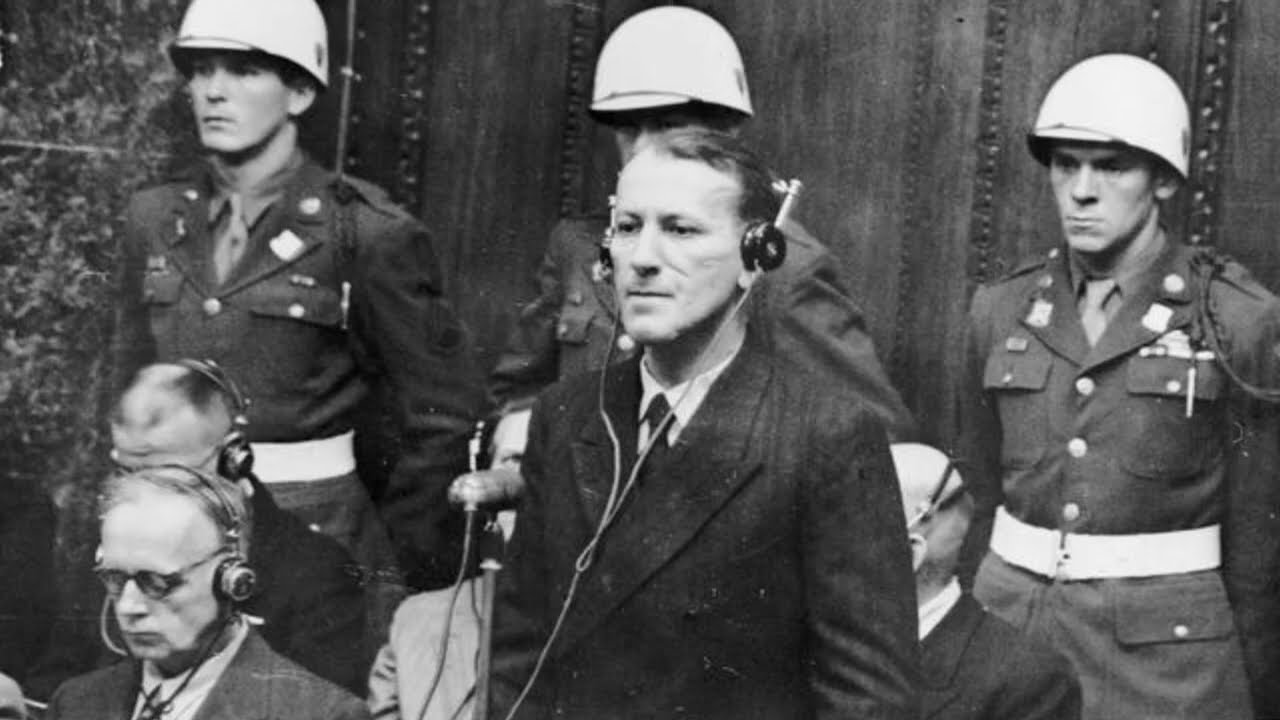
The year was 1942, and the war had reached a critical juncture. The German advance into the Soviet Union had stalled before Moscow, the United States had entered the war after Pearl Harbor, and the Wehrmacht was about to suffer its first catastrophic defeat at Stalingrad. It was in this context that Reinhard Heydrich, the man who had built the RSHA into the most feared security apparatus in history, was assassinated by Czech agents in Prague in May 1942. Heydrich's death created a vacancy at the top of the Nazi security state that could not be filled by just anyone. Himmler, who had built the SS into a parallel state within the Nazi state, needed a successor who was ideologically reliable, administratively competent, and utterly ruthless. He found his man in Ernst Kaltenbrunner. On January 30th, 1943, Kaltenbrunner was appointed Chief of the Security Police and the SD, formally assuming the title of Chief of the Reich Security Main Office, or RSHA. It was a stunning rise for a man who, just over a decade earlier, had been a provincial lawyer in Upper Austria. The RSHA was the central security and intelligence organization of the Nazi state. It controlled the Gestapo, the secret state police; the SD, the SS intelligence service; the Kripo, the criminal police; and a vast array of other offices responsible for everything from border security to the collection of foreign intelligence. Under Kaltenbrunner's command, this enormous apparatus of surveillance and terror would reach new heights of efficiency and brutality. The RSHA was not merely a police organization, it was the operational heart of the Nazi terror state, the organization that identified, tracked, arrested, tortured, and ultimately murdered the regime's enemies. It was responsible for the deportation of Jews to the death camps, the suppression of resistance movements throughout occupied Europe, the administration of the concentration camps, and the coordination of the Einsatzgruppen, the mobile killing squads that operated behind the front lines in the East. Kaltenbrunner inherited this entire apparatus of murder. His predecessor, Reinhard Heydrich, had been assassinated by Czech agents in 1942, and after a period of transition, Kaltenbrunner was appointed to fill his shoes in January 1943. It was a promotion that placed him at the very heart of the Nazi terror machine, and he embraced it with enthusiasm. He was now responsible for the Gestapo, the SD, the Kripo, and the entire apparatus of Nazi surveillance, arrest, torture, and extermination. The RSHA, which he now headed, was the central pillar of the Nazi security state, the organization that coordinated the activities of the Gestapo, the Security Service, the criminal police, and the Einsatzgruppen death squads that operated in the occupied territories of Eastern Europe. It was, in effect, the command center of the Holocaust. Under Kaltenbrunner's leadership, the RSHA continued to function as the primary instrument of Nazi terror, and he personally oversaw the operations of the Gestapo and the SD in their relentless pursuit of all those deemed enemies of the Reich. His office was responsible for the arrest and deportation of millions of people to concentration camps, for the coordination of the Einsatzgruppen killing squads in the East, and for the administration of the entire apparatus of Nazi occupation policy across Europe. The machinery of terror that he commanded was vast, and it was efficient. It was staffed by men who had been selected for their ideological commitment and their willingness to carry out orders without hesitation or moral qualms. And at the center of it all sat Kaltenbrunner, the man who had risen to the very top of this empire of darkness. His role in the Holocaust was not merely administrative, though it was certainly that. He was directly involved in the implementation of the Final Solution, the systematic murder of six million European Jews. He signed orders, he coordinated with the Einsatzgruppen, he oversaw the deportation of Jews from across Europe to the death camps, and he did so with full knowledge of what those deportations meant. The RSHA, which he headed from 1943 until the end of the war, was the central coordinating body for the Holocaust, and Kaltenbrunner was its chief. He was also the man responsible for the murder of Allied commandos and POWs, and for the brutal treatment of millions of people across occupied Europe. He was, in the words of one historian, the most powerful man in the entire Nazi security apparatus after Himmler himself, and he wielded that power with a cold, bureaucratic efficiency that made him one of the most dangerous men in the entire Third Reich. Kaltenbrunner's role in the Holocaust was not merely administrative. He was directly involved in the implementation of the Final Solution, the systematic murder of six million European Jews, and millions of others deemed undesirable by the Nazi state. As head of the RSHA, he oversaw the Einsatzgruppen, the mobile killing units that followed the German army into the Soviet Union and carried out mass shootings of Jews, Roma, and political commissars. He was directly responsible for the operations of the Gestapo and the SD, the intelligence and security services that hunted down and murdered Jews, resistance fighters, and political opponents throughout occupied Europe. He signed orders that sent countless thousands to concentration camps, and he personally approved the murder of prisoners of war and the execution of downed Allied pilots. He was, in the words of one historian, the man who ran the most murderous organization in history. And yet, he is not the name that comes to mind when we think of the Holocaust. He is not the face that appears in the documentaries and the history books. He is the forgotten man of the Nazi high command, the man who did the work of the Final Solution while others took the credit. But the historical record is clear. Kaltenbrunner was not merely an administrator who signed papers and attended meetings. He was an active participant in the machinery of genocide, a man who took personal satisfaction in the power of life and death that his position gave him, and who used that power without hesitation or mercy. His role in the Holocaust was not passive or bureaucratic, it was active, hands-on, and deeply personal. He took a direct interest in the operations of the Einsatzgruppen, the mobile killing squads that followed the German army into the Soviet Union and murdered over a million Jews, Roma, and political commissars in mass shootings. He was involved in the establishment and operation of the concentration camps, and he personally signed orders for the deportation of prisoners to those camps. He was the man who, in the final months of the war, ordered the execution of prisoners in the concentration camps rather than allow them to fall into Allied hands. He was the man who ordered the murder of prisoners at Mauthausen, including the execution of Allied commandos and the gassing of hundreds of prisoners in the camp's gas chamber. He was directly responsible for the murder of Allied airmen who had been shot down over Germany and were being held in SS custody, a violation of the Geneva Convention that he personally ordered. He was the man who, in the final weeks of the war, ordered the execution of the remaining prisoners in the camps under his control, in a desperate attempt to eliminate the evidence of Nazi crimes. And when the war ended, he fled, but he was quickly captured by American forces in the Austrian Alps, where he had retreated to his family home in the village of Altaussee. He was arrested on May 15th, 1945, and found to be in possession of a document that would become one of the most famous artifacts of the entire Nuremberg process, a copy of the so-called Night and Fog Decree, which had authorized the secret removal of civilians from occupied territories to concentration camps for "disappearance" without a trace. Kaltenbrunner was taken to the Dachau concentration camp, where he was held for interrogation, and then transferred to Nuremberg to stand trial before the International Military Tribunal. His trial was one of the most dramatic and closely watched events of the entire postwar period. The evidence against him was overwhelming. Witnesses testified to his role in the murder of Allied airmen, his knowledge of the concentration camps, his authorization of the mass murder of prisoners in the final days of the war, and his central role in the operations of the RSHA. The prosecution presented a mountain of documentary evidence, including orders bearing his signature, reports addressed to him, and testimony from his own subordinates describing his involvement in every aspect of the Nazi terror apparatus. For his part, Kaltenbrunner adopted a defense strategy that was equal parts denial and evasion. He claimed that he had been merely a bureaucrat, a man who sat at a desk and signed papers, who had no direct knowledge of the atrocities being committed by the organizations under his nominal command. He claimed that Himmler had kept him in the dark about the true nature of the concentration camps, that he had never personally ordered the killing of anyone, that his role had been administrative rather than operational. It was a defense strategy that had worked for many lesser war criminals, but it faced a fundamental problem in Kaltenbrunner's case: the evidence against him was simply too overwhelming. The prosecution at Nuremberg presented a mountain of documentary evidence showing that Kaltenbrunner had been intimately involved in the machinery of mass murder at every level. He had signed orders for the execution of concentration camp prisoners, he had overseen the operations of the Einsatzgruppen, the mobile killing squads that had murdered over a million people in Eastern Europe, and he had been directly involved in the murder of Allied POWs and the mass deportation of Jews to the death camps. The most damning evidence came from the documents of the RSHA itself, which showed that Kaltenbrunner had been at the center of the entire apparatus of terror. His signature appeared on orders for the murder of prisoners of war, for the transfer of concentration camp prisoners to forced labor, and for the execution of Allied commandos and airmen. He was directly involved in the suppression of the Warsaw Ghetto Uprising in 1943, and he was the man who ordered the murder of the prisoners at the Mauthausen concentration camp as the war was ending, to prevent them from falling into Allied hands. The scale of the crimes committed under his authority was staggering. As head of the RSHA, Kaltenbrunner controlled the Gestapo, the SD, the Kripo, and the entire apparatus of Nazi terror. He was responsible for the murder of captured Allied commandos, for the execution of prisoners of war, for the deportation of hundreds of thousands of people to concentration camps, and for the implementation of the Final Solution in the territories under his jurisdiction. He signed orders that sent countless innocent people to their deaths, and he did so without hesitation, without mercy, and without any indication that he ever questioned the rightness of what he was doing. His name was not as well known as Himmler's or Heydrich's, but he was every bit as responsible for the machinery of death that the SS had become. And yet, for all the power he wielded, for all the fear he inspired, for all the blood that was on his hands, Kaltenbrunner's story is ultimately one of a man who was in many ways a product of the system he served. He was not a madman in the mold of some of the other Nazi leaders. He was not a sadist who took personal pleasure in the suffering of others, at least not in any way that was documented. He was something perhaps more frightening, a bureaucratic functionary of genocide, a man who administered the machinery of mass murder with the same dispassionate efficiency that other men brought to running a factory or managing a bank. He was the kind of man who could sign an order that would result in the deaths of thousands without losing a moment's sleep, not because he was a monster in the conventional sense, but because he had so completely identified himself with the Nazi project that the suffering of its victims had become a matter of administrative necessity rather than human tragedy. This is the story of how a provincial lawyer from Upper Austria became one of the most feared men in the Third Reich, and how the ordinary human capacity for evil, when combined with ideology, ambition, and a complete absence of moral constraint, can produce a figure like Ernst Kaltenbrunner. His early career in the SS was marked by steady advancement and a growing reputation for ideological reliability and organizational competence. By 1935, he had risen to the rank of SS-Standartenführer, and in 1937 he was given command of the entire Austrian SS, a position that made him one of the most important Nazi figures in the country. His role in the Anschluss, the German annexation of Austria in March 1938, was significant. As the head of the Austrian SS, Kaltenbrunner played a key role in coordinating the Nazi takeover of Austria, and his loyalty and efficiency during this period did not go unnoticed. In the months following the Anschluss, he was rewarded with promotion to SS-Brigadeführer, and then in January 1943, he was appointed to the position that would define the rest of his career, chief of the Reich Security Main Office, the RSHA. This was the organization that controlled the Gestapo, the SD, the Kripo, and the entire apparatus of Nazi surveillance, arrest, torture, and extermination. It was the most powerful police and security organization in the entire Reich, and Kaltenbrunner was now its absolute master. He had risen from a provincial lawyer and underground SS organizer to one of the most powerful men in Nazi Germany, second only to Himmler in the SS hierarchy, and even Himmler's equal in terms of the fear he inspired. The RSHA that Kaltenbrunner inherited from Heydrich was a vast and complex organization, a sprawling empire of terror that employed tens of thousands of people and controlled the entire apparatus of Nazi security and repression. It was responsible for the Gestapo, the secret state police that hunted down political opponents and resistance fighters; the SD, the intelligence service that monitored the population and identified enemies of the state; the Kripo, the criminal police that dealt with non-political crime; and the Einsatzgruppen, the mobile killing units that had already begun their murderous work in the occupied territories of Eastern Europe. As the head of the RSHA, Kaltenbrunner was responsible for coordinating all of these organizations and ensuring that they worked together effectively in the service of the Nazi state. He was, in effect, the chief of police of the entire Nazi empire, the man who oversaw the machinery of surveillance, arrest, and terror that kept the regime in power. And he did so with a cold efficiency that impressed even his fellow SS leaders. He was a man who understood the bureaucratic machinery of terror, who knew how to navigate the complex institutional structures of the Nazi state, and who was willing to use his position to eliminate any obstacle in his path. But Kaltenbrunner's role went far beyond the bureaucratic administration of terror. He was directly involved in some of the most heinous crimes of the Nazi regime. As head of the RSHA, he had authority over the Einsatzgruppen, the mobile killing squads that followed the German army into the Soviet Union and systematically murdered hundreds of thousands of Jews, Roma, and other civilians deemed enemies of the Reich. He was the man who, in 1944, after the assassination attempt on Hitler's life, was given sweeping powers to hunt down and execute anyone suspected of involvement in the July Plot. He was the man who, in the final months of the war, oversaw the evacuation of the concentration camps, ordering the forced marches that resulted in the deaths of tens of thousands of prisoners. And he was the man who, in the final days of the war, attempted to negotiate a separate peace with the Western Allies through the OSS, an act of betrayal that would have enraged Hitler had he known the full extent of it. But before all of that, there was the rise. And the rise began in the shadows of the Austrian underground. The Austrian SS was a small, illegal organization in the early 1930s, operating in the face of government suppression and with limited support from Germany. For a man of Kaltenbrunner's ambition and ideological commitment, it provided the perfect vehicle for advancement. He threw himself into the work with energy and dedication, organizing the underground network in Upper Austria, recruiting new members, and demonstrating the kind of administrative competence and ideological reliability that Himmler prized. His work in the underground brought him to the attention of the SS leadership in Germany, and by the mid-1930s he was being groomed for higher office. In 1935, he was appointed to the staff of the SS division in Linz, and he continued his steady rise through the ranks. The Anschluss of March 1938, when Germany annexed Austria, was the great turning point in Kaltenbrunner's career. The Austrian SS had been working toward this moment for years, and the Nazi takeover of Austria brought the Austrian SS men into the mainstream of the German SS. Kaltenbrunner, who had spent years operating in the underground, suddenly found himself on the winning side. His loyalty was rewarded, and he was promoted to SS-Brigadeführer, a rank equivalent to major general, and given command of SS-Oberabschnitt Donau, the SS district that included Vienna and much of the surrounding region. This was a position of real power, but it was only the beginning. In 1938, after the Anschluss, the German annexation of Austria, Kaltenbrunner's career entered a new phase. He was appointed as the Higher SS and Police Leader for the Donau region, making him one of the most powerful men in the entire Austrian security apparatus. In this role, he was responsible for the coordination of all SS and police activities in his region, including the operation of the concentration camps that were being established on Austrian soil. The most notorious of these was Mauthausen, a camp that would eventually become one of the most infamous sites of Nazi terror. Mauthausen was located near Linz, Kaltenbrunner's home territory, and it was under his jurisdiction as the Higher SS and Police Leader. The camp had been established in 1938, shortly after the Anschluss, and it quickly became one of the most brutal concentration camps in the entire Nazi system. Prisoners at Mauthausen were worked to death in the quarries, forced to carry heavy stones up the infamous "Stairway of Death," a set of 186 steps that became a symbol of Nazi cruelty. The camp was designated as a Category III camp, the highest punishment level, reserved for "hardcore" criminals and political prisoners. The conditions were deliberately lethal, and the mortality rate was among the highest in the entire camp system. Kaltenbrunner, as the head of the RSHA, had direct authority over the camp system through the SS, and he was fully aware of the conditions at Mauthausen and the other camps under his jurisdiction. He was not a distant administrator who could claim ignorance of the crimes committed in his name. He visited the camps, he inspected the operations, he received reports on the numbers being killed, and he continued to order the expansion of the murder machinery right up until the end of the war. The fact that he was personally responsible for the deaths of tens of thousands of people is not in dispute. The question that has occupied historians is not whether Kaltenbrunner was guilty, but rather how one man could preside over such a vast machinery of death and destruction without ever once questioning the morality of what he was doing. The answer, as far as we can tell from the historical record, is that he never questioned it because he never doubted it. He was a true believer in the Nazi project, committed to the end to the ideology that had shaped his entire adult life. He was not a reluctant functionary carrying out orders he privately found distasteful. He was an enthusiastic participant in the machinery of genocide, a man who had spent his entire career building the very systems of terror and murder that he would later command. The transformation of Ernst Kaltenbrunner from a provincial Austrian lawyer into one of the most feared men in the Third Reich did not happen overnight. It was a gradual process of ideological commitment, organizational skill, and ruthless ambition that took him from the underground SS of Austria to the highest levels of the Nazi security state. By the time he reached the pinnacle of his career, he had become something more than just another SS general. He had become the living embodiment of the Nazi security state, a man whose very name was enough to inspire terror in those who knew what he represented. But we are getting ahead of ourselves. Before he could become the head of the RSHA, before he could sign the orders that sent millions to their deaths, Kaltenbrunner had to navigate the treacherous waters of Nazi politics in Austria, survive the turmoil of the 1930s, and position himself as one of the most trusted and capable men in the entire SS hierarchy. His rise was not inevitable, and it was not the result of a single dramatic event. It was the product of years of patient organizational work, ideological commitment, and a willingness to do the dirty work that more fastidious men shied away from. And it all started in the underground world of the illegal Austrian SS, where Kaltenbrunner learned the skills that would one day make him one of the most feared men in Europe. After his release from prison in 1935, Kaltenbrunner returned to the underground Nazi movement with renewed determination. He had been arrested for his political activities, spent time in prison, and emerged more committed than ever to the cause. The Austrian SS, though banned, continued to operate under his leadership in the region around Linz, and he maintained his connections with the German SS across the border. His work during this period was dangerous, requiring constant vigilance against infiltration by Austrian intelligence agents and the ever-present threat of arrest. But Kaltenbrunner was well-suited to this kind of work. He was methodical, discreet, and utterly committed to the cause. His legal training made him valuable in an underground organization that needed to navigate the complexities of operating outside the law, and his personal connections to the German SS leadership, cultivated through years of patient relationship-building, made him increasingly important to Himmler's plans for Austria. The year 1938 was the turning point in Kaltenbrunner's career, as it was for so many Austrian Nazis. When German troops marched into Austria in March 1938, the Anschluss, the annexation of Austria into the German Reich, was accomplished with virtually no resistance. For the Austrian Nazi underground, it was a moment of triumph, the culmination of years of illegal activity, and for Kaltenbrunner, it was the beginning of his meteoric rise. His years of service in the illegal Austrian SS were rewarded with rapid promotion. He was appointed to the Austrian State Council, and in 1938 he was given command of the SS and police in Upper Austria. His rise through the SS hierarchy continued at an accelerated pace. By 1941, he had reached the rank of SS-Gruppenführer, a major general's equivalent, and in January 1943, he was appointed to the most powerful position in the Nazi security apparatus when he was named Chief of the Reich Security Main Office, the RSHA. This was the position that made him, for all practical purposes, the most powerful police official in the entire Third Reich. The RSHA was the central institution of Nazi terror. It combined the Gestapo, the secret state police, the SD, the security service of the SS, the Kripo, the criminal police, and the entire apparatus of Nazi surveillance and intelligence gathering into a single unified command structure. As its chief, Kaltenbrunner was directly responsible for the operations of the Gestapo, the SD, and the entire Nazi security apparatus, answerable only to Himmler and, through him, to Hitler himself. It was a position of almost unimaginable power, and Kaltenbrunner wielded it with the cold, bureaucratic efficiency of a man who had found his true calling. The crimes that were committed under his authority were vast and various. The Gestapo, the SD, the Kripo, the Einsatzgruppen, the concentration camps, the security police, the intelligence services, all of these reported to him. Every act of terror, every arrest, every torture, every murder that the SS security apparatus carried out in the occupied territories of Europe fell under his jurisdiction. He was the man responsible for the machinery that rounded up Jews, Roma, political opponents, resistance fighters, and countless others across the continent and sent them to their deaths in the camps. He was the man who signed the orders that sent millions to the gas chambers. He was the man who, in the words of one historian, was the single most powerful figure in the entire Nazi security apparatus after Himmler and Heydrich. And yet, even at the height of his power, he remained a shadowy figure, a man who preferred to work behind the scenes, pulling the strings of terror from his office in Berlin, rather than appearing at the great rallies and public events that defined the careers of so many other Nazi leaders. The story of how this Austrian lawyer became one of the most feared men in Europe is a story of ideological commitment, bureaucratic cunning, and the terrifying banality of evil. Ernst Kaltenbrunner was not a monster in the sense that we often imagine, he was not a sadist who delighted in the suffering of others, at least not in any way that left a record. He was something perhaps more frightening, a man who saw himself as a loyal servant of the state, who was willing to do whatever his superiors asked of him, and who believed with absolute conviction that the ends justified the means. He was, in other words, the perfect SS man, and he rose to the very top of that murderous organization. His path to power was not a straight line, but it was a steady one. After joining the SS in 1931, he rose through the ranks with a combination of ideological commitment, administrative competence, and a willingness to do the dirty work that more fastidious men might have shied away from. He was involved in the failed Nazi putsch of 1934, was arrested and imprisoned, and spent the years between 1934 and 1938 as a key figure in the underground Nazi movement in Austria, organizing the cells and networks that would eventually help deliver Austria to the Reich in the Anschluss of 1938. When the Anschluss came, Kaltenbrunner was rewarded with a series of increasingly important positions. He was named the SS and police leader for Upper Austria, and then, in 1938, he was given command of the SS in the entire Austrian region, a position that made him one of the most powerful men in the Nazi security apparatus in the newly annexed territory. His rise through the SS continued throughout the war years, and by 1943, he had reached the very top of the security establishment. In January of that year, Kaltenbrunner was appointed to succeed the assassinated Reinhard Heydrich as head of the Reich Security Main Office, the RSHA, and as Chief of Security Police and SD. This made him the second most powerful man in the entire SS hierarchy, answerable only to Heinrich Himmler, and gave him control over the Gestapo, the SD, the Kripo, and the entire apparatus of Nazi terror. He was also given the rank of SS-Obergruppenführer, a rank equivalent to lieutenant general in the Wehrmacht, and he was appointed as a general of police, giving him formal authority over all police forces in the Reich. It was an extraordinary rise for a man who had been a relatively obscure provincial lawyer just over a decade earlier, and it placed him at the very heart of the Nazi machinery of terror. As head of the RSHA, Kaltenbrunner was directly responsible for the operations of the Gestapo, the SD, and the Kripo. He was responsible for the concentration camps, the Einsatzgruppen, the SS, and the entire apparatus of Nazi terror across Europe. He was the man who signed off on the murder of Allied commandos, the execution of captured airmen, the roundup of Jews for deportation to the death camps, and the brutal suppression of the Warsaw Ghetto Uprising. He was the man who, in 1944, after the failed attempt on Hitler's life, was given control of the military court system and used it to execute thousands of German officers and soldiers suspected of disloyalty. He was the man who, in the final months of the war, ordered the murder of Allied prisoners of war and the mass execution of concentration camp inmates as the camps were evacuated in the face of the advancing Allied armies. He was, in short, one of the most powerful and murderous figures in the entire Nazi hierarchy, and yet his name has faded from the public consciousness in a way that the names of his colleagues have not. This is the story of that man, and of the empire of terror he commanded. Ernst Kaltenbrunner was born into a world that was about to be torn apart by the First World War, and his formative years were shaped by the chaos and humiliation that followed that conflict. The Austria of his youth was a country in crisis, and the political movements that arose from that crisis, including the Nazi Party, offered men like Kaltenbrunner a promise of national renewal through violence and racial purity. His entry into the SS in 1931 placed him within an organization that was itself undergoing rapid transformation, and his rise through its ranks was steady and methodical. By the time the Nazis came to power in Germany in 1933, Kaltenbrunner was already a committed and active Nazi, operating in the underground in Austria, organizing the illegal SS cells that would eventually help bring about the Anschluss. His arrest and imprisonment in 1934 for plotting against the Austrian government only strengthened his commitment to the cause. He emerged from prison more radicalized than before, and by the time of the Anschluss in 1938, he was one of the most important Nazi figures in Austria, a man who had paid his dues in the underground and who was trusted by Berlin to deliver order in the newly annexed homeland. The Anschluss, the annexation of Austria by Nazi Germany in March 1938, was the turning point in Kaltenbrunner's career. Overnight, he was transformed from an underground agitator into a senior figure in the security apparatus of the Third Reich. He was appointed to the Austrian State Council and became the SS commander for the entire country, with the rank of SS-Brigadeführer. From this position, he oversaw the integration of the Austrian police and security services into the SS and Gestapo structures, and he began the process of consolidating Nazi control over Austrian society. The Anschluss also marked the beginning of Kaltenbrunner's rise into the highest echelons of the Nazi security state. He was now a senior figure in the SS, with direct responsibility for the political police in Austria, and he used his position to demonstrate his ideological commitment and his organizational ruthlessness. He oversaw the arrest and imprisonment of the regime's political opponents, the establishment of the first concentration camps on Austrian soil, and the brutal suppression of any resistance to the Nazi takeover. His work in Austria was noticed in Berlin, and by 1938 he was appointed to the Austrian State Council and given the rank of SS-Brigadeführer, a promotion that placed him among the senior leadership of the SS. The Anschluss, the annexation of Austria into the German Reich in March 1938, was the great turning point in Kaltenbrunner's career. The Austrian Nazi movement, which had been operating underground for years, suddenly found itself in power, and the SS moved quickly to consolidate its control over the newly acquired territory. Kaltenbrunner, as one of the most senior Austrian SS officers, was perfectly positioned to benefit from this transition. He was appointed to the Austrian government as State Secretary for Public Security in the Anschluss cabinet, and he was given the rank of SS-Brigadeführer, a major general's rank in the SS. In this role, he was responsible