On the night of the 12th of October, 1863, eleven men of a North Carolina home guard detachment went up Salat Mountain looking for deserters. They camped on the open grass of a place called Bitterbald, a sixty-one-acre circle of meadow on a ridge where the forest stopped in a clean line and would not enter. The Kennard family lived there, as they had since 1798, when a man named Absalom Kennard paid in old silver for the tract and asked twice whether the grant carried the open ground on top. The household census count in 1800 was eleven.
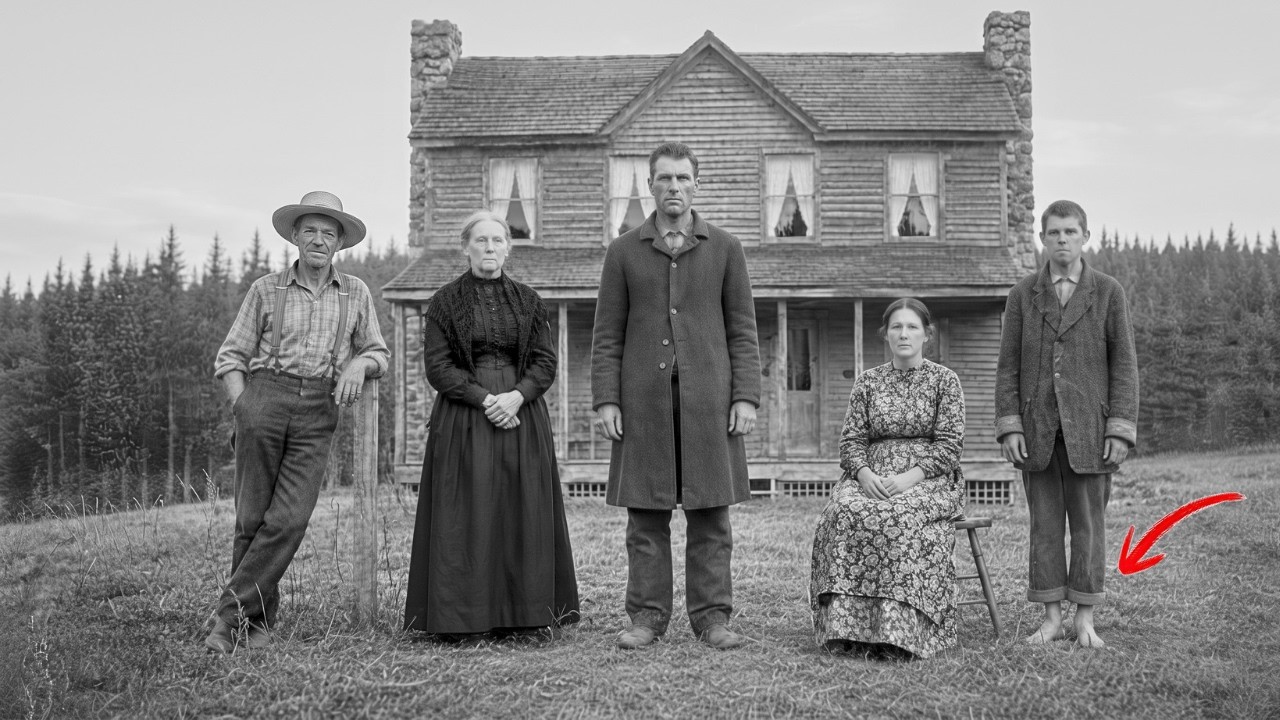
It was eleven in 1810, eleven in 1820, and eleven in 1830, with the same age brackets full, the same empty, as if the household never aged. The 1830 census taker wrote a note beside the Kennard entry: he was fed dinner by eleven people he did not see. Nine of the eleven men came down from that mountain on the morning of October 14. They agreed in their accounts that the family was polite, that the women came out first, that the Kennards would not eat with them, and that at some hour of the night every man in the camp woke at once, not to a noise.
Five of them said a man walked through the camp from the direction of the house, unhurried, and that two of them recognized the man as their own dead kin, one a brother killed at Sharpsburg thirteen months earlier, one a father drowned in 1851. The two men who did not come down were Lieutenant Cordell Seep and a private named Jasper Bohannan. Their blankets, weapons, and boots were in camp. In the frost, the men found two sets of barefoot prints leaving the camp toward the tree line, and two sets returning from the tree line, same feet, but the stride coming back was about forty inches, which is not the stride of a man walking, and a running man does not leave flat-footed prints.
The men left without saying goodbye. As they descended, they could hear for a quarter mile someone on the grass behind them still calling the two names. The home guard incident went into county memory and stayed there. Ninety years later, a truant officer named Ray Dehart drove up that road in 1954.
He came back down the same afternoon and told the superintendent that a woman up there had asked whether his dead son Wendell was doing any better with his reading. Wendell had been dead nine years and had never been enrolled in any school. The superintendent wrote the report, closed the file, and the matter was deferred every year until the state stopped requiring it. In 1971, a deputy named Bud Fentress responded to a report of a fire on the bald.
His cassette recorder caught a woman’s voice, pleasant and ordinary, telling him he was Ada’s boy and that she sings good, present tense. His mother had been dead eight years. On the recording, he can be heard saying three names over and over until the tape runs out. The most detailed record comes from a doctor.
In March of 1901, Dr. Hollis Truit was fetched at night to treat a sick child on the mountain. He found a girl named Sarilda with measles and pneumonia, and he examined nine members of the household while he waited. Their body temperatures ran around 94 degrees, their pulses at midday around forty-four beats per minute, and at dusk all three wrists he counted beat together exactly.
All nine had a second row of small teeth, and the four children had an extra suture across the top of the skull. None of the nine had a single scar, callus, or vaccination mark on their bodies. The child died at four in the morning. When Truit asked where they would bury her, the father said, out on the grass.
Truit rode down and wrote, I am glad to be off that hill. Eight months later, he met the same child in a store in town, with the same eyes, the same mole below the left ear, and no mark where the mustard blister had been. The mother introduced her as Sarilda without hesitation. The family kept a ledger from 1911 to 1934.
It was kept by Silas Doggett, a barrel maker from Carter County, Tennessee, who married a Kennard woman in 1909 and took her name. His entries show a man slowly realizing something was wrong. He counted eleven at supper and nine who slept. The numbers never matched.
He wrote that no one had been sick, no one had died, and no child had been born in the house, but there were more of them than there had been. His wife Ardith told him, after years of asking, that the grass does not grow trees because it is already growing something. She said the ground reads grief the way you would read a pattern, and makes the thing you are missing out of dirt and grass and time. She said she had loved every one of them.
Silas stayed thirteen more years, practicing a ritual a midwife named Perie Scholes had taught him: say your own name, your mother’s name, and her mother’s name out loud. Three is a fence, she said. Four is a gate. He barred his door at night and said the names until his throat gave out when his dead mother came to the door and got only one word wrong.
In 1936, a WPA field worker named Vera Osgood collected folk material in the county. Children on the schoolyard chanted a rhyme about three for the fence and four for the door. She interviewed Perie Scholes, who told her the mountain was not a haunt but a crop, that it had been there long before any people, and that it feeds on grief. When Osgood asked whether she had ever been up there herself, Scholes said she had gone once in 1891 after losing a baby, and she heard it crying under her feet, and she walked down and spent forty-five years telling people how to keep it off them.
The interview ends at page nine. The remaining pages were cut out with a knife. In 1978, a physical anthropologist named Francis Oaks drew blood from twenty-two Kennards for a study of isolated populations. Every sample was identical across eleven serum protein systems, which is not a founder effect and not biology.
Two independent labs returned the same result. Footnoted in the dissertation, which was restricted in 1981 and has never been released, is a technician’s handwritten note: These are not from 22 people. These are not from 22 anything. The samples were destroyed.
The scientist left academia. The story that ties it together begins with a woman in Kingsport, Tennessee, named Karen Wadell, a medical records clerk who tested her DNA in 2019 to find out about a Cherokee grandmother. It was not true. But she had nineteen substantial genetic matches that did not fit any of her four grandparent lines.
They were all Kennards from North Carolina, and every one of them said that side of the family was a brick wall nobody would talk about. She built out her tree to 260 people and there was not a Kennard in it. Her people were Wadells and Seismores from Hawkins County, Tennessee, sixty miles away. She went to the Halloway County courthouse, then up the mountain.
She found a house in perfect repair with curtains in the windows, and a ring of eleven river stones set flush in the grass, ninety feet across. She found that the house had twenty-two windows in most of her photographs, and twenty-three in some, with an extra window appearing for about two hours on the day she was there. She went to see an old woman named Audi Scholes Rand, the granddaughter of Perie Scholes, in a nursing home. Rand gave her the full account, told her not to go back a second time, and told her the pull to go is not yours.
She died in 2024. The final piece is the one Wadell found in her own family. Her mother’s mother, Ada Ruth Seismore, had a death certificate in Tennessee dated 1971. There was a second death certificate for the same woman, same name, same birthday, same parents, dying in North Carolina in 1963.
Two Ada Ruth Seismores lived sixty-one miles apart for twenty-five years, both raising children. The only Ada Ruth Seismore born to those parents in the records died in 1913 at eighteen months old. The woman who raised Karen Wadell’s mother had been made on Bitterbald around 1929, out of a dead child’s name and a grieving woman who had buried four of six children. Nola Jean Combmes Seismore, who lived eleven miles from the foot of the mountain, knew exactly what was up there.
She went up anyway. Nobody in that family ever remarked on it. Wadell had been saying three names every night before bed: her own, her mother’s, and Ada Ruth Seismore’s. The third name had been made on that mountain.
She had not built a fence. She had built two posts and a gate. On her second visit to the bald, on the 21st of March, 2023, her brother Denny’s voice came out of the grass, whistling the way he had always whistled, calling her by the nickname only he had ever used. He asked her why she was missing a name.
She asked him why he always got up before the end of a movie, and he gave the answer he always gave, word for word, which was not the reason. The reason was that their father had died in the kitchen during the last twenty minutes of a film and Denny had found him, and Denny had never once said that to anyone. She told the thing on the grass it was wrong. It asked her to say her third name.
She stood in the ring and said out loud that Ada Ruth Seismore was made on this hill in 1929, that she was not anybody’s grandmother, that her brother was dead and she was not going to be talked out of it. The dew came up at eleven in the morning. She walked off the grass, and behind her in the wet grass there were two sets of tracks, one going and one coming, the stride coming back about forty inches. On the way down, the road was dry.
By the time she reached the lower switchbacks, it was mud. A woman’s voice called her name from up the hill. She answered, you are not my mother. The voice said, I know, hun.
Come here a minute. In her car, she checked her pockets and found that the folded piece of paper with her four sentences, including her brother’s name and the date and place and hour she found him dead, was gone. She left it up there. She drove to the nursing home and told Audi Scholes Rand what had happened.
Rand cried for the first time since her own trip in 1959 and said she was the first one she ever heard of who got asked and said no. In October 2024, a retired postal worker from Ohio, one of the nineteen distant matches, drove down to see about family history. His car was found at the gate. His dogs would not go out onto the grass.
A search found nothing. The case is open. In 2025, Halloway County tried to sell the tract again. There were no bidders.
A homemade sign at the gate says, Nothing up here, go on home. Nobody knows who put it there. On the night of February 11, 2026, Karen Wadell woke to whistling in her snow-covered yard. The tracks came in from the road, turned off at her porch, and went back out.
One set going in, one set coming out. The coming-out stride was about forty inches. She swept the yard clean and cut a tuft of green grass about nine inches tall that had grown up through the crack of her threshold in the snow. It is in a Ziploc bag in her freezer.
She still says two names out loud every night before bed, two names and then a pause where the third is not. She talks about her brother in the past tense on purpose, out loud, and corrects people who do not. Her DNA segment on chromosome eight, the one she shares with her dead brother, was 41. 6 centimorgans in 2019.
It measured 58. 9 in 2023. It is not the same size now as it was then. Her mother does not carry it.
Her father does not carry it. The only explanation the records allow is that it came from a woman who was buried in a churchyard in Hawkins County in 1913 at eighteen months old, and from a mountain that took a dead child’s name and a grieving woman’s heart and made somebody new out of them.