In the autumn of 1862, a Confederate officer stood on a Maryland battlefield and watched something he could not explain. Three weeks earlier, his artillery had helped destroy a Union battery. Broken caissons, dead horses, and damaged guns had been left in the mud. He assumed that battery was finished for months.
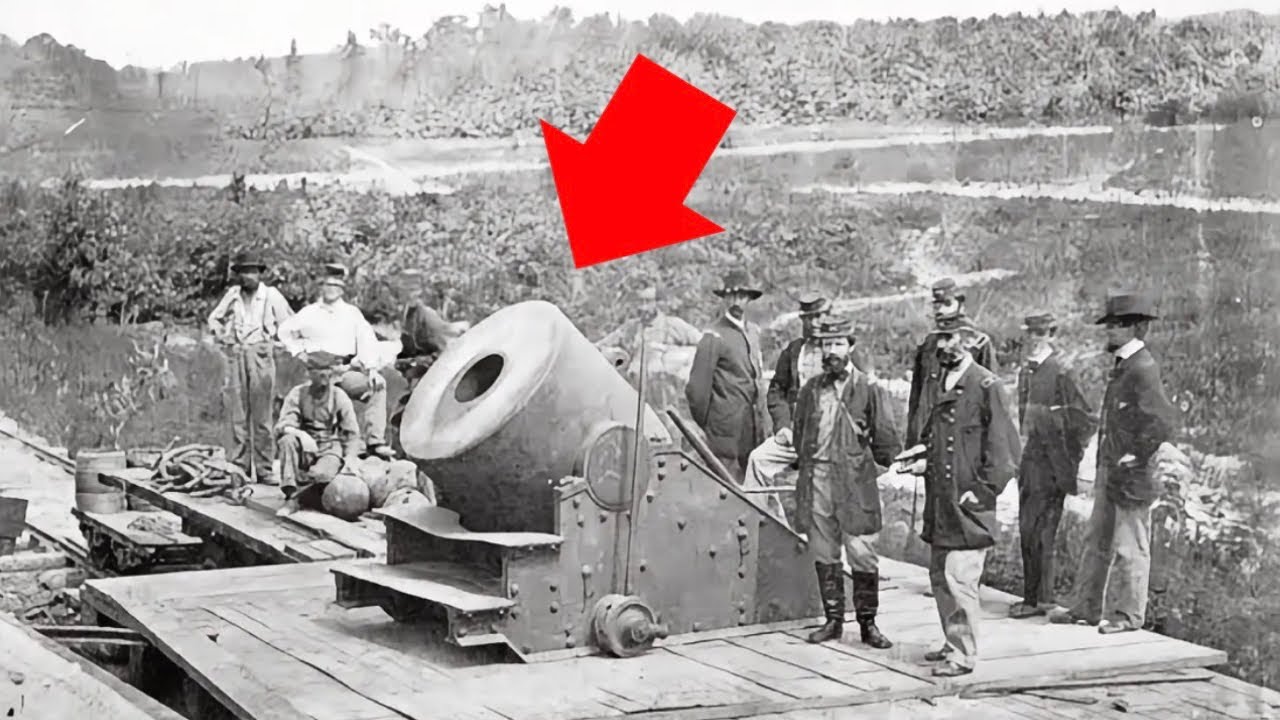
Instead, it had returned to its position almost completely replaced. The same number of guns, fresh horses, and crews that looked as if they had not missed a single day. He was not looking at a miracle. Nor was he looking at Confederate inefficiency.
He was looking at something the Confederacy did not fully grasp until it was too late: an industrial machine in the North that could rebuild an army’s firepower faster than the South believed possible. This is the story of how that machine existed, how it actually worked, and why Confederate commanders spent the entire war underestimating what they faced. That moment on the Maryland battlefield seemed baffling to Confederate officers because of what each side brought into the war in 1861. The gap was not small, and it was not hidden.
The northern states controlled roughly 90 percent of the country’s manufacturing capacity. They held nearly all of the nation’s firearms production, the vast majority of its iron output, and a railroad network more than double anything the Confederacy possessed. None of this was a secret. Southern newspapers had written openly about northern industrial growth for a decade before the war began.
The Confederate political leadership knew, at least in theory, that they were preparing to fight a far wealthier and more industrialized opponent. What Confederate leaders did not fully realize was how that industrial advantage would look once converted into the brutal arithmetic of modern war: how quickly a factory could turn raw iron into a twelve-pounder cannon, and how quickly that cannon could reach a battlefield hundreds of miles away. At the center of that calculation stood a foundry on the west bank of the Hudson River in New York, a place most soldiers on either side had never heard of and would never see, called the West Point Foundry. Before the war, it was already one of the most advanced iron-casting operations in the country, producing everything from steam engine parts to ornamental ironwork.
Once the war began, it became the closest thing to the beating heart of the entire Union artillery program. The foundry’s key innovation, a rifled gun design developed by Robert Parrott and known simply as the Parrott gun, could be manufactured with a speed and consistency that Confederate munitions production never approached. Parrott guns came out of that foundry by the hundreds throughout the war, cast, bored, and reinforced with a distinctive wrought-iron band around the breech, then shipped south to armies that consumed artillery pieces at a rate no one had expected in 1861. What made the Parrott gun particularly suited for mass wartime production was not just its battlefield performance but the manufacturing process behind it.
Robert Parrott designed a gun that reinforced a cast-iron barrel with a separately forged wrought-iron band, shrink-fitted onto the breech by heat, a technique that allowed for a lighter weapon without sacrificing the strength needed to withstand repeated firing. That design choice mattered enormously once war created continuous demand, because it meant West Point Foundry workers could cast barrels at a rhythm approaching an assembly line rather than treating each gun as an individually crafted piece requiring the kind of specialized, time-consuming labor that smaller Confederate operations had to rely on. The North was not just making more guns. It had found, in Parrott’s system and similar innovations elsewhere, a way to make guns faster without making them worse, exactly the kind of industrial efficiency that a largely artisanal war economy like the Confederacy struggled to imitate no matter how skilled its individual workers were.
By comparison, Confederate guns came from a production system built almost entirely from scratch after secession, because the South inherited almost none of the country’s prewar industrial infrastructure. The Tredegar Iron Works in Richmond, Virginia, became the Confederacy’s most important weapons factory out of necessity rather than any prewar advantage, and its workers performed genuinely impressive feats of improvisation throughout the war, casting cannons, rolling armor plate, and producing munitions under conditions that grew harder with each passing year. But Tredegar was, in the end, a single facility trying to do work that dozens of northern foundries divided among themselves. When Confederate artillery pieces were destroyed, captured, or simply worn out from heavy use, the replacement supply line behind them ran through one strained operation, competing for raw materials, skilled labor, and railroad transport with every other branch of a Confederate war economy that was reeling from every direction by mid-war.
The story that opened this account, of the officer who watched a shattered Union battery reappear almost fully restored, was not an isolated incident. Versions of the same shock repeated at nearly every major battle of the war, and the pattern was so consistent that Confederate officers began writing about it in their correspondence with a mix of frustration and something close to disbelief. At Shiloh in April 1862, Confederate forces overran Union artillery positions on the first day of fighting, seizing guns and pushing Grant’s army toward the Tennessee River in what seemed by nightfall to be a decisive Confederate victory. By the second day, Union reinforcements had arrived with fresh artillery, and the Confederate army that had seemed on the verge of destroying Grant’s forces found itself facing a rebuilt Union line whose firepower was, in some sectors, stronger than it had been the previous morning.
Confederate General P. G. T. Beauregard, who ordered his troops to fall back and entrench rather than exploit the advantage on the first evening, spent years afterward defending that decision.
But the deeper problem was structural, not tactical. Even the Confederate army that had decisively won the first day’s fighting could not match the pace at which Union industrial capacity replaced what had been lost. Albert Sidney Johnston, the Confederate commander who might have witnessed this pattern and drawn conclusions from it, was killed in the afternoon of the first day’s fighting at Shiloh after a bullet severed an artery behind his knee while he directed an attack that came astonishingly close, for a few hours that afternoon, to sweeping Grant’s entire army away. His death at that crucial hour removed the only Confederate commander on that field with the seniority to launch the kind of decisive follow-up attack that might have changed what happened the next morning.
What made this replacement speed possible was not a single factory or a single engineering genius but an entire supply chain the North had spent decades building before anyone imagined it would matter this much. Iron ore moved from mines in Pennsylvania and the upper Midwest to foundries connected by a railroad network that, by 1861, linked most major northern industrial centers into something like a coordinated system. Coal from Pennsylvania fields fueled furnaces that never had to stop for lack of fuel, unlike southern furnaces increasingly did as the war continued and Union naval blockades tightened around Confederate ports. Skilled mechanics, many of them trained in the decade before the war building steam engines, textile machinery, and railroad equipment for the North’s growing industrial economy, could shift into munitions production without the North needing to train an entirely new workforce from scratch.
The Confederacy, by contrast, had to build nearly all of this capacity during the war itself and under blockade, with a workforce containing far fewer trained mechanics and ironworkers than were available to the North before a single shot was fired at Fort Sumter. The geography of this disparity compounded the problem in ways that had nothing to do with factories themselves. Nearly all of America’s important prewar iron mills and machine shops lay north of the Mason-Dixon line, the result of decades of industrial development concentrated around northern coal fields, northern rivers suitable for water-powered machinery, and northern port cities connected to shipping routes that brought in raw materials and exported finished goods. The Confederacy was not just starting late.
It was starting in a region that had never been built, geographically or economically, to support the kind of heavy industry modern war required, and changing that pattern within four years of conflict, under an active blockade and while fighting for survival, was never realistic no matter how skilled Confederate engineers and ironworkers were. The Springfield Armory in Massachusetts tells a similar story regarding small arms, which matters because artillery was only one part of what Confederate officers constantly underestimated. The Springfield Armory had been producing rifles for the United States government since the 1790s, meaning that when the war began, the North possessed not just a working arms factory but generations of accumulated manufacturing knowledge about how to standardize parts, train workers, and expand production rapidly under increased demand. By 1863, the Springfield Armory alone was producing rifles at a rate that dwarfed anything Confederate arms factories, working with a much smaller industrial base and suffering chronic raw material shortages, could hope to match.
Confederate soldiers went into battle throughout the war carrying a motley and heterogeneous assortment of weapons. Some were captured from Union arsenals, some were imported through the blockade at enormous cost and risk, and some were made locally in quantities far below what the army actually needed. As the war progressed, Union soldiers carried weapons produced by a system built specifically to replace losses as quickly as they occurred. Robert E.
Lee himself referred to this disparity in his correspondence with Jefferson Davis on several occasions, framing it as a strategic fact rather than a complaint, a fact that shaped every decision he made about when and where to commit his army to battle. Lee understood, before most of his subordinates, that a Confederate tactical victory that failed to destroy the enemy army entirely was often no real victory at all, because the Union side could simply rebuild what it had lost within weeks, while Confederate losses in both men and matériel became harder to replace with each passing year. This understanding shaped Lee’s offensive style in a way that seems counterintuitive at first glance, precisely because grinding wars of attrition favored the side with deeper industrial reserves. Lee repeatedly gambled on quick, decisive engagements that might end a campaign swiftly, because the alternative was a long war the Confederate industry had no realistic way to win.
This is part of why the Battle of Gettysburg and Lee’s decision to invade Pennsylvania in the summer of 1863 makes more sense when read from an industrial rather than purely tactical perspective. Lee was not simply seeking a battlefield victory on northern soil for its symbolic or political value, although both mattered to him. He was seeking the kind of single engagement that could change the course of the war, one that might force a negotiated peace before the full weight of northern industrial mobilization became impossible to overcome by any combination of skill or audacity. The Confederate government did attempt to close this gap through blockade running, and during the first two years of the war those efforts produced real results.
Fast ships built specifically to slip through Union naval patrols brought weapons, ammunition, and raw materials from Britain and other European sources into southern ports, and without those shipments the Confederate war effort would likely have collapsed years earlier than it did. But blockade running was never a substitute for local manufacturing capacity, and both sides knew it. Every rifle that arrived through the blockade had survived a grueling test. Union naval squadrons grew larger and more effective at intercepting blockade runners as the war progressed.
Insurance costs and prices for smuggled military goods rose steadily, and the volume of matériel that actually reached Confederate armies never approached what an effective domestic weapons industry would have provided. The Battle of Fredericksburg in December 1862 provides a particularly clear example of how this industrial gap affected even a battle in which the Confederacy achieved a decisive victory. Union artillery suffered heavy losses in the fighting along the Rappahannock River, both from Confederate counter-battery fire and from the enormous volume of ammunition Union guns consumed attempting to support doomed infantry assaults against Marye’s Heights. Confederate officers who surveyed the battlefield afterward, counting smashed ammunition wagons and abandoned equipment from the Union retreat, had every reason to expect that restoring Union artillery strength on that front would take months.
Instead, when the armies met again five months later at Chancellorsville, Union artillery arrived in strength, reorganized and resupplied, playing a decisive role in the fighting despite the losses suffered at Fredericksburg. Whatever the Union army lost on a Tuesday, northern factories could largely replace before the next major engagement, and no single Confederate battlefield victory, however complete, ever seemed capable of permanently weakening Union combat power the way Confederate losses weakened theirs. Part of what made the North’s industrial mobilization so effective was a shift in the workforce that had nothing directly to do with weapons but everything to do with keeping factories running at full capacity while millions of working-age men left to join the army. Women entered munitions and manufacturing work in numbers that would have been inconceivable a decade earlier, taking jobs in cartridge factories, textile mills producing uniforms and tents, and arsenals assembling ammunition components.
The Watervliet Arsenal in New York and the Frankford Arsenal in Pennsylvania significantly expanded their female workforce during the war years. This expansion mattered directly to the story of rebuilding Union batteries because ammunition production had to keep pace with gun production for either to have any value on the battlefield. A cannon without shells was useless. The same industrial logic that drove northern foundries to replace guns quickly had to extend through the entire chain of ammunition manufacturing, a chain that depended on a workforce the North could expand in ways the South, with its smaller free population and its reliance on enslaved labor concentrated in agriculture rather than industry, could not replicate on a similar scale.
When Ulysses Grant launched his continuous campaign against Lee’s army in the spring of 1864, a campaign built explicitly on sustained engagement and attrition rather than the single decisive battles earlier Union commanders had sought, that strategy was feasible only because Grant knew with confidence that Lee could not match him, and that Union industrial capacity could replace the losses such a campaign would inevitably produce. By the time the armies reached the trenches around Petersburg in the summer of 1864, the pattern that had puzzled and frustrated Confederate officers since the war’s first engagements had become a grim accepted reality rather than a source of ongoing shock. Confederate artillery crews at Petersburg fought with guns that were, in many cases, older and more worn than their Union counterparts, using ammunition stocks that became increasingly unreliable as southern shortages of powder and metal worsened. Union artillery positions around the same siege lines were resupplied and reinforced with a regularity reflecting nearly four years of developed industrial coordination between northern factories, railroads, and the army’s ordnance bureau.
What looked in 1862 like an inexplicable pattern of rapid Union recovery had become by 1864 an operational reality Confederate commanders planned around, because there was no longer any illusion that a single tactical victory could meaningfully disrupt the flow of replacement guns and ammunition reaching the Union army from factories whose numbers the Confederacy could never match, blockade, or destroy enough to change the outcome. There is a particular irony at the heart of this entire story. The Confederacy, especially in its first two years, mobilized some of the most tactically gifted commanders either side produced. Men who could read terrain, exploit enemy mistakes, and win battles against numerically superior forces through sheer operational skill.
But none of that field talent, however real, could manufacture a cannon out of thin air. None of it could smelt iron ore, train a machinist, or build a railroad network capable of moving finished guns from a Pennsylvania foundry to a Virginia battlefield within days of a battle ending. The generals standing on those fields watching Union batteries reappear, rebuilt and resupplied, were witnessing the practical limits of what battlefield genius alone could accomplish against an opponent whose factories refused to stop producing. That is, in the end, the real story behind the bewilderment Confederate officers felt on battlefield after battlefield throughout the war.
It was never really about one gun or one battery or one moment of Confederate surprise. It was about two different economies entering a war whose outcome was ultimately decided by foundries and railroads as much as by any general’s tactical brilliance, and by how long it took the side lacking that industrial base to fully understand what it was fighting.