In England, there is a sealed packet of letters that no one is allowed to read. They were written by Prince Philip to an actress and are now held by a man who was given one instruction: show them only to the official biographer of the Duke of Edinburgh, once one is appointed after his death.
The guardian is a writer who was a friend of the actress. He inherited the letters when her last husband died in 2010. Philip died in 2021. The letters remain sealed. Four years later, no official biography has been announced, meaning the condition she set may remain in force for a long time.
The woman who placed that condition in her will was named Pat Kirkwood. She spent roughly 60 years in exile over a matter that was never proven in the first place. This is the story of one evening in October 1948, what it cost her over five decades, and the story of a man who wrote to her secretly for years while saying nothing about her publicly.
The gossip always missed one thing. In 1948, she was more famous than he was.
Pat Kirkwood was born in Salford in February 1921, two months before Philip. At 18, she was a star singing "My Heart Belongs to Daddy" in a West End show. The show was called Black Velvet and opened in 1939. That was a Cole Porter song sung by a teenager from Salford in London weeks before the war began.
She had a voice that reached audiences without a microphone and a stage presence that survived six decades of changing fashion. She worked through the war in theatre and radio in a country where theatres stayed open despite the bombing. London theatres closed briefly at the start of the war, then reopened because the government decided entertainment was a necessity, not a luxury.
She also toured for the troops and worked in radio, which reached nearly every home in the country by the 1940s. Performers worked during air raids, sometimes finishing a show in a shelter. That was her training. The press called her the "Beauty of the Blitz." Critic Kenneth Tynan described her legs as the eighth wonder of the world.
By the late 1940s, she was one of the biggest names in British musical theatre, headlining her own show. She earned it on stage eight times a week.
That same year, Philip was a serving naval officer who had married into the British royal family 11 months earlier. Outside Britain, most people did not know his name. He was also a young man with almost no money of his own and no fixed role, married to a woman whose job was defined for life.
He had given up a naval career he loved, a country he was born in, and a family name he was born with, all within two years. A man in that position goes out at night with his friends. That is the least surprising part of this story.
That year, he had been moved to a desk job. A naval officer who had led men at sea during a world war was now doing administrative work in London and being taken to events as the husband of another woman. Everyone who knew him in those years describes the same thing: restlessness, frustration, and energy with nowhere to go.
The following year, he was posted to Malta and returned to the sea. The two years he spent there are usually described as the happiest of his adult life. The night in this story falls in the gap between those two things.
In October 1948, Kirkwood was starring in a revue called Starlight Roof at the London Hippodrome. Her boyfriend at the time was Baron Nahum, a society and court photographer who moved easily between nightclubs and palaces. Baron had taken photographs at the royal wedding the previous year, which shows how close he was to the family.
He was also part of an informal group of influential men who met regularly in London. Philip was part of that circle, which is how a duke ended up backstage at a variety show. The group had a name. Every Thursday, a group of men met for lunch in an upstairs room at Wheeler's, an oyster bar on Old Compton Street in Soho.
Baron had helped found it. The membership was not aristocratic. It was entertaining. David Niven, Peter Ustinov, James Robertson Justice, poet John Betjeman, a future Chancellor of the Exchequer, 10 or 15 men a week swapping stories over the restaurant's wine in a room above a fish restaurant. Philip went regularly. His wife, who was about to become queen, called them his "funny friends." She did not go, and was not expected to.
All of this is the context for what happened next. He was not a prince sneaking off to meet an actress. He was a 27-year-old man with a standing lunch date in Soho in the only part of his week that belonged to him.
Baron is the third person in this story, usually reduced to a name in a single sentence. He was born Sterling Henry Nahum in Manchester to an Italian Jewish family with roots in Tripoli. He worked in photography during the war and became one of London's most sought-after portrait photographers afterward. He was the friend who could move between worlds, from chorus girls to dukes, from Soho lunches to palace sittings, all in the same week.
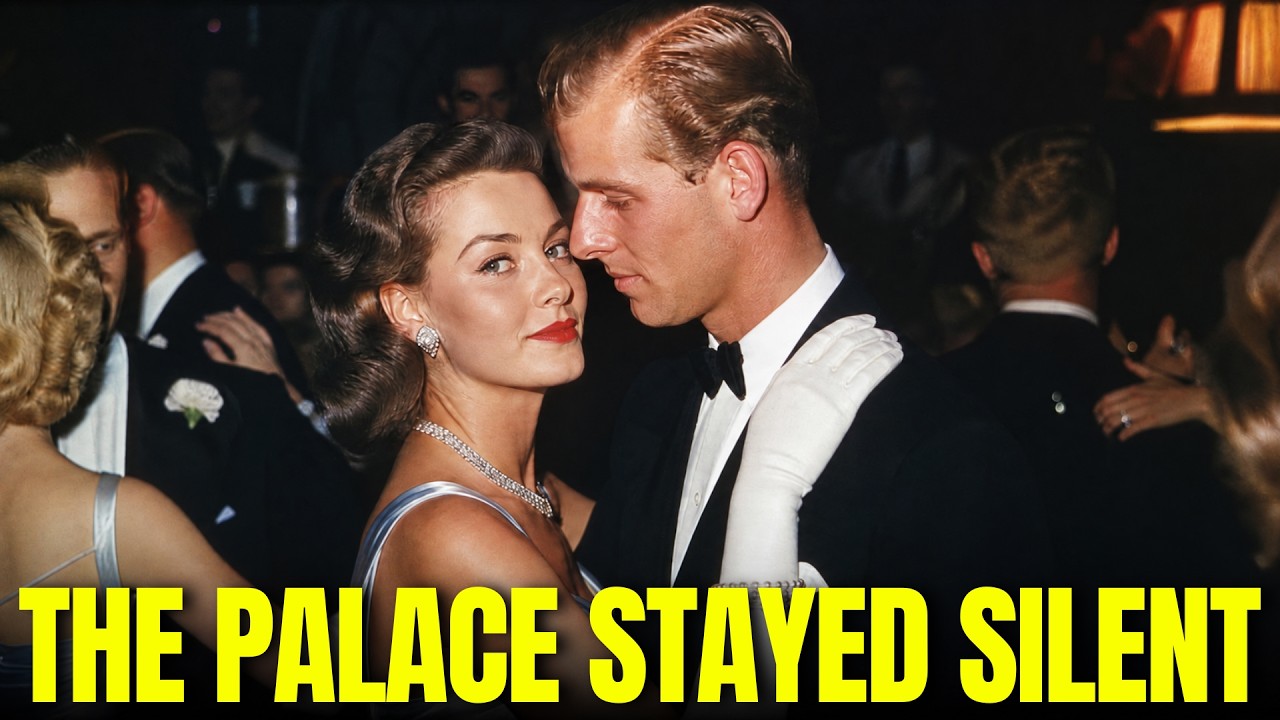
He was her lover at that moment and Philip's close friend at the same time. The evening happened because one man knew them both well enough to bring them together. One night after the show, Baron took a friend backstage to her private dressing room. That friend was Prince Philip, Duke of Edinburgh, aged 27.
A dressing room after a show is a small, crowded, hot place, full of flowers, makeup, and people wanting something. They went to dinner at Les Ambassadeurs in Mayfair, then to the Milroy, a nightclub below the restaurant. Post-war London was still under rationing, and clubs like these were places where those restrictions were quietly forgotten.
Bread had been rationed in 1946 after the war ended, and clothes and fuel were still controlled. A West End club with a band and a dinner license was one of the few places in Britain where it seemed the 1930s still existed. There, in front of a room full of people, the Duke of Edinburgh and the revue star danced for hours.
She was 27. He was 27. Both had spent the war years working, and both were used to being watched. According to her account, they talked about theatre and the Navy, and they danced at arm's length. The Navy is the detail that rings true. It was the only subject he could talk about without direction, and he had just lost it.
Afterward, the group returned to Baron's apartment and had scrambled eggs. Baron was there. So was Philip's personal equerry. Dinner, a dance floor, and eggs at dawn with two other men in the room. That is all that was ever documented about that evening.
No photographer captured an image of them together that night. In a city full of photographers, there is no single photo of them dancing. That is part of why the story could be shaped to fit anyone's agenda. All that remains of the evening is what others did with those few hours.
Fifty years later, she was still being asked about it. Later claims suggested the two met on seven separate occasions. That was never proven, and she never confirmed it. What is undisputed is that the friendship, whatever its size, lasted. They were still exchanging letters decades later, when she was an elderly woman in Yorkshire and he was the longest-serving consort in British history.
It is worth being precise about what was actually unusual. Not that a married man went dancing. In 1948, in those circles, plenty of married couples went dancing. What was unusual was who he was married to. The woman at home was not just a wife. She was the heir to the throne. Within four years, she would be queen.
Everything ordinary he did was about to stop being ordinary. This was one of the last nights when he may not have realized that yet.
The reason the night matters is its timing. Philip married Princess Elizabeth in November 1947, 11 months earlier. In October 1948, she was eight months pregnant with the child who would become King Charles III. Charles was born at Buckingham Palace on 14 November 1948.
So that evening at the nightclub was a few weeks before the birth of the man this series has dedicated 11 episodes to. The heir to the throne was at home expecting a child within weeks while her husband was on a dance floor in Mayfair with a musical star. For that to become a story, nothing needed to happen. It was enough simply to be seen.
There is no evidence of an affair, and no way to prove a negative. What follows is not a verdict. It is a record of what rumor does.
It is worth noting which of the two the rumor actually landed on. He went on to spend 70 years in public life, a dukedom, thousands of engagements, and a state funeral at the end. She went on to answer the same question in every interview she gave into her 80s. One evening from a 60-year working life, and that evening outlived everything else she did.
The rumor started within days and never really stopped. It is worth asking why it stuck to her rather than any other woman he was seen with over the years. Part of the answer is simply her profession. A duchess in a nightclub is a private matter. An actress in a nightclub is a story, because an actress is already considered public property, already photographed, already assumed to be available for comment.
She had spent 10 years building a name that belonged to her alone. The rumor took that name and permanently attached it to someone else's marriage.
Fleet Street in 1948 did not print royal scandals directly. It printed hints and let readers finish the sentence. The same restraint had held during the abdication crisis 12 years earlier, when British readers learned about Mrs. Simpson weeks after the rest of the world. Foreign newspapers did not share that restraint, and neither did the people in the room.
There was a structural problem underneath it all that no one could solve. The rumor concerned a private evening. The only two people who could settle it were the two people involved. One was barred by custom from discussing his private life. The other was not believed because she had an obvious reason to deny it. That is a trap with no exit. If you say nothing, the rumor grows. If you say something, the rumor renews.

Over the following decades, it was published that she was his mistress, that she received a white Rolls-Royce, that it was not one meeting but many. No evidence was ever produced for any of it. None was needed because no one would sue on behalf of the palace, and she could not afford to sue on her own.
She denied it consistently and angrily all her life. In her own account of that night, written half a century later, she described the evening as very ordinary and said they danced at arm's length. She said something else more important. She said the rumor damaged her reputation and her career.
No leading actress in 1948 could afford the stigma of being the other woman in a royal marriage. Managements notice. Audiences notice. Newspapers certainly notice. That label follows you into every interview for the rest of your career. Every profile. Every talk show. Every obituary.
There is a particular injustice in the nature of it. The story was about him, the damage fell on her, and she had no means to fight it. She could not sue a rumor. She could not force a newspaper to print a correction for something it had only implied. She could deny it in an interview, the one step guaranteed to repeat the story with her denial as the headline. Every time she said no, the question gained new life.
What she wanted was simple. A public denial from the palace. She never got it. She remained resentful of that until her death and said so publicly. The Duke himself never intervened to clear her name.
He was still being asked about her in his 70s. When she published her memoirs, the denial in that book was among its angriest chapters.
Compare that with another episode from this series. In 1980, when a newspaper story linked the Prince of Wales with a Catholic princess from Luxembourg, the palace issued a firm public statement. "There are no plans at all and there are no meetings at all." That story involved a change in British law. This story involved a dancer from Salford. The institution can speak when it chooses to. For 60 years, it chose not to.
There is a defense of that position and it deserves to be stated. The palace never comments on private life, and once it starts, it cannot stop. But the price of that rule was not paid by the palace. It was paid by a woman in Yorkshire answering the same question in her 70s.
It was not as though he was silent with her. This is the part almost no one knows.
Baron himself did not last long. He died in 1956 at the age of 50 after surgery. With his death, the easiest link between those two worlds was lost. The Thursday lunches eventually faded. The restaurant changed hands, and stories about what happened there began appearing in the bolder papers. That is the usual pattern with this kind of friendship. While the link is alive, it is a social circle. Once he is gone, it becomes material for publication.
Then, nine years later, the whole thing returned, much bigger. In 1957, Philip was on a five-month tour aboard the royal yacht with his private secretary and old friend, Mike Parker. While they were at sea, Parker's wife filed for divorce. In 1957, divorce in the palace's inner circle was a scandal in itself. Parker resigned and flew home to face a crowd of reporters.
From there, the story grew. Foreign newspapers began speculating that the royal marriage itself was in trouble. An American paper linked it to an unnamed party girl. Here the palace did something it almost never does. The Queen authorized her press secretary to issue a statement. It said: "It is quite untrue that there is any rift between the Queen and the Duke."
That distinction is the heart of this episode. The palace did break its silence. It broke it to protect the marriage. It did not break it to say Pat Kirkwood was innocent. Many people in London assumed the unnamed party girl was her.
Which brings us back to the letters. Philip did write to her, not once and not briefly. The man who holds them now has described them publicly without quoting from them. He says: "They were written in terms of friendship and concern from two people caught up in a media storm." He has also said clearly that there is nothing in them to support the rumor.
Publicly, for 60 years, nothing. Privately, there was correspondence between two people caught in the same storm. No one else has read it because her will forbids it.
Think for a moment about what that means practically. Somewhere in England, there is private correspondence between two people. A woman described as a royal mistress for 60 years, and the man she was said to have had an affair with. It would have cleared her name in an afternoon. She locked it away.
Some of what passed between them was recorded, and it is the most revealing material in this entire story. She wrote to him that if there had been any support from his side, the matter could have been ended years earlier. Instead, she said, she was left to fight a sea of rumors alone.

His reply was the reply of a man inside an official institution. He told her that apart from starting legal proceedings for defamation, there was nothing that could be done at all. He said the invasion of privacy and fabrication were the plague of their existence.
Put those two positions together and the episode explains itself. She asks him to defend her. He explains that the system has no option of defense, only silence.
Then she said the thing that strikes a journalist more than anything else. She said that a lady, as a rule, is not expected to defend her honor. That is the role of the gentleman.
Those instructions are the most interesting thing she ever did. She could have sold the letters. She could have published them and ended the debate in an afternoon. Instead, she left them with a friend with orders to hand them to the person who would write the official biography of his life after his death. She wanted the historical record corrected. But she did not want to do it while it could still embarrass him.
There is something else worth mentioning about her because it is usually ignored. By the late 1940s, according to several sources, she was the highest-paid star on the London stage. Not among the highest. The highest. That is the woman this story usually treats as a footnote to someone else's evening.
Her career continued and it was a real one. In 1950, Noël Coward wrote the musical Ace of Clubs specifically for her. Coward did not write roles for people he thought were finished. That commission is worth more than any gossip column.
She worked in theatre, television, film, and pantomime for decades in an industry that eats its own. There were difficult years in the middle of it, but she recovered and returned. She also worked outside variety in serious plays and classical theatre, which people do not expect from a variety star.
She married four times. Her second husband died two years after the wedding. Her last marriage lasted 26 years until her death, and it was the death of her fourth husband that revealed the letters to the friend who holds them now. He was with her through the final stage of this controversy, and by all accounts, he stood firmly by her. A husband who watches his wife answer the same insinuations in her 70s is not a neutral observer, and he never claimed to be.
In 1999, she published her autobiography, addressing the rumor directly and denying it. She called the book The Fabulous Days. It is a theatrical title, cheerful and slightly defiant. It seems an odd name for a memoir that had to devote pages to a night in a nightclub 50 years earlier.
She died on 25 December 2007 in Ilkley, Yorkshire. She was 86. Christmas Day. Roughly 60 years after a night on a dance floor in Mayfair.
There is one additional fact to place beside all of this, and it contradicts the easy version of the story. The marriage the rumor was supposed to threaten lasted 73 years. It survived the crisis of 1957, decades of speculation, and every book written about it since. Whatever that night in Mayfair was, it was not the beginning of the end of anything. It was just one evening attached to one woman's name.
Philip outlived her by 14 years. He died in 2021 at the age of 99 after 73 years of marriage to the woman who was at home expecting a child on the night this episode is about.
When she died on Christmas Day 2007, every British newspaper published her obituary. Every obituary mentioned Philip's name. She had sung to a country under bombardment. A musical had been written for her by Britain's most famous playwright. She had worked for 60 years at the top of a brutal profession. And the first fact of her life story, every time, was one night spent dancing.
She told the story herself, clearly, for decades, and it changed nothing. She knew it would. That is presumably why she left the letters the way she did, with a friend, under lock, with a date she would never see.
There is a version of her story in which she sells those letters in 1992 at the height of the royal scandals and dies rich, vindicated, and hated. She chose the other version. She kept his letters out of the papers for the rest of her life. And she left instructions that they be given to the one reader who would write the record that remains.
That is the behavior of someone who wanted to be believed more than she wanted to win. And that condition is still in force. Someone will one day be appointed to write the official biography of the Duke of Edinburgh. That person will be handed a packet of letters no one else has read, from a woman who died nearly 20 years ago.
She will get her answer in a book she will never see, written by a stranger she never met. That is almost a century after that night, depending on when the appointment is made. It is a strange kind of faith, and it was the last thing she did about the matter.
There is a sad, small symmetry among the three of them. The photographer died at 50 before any of it was written down. The actress lived to 86 and spent most of those years in denial. The prince lived to 99 and said nothing at all. Only one of the three chose his own silence. The other two had it imposed on them.
The obituaries got one thing almost right by accident. They called her a survivor. She survived the war, four marriages, the collapse of the variety theatre that made her, and 60 years of a story she could not end. She kept working into her 70s in an industry that had stopped making the kind of shows she was built for.
In 2013, six years after her death, someone wrote a stage show about exactly that. It was called The Plain Truth of the Matter. She would have been furious.