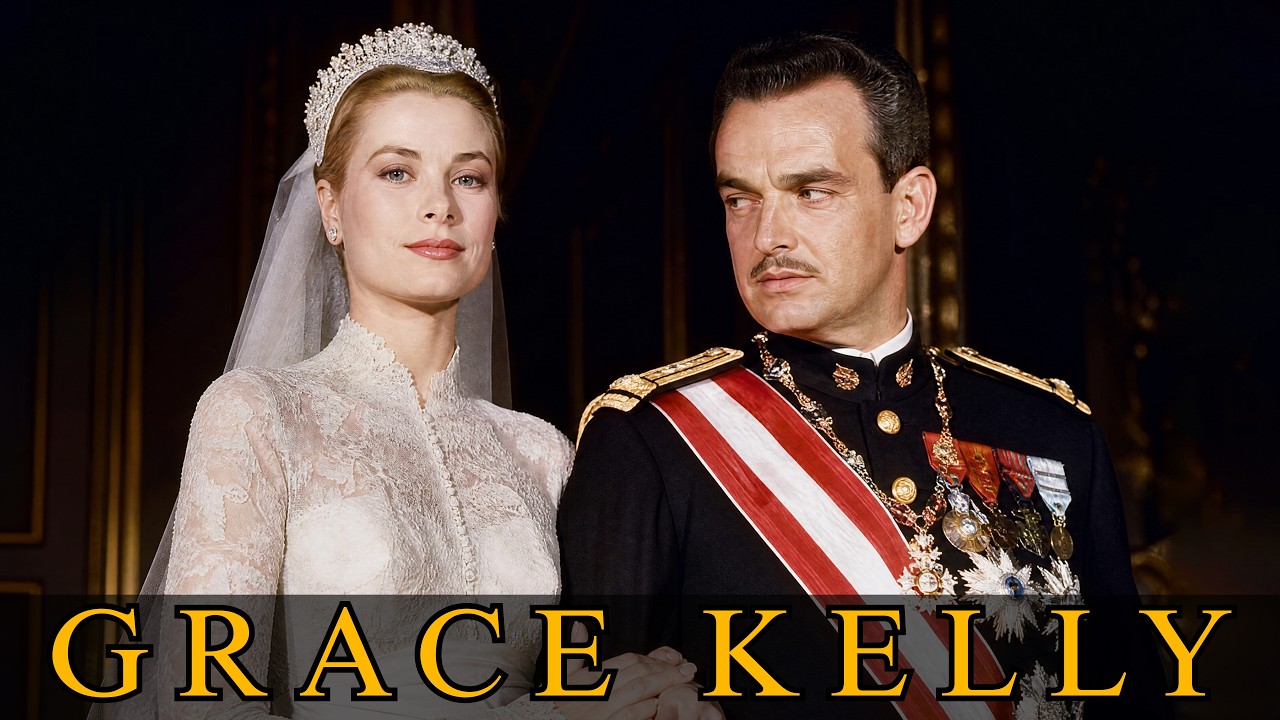
The story the world was told in 1956 was simple and beautiful. A glamorous Hollywood actress meets a real prince at a film festival. They fall in love, marry, and she becomes a real-life princess living in a pink palace above the sea. It was sold as the greatest fairy tale of the twentieth century.
The reality was colder.
On her wedding day, the most famous actress in the world entered a country where her own films were banned. She would never act again. And the gates of a small, rocky palace closed quietly behind her. The world saw a crown. She entered a cage.
This is the story of Grace Kelly, the overlooked daughter who became a star, the princess who became a prisoner, and the woman who spent twenty-six years performing the role of a lifetime.
Chapter One: The Girl Her Father Overlooked
Grace Patricia Kelly was born on November 12, 1929, in a large brick home on Henry Avenue in the East Falls section of Philadelphia. She was the third of four children in a family that worshipped strength and had little tolerance for softness.
Her father, John Brendan Kelly, known as Jack, had risen from poverty to immense wealth through a construction business. He was also a champion athlete who had won three Olympic gold medals in rowing. He ran for mayor of Philadelphia. He gave orders, and people followed them.
In such a family, children were measured by their achievements. Grace’s older sister, Margaret, was bold and brave, the clear favorite of her father. Her brother, John, was the son and heir, groomed for Olympic glory. Then there was Grace. She was quiet, cautious, and often sick with colds. She lacked the athletic confidence the Kelly family prized above all else.
Her father did not hide his preference. He did not even try. Years later, after Grace had conquered Hollywood and married a prince, Jack Kelly reportedly said he had always expected great things from his other children. Grace was the one he worried about.
The world’s most admired woman was still, in her father’s eyes, the little girl who had somehow surprised him.
Psychologists have a simple term for what happens when love is conditional. The child learns to perform. She learns that affection is a reward to be earned by being good, perfect, and chosen. Grace Kelly learned this lesson deeply and early. She spent the rest of her life trying to be chosen.
She was sent to convent school, raised in strict Catholic tradition, and taught to fold her hands, lower her eyes, and never speak of her feelings. She grew into a beautiful young woman whose calm exterior hid a fierce hunger. That stillness would later read on camera as elegance and royalty. In truth, it was the armor of a girl who had decided no one would ever know how much love she wanted.
When she announced she wanted to act, her father was unimpressed. Acting was a disgraceful profession for frivolous people. He let her go to New York, but he made his contempt clear.
The overlooked daughter left the house on Henry Avenue with a single obsession. She had to prove she was worthy of being chosen. She would prove it to everyone. Everyone except the one man whose approval she wanted most.
Chapter Two: She Became the Best in the World
Within five years of leaving home, the overlooked daughter became the most in-demand actress in Hollywood. It happened fast, and it happened on her terms.
Grace arrived in New York and enrolled at the American Academy of Dramatic Arts. She modeled to pay for her classes, and the camera loved her immediately. There was something in her face that the lens could not get enough of. A strange transparency, a coolness, like deep, still water with something moving beneath it.
She worked in television, then landed a small role in a 1951 film called "Fourteen Hours." Few noticed her. That did not last.
In 1952, she starred opposite Gary Cooper in "High Noon," which became a classic Western. She played a young Quaker bride, pale and principled, holding her own against one of the biggest stars in the world. Hollywood began to take notice.
The next year, she went to Africa to film "Mogambo" with Clark Gable and Ava Gardner. That performance earned her an Academy Award nomination. The weak third child of the Kelly family was suddenly the center of attention.
Then came Alfred Hitchcock, and everything changed.
The great director saw in Grace exactly what he spent his career chasing. He called it fire under ice. A woman who seemed untouchable, frigid, perfectly still, but with a heat beneath that stillness that could burn a man alive.
He cast her in "Dial M for Murder" and then in "Rear Window" opposite James Stewart. These films turned her into an icon. The camera loved her in a way few actors have ever been loved.
Consider the scale of what she achieved in such a short time. Between 1951 and 1956, a span of just five years, Grace Kelly made eleven films. She worked with Gary Cooper, Clark Gable, James Stewart, Cary Grant, Bing Crosby, and William Holden. Hitchcock directed her three times. She earned an Oscar nomination for her third major film and won the Academy Award for Best Actress for her ninth.
By the age of twenty-four, she was one of the highest-paid and most sought-after women in the industry. No one had risen so quickly.
What is most striking in hindsight is how much of herself she gave to her work and how little the world understood it at the time. To audiences, she was the cool blonde, the elegant ornament, just a face. But the actresses and directors who worked with her saw something else. A serious artist who studied her roles, made bold choices, and was not afraid to make herself plain and unglamorous when the part required it.
The cool image that made her famous was largely a performance she had crafted and controlled. She had been building that controlled image since childhood in Philadelphia, hiding her inner needs behind stillness. On screen, that lifelong habit became art, and the art was recognized with the highest honor in her profession.
She won the Oscar in 1955 for "The Country Girl." It was a brave performance. She stripped away the glamour completely, wore plain clothes, went without makeup, and played the tired, bitter wife of an alcoholic. It was the opposite of the cool goddess Hitchcock had created, and it won her the highest honor in her field.
When her name was announced, the girl who had grown up believing she only worried her father stood at the absolute peak of the acting world.
Here is the cruel irony that must be understood. Just months after proving she was the best in the world at what she did, Grace Kelly was on her way to giving it up forever. The Oscar in her hands in 1955 was not the beginning of a long reign. It was near the end.
She had only one more year of real work left in her career. She did not know it yet. Neither did the millions who watched her win.
What drove her in those years was not ego. It was hunger. The old childhood hunger was finally being fed. On a film set, she was needed. Legendary directors chose her again and again. The applause was real, and it was for her, for her skill, for the work of her own mind and body. The silver screen was the place where she finally earned the love she had been taught to chase.
Then a photographer arranged a meeting in the south of France, and she gave up the one place where she was truly free for a crown that would hold her captive.
Chapter Three: The Prince Who Needed a Wife
In 1955, at the Cannes Film Festival, a photographer arranged a meeting that would end her career. At the time, it seemed like nothing more than a publicity stunt.
Grace was representing American cinema at Cannes. A French magazine wanted photographs of the beautiful young Oscar winner with the handsome unmarried ruler of a small principality nearby. A visit to the Palace of Monaco was arranged, and Grace Kelly was introduced to Rainier III, the Sovereign Prince of Monaco.
Camera flashes went off. Few people present realized they were capturing the beginning of the end of one of cinema’s greatest careers.
To understand what happened next, you must understand the man and his desperation. Behind the romance the world was told was a hard dynastic necessity.
Rainier III was born on May 31, 1923, and had ruled Monaco since 1949. He was the head of the Grimaldi dynasty, a family that had governed Monaco since the late thirteenth century. He ruled a tiny country barely larger than a few city blocks, known mainly for the Monte Carlo casino and the gamblers and aristocrats who came to it.
He was serious, somewhat shy, proud of his ancient title, and daily aware of the danger hanging over his entire state.
The danger was this. Under a treaty signed with France in 1918, if the ruling prince of Monaco died without an heir, Monaco would lose its independence and be absorbed into France. The country would cease to exist as a nation.
In 1955, Rainier was an unmarried man with no children. The survival of his dynasty and the existence of his nation depended on one simple fact. He needed a wife, and he needed an heir from her quickly.
So when a famous, beautiful, devoutly Catholic American actress walked into his palace, Rainier was not just meeting a film star. He was evaluating a candidate.
Grace was Catholic, which was essential for a Catholic state. She was world-famous, which would bring invaluable attention to Monaco. She was young enough to bear children, and she carried herself with a dignity that already seemed royal. On paper, she was perfect.
It is important to imagine the country he was offering her. It was not the glittering place it is today. In the 1950s, Monaco was a small, somewhat faded principality, dependent on the casino and the wealthy tourists it attracted. It was less than one square mile in area. Its entire population would fit easily into an ordinary city.
Rainier was a ruler looking for ways to revitalize his tiny state, and he shrewdly understood that the most famous bride in the world would do more for Monaco than any policy. Marrying Grace Kelly was, among other things, the greatest publicity campaign ever run by a small country.
He was right. The royal family he married into was largely saved by her fame. This woman was a gift to the nation, long before she became its prisoner.
The courtship proceeded through the rest of 1955, mostly through letters across the Atlantic. Late in the year, Rainier traveled to America. He visited the Kelly family in Philadelphia, and within days, the engagement was finalized. It all moved so quickly that purpose mattered more than passion. A dynasty was dying, and this was the solution.
To be fair to both sides, there was real attraction and real warmth. Grace genuinely felt she was being offered something extraordinary. She was twenty-six and had begun to wonder if being a movie star was a life or just a profession. Being a princess meant a permanent position, a great purpose, and a man who wanted her not as an actress but as a wife. It awakened the old hunger in her, the desire to be chosen by a prince.
What girl raised on conditional love could resist that?
But beneath the fairy tale, the machinery was cold. It was an arrangement between two powerful families, an American construction fortune and an ancient European throne. And like all arrangements, it came with conditions.
Before Grace Kelly could wear the crown, she had to agree to a contract. The terms of that contract revealed exactly what kind of fairy tale she was stepping into. She had to undergo a physical examination. Money had to change hands. And she had to give up rights that no woman in a love story is ever asked to surrender.
The bargaining had not even begun. When it did, her price was something the Cannes photographs could never have suggested.
Chapter Four: The Price of the Crown
Before she could marry the prince, Grace Kelly was examined, valued, and purchased like livestock. This is the part left out of the fairy tale. This is the part that gowns, doves, and television cameras were meant to hide.
The marriage of Grace Kelly and Rainier III was not primarily a love match. It was a transaction between two families, with terms written down and money exchanged. Those terms reveal what she was actually worth to the people who wanted her.
Start with the money. Among old European aristocrats, it was customary for the bride’s family to provide a dowry. The Grimaldi family expected the same. The agreed amount was two million dollars.
In 1956, that was an enormous sum. It could buy grand estates many times over. It was wealth most Americans could not earn in twenty lifetimes.
Here is the painful detail. Reports indicate that half of that two million came from Grace’s inheritance, and the other half came from her own earnings. In other words, the famous bride paid half the price for herself. The Oscar-winning actress who had conquered the screen had to pay for the right to sit on the throne.
Think about that for a moment. A woman so desired that a prince crossed an ocean for her. Yet she or her family had to pay for him to accept her. The dowry was not proof of her worth. It was a sign of the true nature of the relationship. Cash for a crown. Wealth for a throne. And a womb.
Because the womb was the real point, and the next condition made that brutally clear.
Before the marriage could take place, Grace Kelly was required to undergo a medical examination. The purpose was to confirm she could bear children, that she could give the Grimaldi family the heir on which the survival of the entire country depended.
Consider what that means. The most photographed woman in the world. An artist at the peak of her career. She had to be physically tested and certified as fertile before a prince would agree to marry her. Ordinary brides are not examined. Livestock are examined. Queens whose only purpose is to produce heirs are examined.
Grace passed the examination. The fairy tale could proceed.
Then came the cruelest condition, the one that made the trap complete. As part of the agreement, Grace had to accept that in the event of a separation, their children would remain in Monaco with their father. She would have no claim on them. If the marriage failed, she could leave, but she would have to leave her children behind in the palace, in the custody of the Grimaldi family.
This single condition was the lock on the door. It meant that once she became a mother, Grace could never fully leave. To leave would mean abandoning her children forever. The contract built the cage before she even stepped into it, and the bars were her own children.
Consider the magnitude of what she gave up versus what she signed. She gave up her American citizenship in practical terms, taking the nationality of a foreign throne. She accepted the two-million-dollar condition for her family. She submitted her body to examination. She accepted a condition that bound her future children to a country that was not her own.
In return, she received a title, a palace, and a husband who needed an heir more than he needed a wife. The arithmetic of this contract is clear, and it is not romantic.
Why did she agree? This is where the psychology of the neglected child matters most. Grace Kelly had spent her life learning that love must be earned. That you prove your worth by being chosen and by paying the price of being chosen. The conditions that should have terrified her spoke to the deepest habit of her life.
Of course there was a price. There was always a price. Of course she had to be perfect, fertile, certified, and ready to give up everything. She had been auditioning for love since childhood in a house where her sister was preferred. Now she was being offered the biggest role of all, the role of princess, and she only had to pay the price.
So she paid it.
There may have been a quieter motive as well. She was a devout Catholic, raised to believe that a woman’s highest identity was marriage and motherhood, not the unstable, somewhat disreputable life of an actress. Her own father had looked down on her profession. Marrying a Catholic prince was, in a sense, the ultimate and respectable answer to her father’s contempt. It was a way of finally saying she was not just a star but a lady, a wife, a princess, the most chosen woman alive.
The wound and the crown fit together like a lock and key.
It is worth considering how unusual this was, even by royal standards. European thrones had been bargaining for brides for a thousand years, exchanging daughters for alliances and dowries for security. But this was 1956, not the Middle Ages. And the bride was not a sheltered princess raised for the marriage market. She was a modern American woman, an independent earner, an Academy Award winner who had built her own fame through her own work.
The old royal system wrapped around her exactly as it would have wrapped around a medieval queen. Fertility tests. Dowries. Custody battles over children. These were not relics of the past she had somehow escaped. They were her entry requirements.
The lesson is harsh and clear. The monarchy did not modernize to accept her. She was forced to step back centuries into a contract where even the most successful woman in the world was seen as a vessel for an heir and a name on a document.
Yet she stepped into it knowingly, and that is what separates her from an easy victim. Grace was not naive. She was a sharp, intelligent woman who understood transactions and image management better than most. She knew, at least in part, what she was signing. She chose it anyway, because the chance to be a princess, and to silence the voice that always told her she was not enough, was worth more to her than the freedom she was losing.
That is the quiet tragedy beneath the contract. No one forced her. The cage she entered voluntarily had a key, and the key was in her own hand. The wound inside her made the contract look like salvation. But a contract is not a marriage, and a price is not love.
Grace Kelly signed her name, accepted the terms, and prepared to sail for Monaco. The world was told a story of destiny and romance. The truth was a bargain involving a dowry, a fertility test, and a condition that would hold her captive for the rest of her life.
Chapter Five: The Wedding of the Century
Thirty million people watched her become a princess. None of them saw the cage close.
It began with an ocean voyage. In April 1956, Grace Kelly boarded the SS Constitution in New York, bound for Monaco. She carried mountains of luggage, her wedding dress, her family, her bridesmaids, and a small poodle. She was leaving her country, her career, and her name behind. And she was doing it in front of the whole world.
When the ship reached the coast of Monaco, the prince’s yacht and a fleet of small boats came out to greet her. A seaplane circled overhead, dropping thousands of red and white carnations onto the water in the colors of the Monégasque flag.
The fairy tale was staged like a perfect film script. In a sense, it was. Hollywood had not let her go cheaply. Grace was still under contract to Metro-Goldwyn-Mayer, and the studio knew exactly what it had. It had the most famous bride on earth.
So the studio made the wedding part of its contract. MGM created her wedding gown, an exquisite creation of antique rose point lace and silk designed by studio costume designer Helen Rose. It was so beautiful it has been copied for generations. In exchange, the studio took the film rights to the ceremony, so the wedding could be shown in movie theaters around the world.
The bride who was leaving film forever spent part of her wedding day as an MGM production.
There were actually two ceremonies. The civil wedding took place on April 18, 1956, in the throne room of the palace. The religious ceremony followed on April 19 at the Saint Nicholas Cathedral in Monaco, a white stone church by the sea.
As Grace walked down the aisle in her lace gown, her face wore its familiar serene expression. She became Her Serene Highness Princess Grace of Monaco, and the whole world watched.
The scale of the event was immense. The wedding was broadcast live to nearly thirty million viewers across Europe, carried by broadcasters in nine countries through the new Eurovision network. It was one of the first true global media events of the television age.
Nearly six hundred guests filled the cathedral. The bride wore a gown of rose point lace over a hundred years old, with a long train and matching silk for the bridesmaids. The church was filled with flowers, and at the center stood the girl from Philadelphia who had, on paper, achieved the greatest victory available to any woman of her era.
The world saw a royal coronation of love. What the world did not see was the price.
Consider what she had to give up in those few weeks to become Princess of Monaco. Her career was over. She would never make another film. She had left her country. She had accepted a foreign title and responsibilities she barely understood.
Then something happened that made the reality of her new life unmistakable. Her husband banned all of her films from being shown in Monaco.
Think about that. The woman whose identity, Academy Award, and worldwide fame were all built on the screen now lived in a country where she could not even see her own work. Not "Rear Window." Not "To Catch a Thief." Not "The Country Girl." The films that had made her a star were kept out of the principality.
Giving up acting was not enough. Every proof of who she had been was hidden away, as if it were slightly improper for a princess to have done those things. Her past was erased.
The gates did not close with a bang. They closed silently, at her husband’s order, while the wedding flowers were still fresh.
There was a particular cruelty in the timing. At the exact moment the world was celebrating her as the luckiest woman alive, the terms of her captivity were being finalized. She could not work. Even her past work was kept from view. She could not leave without abandoning the children she was expected to bear. And she could not speak of any of it, because she was now a symbol, the bright princess of a fairy-tale kingdom.
A symbol is not allowed to be unhappy.
She performed her duty, and she did it quickly. On January 23, 1957, just nine months after the wedding, she gave birth to a daughter, Caroline. The following year, on March 14, 1958, she gave the dynasty what it truly needed, a son and heir, Albert.
The contract was fulfilled. Monaco was safe. The Grimaldi line would continue. Grace Kelly had paid the dowry, passed the examination, and produced the heir. She had met every term of the agreement.
Notice the speed of it all. Between the spring of 1955 and the spring of 1957, a span of just two years, Grace Kelly met a prince, courted him by letter across an ocean, agreed to a marriage contract, underwent a physical examination, helped pay a two-million-dollar dowry, gave up her career, left her country, married before thirty million television viewers, watched her films get banned, and gave birth to her first child.
Two years. Most people cannot completely change their lives in two decades. She did it in twenty-four months, in front of the entire world, without ever letting her famous, serene face show any sign of strain. The level of control required is almost frightening.
And now she would discover what remained of life after the contract was fulfilled and the cameras went away.
Chapter Six: The Palace Was Still a Prison
She had a crown, a prince, and a palace above the sea. She had never felt more alone.
The Palace of Monaco is a beautiful building. It sits on a cliff above the harbor, a fortress of pale pink stone with crenellated towers, a magnificent marble courtyard, and state rooms facing the Mediterranean. Visitors today walk through it in wonder.
But a beautiful building can still be a prison. For Grace Kelly, in the years after the wedding, the palace became exactly that.
The first thing that broke was simple. She was deeply unhappy. She had left Philadelphia, New York, and Hollywood. She had left her language, her friends, and her entire world of work. She had arrived in a small foreign country where she barely spoke the language and knew no one.
Her family was across the ocean. The warm, loud, competitive Kelly world was gone, replaced by the rigid etiquette of an ancient European court. She had traded the busy freedom of a film star for the gilded silence of the palace, and the silence pressed down on her.
Then came the loss she felt most deeply. The loss of privacy and self. As a princess, she was always on display. Every appearance was observed, every word measured, every gesture recorded. She could not walk down a street unnoticed. She could not be an ordinary person for even an hour.
Biographers have noted that what Grace returned to again and again, what she craved, was time. She wanted privacy. She wanted to be alone with her husband for a few hours, just alone. And she could not have it. She had become public property, a face on a postage stamp, a symbol of a nation.
And somewhere beneath that symbol, the woman was disappearing.
And the work, the one place where she had been truly free, was gone. This was the root of her unhappiness, and it should be stated plainly. Grace Kelly was an artist. On a film set, she gave everything, her mind, her body, her instincts, and she received in return the highest honor her profession could offer. That outlet, that proof of her worth earned through her own labor, had been taken away and kept outside the borders of the country.
In its place, she was given galas to host, ribbons to cut, and charities to chair. These were not meaningless, but they were not her work, and she mourned her work.
Into this loneliness came rumors about her husband. Here we must tread carefully and be honest about the evidence. Biographer Wendy Leigh, in her book "True Grace," alleged that within months of the wedding, Rainier had multiple mistresses and was repeatedly unfaithful, leaving Grace humiliated and deeply unhappy.
This is a serious claim from one biographer, but it is a claim, not established fact. Other accounts of their marriage paint a completely different picture. People who knew them insist that Grace found real and lasting love with Rainier over their twenty-six years together.
The truth is likely that both things were true at once. There was love, and there was loneliness. There was loyalty, and there was pain. And Grace, trained from childhood to hide her feelings, kept that pain hidden from everyone.
There were whispers that she considered leaving. Reports exist, never proven, that she thought about returning to Hollywood, even about divorce during the hardest moments. But the contract she had signed held her in place. Leaving meant leaving her children, and she would never do that. The cage built by the contract held her exactly as it was designed to hold her.
No matter how much she longed for her old life, her children kept her in place.
Consider the strange arithmetic of her position. She was one of the most admired women on earth. She lived in a palace with over two hundred rooms. She wore the jewels of an ancient dynasty. She was a princess, a wife, a mother, the envy of millions of women who would have given anything to be in her place.
And she was lonely, homesick, cut off from her art, watched at every waking moment, and bound to a country that was not her own by the terms of her own children. By every external measure, she had everything. By every internal measure, she had lost herself.
The gap between the glittering exterior and the hollow interior was the true picture of Grace Kelly’s life inside the palace.
There is a particular kind of loneliness known only to the envied, and Grace lived inside that loneliness. When an ordinary unhappy woman speaks of her sorrow, the world offers sympathy. But who sympathizes with a princess? Who believes that the luckiest woman alive could also be suffering?
Her unhappiness was, in a sense, forbidden. To speak of it would seem like the ultimate ingratitude. A woman complaining about her fate while living in a palace with a crown and a prince. So she could not speak of it. She had to carry it alone behind that serene face, because a fairy-tale princess is never allowed to be sad.
Her perfect image was what held her captive. The fairy tale that trapped her was the gag that kept her silent.
She found small ways to survive. She threw herself into the work of the Monaco Red Cross. She started a garden club. She pressed flowers and made pictures from them. She read poetry. She poured all her care into her three children, joined by a third child, Stéphanie, in 1961.

She built, piece by piece, a life of duty and motherhood that was real and meaningful to her. But none of it filled the void that acting had left.
Then, six years into her exile, the telephone rang. The one man who could have opened the gates was offering her a way back into the light. His name was Alfred Hitchcock, and for a brief time, Grace Kelly believed she might be free.
Chapter Seven: Hitchcock Came Back for Her
In the spring of 1962, the man who had made her a star offered her a way home.
Alfred Hitchcock had never forgotten Grace Kelly. To him, she was the perfect actress, the true realization of the cool blonde he had spent his career chasing. Every other actress he worked with was, in some sense, an attempt to find another Grace.
So when Hitchcock began work on a new film in the early 1960s, his mind returned to the woman he had lost to a throne.
The film was called "Marnie." It was based on a novel about a beautiful, psychologically damaged young woman who is a compulsive thief, cold and obsessed, who marries a man who tries to uncover the root of her behavior. It was a complex, psychologically dark character, a role that could remind the world that Grace Kelly was not just a beautiful princess but a serious actress of depth.
In March 1962, Hitchcock offered her the lead role. Grace accepted.
Imagine what that "yes" meant to her. Six years trapped in a palace, her films banned, her art taken away, her days filled with duty. And now the greatest director of the era had opened the door and invited her back to the one place where she was fully herself.
This was not a fantasy. It was a real offer, a real film, from a real master. For one bright moment, the palace gates swung open, and astonishingly, it seemed possible.
Rainier himself was a fan of Hitchcock and initially supported the project. An official announcement was made from the palace. Her Serene Highness, Princess Grace, would return to the screen for a single film directed by Alfred Hitchcock.
For a few weeks in 1962, it seemed the impossible might happen. The princess would act again.
Grace, who understood image better than anyone, tried to manage the delicate politics of it. She knew that a princess returning to the glamorous world of cinema would not sit well with everyone. So she took a step to quiet the critics.
She announced that she would donate her entire salary from the film, reported to be eight hundred thousand dollars, to Monégasque charities. She would not keep a penny for herself. The vast sum would go to good works in the principality.
It was a clever and generous attempt to frame her return not as ego but as public service. Surely, she must have thought, no one could object to giving eight hundred thousand dollars to the poor of the country.
She was wrong. She had badly misjudged how her subjects would feel about seeing their princess on a movie screen, and that misjudgment would cost her the last chance to revive her artistic self.
But for that brief spring, none of that was clear. For a few weeks, Grace Kelly allowed herself to hope. She was thinking about the character, about the man, about being back on a film set with Hitchcock beside her. She was thinking about being chosen again, not as a royal symbol or a breeding vessel, but as an actress, on the merits of her own talent.
The old hunger that had driven her since childhood surged back to life. After six years in a gilded cage, she could see a line of light through the bars.
It is important to understand how significant the "Marnie" offer was. This was not a casual request to an old friend. Hitchcock was building the entire film around Grace’s persona. The character of Marnie, beautiful, cool, hiding pain within, was a reflection of the qualities Hitchcock saw in Grace. Fire under ice.
He wanted her so badly that when she finally said no, he did not simply move on with someone else. He turned to Tippi Hedren and tried to mold her into Grace’s replacement, with results that became one of the most controversial episodes in Hollywood history. That is how important this role was to him.
He was not just offering Grace a character. He was offering to build a lasting film on the foundation of her persona. For a woman starving for her art for six years, there could be no more tempting or flattering offer.
Think of the stakes assembled in that moment. A film by the most famous director of the era. A deeply emotional lead role. An eight-hundred-thousand-dollar salary, all pledged to charity. A husband who had initially agreed. And a thirty-two-year-old woman who had given up everything and was now being offered a piece of that life back, against all odds.
It was the turning point of her adult life. Everything before had led to this opportunity. Everything after would depend on it. The door was open. All she had to do was walk through it.
Then the entire country reached out and closed the door.
Chapter Eight: The People Said No
The whole nation decided their princess would not be seen kissing another man on screen.
When word spread in Monaco that Princess Grace wanted to return to acting, the reaction was not the polite approval she had expected. It was revolt.
The people of Monaco, the citizens of the tiny state, were outraged. Their princess, their dignified symbol of the nation, was going to play a thief, a liar, and a disturbed woman in a Hollywood film. Worse, she would be seen kissing another man in romantic scenes on camera.
To a small, proud, conservative Catholic population, this was an insult. It did not matter that she was a trained actress doing her job. What mattered was that their princess would be seen in the arms of a man who was not their prince.
The casting of the male lead made the objection sharper. The role of Marnie’s husband was to be played by Sean Connery, a rising young actor who was about to become famous as James Bond. The idea of their serene princess embracing this burly young star on screen was unacceptable to the people of Monaco.
The murmurs turned into outright opposition. Grace’s careful gesture, the eight hundred thousand dollars to charity, did nothing to calm the situation. The people did not want the film’s money. They did not want the film at all.
Then a second force pressed down, larger and harder than public opinion, and it had nothing to do with kissing.
At that exact moment of crisis, Monaco was locked in a dangerous conflict with France, and the country’s very existence was at stake.
The president of France was Charles de Gaulle, a proud and powerful man who had run out of patience with Monaco. The principality had become a tax haven, where wealthy French citizens and companies parked their money to avoid French taxes. De Gaulle wanted it stopped.
He had put intense pressure on Rainier, threatening to abolish Monaco’s special privileges, even hinting at a blockade to force the country to submit. The independence that Grace had married into, the independence her own children would inherit, was under direct threat.
In that situation, the Princess of Monaco going off to make a Hollywood movie was a disaster. Rainier could not appear frivolous, careless, or distracted while negotiating for the life of his dynasty with France. He needed Grace beside him, a dignified consort, the mother of his heir, not a movie star chasing her old career while the nation’s future hung in the balance.
The political pressure and the public anger were flowing in the same direction. Both spoke the same language. The princess could not make this film.
And so, in June 1962, Grace Kelly withdrew from "Marnie." She gave it up. The door that had opened in March was closed and locked before summer arrived.
The role went to Hitchcock’s new discovery, Tippi Hedren, who became the director’s next obsession and cautionary tale. Grace returned to her duties. Her comeback was over before a single frame was shot.
This was the moment when the gates fully closed, and it is important to be clear about who turned the key. In the end, it was not just her husband. It was an entire country that did not want to see her work. It was a people who found her art shameful. It was a political crisis that made her freedom a luxury the dynasty could not afford.
The forces that imprisoned Grace Kelly were not just one controlling man. They were the entire machinery of monarchy, image, and national survival. All of it pressed down on one woman who simply wanted to act in a film and give the money to the poor.
Think about what was actually lost. Not just a film role. The principle of the thing was lost. The "Marnie" episode proved beyond doubt that Grace Kelly was not free. She may have believed she could keep some part of her old self, that the crown and the art could somehow coexist. "Marnie" was the test of that belief, and the belief failed.
She understood then that the answer would always be no. That a princess could not be an artist. That the cage was real and permanent. That nothing could break the bars, not Hitchcock, not charity, not her own desire.
She was thirty-two years old, and she had just been shown the shape of the rest of her life.
There is a cruelty in the details worth considering. Grace had offered to donate every penny of her eight-hundred-thousand-dollar salary to the poor of Monaco. She had tried to turn her own desire into an act of generosity, to buy back her freedom by giving the money away. It did not help.
The public preferred their princess caged and silent to working, even if her work would have fed the hungry of their own country. That is how completely her image had consumed her. Her value to Monaco as a symbol of perfect royal womanhood was worth more than eight hundred thousand dollars of real benefit.
The fairy tale had a price, and the state was willing to pay it with her happiness.
She never tried again. There was no other "Marnie." No other Hitchcock. No quiet return through a back door. After 1962, Grace Kelly accepted, with a deep and private grief, that the actress was dead and only the princess remained.
And with that acceptance, she began the hardest performance of her life, one that was never recorded on camera. The role of a woman who had everything and lacked nothing. She played that role for another twenty years, and she played it perfectly enough to fool the world.
Chapter Nine: The Performance of a Lifetime
With the only escape route gone, Grace Kelly began the hardest performance of her life. The role of a happy woman.
The years after "Marnie" looked, from the outside, like the quiet middle of a successful reign. Grace adapted to her role. She was a devoted mother, a tireless patron of the arts, a gracious hostess, the beloved face of a prosperous little country.
Monaco itself prospered. The conflict with France was eventually resolved. The state survived, and Monte Carlo grew richer and more glamorous, filled with yachts, casinos, and the international wealthy. The princess presided over all of it with her famous composure.
The performance was flawless. Almost no one understood its cost, because inside, the woman was still grieving.
And as the years passed, new griefs accumulated. Like everyone, her body changed. She gained weight. As she moved through her forties and toward fifty, the memory of Hitchcock’s bright young goddess faded. For a woman whose value had been so tied to her beauty and image, aging was a particular torture.
The face in the mirror was no longer the face that had conquered the world. She was still beautiful, still elegant, but the old radiance was a thing of the past, and she knew it.
Her children, the very reason she was trapped in Monaco, were developing their own problems. Her eldest daughter, Caroline, became a rebellious and headstrong young woman. In 1978, Caroline married Philippe Junot, a French businessman much older than herself, over the strong objections of her parents. The marriage was a disaster and ended in divorce by 1980, a public embarrassment and private agony for Grace.
Her youngest daughter, Stéphanie, was stubborn and constantly in rebellion against the strict discipline of the palace. The serene mother of the fairy tale found herself, like so many parents, watching her children make decisions that frightened and saddened her. And all of it happened under the merciless gaze of the world’s press, with no outlet for the acting she still craved.
She found partial release, and those moments reveal how deep her hunger for work ran. She performed poetry readings, traveling to give recitals, standing before audiences again, using her voice and presence as a performer. She narrated films. She founded cultural institutions to support young artists, which later became the Princess Grace Foundation.
She kept reaching for the creative life that had been taken from her, trying to be satisfied with whatever scraps of opportunity the royal duties allowed.
Compare what she achieved in the end with what she gave up. She reigned as princess for more than twenty years. She bore and raised three children. She helped run a country that transformed from a faded gambling town into one of the wealthiest small territories on earth, its harbor filled with yachts, its towers filled with the fortunes of the world’s rich.
She built a charity foundation. She hosted thousands of guests. She became one of the most recognizable faces of the twentieth century. By every external measure, she was a success.
And she never made another film after 1956. The equation never balanced. On one side of the ledger, all the glories of the world. On the other, a single lost thing, the work that weighed more to her than everything else combined.
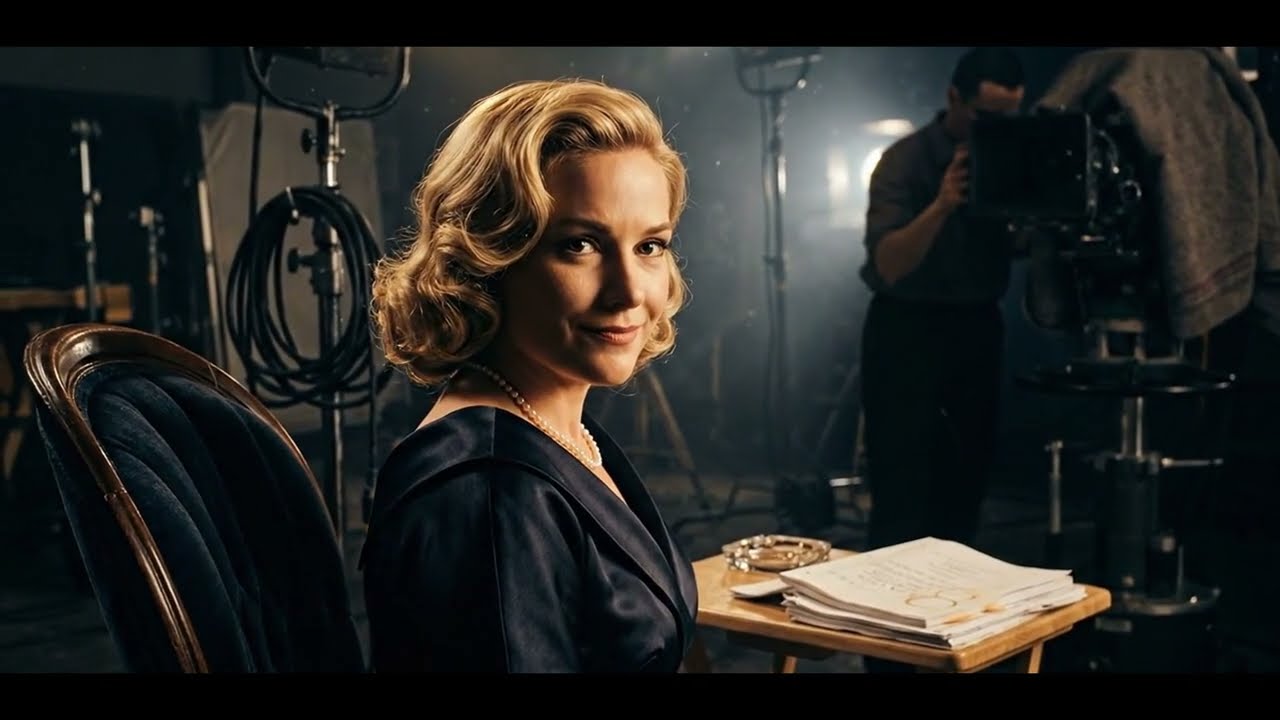
In her final years, she developed a deep friendship with a young filmmaker named Robert Dornhelm, a relationship described by those close to her as chaste and creative, a connection to both love and the lost world of cinema. Through him, she began to engage again with film projects, with the possibility of being involved in the acting world, even if only behind the scenes.
There was gossip, as there always is, around a beautiful and lonely woman. But what this friendship shows most clearly is a woman in her fifties still looking for ways to feel alive.
Consider the full weight of the performance she sustained. For twenty years after "Marnie," Grace Kelly presented herself to the world as a contented princess. She hosted galas. She wore jewels. She smiled the practiced smile. She gave the world the fairy tale they wanted, year after year, flawlessly.
And beneath that smile, she carried the grief of a lost career, the burn of fading beauty, the worry of troubled children, the loneliness of a marriage described by different accounts as both loving and cold, and the deep, unhealed wound of a woman who had given herself away for a crown.
The acting she had done on screen, the work that won her an Academy Award, was easy by comparison. This was the greatest role of her life. No script. No applause. Two decades without a day off.
By the early 1980s, she was restless and not entirely well. Friends from that time describe a woman searching for meaning, wanting to return to film, and tired far beyond her years. She was fifty-two. She had been playing the princess longer than she had been the actress.
And the strange truth is that the world believed the performance completely. To almost everyone, Grace Kelly was one of the happiest women alive, impossibly blessed, living proof that fairy tales come true. The gap between that belief and the reality was the saddest achievement of her life.
She hid her unhappiness so well, for so long, that when the end came on a mountain road above her golden state, the world saw it only as the tragedy of a woman who had everything. The world never understood how much she had lost long before the car left the road.
Chapter Ten: The Mountain Road
On September 13, 1982, she set out on a road she had driven a hundred times.
The Grimaldi family kept a private country retreat in the hills above Monaco, near the French mountain village of La Turbie. It was called Roc Agel, a farmhouse where Grace could garden and feel some of the ordinary privacy she had craved since her marriage.
On that September morning, she was driving back down from Roc Agel to the palace below. In the car with her was her youngest child, Stéphanie, who was seventeen years old.
The road they took was the Moyenne Corniche, the middle of three famous high roads that hug the cliffs of the French Riviera. It is a beautiful and extremely dangerous road. Steep and narrow, it winds between rocky walls and sheer drops, with the blue Mediterranean far below.
Grace knew the road well. In her twenty-six years in Monaco, she had driven it countless times. There was nothing unusual about this journey. It was a short trip home on a familiar route on an ordinary day.
There is a detail that biographers and the curious always return to, and it should be mentioned without overstatement. Grace had a chauffeur. A princess of Monaco did not normally drive herself on mountain roads. She had staff for that, professionals who knew every turn.
But according to local lore, on that morning the back seat of the car was filled with dresses brought from Roc Agel, leaving no room for the driver. So she took the wheel herself.
A small, ordinary decision, the kind anyone might make on a busy day. And it is on such small decisions that whole lives can turn.
If the chauffeur had been driving, the most famous woman in the world might have lived to old age. Instead, she was at the wheel on a dangerous road, and what happened next happened without the control of a professional hand.
Near La Turbie, at a sharp curve, the car left the road. It did not skid to a gentle stop. It plunged down a steep slope for nearly one hundred and twenty feet, bouncing and rolling against the hillside before coming to rest.
Inside were a fifty-two-year-old woman and her teenage daughter.
The most photographed woman in the world, the fairy-tale princess, lay badly injured in the wreckage of a British car on a French hillside above the state that had been her cage.
Stéphanie survived. She had a slight fracture of a neck vertebra, but she was not seriously hurt and made a full recovery. Her mother was not so lucky.
Grace was critically injured, including severe head trauma and bleeding on the brain. She was rushed to a hospital in Monaco. Doctors fought to save her. The family gathered. The world, still not understanding the gravity of the situation, began to receive initial reports of Princess Grace’s accident.
For a day she lay unconscious, kept alive by machines. Rainier came. The children came.
The next day, September 14, 1982, with no hope of recovery and no chance that the woman they loved would ever wake again, the decision was made to remove life support. Grace Kelly died. She was fifty-two years old.
The girl from Henry Avenue, who had won an Oscar, married a prince, and worn a crown for twenty-six years, was gone. She had been found on a mountain road a few miles from the palace where she had spent half her life waiting to be free.
The official account was simple and tragic. According to doctors, Grace had suffered a stroke while driving. A sudden hemorrhage in her brain caused her to lose control of the car, which is why it left the road. The stroke caused the accident. The accident and a second stroke caused her death.
It was the story of a simple, terrible medical event happening at the worst possible time and place. This is what Monaco told the world.
And as soon as it was told, people began to wonder if it was the whole truth.
Chapter Eleven: The Story the Palace Told
Almost immediately after she was buried, people began to question whether the official account was true. The doubt did not come only from the fanciful. It came from inconsistencies that still cling to the story today.
We must be careful here. There is no evidence of a cover-up, only questions that the official account does not fully answer. But the questions are real, and they deserve to be laid out clearly.
The first question came from inside the car. Stéphanie, who survived the crash, reported that in the moments before the accident, her mother screamed in terror. But according to medical understanding, if a driver loses control due to a stroke, screaming is not expected. A person suddenly paralyzed by a brain hemorrhage typically goes limp. They do not have the chance to scream in fear.
The scream does not fit the official story of a stroke at the wheel.
The second question concerned Grace herself. A stroke at fifty-two is young. Some family members said she had high blood pressure, a major risk factor for stroke. But doctors denied she had high blood pressure. She was not overweight enough to explain the condition. She had almost none of the usual warning signs.
A fatal stroke in a woman of her age and health was not impossible, but it was unusual enough to raise doubts in many minds.
Then came the rumor that has surrounded the event for more than forty years, which the palace has always firmly denied. It began as whispers and later became open speculation. The rumor was that Grace was not driving. That seventeen-year-old Stéphanie was at the wheel.
At seventeen, Stéphanie was not of legal driving age. According to the rumor, if the teenage princess had been driving and lost control, the official story of her mother’s stroke may have been created to protect the girl from blame and to preserve the dignity of the dynasty.
The palace has completely rejected this. Stéphanie has always maintained that her mother was driving. There is no evidence to the contrary. But the rumor has never died, because the questions surrounding the accident were never fully resolved.
What are we to conclude from this? The honest answer is that we do not know, and we should not lean toward a manufactured conspiracy. It is entirely possible that the official account is correct. That a healthy woman suffered a sudden stroke at the worst possible moment on a dangerous curve. Strokes do happen to people in their fifties. Dangerous roads do claim careful drivers. The simple explanation may be the true one.
But it is important to note the pattern, because it matches the pattern of her entire life. From the beginning, Grace Kelly’s story was managed, staged, and edited for the sake of image. The wedding was an MGM production. The marriage was a contract disguised as a romance. Twenty years of perfect performance hid her unhappiness. The films were banned. The truth was softened. The exterior was always kept flawless.
So when she died and questions arose, it was natural for the world to wonder if even this final moment had been rewritten to protect the dynasty. We may never know. All we can say is that the woman whose entire public life was a carefully constructed story died inside another story, and the truth of her final moments, like so many secrets of her heart, remained behind the palace gates.
Chapter Twelve: The Price of the Crown
The world remembered the wedding. But the real picture is of a woman who was alone in a country that only loved her face.
Grace Kelly’s funeral was held on September 18, 1982, at the Saint Nicholas Cathedral in Monaco. It was the same white stone cathedral where, twenty-six years earlier, she had married Rainier.
The scene was almost unbearable. The building that had witnessed the wedding of the century now held her coffin. Nearly four hundred mourners were present. Among them was Princess Diana of Wales, then young and newly famous, visibly emotional. Cary Grant, her old friend and co-star, was there. Nancy Reagan, the wife of the American president, came to pay her respects.
The world wept for the broken fairy tale, and Grace was laid to rest in the Grimaldi family vault, inside the cathedral that had been both her home and her prison.
Rainier was devastated. Whatever the truth of their marriage, whatever the conflicting stories of love and coldness, the prince’s grief was real and lasting. He never remarried. He mourned her publicly for the rest of his life.
And when he died twenty-three years later, on April 6, 2005, he was buried beside her in the same cathedral. At last, the two of them were reunited in the building where it all began.
Their son, Albert, succeeded him as Sovereign Prince. The dynasty Grace had given her life to preserve was secure, exactly as the 1956 contract had intended.
Diana’s presence at that funeral carries a weight that has only grown with time. The two women had met, and it is said that Grace, the first fairy-tale princess of the modern age, who understood so painfully the real cost of that role, offered the young Diana sympathy and warning about her new life.
Look at the terrible parallels in their stories. Two beautiful outsiders, sold to their people as fairy tales. Both found the reality far darker than the legend. Both were trapped inside a palace and an image that was too small for them. And both ultimately died in car crashes on roads in France.
Grace was the first of the modern fairy-tale princesses, and her life was the warning that the next one ignored.
Here is the deep truth of her story, the root of everything that came before. The fairy tale and the cage are two sides of the same structure.
The world saw Grace Kelly as the happiest ending imaginable. An Academy Award topped by a crown. What she actually got was a beautiful prison. Everything that made the story magical, the palace, the prince, the title, the duty, these were the bars of the cage.
She had earned the right to be the best in the world at something. And the price of the crown was that she could never do it again. Even her own people could not be allowed to see her previous work. The closing of the gates was not a metaphor. It was a husband banning his wife’s films and a nation rejecting her only chance to return.
That is the price of becoming a symbol. To become an icon is to lose the right to live as a person. The institution needed the image, the elegance, the fairy tale. And it silently consumed the human being who provided them.
Grace performed contentment so perfectly that the world never saw her loneliness. And that performance was the final proof of how much the role demanded of her.
The tragedy is not that she was unhappy every day, because she was not. There was love in her life, her children, real purpose. The tragedy is that the question of whether she was happy became impossible even for those closest to her to answer, because the character she played left no room for the real person to be seen.
She paid the dowry. She passed the examination. She maintained the dignity. She accepted the ban on her films. She gave up her art. She smiled through all of it for twenty-six years.
And in the end, that path led her to the mountain above the state she had given everything to protect. To an accident whose truth the palace may have edited one more time.
From the wedding of the century to the funeral in the same cathedral, the price of the crown was paid in full by the girl from Philadelphia who only wanted to be chosen. And when she was chosen, she learned that being chosen was the loneliest fate of all.
The gates closed behind Grace Kelly in 1956. The world saw a princess. She entered a cage. And the woman who had conquered Hollywood spent the rest of her life performing the role of a lifetime, hidden behind the walls of a palace that was also her prison.