On June 25, 1876, the Battle of Little Bighorn claimed more than George Armstrong Custer. Five members of the Custer family died on that dusty Montana hilltop: George, his brothers Tom and Boston, his brother-in-law James Calhoun, and his nephew Henry Reed. Yet among them, one body drew a horror that outlived the battle itself. Captain Thomas Ward Custer, a two-time Medal of Honor recipient and the most reckless officer in the 7th Cavalry, was found so savagely mutilated that the soldiers who discovered him spent hours unable to recognize that the shattered mass of flesh before them had ever been human.
Tom Custer had built his legend during the Civil War. At the Battle of Namozine Church in April 1865, he threw himself into enemy fire to capture a Confederate flag. Days later, at Sailor’s Creek, he charged into Confederate lines, was shot in the face, and still captured a second flag while bleeding. He became the first American soldier ever to receive the Medal of Honor twice.
His courage bordered on recklessness, and his loyalty to his older brother was absolute. Whatever George ordered, Tom executed without hesitation. He commanded Company C of the 7th Cavalry and was the most devoted member of what was known as the Custer clan. By June 1876, the regiment was advancing through Montana toward the Little Bighorn Valley.
The Custer brothers carried with them an arrogance that proved fatal. They had badly underestimated the alliance of Lakota, Cheyenne, and Arapaho warriors united under leaders like Sitting Bull and Crazy Horse. George Custer made the decision to divide his regiment into three battalions. He led five companies, including Tom’s, along the ridges east of the river.
What they saw stopped them cold: the largest Native American encampment ever assembled on the continent, stretching for miles along the valley. Retreat was not an option Custer would accept. The warriors crossed the river in overwhelming numbers and swarmed the hills. The soldiers were outnumbered, low on ammunition, and trapped.
Tom and his company initially tried to push toward the river, but the fury of the assault forced them back. The fighting lasted barely over an hour. On Last Stand Hill, soldiers fell one by one to arrows, bullets, and hand-to-hand combat. Their single-shot Springfield carbines jammed in the heat of battle, forcing them to fight with knives and revolvers.
Tom remained beside his brother until the end. When the dust settled, not a single American soldier on that hill was left alive. Two days later, on the morning of June 27, reinforcements under Generals Alfred Terry and John Gibbon entered the valley. They had expected to find Custer celebrating a victory.
Instead, they met the stench of death, circling crows, and a field of swollen, blackened corpses. The burial detail climbed the hill and found the remains of the command group. George Armstrong Custer lay in the middle of a makeshift barricade of dead horses. Strangely, his body had suffered relatively little damage.
He had been shot in the left chest and left temple, but he had not been scalped, and his body remained largely intact. Just a few steps away lay another corpse, one that froze the blood of every soldier who saw it. The body was so thoroughly destroyed that it was barely recognizable as human. The skull had been crushed, almost flattened, likely by repeated blows from tomahawks, stones, or rifle butts.
The face had been obliterated. The nose, jaw, and cheekbones were reduced to pulp. The scalp had been torn off, not once but repeatedly, with deep savage cuts extending from behind the ears to the nape of the neck. The rib cage had been slashed open lengthwise, the chest cavity destroyed, and witnesses reported that the heart had been removed.
The throat was deeply slit, the abdomen cut end to end with intestines pulled out. Arms and legs had been severed at the joints, fingers chopped off, and dozens of arrows had been shot into the body after death. The soldiers searched for some way to identify the remains. Beneath the blood and dirt on the right arm, they found a tattoo: the goddess of liberty draped in the American flag, with three intertwined letters beneath her.
TWC. Thomas Ward Custer. The two-time Medal of Honor hero had been reduced to an unrecognizable relic of rage. The contrast between the two brothers lying only steps apart haunted everyone who witnessed it.
Why had George Custer, the most famous commander in the American army, been left nearly untouched, while his brother suffered the most systematic mutilation on the field? Captain Frederick Benteen, a veteran who had seen hundreds of corpses, wrote to his wife that he would never forget what had been done to Tom’s body for the rest of his life. The violence was not random. It bore the marks of deliberate, personalized fury.
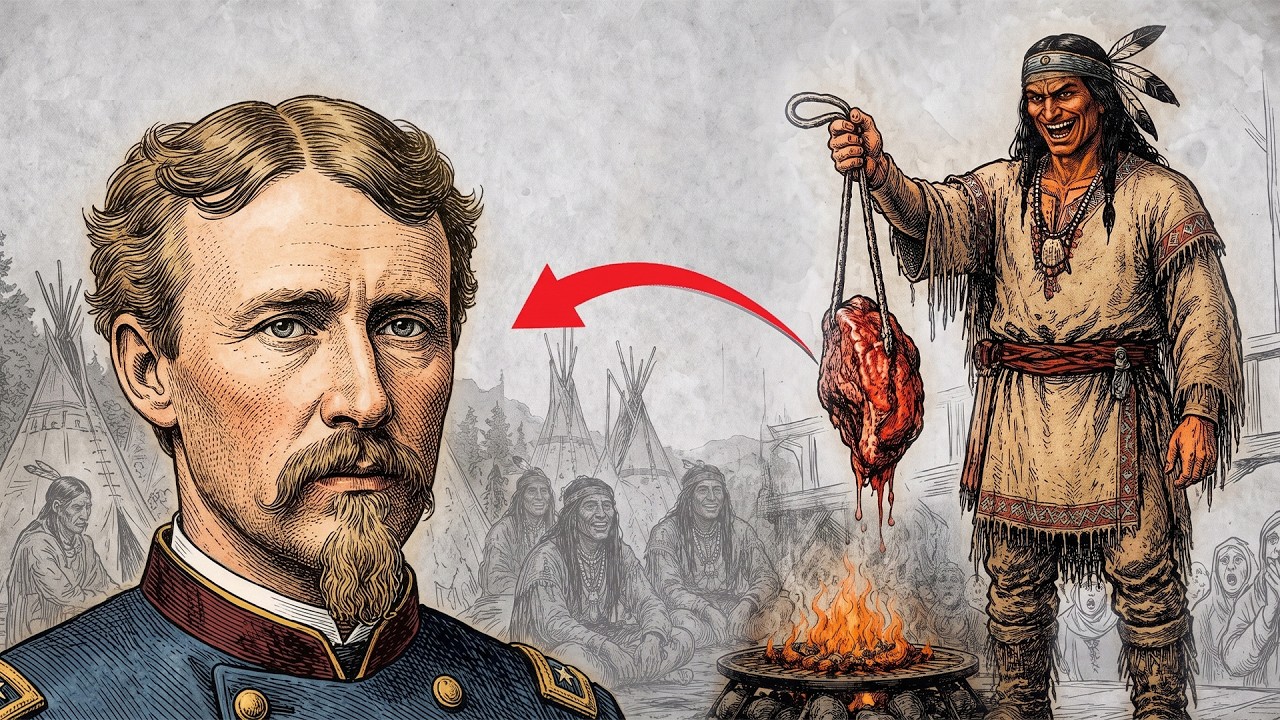
Several theories emerged to explain it. The most famous involved Rain-in-the-Face, a Lakota warrior. In 1874, during the Yellowstone expedition, Rain-in-the-Face was accused of killing two white civilians. Tom Custer arrested him on George’s orders, in a manner described as harsh and degrading.
The warrior was chained and imprisoned but escaped, reportedly swearing he would cut out and eat the heart of the captain who had humiliated him. When Tom’s body was found with his chest opened and heart missing, the connection seemed obvious. The story became a sensation, immortalized in a poem by Henry Wadsworth Longfellow called The Revenge of Rain-in-the-Face. Years later, Rain-in-the-Face denied the claims, saying he had not recognized the Custer brothers in the chaos and had eaten no one’s heart.
But the legend never faded. Another theory centered on mistaken identity. Before the campaign, George had cut his famously long hair short, and he was beginning to bald. That day, both brothers wore nearly identical fringed buckskin jackets.
From a distance, through the dust and gunpowder smoke, the resemblance was uncanny. If George fell early in the battle, Tom, with his aggressive command presence and fearless fighting style, may have been mistaken for the main commander. Native warriors who killed a great leader often destroyed his body completely to prevent his spirit from seeking revenge in the afterlife. The crushed skull, severed fingers, and slashed leg muscles all carried spiritual meaning: to disable the enemy in the next world, to blind him so he could not see his killers, to prevent him from walking after them.
Tom’s own fighting style likely sealed his fate. He was not a man to shoot from a distance. He fought in the closest, bloodiest contact, and even when his ammunition ran out, he would have fought with his knife. Accounts gathered from Cheyenne and Lakota survivors years later described soldiers who panicked and others who fought like wild animals until the end.
Tom was almost certainly among the latter. To the warriors who faced him, he became a demonic force that had to be utterly erased. The burial detail wrapped Tom’s shattered remains in tarps and interred them in a shallow grave. For years, the army censored the full truth.
Telegrams to Washington described his body only as severely damaged. The public was told the soldiers had died heroically, instantly, cleanly. Elizabeth Custer, George’s widow, was never told the full extent of what had been done to her brother-in-law. The officers who knew swore vows of silence to protect her and to shield the army’s reputation.
A year later, in the summer of 1877, a detail under Captain Michael Sheridan returned to exhume the dead. The winter and wild animals had scattered bones across the valley. George’s remains were carefully gathered and sent to West Point for a grand ceremony. Tom’s grave was another matter.
His body had been too broken to hold together even when first buried. What remained was a mix of shattered bones, crushed skull fragments, and deep hatchet marks etched into the remains. His famous tattoo had rotted away with his skin. His bones were sent quietly to the military cemetery at Fort Leavenworth, Kansas, with no ceremony.
His plain white gravestone bore only his name, rank, and date of death. The consequences of Little Bighorn reached far beyond the burial detail. For the Lakota, Cheyenne, and Arapaho, the victory was the beginning of their end. The news of the massacre, and especially the mutilated bodies of officers like Tom Custer, transformed the conflict in American eyes from a frontier nuisance into a war of annihilation.
Tens of thousands of soldiers were sent west. Winter camps were raided. Bison herds were slaughtered by the state to starve the tribes. Sitting Bull fled to Canada.
Crazy Horse surrendered and was killed under suspicious circumstances shortly afterward. Tom Custer had paid the heaviest price among the Custer brothers, not just in death but in what came after. While George entered the pantheon of American legend, his brother was buried in silence. The mutilation of his body was hidden from public knowledge for years, treated almost as a state secret.
What happened on that hill was not merely a military defeat. It was the collision of two worlds, two cultures, and years of broken treaties, oppression, and desperate resistance. Tom Custer, the man who had lived in his brother’s shadow and followed his orders without question, was made to bear the weight of that collision with his own body. On the battlefield today, a plain white marker stands near George’s fenced monument.
Most visitors never notice it. Beneath it lies a two-time Medal of Honor hero whose unrecognizable corpse became one of the darkest, most disturbing scenes in American military history.