On the first day of the Battle of Gettysburg, as the afternoon of July 1, 1863 wore on, Major General Winfield Scott Hancock and a deflated Major General Oliver O. Howard worked to stem the Union retreat near the entrance to Gettysburg’s Evergreen Cemetery. It was around 4:30 in the afternoon, and the two generals knew that if the Confederates launched another attack, they had only about 7,000 men to meet it. Yet, because of the sacrifices of Brigadier General John Buford’s cavalry and the hard fighting of the First and Eleventh Corps, the Army of the Potomac still held the high ground.
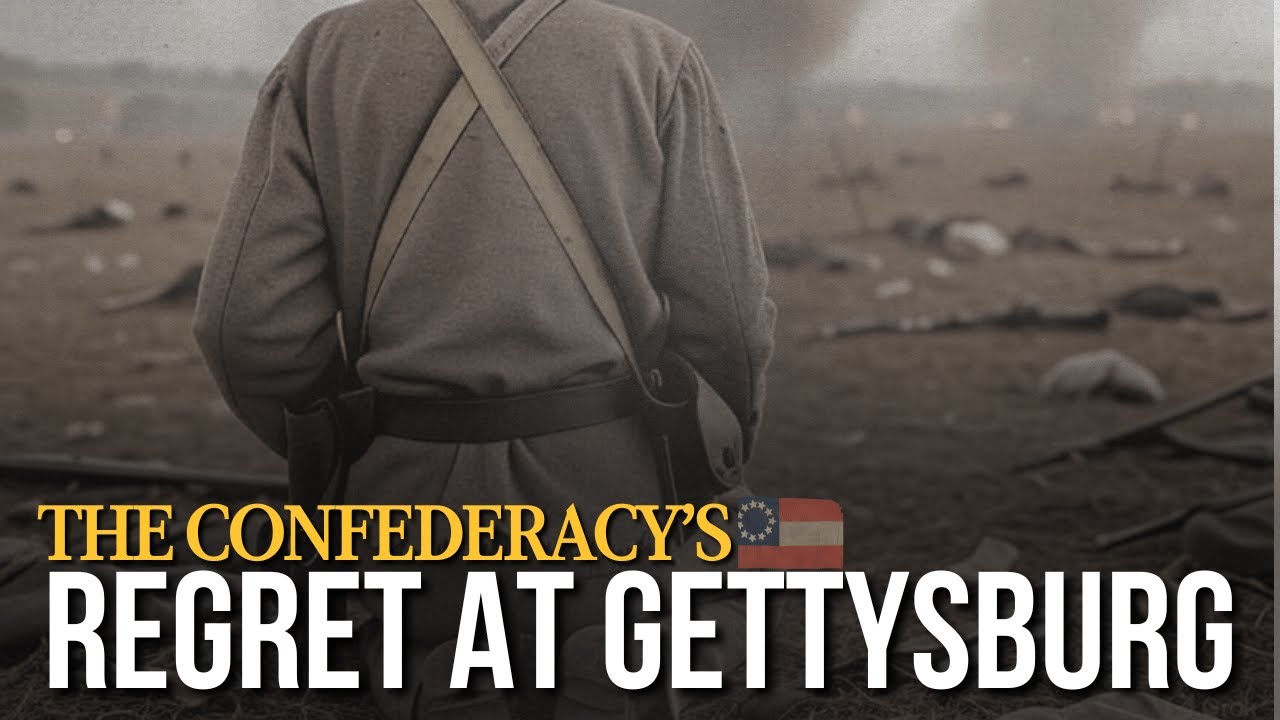
The expected late afternoon Confederate attack never came, and that single fact would eat at every Southerner from that day forward. Through the remainder of that evening, Confederate commanders on the field weighed their options with the weight of the moment pressing on them. The principal actors in this what-might-have-been were General Robert E. Lee, his Second Corps commander, Lieutenant General Richard S.
Ewell, and two of Ewell’s subordinates, Major Generals Jubal Early and Isaac R. Trimble. With military momentum and advantage in hand, Lee issued discretionary orders to Ewell: he was to press the Union troops and gain possession of the heights south of town, taking Cemetery Hill and Culp’s Hill if possible. Those last two words, if possible, would become the hinge of the entire evening.
Early’s Confederate division was available for a renewed assault, but Major General Robert Rodes, whose men had fought most of the day, was uncertain about cooperating with any new attack. Rodes said he would support an assault if Third Corps commander Lieutenant General A. P. Hill would assist him.
Hill, however, was ill that day and had already failed to move elements of his corps southward to cut off the Union retreat routes. While couriers raced back and forth between the Confederate headquarters, Ewell decided that Culp’s Hill would be his focus. But Early believed his own men were exhausted and suggested that another of Ewell’s divisions, Major General Edward Johnson’s, which had just arrived on the field, could go in instead. All the hesitancy led Lee to believe that no attack on Cemetery Hill or Culp’s Hill was forthcoming.
He therefore suggested that Ewell swing his corps to the right and join the rest of the Confederate line stretching along Seminary Ridge. Ewell, with Early’s advice in his ear, thought it best not to do so. He did not attack, and he would not shift his position. The moment passed, and the burning question of what might have been lingered over the Confederate cause.
Some later wondered what would have happened if Stonewall Jackson, Ewell’s predecessor, had been there. But even if Jackson had taken Cemetery Hill, he could not have held it without support. The failure at Culp’s Hill, however, was clearly Ewell’s mistake. He never monitored Johnson’s division as it arrived on the battlefield, and although he did issue orders to Johnson, those orders never conveyed any sense of urgency.
Across the way, Major General George G. Meade, the newly appointed commander of the Army of the Potomac, arrived near Gettysburg around midnight. He wanted to attack the next day, but his largest corps, the Sixth under Major General John Sedgwick, was still thirty-five miles away. His Twelfth Corps under Major General Henry Slocum had not yet arrived either.
The fighting of July 1 had wrecked Meade’s First Corps, which suffered 5,600 casualties, a staggering 62 percent of its strength. His Eleventh Corps, which had broken under pressure yet again, lost some 3,200 men. For Thursday, July 2, Meade would have nearly his entire army on the field, save Sedgwick’s Sixth Corps. He chose to dig in and wait to see what his adversary would do.
During the evening of the first, no attack orders came from Lee. Historian Stephen W. Sears believed that Robert E. Lee was angry and frustrated.
He was angry at an absent Jeb Stuart, whose cavalry had left the army blind during the campaign. He was angry at Henry Heth, who had stumbled into the fight in the first place. He was angry at the indecisiveness of A. P.
Hill and Ewell, and at the stubbornness of his senior subordinate, Lieutenant General James Longstreet, who had opposed continuing the battle at Gettysburg and had questioned the nature of the invasion itself. All of this was unsettling to Lee. It was the first time in Lee’s command that he had experienced subordinates who balked and fumbled with discretionary orders. Never before had he been doubted by his own officers.
The misunderstanding with Longstreet bore fruit that evening. Longstreet, Lee’s second in command, wanted to move the army to the right, to the south, and get between Washington City and Gettysburg, forcing the Federals to attack in a strong defensive position. But as Longstreet put it, Lee’s blood was up. Indeed, it was.
There had been real Confederate success that first day. Some 25,000 men of Lee’s army had made it to the field and inflicted roughly 9,000 Union casualties. Conversely, only about 18,000 of the 95,000-man Army of the Potomac fought that first day, yet they still inflicted some 7,000 Confederate casualties. Much was still in the balance, with about 16,000 total casualties suffered in a single day of fighting.
The war would bring many more casualties in the days to come, and just as many stories. But the failures of that first evening at Gettysburg, the missed opportunity to seize Cemetery Hill and Culp’s Hill before the Union line could consolidate, set the stage for the desperate fighting that would follow. Ewell’s hesitation and Lee’s frustration on the night of July 1 were not merely the product of exhaustion; they were the first cracks in the Confederate command structure at Gettysburg, and those cracks would widen as the battle continued. Meade, meanwhile, had chosen to hold the high ground and await the Confederate attack, a decision that would shape the fate of the army and the nation over the next two days.
The first day of Gettysburg had ended with both armies licking their wounds, the Confederates holding the initiative but failing to press it, and the Federals clinging to the ridge line that would become their defensive anchor. The question of what could have been was already taking shape, and it would haunt the Confederate cause long after the last shots were fired.