In the spring of 1886, two El Paso madams went to war over a young prostitute named Bessie Colvin. By the time the smoke cleared, one of them had a bullet wound in a place no respectable newspaper would print, and the other stood charged with attempted murder. The fight became local legend, remembered as the Battle of the Bordellos. El Paso in those years was a town being transformed overnight.
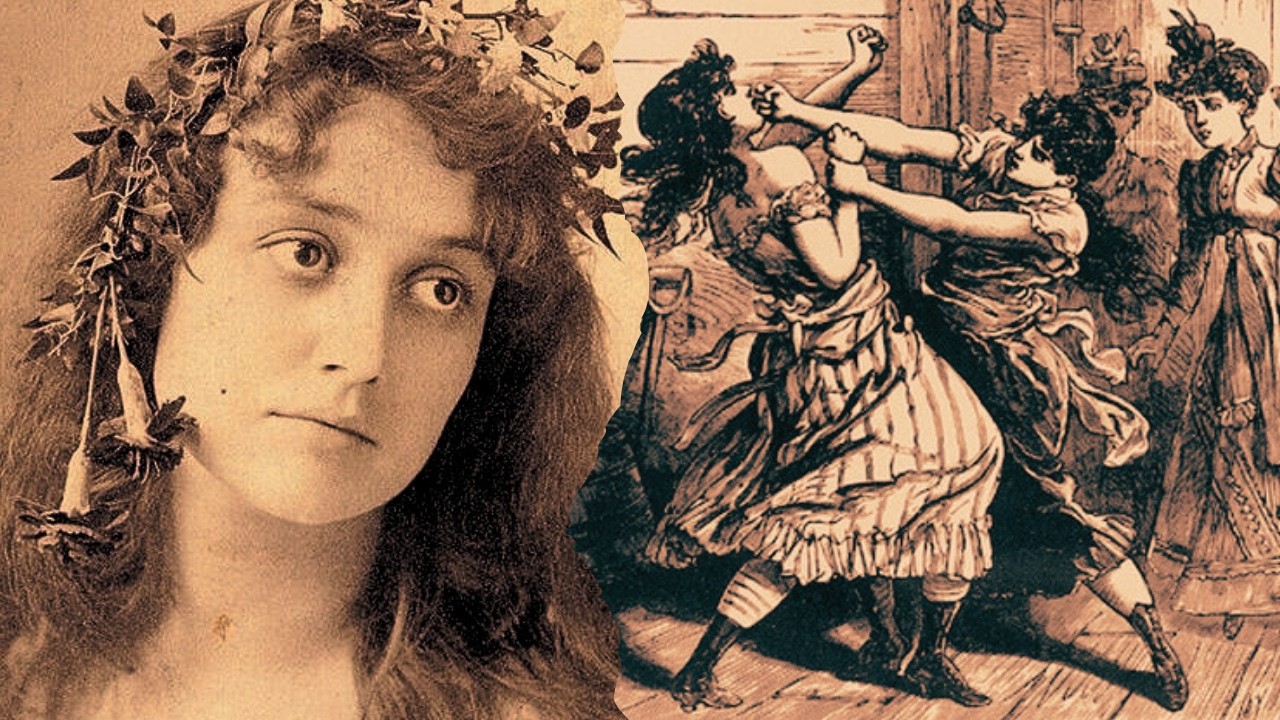
In 1880, barely seven hundred people lived there. Then the railroad arrived, and within a decade the population exploded past ten thousand. Growth brought crime, and soon the city had earned a grim nickname: the six-shooter capital of the world. Visiting President Benjamin Harrison called it Sin City.
The town was effectively split in two. On one side stood the respectable world of churches, schools, and legitimate businesses. On the other lay the Tenderloin District, where a man could find liquor, gambling, and women for sale. At the heart of the Tenderloin sat the Utah Street Reservation, a vice district packed with brothels and hundreds of prostitutes.
Prostitution was technically illegal in El Paso, and the city had laws on the books against what were called wanton women. But there was a workaround. As long as a madam paid a weekly fine of roughly ten dollars, her establishment was allowed to keep operating. That money went straight to the local police department.
Everyone was being paid, and everyone was being serviced. Not all prostitutes were equal. At the bottom were the crib girls, street walkers who took clients to tiny, squalid dens for as little as fifty cents. Many of them were victims of sex trafficking, unable to speak English and working against their will.
Above them were the saloon girls, who met customers in the barroom and took them to the back or upstairs. Even higher stood the parlor houses, the upscale brothels where the women were cleaner and the prices were higher. Alice Abbott ran one of the finest parlor houses on Utah Street. Alice, known to the locals as Fat Alice, was a formidable figure.
Born in the early to mid-1850s, she had come to El Paso from Louisville, Kentucky. Dark-haired and stout, she stood six feet tall and weighed somewhere between 190 and 230 pounds. She had started as an ordinary working girl before climbing her way up to run her own establishment. Across the street, another madam ran a rival house.
Her name was Adda Clark, better known as Adda the Grasshopper. The two women had not always been enemies. At one point, Adda had worked for Alice, and there is evidence they may even have been lovers. Whatever bond they shared had long since soured by the spring of 1886.
The trouble began with Bessie Colvin. Bessie was one of Alice’s top earners and one of the most popular prostitutes in El Paso, and she knew it. She and Alice had been arguing over money for the better part of a year. Finally, on the evening of April 18, 1886, Bessie marched out of Alice’s parlor and announced to anyone who would listen that Prime Cut would soon be found across the street.
She meant herself, and she meant business. She had a skill that would sell anywhere, and she knew it. She crossed the street and offered her services to Adda Clark. Alice was not the kind of woman to let one of her best girls walk away.
At first, she sent two of her other prostitutes across the street to collect Bessie. They returned empty-handed. So Alice decided to handle the matter personally. She marched over to Adda’s establishment and began banging on the door, demanding to be let in.
Adda wanted no part of it. She cracked the door open and told Alice to leave. Alice responded by ripping the door off its hinges and storming inside, smashing her fist into Adda’s face. Adda was holding a brass gas lighter of the kind used to ignite street lamps.
It was heavy, and she swung it at Alice. Alice deflected the blow and punched Adda in the mouth, sending the smaller madam reeling across the floor. Then Alice grabbed Bessie by the wrist and tried to drag her outside. Adda ran to her quarters and came back with a bone-handled bulldog revolver.
She cocked it, aimed it at Alice, and ordered her out. Alice charged. Adda shouted that she would kill the damn bitch, and squeezed the trigger. The bullet struck Alice in the pubic arch, the notch at the very bottom of the pelvis.
The bullet passed just to the right of the bone and went clean through without hitting any vital organ. The El Paso Herald reported the next day that Alice had been shot in her public arch, a slip that may have been accidental or a sly allusion to her profession. Alice staggered out of the cathouse and collapsed in the street, bellowing that she had been shot. Adda followed and fired again, missing.
Three of Alice’s girls came running and dragged their madam to safety. Adda turned herself in and was charged with attempted first-degree murder. She had a good lawyer. Less than a month later, she was found not guilty on grounds of self-defense.
Some observers could not help but wonder how many of her customers had sat on that jury. The story did not end there. On July 12, 1888, a little over two years later, Adda’s brothel burned to the ground. According to some accounts, it was Alice who had ordered the fire.
One source, a publication from El Paso Community College, later claimed that it had been determined Fat Alice hired some drunks to set fire to her enemy’s house, but because of gaps in the evidence, Alice and her hired crew were acquitted. Eventually, a rich client came along and built Adda a brand new parlor. The man’s wife divorced him over it, and he and Adda went on to live as husband and wife without ever officially marrying. There was another fire in 1905, and this time Adda barely survived.
She died in 1908 from complications related to all the smoke she had inhaled. Alice Abbott kept running her brothel in El Paso until February 1890, when she leased it to another madam named Tilly Howard. On April 7, 1896, Alice died of a heart attack. As for Bessie Colvin, the Helen of El Paso as some called her, no one knows what became of her.
There is no birth record, no death record, no grave. The only reason anyone knows she existed at all is because two madams fought over her like property. And after all the gunfire and all the drama, she still went back to work for Fat Alice. Most of the surviving photographs of these women come from Alice Abbott’s personal photo album, which contained notes identifying the girls.
She gave them nicknames, drew hearts around some of them, symbols thought to mark the women who had also been her lovers. Even Adda had a heart drawn around her, but Alice had marked it out with a big red X and left a note calling her a whore. The revolver Adda used to shoot Alice was a British Bulldog, the same type of pistol used to assassinate President James Garfield. The only difference was the caliber.
In the end, the Battle of the Bordellos was a story of jealousy, pride, and a bullet through the pelvis of one of El Paso’s most notorious madams. It was also a reminder that most of the women in that world lived lives of desperation, invisible in their own time and forgotten after it. Bessie Colvin vanished from the record without a trace, and the only proof she ever lived at all was the fight two madams waged over her.