The housemaid drew back the curtains, and the gray morning light fell across the bed. What she saw made her breath catch in her throat. On the pillow lay an elderly woman, motionless, her face and nightgown streaked with dark blood. No window had been broken.
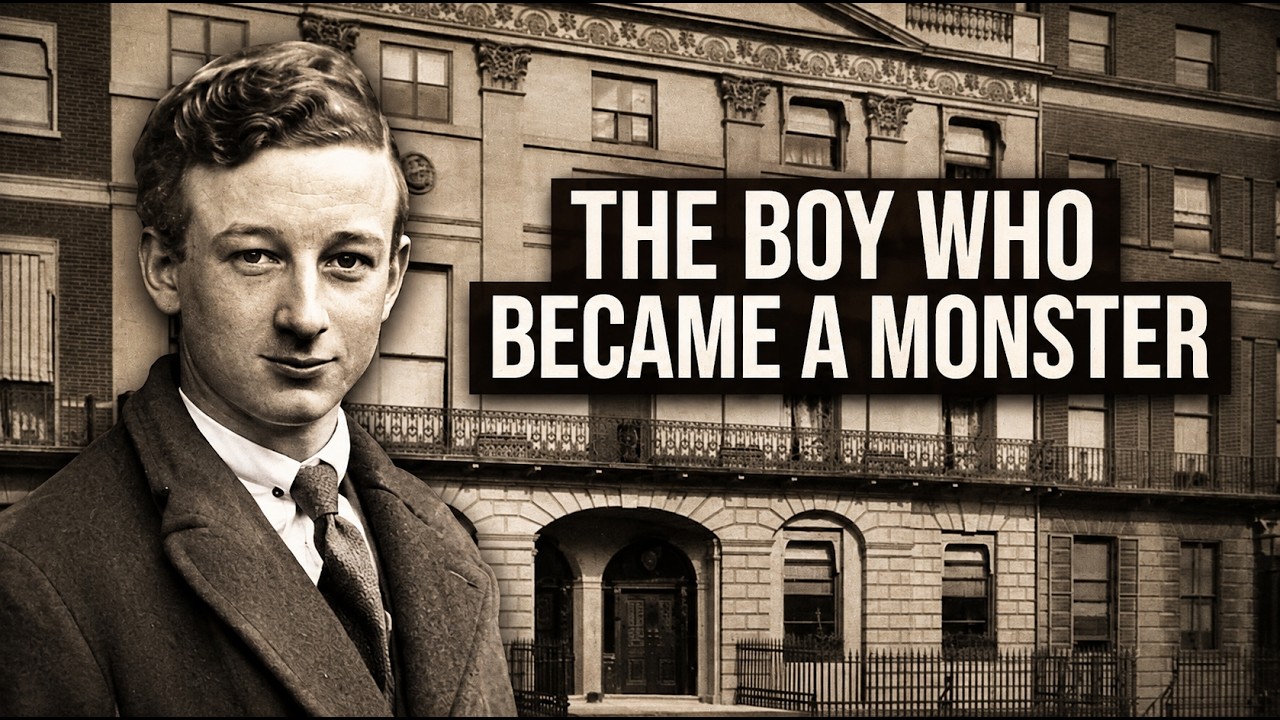
No lock had been forced. No jewel, coin, or valuable had been taken. Behind a bolted door in a respectable London hotel, something impossible had occurred. The story unfolds in London’s West End, on Portland Place, on the cold Monday of March 13, 1922.
The war had ended only four years earlier, and the great city continued as it always had: the clatter of taxicabs on wet stone, coal smoke rising over the rooftops, the steady tread of a constable on his beat. In a comfortable hotel on that street lived a young man of eighteen who worked as a storeroom boy and general porter. His name was Henry Julius Jacobi. He carried luggage, delivered messages, answered bells, and slept, as many servants of that era did, in a cramped room in a basement below street level.
Among the hotel’s permanent residents was a sixty-five-year-old widow named Lady Alice White. She was the widow of Sir Edward White, a man of standing in London’s public affairs who had died a few years earlier. Lady White had taken rooms at the hotel the previous November. By all accounts, she was a courteous and considerate lady, kind to the staff who served her.
On that ordinary Monday evening, she hosted friends for a game of cards and retired to bed in good spirits. By dawn the next day, she was dying, and no one could yet say why. Henry Julius Jacobi had been born in Hoxton, in London’s Hackney district, on June 28, 1903. His beginnings were difficult.
He grew up, according to the available accounts, in a household marked by poverty and violence, and his early years offered little of the stability a child needs. For a time, he was sent to live with an uncle and aunt, where he was said to have found some measure of calm. That relief did not last. When he reached fourteen, he was returned to the family home.
That was the customary age for a boy to leave school and enter the world of work, and Henry, by all accounts, was eager to leave home as much as possible. He took whatever jobs he could find, as boys of his class did: manual labor, errands, and junior posts in the capital’s great service economy. In time, he secured a position at the hotel on Portland Place. For a boy who had left school at fourteen, this was a respectable post and no small achievement.
The work, however, was hard. He was expected to carry luggage, deliver letters and parcels, escort visitors through the building, answer bells, and be useful wherever needed. The hours were long, beginning early and ending late. As a junior member of the staff, he lived in the building’s basement and could be summoned at any hour of the night or day.
Despite its hardships, the work was better than anything he had known before. It provided his own bed, wages, and a roof that did not shake with household quarrels. He was eighteen, and still very young. Newspapers later noted that he looked younger than his actual age.
Of the inner thoughts of that young man, the records tell little. He woke, worked, and slept below street level, and for a time, that was all there was. To understand the events of that March, one must first understand the woman at the heart of them. Lady Alice White was the widow of Sir Edward White, who had served in London’s public life and died years earlier.
After his death, Lady White devoted herself to charitable works, and in November 1921, she took up residence at the hotel on Portland Place. She was sixty-five years old. She occupied a comfortable suite on the first floor bearing the number 14, with windows overlooking the street below. She became well known to management and staff alike, and everyone without exception considered her a considerate guest who treated those who served her with kindness.
There was nothing in her manner or circumstances to suggest she was a person in danger. Monday, March 13, passed like any other day. In the evening, Lady White received a small group of her friends in her suite, where they spent time playing bridge. Those who attended the gathering later described it as a pleasant occasion.
Lady White appeared in good health and high spirits throughout. They said there was nothing at all unusual about her. Shortly before eleven, the guests departed, and Lady White went to her bedroom. By that hour, most of the resident staff had gone to their beds as well.
Only the night porter remained on duty, stationed near the entrance and occasionally walking the corridors of the building, as his duties required. The hotel itself was a somewhat peculiar place. It had been formed from two separate houses joined together, an old property with two entrances, and its gates and doors were firmly closed every evening. For any intruder from the street, there was no easy way in, and so the house settled for the night.
The lamps were lowered, and the large building grew quiet, save for the porter’s footsteps and the distant sounds of the sleeping city beyond the walls. Somewhere below street level, in a basement room, a young man was awake. What passed through his mind in those dark late hours, the sources do not say. What he did next, however, is a matter of recorded history.
Around two in the morning, the night porter heard footsteps approaching through the hall. When he looked up, he saw young Henry Jacobi coming toward him. The porter asked why he was out of bed and noticed that the young man seemed very nervous. Henry lowered his voice and asked whether the porter had heard anything unusual.
He explained that he thought he had heard two men whispering outside the basement room where he slept, and he feared someone had entered the building. He suggested they search together. The two men walked through the basement corridors, checking every passage and storage room where someone might hide. They found no one.
The porter concluded that Henry had perhaps misread the ordinary sounds of the night, advised him to return to bed, and resumed his rounds. By eight o’clock the next morning, it was noticed that Lady White had not come down from her room. A maid was sent to knock on the door but received no answer. At first, there was little cause for concern.
Guests who had entertained others the previous night sometimes slept late. But Lady White was known to be an early riser. Around half past eight, the chambermaid was instructed to enter. The door was unlocked.
The maid went in, drew the curtains, saw the horrifying scene on the bed, and immediately raised the alarm. A doctor was summoned, and the police were notified. The examining physician found that Lady White had suffered a large wound on the left side of her scalp and that her skull had been shattered by blows from a heavy blunt instrument. She was still alive, but her condition was critical.
An ambulance took her to the hospital. Later that same night, Lady Alice White died of her injuries. The case was now murder, and Chief Inspector Cornish of Scotland Yard took charge. His investigators examined the room, and the mystery deepened.
There was no trace of a break-in. There was no murder weapon. There was no evidence of a struggle. The furniture was in place.
The drawers were untouched, and Lady White’s jewelry and money remained exactly where they were. One question pressed on the investigators above all others. If this was a robbery, why had nothing been stolen? The medical examination established how Lady White had died with grim clarity.
She had received a large wound on the left side of her scalp, and her skull had been shattered by blows from a heavy blunt weapon. From the location of the injuries and the disturbance around the bed, investigators reconstructed the attack. They concluded that the attacker had been standing between the two beds when Lady White woke, that she had raised her hands to protect herself, suffering defensive wounds, and that the blows to her head had followed. Yet the mystery of the locked room remained.
Chief Inspector Cornish examined the doors, windows, balcony, and every possible point of entry. No lock had been broken. No window showed the slightest sign of tampering. This led him to a disturbing conclusion.
The person who attacked Lady White had not broken in from outside. He was already inside the hotel when the doors were locked for the night. Such a person would have known the building well and could have moved through the back staircase unseen once the household had gone to sleep. Attention turned to the basement.
Construction work was underway on the premises, and the workers stored their tools below. Cornish ordered every tool examined. One hammer caught his eye immediately. Where the other tools bore the ordinary dirt of use, this hammer appeared to have been washed recently.
Placed under a microscope, on the cleaned metal, traces of blood were found. The likely weapon had been discovered, but the weapon was not the culprit. Every member of the staff was interviewed, and no clear suspect emerged. More importantly, the night porter had initially neglected to mention his strange encounter with young Henry Jacobi in the early hours.
When he finally remembered it, the investigation quietly turned toward the basement. Upon being questioned again, Henry now suggested that the sounds had perhaps come from the street above, not from the hotel. A test showed this was indeed possible, and his account held for a time, but inquiries into his background worked against him. His claim of an allowance from a grandmother in St.
Albans could not be verified, and it emerged that he had previously run away from home after an incident of theft. A bloodstained handkerchief was explained by a boxing match, which a fellow porter confirmed. Then a final search found a bloodstained coat hidden in the basement, which the staff identified as belonging to Henry. He was detained at the police station.
At first, Henry said little. Then he asked to speak directly to Chief Inspector Cornish and made a statement. He said that after searching the basement, he had returned to bed but could not sleep, and his thoughts turned to stealing money from one of the wealthy residents. He said he wanted cash, not jewelry, because tracing money would be harder.
He described taking a hammer from the workers’ tools, climbing the back staircase to the first floor, and trying a door that was locked before finding another that was not. He entered, and while he was searching, the lady in the bed woke and screamed. He said that in his terror, he struck her on the head. Afterward, he washed the hammer, dried it, and returned it to the toolbox.
He took nothing. This confession explained the locked-room mystery, the untouched valuables, and the vanished intruder. Henry was committed for trial at the Central Criminal Court, the Old Bailey, where proceedings began on April 28, 1922. The case came before Justice McCardie.
The prosecution was led by Mr. Percival Clarke, while the defense was undertaken by Mr. Lucien Fior, a barrister who had been in practice for less than two years. When asked for his plea, Henry, despite his confession, answered “not guilty.
” Mr. Fior challenged the confession, arguing that it had not been given freely. From the witness stand, Henry offered a new account: that he had struck a figure in the darkness believing there was an intruder, and that he had panicked when he turned on the lights and discovered it was Lady White. The prosecution responded that this was inconsistent with his confessions and with the evidence, and that a man who arms himself with a hammer does so in anticipation of resistance.
The jury withdrew, then returned to ask whether they could return a verdict of manslaughter, in case Henry had entered for robbery rather than murder. The judge replied that if a person deliberately caused grievous bodily harm and the victim died, the crime was murder. They withdrew again. Eventually, they returned a unanimous verdict: guilty of murder, with a strong recommendation for mercy on account of his youth.
The judge pronounced the death sentence. It was noted that he did not add his own recommendation to that of the jury. The jury’s petition for mercy was referred to the Home Secretary, Mr. Edward Shortt, for consideration.
Under ordinary circumstances, a recommendation for mercy combined with the youth of the condemned man might have carried considerable weight. But Henry Jacobi’s case did not stand alone. Through a cruel coincidence, it had become entangled with another. Just one week before Lady White’s murder, a man named Ronald True had killed a young woman named Gertrude Yates in her London flat.
True was thirty-one years old, the son of a mother with a wealthy name, and his defense spared no expense. He too was convicted and sentenced to death, but a panel of medical experts examined him, found him insane, and his sentence was commuted. Instead of the gallows, he was placed in Broadmoor asylum. The contrast was stark, and the public quickly seized upon it.
Here was True, wealthy, influential, defended by expensive lawyers, granted clemency. And here was Jacobi, a poor storeroom boy, alone, the son of a woman driven by poverty onto the streets, recommended for mercy by the very jurors who convicted him, and yet refused a commutation. Mr. Shortt reviewed the case and found no grounds to intervene.
Letters poured into newspaper offices. One newspaper declared that the Home Secretary’s decision in the True case had disqualified him from office. The case became, in the public mind, clear evidence of a bitter truth: there was one law for the rich and another for the poor. Henry’s advocates did not surrender.
An appeal was lodged, arguing that the judge had misled the jury on the question of intent and that the young man had been in a hysterical state when he confessed. The appeal was dismissed. It was recorded that two of the jurors later went to the defense solicitor’s office and said that had they known Jacobi would be executed, they would never have returned a verdict of murder. Efforts were made to reach the highest levels.
Every attempt failed. On June 7, 1922, Henry Julius Jacobi was executed at Pentonville Prison. He was eighteen years old. More than a century has passed.
The debate over class and justice that his case provoked remains alive long after everyone who lived through it has gone. The two names, the noblewoman and the kitchen servant, remain joined together in the records of the Old Bailey. One entered an asylum and lived nearly thirty more years. The other ended in a young grave behind prison walls.
He is remembered today not for what he did, but for the terrible question his death left behind.