Robert Kennedy stood between two caskets. One cost nine hundred dollars, the other two thousand. He did not need to save money—his family had more of it than almost anyone in the country—and the funeral he was arranging would be watched by more people than any in American history. No one would have questioned the expensive choice.
No one would have noticed. He chose the cheaper one. It was November 1963. The dead man was President John Fitzgerald Kennedy.
Robert made the arrangements, and afterward, by her own written account, he explained himself to a woman across the country in Oakland, California. Without her book, he told her, he would have felt obliged to buy the expensive one. The book had appeared three months earlier, called The American Way of Death. It dismantled the American funeral business with the precision that comes only from reading the industry’s own trade magazines cover to cover.
Its author had read all of them. She had also telephoned funeral homes posing as a grieving relative and asked for a simple cremation with no ceremony. Every one of them told her it was against the law. It was not against the law anywhere.
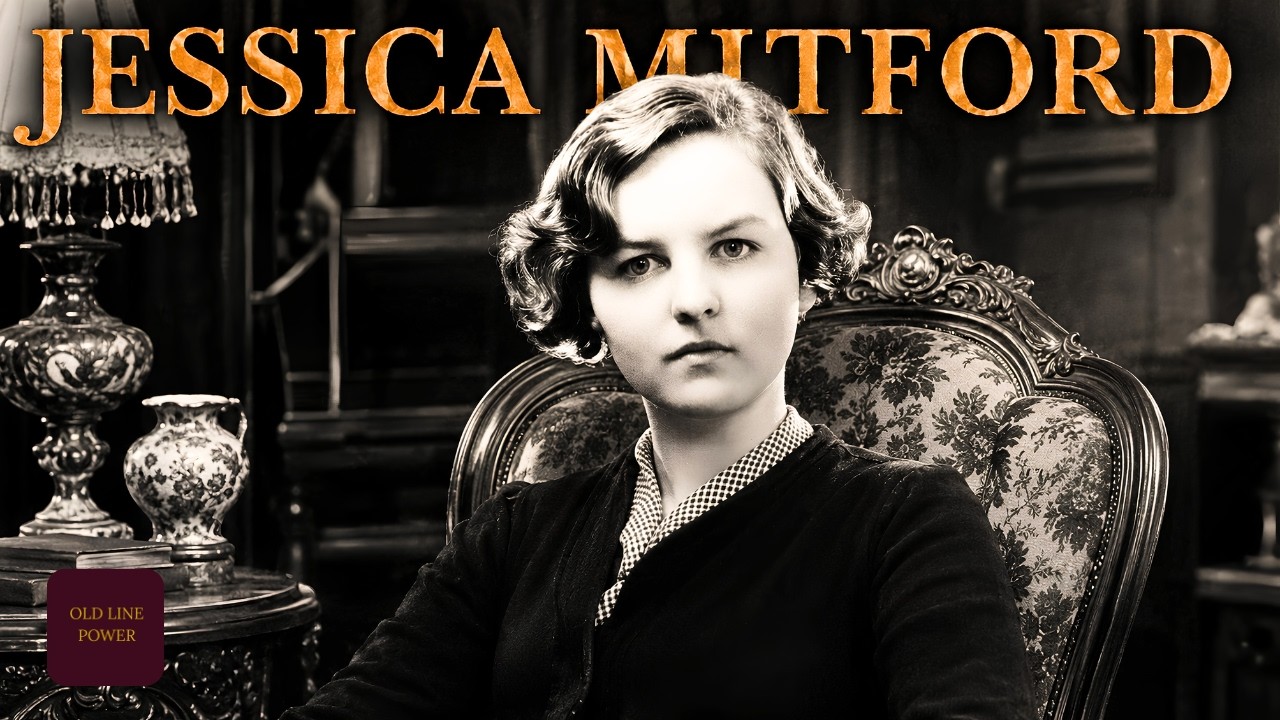
Her name was Jessica Mitford. She was forty-six, the sixth child of a British baron, raised in the Oxfordshire countryside in a house with servants and hunting dogs and no schoolroom. By the time she wrote that book, she had been cut out of her father’s will, placed under Federal Bureau of Investigation surveillance, refused a passport by her adopted country, and escorted out of Mississippi by police who suggested leaving would be better for her health. Of the six famous Mitford sisters, she is the only one who changed something still in force today.
Twenty-one years after the book appeared, the Federal Trade Commission introduced a rule requiring every American funeral home to hand customers an itemized price list, even over the telephone. It is still there. If you have ever arranged a funeral in the United States and been given a printed price list before deciding anything, that happened because of her. The reaction to the book was immediate and measurable.
Researchers who tracked the aftermath put American memorial society membership at roughly seventeen thousand households before publication. These were small nonprofit groups that quietly helped families arrange cheap funerals. Within a short time, the figure approached a million. She had outrun a British warship, buried a husband and two children, sat before a congressional committee investigating communists and declined to answer, and rung William Faulkner’s doorbell to ask him to sign a statement about a man on death row.
The warship came because of an elopement. In early 1937, she left England with a second cousin she had never met until a dinner party weeks earlier. Esmond Romilly was eighteen, a nephew by marriage of Winston Churchill, and a veteran of the International Brigades in Spain. Jessica was nineteen.
They reached Bilbao. Their plans had been so badly concealed that the foreign minister of the Basque Republic was standing on the dock when they landed. The British foreign secretary instructed the consul to find her. A British naval vessel was sent to the Spanish coast with orders to bring her home.
The captain had no power to compel her, so he tried dinner invitations, which she refused. What finally moved them was not family and not the Navy. The British government let it be known that unless the couple left Spain, it would stop accepting Basque refugees. Thousands of children were being evacuated out of the war zone, and the government had just made those children a bargaining chip against one nineteen-year-old girl.
They crossed into France. She ended the standoff by informing her family she was pregnant. The objections collapsed. They married in a civil ceremony in Bayonne on May 18, 1937.
In Germany, Unity Mitford, the sister inside Hitler’s circle, wrote home that Hitler had personally kept the elopement out of the German papers. She added that this was nice of him. The young couple took rooms in the London docks because they were cheap. They left every light and appliance burning, apparently under the impression that electricity came with a building like walls.
When the bill arrived, it shocked them. Their daughter Julia was born in December 1937 and died in a measles epidemic the following spring at five months old. Jessica left almost nothing on paper about that. In her long memoir of these years, the baby is not there.
Before leaving England for good in February 1939, she rode out to Oxfordshire to find a sheep named Miranda she had kept as a child. Out of the flock came an enormous animal with rotting feet, hobbling across the grass. Jessica cried the whole way back to London. In America, they took whatever work they could find, at one point selling silk stockings door to door in the South.
In Washington, she could not get work and could not understand why, until someone explained there was a line on the form marked color. She had been writing brown, meaning her hair. She started writing white and had a job immediately. Their second daughter was born in February 1941.
Esmond joined the Royal Canadian Air Force and flew over Germany as an air observer. On November 30, 1941, his aircraft did not come back. Nothing was ever found. He was twenty-three.
When Churchill was in Washington that December, the story told within the family holds that he came in person to tell Jessica her husband was dead. She refused to accept it. In mid-January, she wired her mother: “Waiting for better news. ” Then she packed up, took the baby, and went as far west as the country goes.
In 1943, she met Bob Treuhaft, a labor lawyer, the son of Hungarian Jewish immigrants. They married that year. She took American citizenship the following one. They joined the Communist Party and settled in Oakland, where Bob took union and civil rights cases and Jessica ran the local Civil Rights Congress branch.
In 1951, the national office sent a directive buried near the bottom of a stack: send the Oakland branch’s quota of four women to a white women’s delegation to Mississippi. The man was Willie McGee, a black truck driver convicted in 1945 of raping a white woman in a trial that took under a day, with a jury out under three minutes. Over four decades, more than fifty black men had been executed in the Deep South for rape. No white man had ever been executed for it.
Jessica drove five days to the meeting point and discovered the four of them were the entire delegation. In Jackson, Mississippi, they moved in pairs, stopped work at sunset, and never stepped outside dressed as anything other than respectable white women because that was the only protection any of them had. The Jackson Daily News found them within days and ran it across the front page, reporting that 150 women were canvassing the city. There were four.
They drove to Oxford and asked a boy for directions to William Faulkner’s home. He came to his own door, invited four communist organizers inside, and talked for two hours. Jessica took notes and cut them into a press release. She drove back alone and found him on the farm in hip boots up to his knees in manure.
He read the statement and initialed it, then half to himself said he thought both McGee and the woman who accused him should be destroyed. Willie McGee was executed on May 8. The four women changed nothing about that, except that the newspaper had printed the defense’s version of the case across its own front page for the first time anywhere in the state. In 1953, the subpoenas reached Oakland.
Neither Treuhaft gave a name. Neither discussed membership. For years afterward, they were watched. Jessica was refused a passport, and employers stopped returning her calls.
She resigned from the Communist Party in 1958. What she said was that the thing had become drab and useless. In 1955, their older son Nicholas, age ten, was hit by a bus in Oakland and killed. Jessica wrote a great deal about her own life and appears to have written almost nothing about him.
The fullest surviving portrait of him is a nickname. His grandmother met him on her one trip to America and called him her “little okay” because whatever anyone asked, he answered okay. Bob Treuhaft had noticed in the early 1950s that death benefits paid to workers’ families matched the funeral bills almost to the dollar. Undertakers seemed to know exactly what a warehouse worker got and priced accordingly.
His answer was practical: he started a nonprofit funeral society that contracted with a cooperative undertaker for plain funerals at a fraction of the going rate. His wife thought the subject dull for about three years while he tried to interest her. Then he started bringing the trade magazines home—Casket and Sunnyside, Mortuary Management, American Funeral Director. She worked through them all, every issue in order.
The industry had been printing its own methods openly for decades. The sales training, the pricing psychology, the candid discussion of how to move a grieving family to a better casket—none of it was hidden, because the trade press rested on the safe assumption that no outsider would ever pick it up. That was not a conspiracy. It was complacency.
The American Way of Death was published in August 1963 and climbed the bestseller lists. The funeral industry’s response was to call her a communist and a crackpot, coordinated through journals, conventions, and letters to editors, with salesmen briefed on how to handle customers who mentioned her. She denied none of it. She observed that if communism was the difficulty, the profession might reflect that the finest embalming job in history had been carried out on Lenin.
The campaign failed. Her accusers could not call her a liar without calling their own professional press liars, because that is where nearly all of her facts had come from. Then came Dallas. The Kennedy family had four days to bury a president in front of the whole country, with every decision watched and no reason to economize.
Robert Kennedy chose the cheaper casket and told her why. The fight ended. The funeral business had spent that autumn trying to convince America she was a subversive with a grudge. Robert Kennedy undid all of it in one private conversation, and he was not even trying to.
She kept working. She exposed a famous writers’ correspondence school as a machine dependent on students quitting before they finished, and the school went bankrupt. At fifty-five, offered a professorship, she refused to sign a loyalty oath and refused to be fingerprinted, taught the course anyway without salary, and fought the requirement. She wrote a book about the prison business, a book about the maternity industry at seventy-five, and a manual on investigative journalism.
She started a kazoo band called Decca and the Dectones. Maya Angelou performed with her anyway. She died in Oakland in July 1996, at seventy-eight, of lung cancer. She was cremated with no ceremony and no viewing, in the plainest arrangement available.
The cost came to $533. 31. On her standing instructions, her assistant sent the bill to the chief executive of a large funeral corporation, suggesting his industry might like to cover it given everything she had done over the years for their public profile. Her friends handled the rest.
Six black horses with plumes pulled an antique hearse loaded with Mitford memorabilia through the streets of San Francisco. A brass band played “Amazing Grace” and “When the Saints Go Marching In,” and then it played the “Internationale,” out loud, in 1996, for a woman who had left the Communist Party thirty-eight years earlier and never pretended she had not joined it. The federal rule is her legacy, and the books. But the thing worth ending on is not on a shelf.
Her daughter Constantia, known as Decca, worked in the American South for the Student Nonviolent Coordinating Committee, where she met James Forman. Their elder son, James Robert Lumumba Forman, went to Brown, then Yale Law, clerked for a Supreme Court justice, spent six years as a public defender in Washington, and helped found a charter school named for Maya Angelou. In 2017, he published Locking Up Our Own, about how America came to imprison so many of its black citizens. In April 2018, it won the Pulitzer Prize.
In October 1936, one Mitford sister was married in Berlin in a room belonging to Joseph Goebbels, with Adolf Hitler standing as a wedding guest. In April 2018, the grandson of another one collected the Pulitzer Prize for a book about race and punishment in America. More than eighty years separate those two rooms, and the same parents produced the two sisters at either end of it, in the same house, with the same governesses and no schooling whatsoever. One of them opened a bank account at age eleven and called it her running away account.
She used it.