In early December 1864, Major General John A. Logan boarded a train bound for Nashville, Tennessee. He was not heading to the front to fight.
He was traveling to relieve one of the Union Army’s most successful commanders, a general who had not lost a major battle in three years of war and was at that very moment defending a crucial Union city against a desperate Confederate advance.
Logan carried orders from Ulysses S. Grant himself. If the commander in Nashville had not launched an attack by the time Logan’s train arrived, Logan was to remove him from command immediately and take over the army.
Two days later, Grant grew so worried that Logan might not move fast enough that he boarded his own train, traveling the same route, ready to relieve the general personally if his subordinate had not already done so.
The general they were racing to replace was George Henry Thomas. History would later call him the "Rock of Chickamauga," a nickname earned for holding a collapsing Union line almost alone while the rest of the army fled around him. He would finish the war with a record no other Union general could fully match.
He never lost a battle he fully commanded. Not one.
And Ulysses S. Grant, the general who would become president, was racing across three states to fire him.
To understand why Grant was prepared to dismiss Thomas in the middle of a major Confederate invasion, you have to understand the reputation that followed Thomas throughout most of his career. It was built, ironically, on the very trait that made him nearly unbeatable.
Before the war, as an instructor at West Point, Thomas earned a nickname from the cadets he taught: "Old Slow Trot." It was a sarcastic reference to his insistence that horsemanship be practiced with control and precision rather than reckless speed. It was meant as mild mockery at the time, but it would stick to him less kindly for the rest of his career.
There was a deeper tension beneath that reputation as well. Thomas was a Virginian by birth, one of the few senior Union generals from a Southern state who remained loyal to the Union instead of joining the Confederacy. That choice reportedly cost him his relationships with his family for the rest of his life.
According to most accounts, his sisters never spoke to him again after he chose to stand with the Union.
Within Grant’s inner circle of trusted commanders, Sherman, Sheridan, and Grant himself, all veterans who built their reputations together in the Western campaigns along the Mississippi, Thomas remained something of an outsider. He was respected for his battlefield record but never fully accepted as one of them.
That status would follow him through three of the most important battles any Union general fought during the war. Each one showed the same pattern: systematic preparation away from the spotlight, followed by results that were almost impossible to argue with.
Long before Chickamauga, and long before Nashville, George Thomas achieved one of the first real Union field victories of the entire war. It is a battle hardly anyone remembers today, despite its real importance at a moment when the Union desperately needed such a win.
In January 1862, in the rugged hills of eastern Kentucky, Thomas led Union forces against a Confederate army commanded by Major General George Crittenden. The broader Union war effort at this stage was suffering badly. A series of setbacks and stalemates had depressed morale in the North.
Abraham Lincoln was desperately looking for any general who could deliver a clear, unambiguous victory to counter the growing sense that the war might drag on indefinitely.
Thomas, as usual, prepared his position carefully before Crittenden’s Confederates launched a surprise dawn attack on him at Mill Springs on January 19. The attack initially caught elements of Thomas’s forces in difficult, rain-soaked terrain, and for a time the outcome was genuinely uncertain. But Thomas’s systematic preparation held.
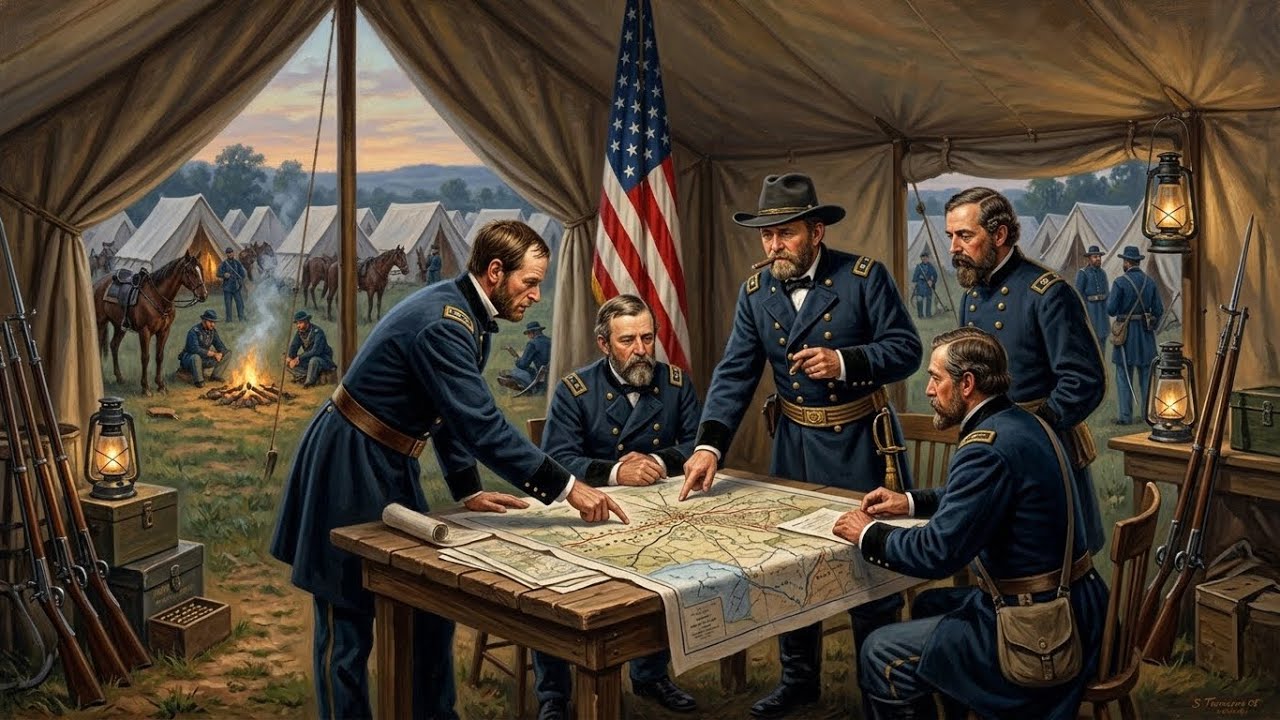
His troops stabilized the line, then launched a counterattack that drove Crittenden’s army into a complete and disorganized retreat, effectively destroying it as a fighting force in the region.
The significance of Mill Springs went far beyond its relatively modest size. It was one of the first decisive, clear Union victories of the entire war. It broke Confederate control over a large area of eastern Kentucky at a moment when the Union desperately needed that kind of momentum.
Northern newspapers seized on it as proof that the Union army could win outright, not just hold its lines.
It established, at the start of Thomas’s war career, the exact pattern that would define every major engagement he fought for the rest of the war: absorb the enemy’s first blow without breaking, then respond with a devastating, carefully prepared counterstrike.
That pattern was about to repeat on a much larger and more desperate stage, on a hill in Georgia where the Union’s Western army was hours from total annihilation.
By September 1863, Thomas commanded a corps within the Army of the Cumberland under William Rosecrans, facing Confederate forces under Braxton Bragg along a slow-moving creek in Georgia called Chickamauga. On the second day of fighting, September 20, a misunderstood order opened a gap in the Union line. The Confederates, led by James Longstreet’s newly arrived corps, poured through the breach with devastating effect.
The Union right wing collapsed almost immediately.
Rosecrans himself, along with much of his command staff, believed the battle was lost and left the field, retreating toward Chattanooga with thousands of fleeing Union soldiers.
Thomas did not retreat. Positioned on high ground that became known as Horseshoe Ridge, Thomas gathered whatever units remained under his direct control, reinforced by scattered survivors from the collapsed Union right and a reserve division under Gordon Granger that arrived on its own initiative at the moment Thomas needed it most.
For the rest of that afternoon and into the evening, Thomas’s improvised force held that hill against fierce, repeated Confederate attacks, buying critical hours for the rest of the shattered Union army to retreat safely to Chattanooga rather than being wiped out in the open. Ammunition ran desperately low as fighting continued into the evening. Thomas’s men resorted to fixing bayonets and using captured Confederate cartridges to keep the position from collapsing entirely.
Wave after wave of Confederate attacks broke against that line, and each time Thomas’s exhausted, outnumbered force held. Only after dark, with his ammunition nearly gone and his mission of covering the retreat accomplished, did Thomas finally withdraw his troops from the hill in order, the last organized Union force to leave the field.
The rest of the Army of Cumberland survived to fight another day largely because of what happened on that hill. Newspapers and soldiers gave Thomas the nickname that would follow him for the rest of his life: the "Rock of Chickamauga."
It was one of the most famous individual performances on a battlefield during the entire Civil War. Yet within months, it would do surprisingly little to protect Thomas from the same kind of doubts that nearly cost him his command at Nashville a year later.
Two months after Chickamauga, in November 1863, Thomas’s troops played a pivotal role in one of the strangest and most dramatic moments of the war, a battle in which an army literally exceeded its orders and no one could fully explain why.
As part of Grant’s broader campaign to break the Confederate siege of Chattanooga, the Army of the Cumberland under Thomas received orders to advance only to the base of Missionary Ridge, a steep, fortified Confederate position, and wait there while other Union forces attacked the ends of the ridge. It was supposed to be a supporting, limited action, not the main event.
But what actually happened defied all expectations on both sides. Thomas’s troops, veterans who still felt the bitterness of their army’s collapse and retreat at Chickamauga two months earlier, reached the base of the ridge as ordered. And then, without any coordinated order to continue, individual units began climbing beyond that point, pushing themselves up the steep slope toward the Confederate positions at the top.
Officers on the scene, including Grant himself watching from a nearby vantage point, reportedly had no idea who had ordered the advance to continue because no one had. The improvised, unauthorized attack succeeded beyond anything a deliberate plan could have reasonably expected. The Confederate defenders on the ridge, shocked by the scale and momentum of an advance no one had prepared for, scattered and fled in a collapse so sudden it stunned commanders on both sides.

Bragg’s Confederate army, which had held the strategic advantage in the region for months, was driven off the ridge entirely and forced to retreat, effectively ending the Confederate ability to threaten Chattanooga again.
Thomas’s role in that moment was characteristically modest. He had ordered the attack no more than anyone else had, but the men who carried it out were his men, forged under his command, including many of the same soldiers who had stood with him at Horseshoe Ridge two months earlier. It is tempting, and not unreasonable, to draw a direct line between the discipline and determination Thomas instilled in that army at Chickamauga and the almost inexplicable resolve that drove them up an impossible slope at Missionary Ridge without anyone asking them to.
A year later, that same combination, deliberate preparation paired with devastating execution, would be tested one final time on the largest stage of Thomas’s career, with his job on the line while it happened.
In late November 1864, Confederate General John Bell Hood marched his army north into Tennessee, aiming to threaten Nashville itself and, if things went well, possibly push into Kentucky. It was a bold and desperate gamble by a Confederate army that had been badly bled earlier that year while defending Atlanta.
Hood’s army reached the outskirts of Nashville in early December and began digging in, facing Thomas’s Union forces defending the city. The strategic stakes were enormous. If Hood somehow defeated Thomas or slipped past him into Kentucky, the Union might be forced to divert troops away from Sherman’s ongoing campaign deep in Confederate territory, potentially prolonging the war at the very moment it seemed to be ending.
Thomas’s response to this threat was exactly what his battles at Mill Springs, Chickamauga, and Missionary Ridge had trained him for: systematic preparation before committing to battle. He spent nearly two weeks massing his troops, gathering additional horses for his cavalry from as far away as Louisville, and waiting for conditions that would allow him to strike with decisive, overwhelming force rather than risk a costly, uncertain clash against a desperate enemy with nothing to lose.
From Nashville, this preparation looked wise. From Grant’s headquarters in Virginia, hundreds of miles away and receiving only delayed telegraph updates, it looked exactly like the kind of costly hesitation that had frustrated Grant with cautious commanders throughout the war.
Grant had spent years building his reputation on relentless, aggressive pressure, refusing to let Robert E. Lee’s army rest, pushing forward even at terrible cost, because he understood that time favored the Confederacy’s ability to wait out war-weary Northern public opinion. Watching Thomas sit motionless in front of Hood’s army week after week triggered exactly the concern Grant’s entire military philosophy was built to guard against.
What Grant, sitting in Virginia, had not fully accounted for was the weather. In the second week of December, a severe ice storm swept through Tennessee, covering the ground and every road around Nashville with a thick, treacherous layer of ice. Union cavalrymen who attempted routine movements were injured when their horses slipped and fell on the frozen ground.
Any large-scale offensive movement under those conditions risked catastrophic losses from accidents alone before a single shot was fired at the enemy.
Thomas communicated the severity of the conditions to Washington in blunt, direct terms. But from Grant’s perspective, hundreds of miles away and increasingly convinced that Hood might bypass Nashville entirely if given enough time, the weather reports sounded less like a legitimate operational obstacle and more like a convenient excuse from a general who was again moving too slowly.
On December 9, Grant sent Thomas a direct order to attack immediately regardless of weather conditions. Thomas refused, supported by his senior commanders who agreed the roads were genuinely impassable, and respectfully declined to move until conditions improved. It was a direct act of professional defiance against his superior officer, coming at the worst possible time for such a confrontation.
With an enemy army on the doorstep of Nashville and Grant’s patience with Thomas’s caution completely exhausted, Grant put John Logan on a train four days later.
What followed was one of the strangest command dramas of the entire Civil War: a literal race across hundreds of miles of Union-controlled railroad and telegraph lines, between an order of relief and the battle that order was meant to prevent being delayed any further.
Logan left Washington on December 13 carrying written orders to relieve Thomas from command if he found, upon arriving in Nashville, that the attack had not yet begun. Two days later, Grant’s anxiety got the better of him, and he boarded his own train heading to Nashville to take command personally if necessary. It was a striking admission of how seriously Grant viewed the situation and how little confidence remained in Thomas’s judgment.
Neither man, as their trains carried them west, realized that the ice had already begun to melt. On the night of December 14, with conditions finally improved enough to risk a coordinated attack, Thomas sent word up the chain of command. The attack would begin the following morning.
On December 15, 1864, Thomas’s forces struck Hood’s entrenched army outside Nashville in a coordinated, overwhelming assault built on the same kind of systematic preparation Thomas had spent two frustrating weeks assembling. The attack unfolded over two days of genuinely dramatic fighting.

On the first day, Thomas’s troops hit Hood’s left flank hard, driving the Confederate defenders back from a series of fortified positions and capturing artillery and prisoners in large numbers. Hood was forced to shorten his lines overnight, establishing a shorter, more concentrated defensive position anchored on high ground, including a position later known as Shy’s Hill.
On the second day, December 16, Thomas’s forces renewed the attack along Hood’s entire shortened line. Union troops assaulting Overton Hill on the Confederate right faced fierce resistance and heavy casualties in an initial attack that was repulsed. But on the opposite flank, Union cavalry and infantry combined to crush the defenders at Shy’s Hill in a coordinated assault that completely broke the Confederate left flank.
Once that flank collapsed, the rest of Hood’s line disintegrated with astonishing speed. Confederate soldiers who had endured years of brutal fighting fled and retreated in a rout that shocked observers on both sides, streaming south in utter chaos while Union cavalry continued the pursuit.
The battle is regarded by many historians as one of the most complete and decisive tactical victories achieved by either side during the entire conflict. It not only seized the field but practically destroyed an entire Confederate army’s ability to fight again. Hood’s Army of Tennessee, which had marched north weeks earlier with real hopes of turning the tide of the Confederacy’s declining fortunes, retreated south as a shattered remnant of its former strength, relentlessly pursued by Union cavalry for days afterward.
Logan, traveling west, reached Louisville, Kentucky, on December 15, the same day Thomas’s attack finally began. News of the victory reached him there before he could proceed to Nashville to carry out his orders. He sent a telegram to Grant saying the people in the area were elated by Thomas’s success and that it seemed best for him to abandon the relief mission entirely and return to his own command instead.
Grant, who arrived in Washington that same day and finally received Thomas’s report describing the success of the attack, immediately canceled his own trip west. He sent a telegram to Thomas that same night with words that stood in stark contrast to the tone of his messages over the previous two weeks. He congratulated Thomas directly, urged him to pursue and destroy Hood’s shattered army completely, and made no mention whatsoever of relieving him from command.
The order of relief that had traveled hundreds of miles, carried first by Logan and then nearly delivered by Grant himself, arrived late by a matter of hours. George Thomas had effectively been fired by his commanding general, and then the firing was canceled because the sheer magnitude of his victory made it impossible to justify before the order even reached him.
Even after Nashville, even after Mill Springs, Horseshoe Ridge, and Missionary Ridge, even after achieving one of the most decisive victories of the entire Civil War, his immediate superior had literally been on his way to relieve him.
George Thomas never entered the inner circle of Grant’s trusted commanders for the rest of the war or in the years that followed. Grant’s postwar writings and correspondence continued to reflect the same underlying doubts that nearly cost Thomas his command in December 1864: respect for the results Thomas achieved, paired with persistent skepticism about the pace at which he achieved them.
Sherman and Sheridan remained part of an inner circle that shaped Union military policy and eventually national politics in the postwar years. Thomas, despite achieving what could be considered the most complete tactical destruction of an enemy army by any general on either side of the war, was never fully integrated into that circle in the same way.
It is worth asking directly: were those doubts actually deserved? Review Thomas’s complete combat record clearly, battle by battle. Mill Springs, one of the first decisive Union victories of the entire war, achieved at a moment when the North desperately needed such a result.
Horseshoe Ridge, where he held a collapsing army together using fixed bayonets and captured ammunition rather than retreating. Missionary Ridge, where the discipline he instilled in his soldiers produced an unauthorized attack up an impossible slope, achieving a victory no one had planned. And Nashville, where the systematic preparations that infuriated Grant produced the most complete destruction of a Confederate field army in the entire war.
Every major engagement Thomas fully commanded, he won. A record Grant, Sherman, and Sheridan could not claim with the same consistency throughout the war. The caution that frustrated Grant was not a character flaw slowing Thomas down.
It was the actual mechanism that produced every one of those results.
Thomas died in 1870, only five years after the war ended, reportedly carrying resentment over not receiving the highest promotions that Grant, Sherman, and Sheridan ultimately received. He never sought to correct the historical record the way Longstreet or other controversial figures of that era did through memoirs and public advocacy. By most accounts, Thomas considered that kind of public score-settling beneath the dignity of the uniform he wore.
That reticence may be part of why his story never reached the same level of fame in Civil War memory as Grant, Sherman, Sheridan, or even his Confederate contemporaries. He never wrote the book that would have made his case. He simply won the battles, quietly outlasted the doubts his superiors held against him, and let the record speak for itself.
A record that, when placed alongside Grant’s anxious telegrams of December 1864, makes an argument Thomas never had to say out loud. The train carrying his replacement reached Louisville before news of his victory arrived. That gap, that razor-thin margin between dismissal and vindication, is the best summary of the trust George Thomas never fully received.
And which, based on the evidence of his record, he had earned.