At 1:00 a. m. , L. D.
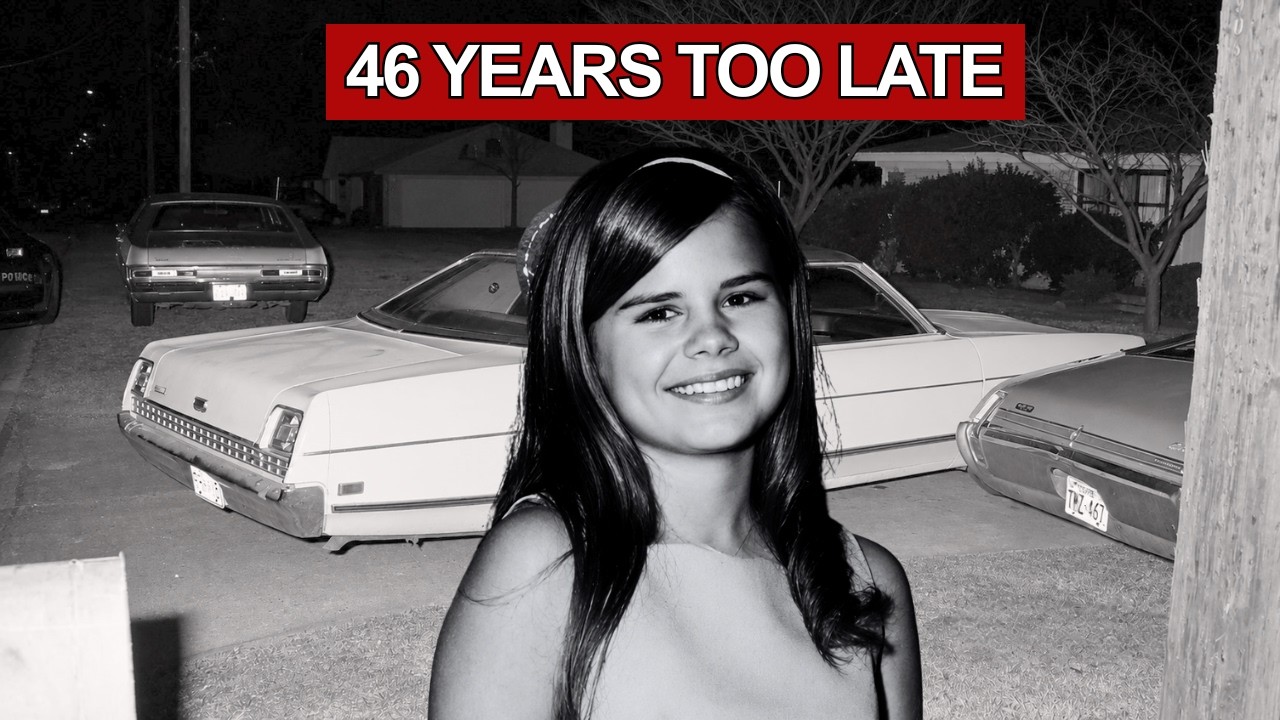
Walker opened his front door in Fort Worth, Texas, to find his daughter’s boyfriend on his porch, blood streaming down his face. The young man’s words were barely coherent: “Mr. Walker, they took her. They’re going to hurt her badly.
”
The girl was Carla Walker, seventeen years old, 4 feet 11 inches tall, and 100 pounds. She was a junior at Western Hills High School, a cheerleader and a tennis player, the kind of person who filled a room without trying. She had gone to a Valentine’s Day dance that evening with her boyfriend, Rodney McCoy, and afterward, they had driven to the parking lot of the Brunswick Ridglea Bowling Alley on South Holland Street. It was just past midnight on February 16, 1974.
The lot was dark. The couple had no reason to hurry. Then the passenger door was yanked open from the outside. Carla fell partway out of the car.
A white man stood there, roughly 5 feet 10 inches tall, a stranger to both of them, holding a pistol. He brought the butt of the gun down on Rodney McCoy’s head, once, then again. McCoy later described the ringing in his skull and the blood filling his eyes. As he struggled to stay conscious, he heard Carla screaming at the man to stop hitting her.
Even then, with her boyfriend being beaten and an armed stranger looming over them, her instinct was to protect Rodney. The man looked at her and said, “You’re coming with me, aren’t you, sweetheart? ”
Carla’s last words, spoken as Rodney was losing consciousness, were for him, not for herself. “Rodney, go get my dad.
” She believed, in that final moment, that her father could still reach her. McCoy blacked out. When he came to, the car was empty. Carla was gone.
The man was gone. On the ground nearby lay the ammunition magazine from a . 22 caliber Ruger pistol, wrenched loose during the attack. Carla’s purse was there.
Nothing else. Three days later, on February 20, 1974, Carla Walker’s body was found in a drainage ditch near Lake Benbrook, about thirty minutes south of Fort Worth. She had been beaten, sexually assaulted, and tortured. The autopsy documented wounds on her thighs and legs.
She had been strangled with her own bra. Forensic analysis indicated she had survived for roughly two days after the abduction, 48 hours of suffering known in full only to one person. The case broke open quickly at first. The magazine found at the scene was matched to a specific model of Ruger pistol, and investigators matched regional gun purchase records to a name almost immediately: Glen Samuel McCurley.
He lived about a mile from the bowling alley and had recently purchased a Ruger . 22, the same model as the magazine in evidence. When questioned, McCurley told police the gun had been stolen from his truck. He agreed to a polygraph test.
He passed it. By the investigative standards of 1974, that was enough to remove him from the suspect list. McCurley walked out of the interview and returned to his life on the south side of Fort Worth. The investigation continued for years.
A bowling alley employee picked a convicted felon named Will Hoy from a lineup in 1976, insisting Hoy had been at the alley the night of the abduction. Police administered a polygraph at Huntsville Prison. Hoy failed. In the conversation that followed, he hinted he had failed because the questions reminded him of another crime, an assault on a Texas Christian University student, that he believed he could not be prosecuted for.
That lead produced one of the darkest footnotes of the case: a man named Kenneth Leslie Miller had been wrongly convicted in that student assault, had fled before sentencing, and had vanished. One case tangled into another, and neither was resolved. Other leads surfaced over the decades: false confessions, tips from psychics, anonymous letters. Every thread was pulled.
Every thread broke. The Fort Worth Police Department never closed the case. Detectives rotated through the file, each one inheriting a folder that outlived the investigators who came before. Carla’s parents, L.
D. and his wife, died without ever learning who took their daughter from that parking lot. Her sister Cindy and brother Jim kept pressing law enforcement, ensuring her name stayed alive in conversations where it might otherwise have faded. When standard DNA testing became available in the early 2000s, it failed.
The biological evidence, the clothing, the bra, the samples from the original examination, had been preserved, but the genetic material was too degraded for the conventional methods of the time. The evidence was real. The science had not yet caught up. In April 2020, Carla Walker’s case was featured in an episode of a series on the Oxygen network hosted by Paul Holes, an investigator who had worked the Golden State Killer case.
That case, solved just two years earlier, had proven what investigative genetic genealogy could do for cold cases that traditional DNA testing had failed. The production team agreed to fund DNA testing on the preserved evidence from 1974. The cost was $15,000. The evidence was sent to Othram, a forensic genomics laboratory in The Woodlands, Texas, that specialized in limited and degraded DNA samples.
Their sequencing technology was built for exactly this problem. They successfully extracted a comprehensive DNA profile from material that had sat in storage since 1974. Using investigative genetic genealogy, they traced the markers through public databases and narrowed the results to a family in the Fort Worth area. Three brothers emerged as possible matches.
Further analysis reduced the possibilities to one man. On the morning of July 4, 2020, Detective Jeff Bennett was at home when his phone rang. The caller was David Mittelman, the CEO of Othram. They had developed a full genetic profile, Mittelman told him, and they had a family name.
The name was McCurley. Bennett later described it as one of the most impactful moments of his career, forty-six years of waiting, distilled into a single phone call. Glen McCurley was then 77 years old, retired, and living on the south side of Fort Worth, the same city, the same part of town, the same community where he had abducted a seventeen-year-old girl on Valentine’s Day. Detectives did not approach him directly.
On July 7, 2020, they quietly collected discarded items from a trash container outside his home. Those items were tested. The DNA matched the profile extracted from Carla’s clothing. A direct cheek swab was taken.
It matched as well. On September 21, 2020, forty-six years and seven months after Carla Walker was taken from that parking lot, Glen Samuel McCurley was arrested and charged with murder. He initially denied ever seeing her. He maintained his innocence.
But when investigators searched his home, they found something that required a moment of deep reflection. In 1974, McCurley had told police his Ruger . 22, the weapon whose magazine had fallen in the bowling alley parking lot, had been stolen from his truck. That explanation, paired with the passed polygraph, had moved police onward.
The gun was found inside McCurley’s home. He had kept it for 46 years. The weapon used to beat Rodney McCoy and abduct Carla Walker had been within his reach the entire time. The trial of Glen Samuel McCurley for murder began on August 19, 2021, in a Tarrant County courtroom before Judge Elizabeth Beach.
McCurley was 78 years old. Rodney McCoy, now 65, took the stand on the first day. He told the jury about the door opening, the gun striking his head, the blood covering his eyes. He described trying to get up, trying to fight off unconsciousness, trying to do anything, and failing.
He told the court he had felt he let Carla’s father down. The jury was shown McCurley’s recorded interview with investigators. In it, they asked him directly, “How did you kill her? ” The jury heard his answer.
On the third day of trial, August 24, 2021, Judge Beach told the courtroom she had received a document in which McCurley confessed to the kidnapping and murder. She asked if he understood his right to continue the trial and that signing the agreement waived that right. McCurley changed his plea to guilty. He was immediately sentenced to life in prison.
After sentencing, Carla’s family delivered victim impact statements. Her brother Jim spoke first. He said he had found something he never expected to find at this stage of his life: forgiveness. Not for McCurley, but for himself.
He said it was time for healing and expressed hope the case might help other families. Then Cindy Stone, Carla’s sister, stood and faced the man who had shared her city, who had lived a mile from where he abducted her sister, who had passed a polygraph and walked free for 46 years. She reminded him that she had spent 17 years sharing a room with her sister, that she knew Carla well. She noted his choices that night: he had a gun, he had alcohol, he had whiskey.
She asked him to tell the truth about what he had done, to confess if he had hurt anyone else, because other families needed to know too. Cindy Stone spent 17 years sleeping in the same room as her little sister. Seventeen years of ordinary mornings and ordinary arguments over nothing, which now seemed like the most precious things imaginable. Then, on a Valentine’s Day, a man with a gun and a bottle of whiskey drove to a parking lot, and Carla was there, and he chose to take her.
Her parents never learned his name. They died holding a question that Cindy and Jim lived long enough to hear answered. Glen McCurley did not escape exposure for 46 years because he was clever. He benefited from a series of loopholes, each one explainable on its own, but together forming a wall that took five decades to break through.
He passed a polygraph in 1974, a test now known to have serious reliability problems and inadmissible in most modern courts. He kept the murder weapon in his home, not because he was careless, but because the polygraph had cleared him and no one came back to look. The biological evidence on Carla’s clothing was real and intact, but the DNA technology of the 1990s and early 2000s could not extract a usable profile from degraded material. The science that would have caught him in 2005 simply did not exist yet.
A television production company paid $15,000 to a private laboratory in Texas, and the gap was closed. On a July 4th morning, the accumulated limitations of a 1974 polygraph, the state of forensic science, and 46 years of technological delay finally ran out. McCurley was arrested at 77. He pleaded guilty at 78.
He died in prison in 2023 at the age of 80. He served less than two years of a life sentence. He lived 46 years of ordinary life that Carla Walker, 4 feet 11 inches tall and 100 pounds, was never allowed to live. The district attorney in Tarrant County said she could not rule out McCurley’s responsibility for other crimes.
There are boxes of unsolved murder cases from the 1970s in Fort Worth that have never been DNA tested for lack of funding. That question was never answered. Cindy Stone and Jim Walker committed themselves to using Carla’s case to help other families fund DNA testing for old cases. Their hope, as Jim expressed it, was that the case would stimulate more testing, especially the new DNA testing, and perhaps help solve some old cases and give other families a measure of peace.
The investigation that began with a $15,000 investment, less than the cost of a used car, became one of the first murder trials in American history to use forensic genealogy. The science exists. The funding often does not. That gap remains one of the most solvable problems standing between cold case families and the answers they deserve.
The parking lot at 3900 South Holland Street no longer holds a bowling alley. The building there on Valentine’s Day 1974 has been a skating rink, a wedding hall, and a mortgage company. The city moved on, as cities always do. But the question Rodney McCoy carried from that night, when he woke up alone in his car and the space was empty, finally found its answer.
It took five decades, a television network, a private laboratory, a phone call on a holiday morning, and a detective who refused to close the file. Carla Walker was 4 feet 11 inches tall. She weighed 100 pounds. She went to a Valentine’s Day dance with a boy she liked, and she asked the man hitting her boyfriend to stop before she asked anything for herself.
Her last words were about her father. She was 17 years old.