From Irish immigrant roots to the pinnacle of American political power, the Kennedy family’s ascent is one of the most compelling narratives in United States history. It is a story driven by the relentless ambition of a patriarch who built a fortune, the calculated strategies that blended new money with old, and a legacy that continues to shape the nation’s cultural and political landscape.
The foundation of the Kennedy dynasty was laid by Joseph P. Kennedy Sr. , a son of Irish immigrants born in Boston.
In the early 20th century, he began an unprecedented journey toward wealth, navigating the murky avenues of bootlegging during Prohibition, the unpredictable whirlwind of the stock market, and the dazzling limelight of Hollywood. While his rumored ties to organized crime during the 1920s remain a subject of speculation, his financial acumen was undeniable. He made a series of lucrative investments, including the purchase and sale of Pant’s Theater Company for a handsome profit.
Crucially, sensing an impending economic downturn, he astutely liquidated most of his stock portfolio before the infamous Wall Street Crash of 1929, shielding his wealth and allowing him to buy back stocks at rock-bottom prices during the Great Depression.
His ventures extended into real estate, amassing a significant portfolio that included the Somerset Hotel in Boston and the iconic Manhattan building at 14 Wall Street. In Hollywood, he assumed control of several movie studios, including FBO Studios, which he later sold for a substantial profit. These accomplishments were the cornerstones of the family’s transition from humble roots to new money, carving out a formidable financial empire in just a couple of decades.
Joseph Kennedy’s vision, however, extended beyond commerce. He dreamed of a dynasty that would etch its name into the golden ledger of American political history. He invested heavily in the intellectual grooming of his offspring, ensuring they attended the finest institutions like Harvard and Stanford.
Joseph Kennedy Jr. was initially envisioned as the political torchbearer, but his sudden death in 1944 during World War II tragically upended this plan. The mantle then fell to his younger brother, John F.
Kennedy.
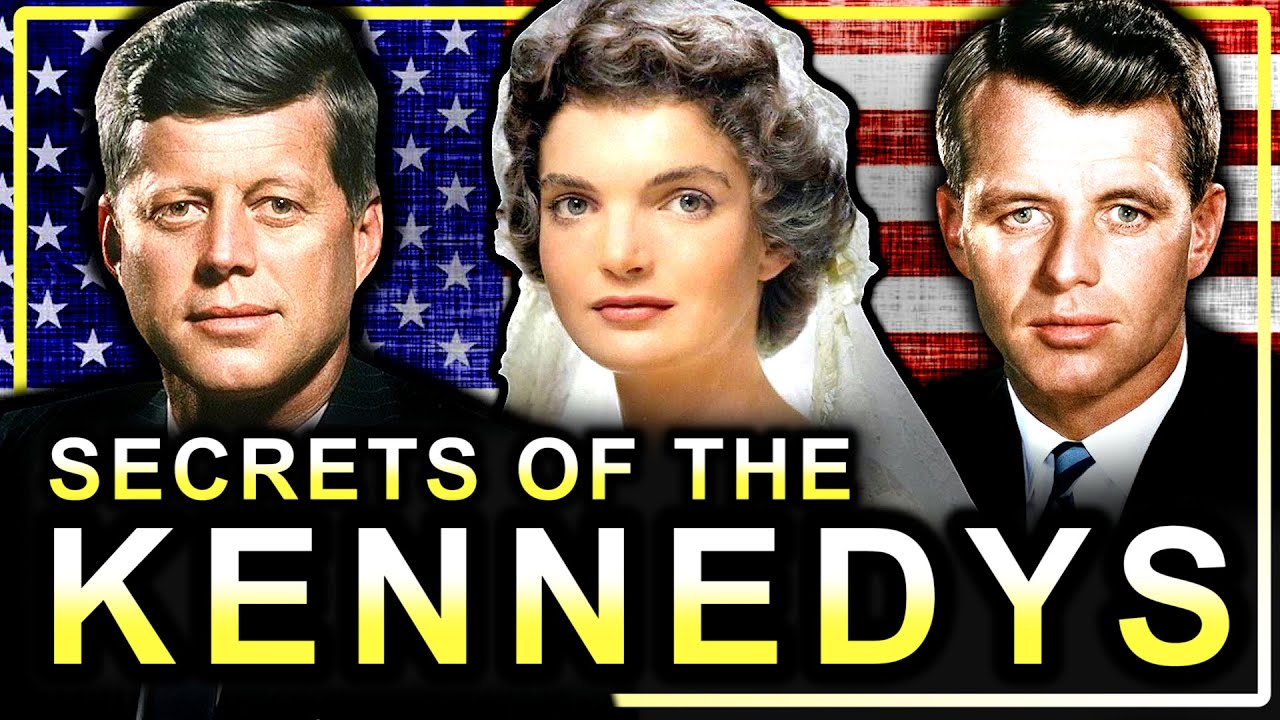
JFK’s electoral debut materialized in 1946 when he won a seat in the U. S. House of Representatives.
His ascent continued as he defeated incumbent Henry Cabot Lodge Jr. to win a seat in the U. S.
Senate in 1952, a victory largely attributed to the powerful campaign machinery funded by the Kennedy wealth. The crowning glory came on November 8, 1960, when JFK won the presidential election, defeating Vice President Richard Nixon. As the first Irish Catholic President, JFK represented the culmination of the Kennedy journey from immigrants to the peak of American political power.
From the very start, the Kennedys sought to weave themselves into the exclusive fabric of American society, emulating the old money attributes of elite education, refined leisure, and strategic alliances. Their summers were spent at their estate in Hyannis Port, Massachusetts, a picturesque community popular with the wealthy elite. A key strategic move was the marriage of John F.
Kennedy to Jacqueline Bouvier in 1953. Jacqueline was the epitome of old money, hailing from a distinguished East Coast lineage with roots tracing back to early French immigrants. The union blended the vigorous dynamism of the new money Kennedys with the established grace of the Bouvier family, helping to validate the Kennedys’ place among the societal elite.
As First Lady, Jackie Kennedy played a pivotal role in crafting the family’s image. Her innate grace, sophisticated style, and cultured intellect helped cultivate an image of the Kennedys as an old money family. Her restoration projects in the White House made it a symbol of cultured elegance, and her influence extended to fashion, setting trends that were emulated by women across the nation.
The term “Camelot,” a mythical kingdom known for its idyllic aura and noble ideals, was applied to the Kennedy administration after JFK’s tragic assassination. When Jackie referenced Camelot in a post-assassination interview, the metaphor stuck, casting a near-mythical aura around the Kennedy presidency. This imagery aligned seamlessly with the old money image the Kennedys were cultivating, connecting an Irish immigrant family with the grandeur and noble ideals traditionally associated with the country’s elite.
The Kennedy story, however, is also marked by a series of notable scandals and tragedies, often referred to as the Kennedy curse. The litany began with Joseph Kennedy Jr.’ s untimely demise, followed by the shocking assassinations of JFK in 1963 and Robert Kennedy in 1968.

Scandals, too, were not unfamiliar, the most notable being Ted Kennedy’s Chappaquiddick incident in 1969. Yet, each tragedy was met with a dignified stoicism that spoke volumes of the family’s resilience, a characteristic reflective of old money families who navigate tumultuous waves with a level-headed demeanor.
In the contemporary world, the Kennedy family continues to exert significant influence. Members of newer generations have carried forward the tradition of public service, including Joseph P. Kennedy III, who served as a congressman from Massachusetts.
While their scale of wealth may not match today’s billionaire magnates, their name carries a weight in history, tragedy, and triumph that money alone cannot buy. They personify an intriguing synthesis of new money zeal and old money refinement, a living example of a quintessential American narrative where a family can ascend from humble beginnings to the towering peaks of social influence.
This legacy is also reflected in the family’s architectural footprint. The Kennedy Compound in Hyannis Port, a sprawling estate overlooking Nantucket Sound, served as the family’s beloved summer retreat and a crucial stage for political machinations during JFK’s 1960 presidential race. The White House itself was transformed under Jackie’s discerning eye, imbued with historical authenticity and elegance.
The Kennedy winter White House in Palm Beach, Florida, was a sanctuary where JFK penned significant portions of his Pulitzer Prize-winning book Profiles in Courage and his iconic inaugural address. Other properties, like the Kennedy residence in New York City and Hickory Hill in Virginia, further cemented the family’s connection to American history.
While the men of the family often took center stage, it was the Kennedy women who truly cultivated the old money ethos. Rose Fitzgerald Kennedy, the matriarch, was the product of the influential Fitzgerald family, and her marriage to Joseph P. Kennedy Sr.
laid the foundations of a legacy that transcends time. Jacqueline Kennedy’s old money elegance transformed the family’s public image, and her sister, Lee Radziwill, was celebrated as a fashion icon in her own right. Eunice Kennedy Shriver’s philanthropic work, including the founding of the Special Olympics, solidified the family’s ethos of noblesse oblige.
These women, along with others like Caroline Kennedy and Maria Shriver, were as pivotal to the old money connection with the name Kennedy as the men themselves.

The tragic tale of John F. Kennedy Jr. adds another poignant layer to the family saga.
Born into the spotlight as the first child of an incumbent president to be born in the White House, his life was one of immense potential. After a career in law and journalism, where he founded George magazine, whispers of a political future began to permeate the air. On July 16, 1999, the nation was gripped by tragedy when the plane he was piloting crashed into the Atlantic Ocean, killing him, his wife Carolyn Bessette, and her sister Lauren.
The abrupt departure of John F. Kennedy Jr. created a vacuum in the fabric of American political and societal spheres, leaving behind a tantalizing political “what if.”
The Kennedy family saga holds a special place in American history, with the unexpected financial rise of Joseph P. Kennedy Sr. at its core.
His story reads like a how-to guide on wealth building, albeit with a sprinkle of controversy. While the tale of his supposed bootlegging empire during Prohibition has been largely debunked by historians, his financial wizardry on Wall Street and in real estate is well-documented. By the time of his death in 1969, his estate was estimated to be worth $500 million, a fortune that ensured his descendants were free to chase their political dreams.
The Kennedys also left an indelible mark on the world of style, embodying the old money aesthetic of quiet luxury. JFK’s preference for slim-fitting, two-piece suits from Brooks Brothers, with narrow lapels and subtle patterns, became a signature of the preppy look. Jackie Kennedy’s fashion sense was so iconic that she is considered one of the most stylish people to ever reside at 1600 Pennsylvania Avenue.
Her beige Oleg Cassini coat dress and pillbox hat from the inauguration day set significant fashion trends, and her preference for neutral shades and simple, elegant lines became a masterclass in the old money philosophy of understated class.
From their humble immigrant roots to the pinnacle of American wealth and power, the Kennedys’ story is one of resilience, relentless ambition, and an indomitable spirit to carve their place in history. They are a family that personifies an evolving blend of new and old, a constant striving for higher realms, and a steadfast adherence to their heritage. In the common parlance, the name Kennedy conjures images of graceful elegance in the face of tragedy, a bold New Frontier, and an unbridled American optimism.
It is a legacy that continues to captivate and confound, a quintessential American saga that shows how a family can ascend from humble beginnings to become synonymous with the concept of an American aristocracy.