In November 1996, a young physician and psychologist in Bilbao, Spain, failed to appear at his workplace. Carlos Sánchez Ortiz de Salazar, known for his punctuality, had vanished. At just twenty-six, he had already achieved remarkable academic success, mastering several languages and earning the respect of both his family and his patients, who remembered him as humble, kind, and wise. But beneath his swift rise to prominence, he had privately struggled for years under the weight of his parents’ high expectations, battling depression and stress.
When Carlos’s parents reported him missing, a large search involving police, volunteers, and the entire community turned up nothing. His last known whereabouts were unknown. The case gradually grew cold, yet his family refused to give up. Over the next fourteen years, they hired private detectives and launched media campaigns, but no trace of him was ever found.
In 2010, the Spanish government officially declared him dead. Five years later, on the other side of the Mediterranean, two hikers in the region of Marche, Italy, were foraging for mushrooms in a forest. Having brought minimal provisions, they ventured deep into the woods and came across a peculiar sight: heaps of discarded waste, littered cans, and empty bottles. Following the trail, they stumbled upon a makeshift camp with a shoddily built tent and tin cans brimming with rainwater.
Assuming it was deserted, they decided to rest there—until a man suddenly emerged and confronted them. He appeared worn down, with an unkempt beard nearly a foot long, a dirty and thin face. Panicking, the hikers fled and soon found a forest ranger, to whom they recounted what they had seen. Intrigued, the ranger returned to the camp and confronted the man.
Under questioning, the stranger revealed his identity: Dr. Carlos de Salazar. He confessed that this camp had been his home since 1997. The ranger insisted on proof, and Carlos, with a deep sigh, handed over an expired passport.
How Carlos had survived in the wild for years or even decades, alone, baffled the hikers and the ranger. They speculated he might have grown his own food or scavenged from nearby towns. Carlos appeared visibly unsettled, likely weighed down by the discovery of his hiding spot. The group parted ways, but the hikers felt compelled to notify the authorities.
One of them had managed to snap a few photos of Carlos’s passport. News quickly reached the Spanish police, who notified Carlos’s parents. Shocked and excited, they immediately booked a flight to Italy. There, they teamed up with Italian officers and the hikers, who guided them to the abandoned campsite.
But Carlos was nowhere to be seen. He had left in a hurry, leaving behind some belongings. His campsite was littered with trash, bottles, and tattered clothes, suggesting he had abandoned all personal hygiene. The family hoped for an extensive search and rescue mission across the entire forest.
The Italian authorities, however, refused. Because Carlos had intentionally chosen to live in seclusion, his case did not technically meet the criteria for a missing person’s investigation. The police declined to allocate time and resources to find him. Refusing to surrender, the Salazar family took matters into their own hands.
For many days, they roamed the vast and dense forest, but the search yielded nothing. With Carlos’s father unable to stay longer due to work commitments, they returned to Spain, promising to come back. In the years since, they have made multiple trips to Italy, but they have never found any trace of him. Whether Carlos still resides in those woods or has relocated elsewhere remains a mystery that may never be solved.
In a separate case, an eighteen-year-old high school senior named Julian Hernandez faced a bewildering setback. He had excelled academically with a host of extracurricular activities and had applied to several prestigious colleges. All his applications were denied due to discrepancies between his name and Social Security number. Seeking answers, he consulted his guidance counselor.
Their research uncovered a startling truth: Julian had been reported missing fifteen years earlier. He had been living under a false identity, unaware of a tragedy that had befallen him long ago. Confronting his father, Bobby Hernandez, Julian demanded answers. Bobby fumbled his words but ultimately confessed the horrible truth.
Julian, feeling lost and confused, turned to Reddit for legal advice. He explained that his father had changed both their names and Social Security numbers, erasing their past to evade the law. Julian’s entire sense of self had been shattered. He recalled how his father had once asked him if he would still love him if he learned something terrible he had done.
Despite everything, Julian held no grudge. His father had done everything he could for him growing up, and Julian wanted to keep him out of trouble, not just for his own sake but for his little sister, so that his father could stay out of prison and care for her. The story began in 2002, when Bobby and Julian’s mother were embroiled in a fierce custody battle. Bobby’s wife won full custody of five-year-old Julian.
One day, Bobby asked his former wife if he could babysit Julian after kindergarten. She gullibly agreed. When she returned home, both Julian and Bobby were gone. A note from Bobby said he intended to take Julian away for good.
Hernandez fled with Julian to Cleveland, Ohio, where he found a new home with his girlfriend and her children. For thirteen years, they lived as a family. When Julian came of age and asked about his mother, Bobby replied that she was gone forever. Julian’s Reddit plea created an uproar.
Many commenters noted that there were usually two sides to every story. According to Bobby, he only wanted to be with his son. Julian’s mother believed Bobby was bitter and took Julian to punish her. Either way, it was hard to argue that kidnapping one’s own child, depriving him of a mother’s love, and making him believe his mother abandoned him was justifiable.
When Julian’s school counselor informed the police and Julian’s mother received word that her son had possibly been found, her heart leapt with joy. She remained wary, as countless similar reported sightings over the years had proven false. But when police confirmed it was indeed Julian, she was overwhelmed with emotion and relief. Bobby was arrested in November 2015.
The trial captured worldwide media attention. The victim was no longer a minor, had suffered no abuse, and stood firmly at his abductor’s side, pleading with the jury to forgive his father. Nevertheless, after a lengthy court process, the jury found Bobby guilty of abduction, custodial interference, and forgery of documents. He was sentenced to four years in prison, followed by five years of supervised release.
Julian’s mother never wavered in her faith that her son would one day return. She was reunited with him over the holidays, sharing a heartfelt and tearful reunion. Just hours before his disappearance on August 30, 1902, Dr. William Horatio Bates, a renowned and wealthy ophthalmologist in New York City, penned a hastily written letter to his absent wife.
He disclosed that he had been summoned to a distant location alongside an old pupil to perform surgical procedures, without stating the duration of his absence. His palpable excitement about the compensation was bizarre for a man of considerable fortune. After dispatching the letter, the doctor inexplicably vanished. Bates had been at the pinnacle of his career, holding prestigious degrees from Cornell University and the College of Physicians and Surgeons, and serving at esteemed institutions.
When he failed to resurface, his wife embarked on a desperate quest, reaching out to acquaintances across the United States and Europe. A letter arrived from Britain describing a man bearing an uncanny resemblance to Bates, working as a medical assistant at Charing Cross Hospital in London, where he had initially been admitted as a patient, emaciated and nearly starved. Mrs. Bates boarded the next ship for London, but her hopes were shattered.
William was a stranger in his own skin, unable to recall their shared life. “I don’t know why you bothered, Madam,” he uttered. “We are strangers. ” Reluctantly, he agreed to accompany her to a hotel, where he faintly recalled his hasty departure from New York, summoned aboard a ship to perform an operation on someone with a brain abscess.
After just two fleeting days together, Bates ran away. Mrs. Bates never saw him again. Her relentless pursuit tragically ended in 1907 when she died clutching a cherished portrait of her husband.
Three years later, a close friend from Bates’s New York days recognized him in Grand Forks, North Dakota, where Bates had established a modest ophthalmology practice with no recollection of his previous life. The friend persuaded him to return to New York, where they set up a joint practice. Bates went on to become an esteemed attending physician at Harlem Hospital and found love again. In 1917, he published a new approach to eye care, a compendium of exercises designed to improve vision naturally, called the Bates System.
The response was phenomenal, and he developed a loyal following. His self-published book was heavily criticized for its controversial claims, but his followers numbered in the thousands. By 1929, the Federal Trade Commission lodged a complaint against him for peddling false and deceitful claims, yet the allure of his teachings persevered. To this day, the mystery of Bates’s disappearance remains unsolved.
Some speculated it was a rare manifestation of aphasia, but that condition only affects communication. Others characterized his missing years as episodes of amnesia, but people with amnesia typically retain knowledge of their identity. Another potential explanation was dissociative fugue, a condition characterized by significant gaps in autobiographical memory and aimless wandering, which aligns with some of his symptoms. Or perhaps Bates orchestrated his own disappearance, weary of his mundane lifestyle or yearning for an escape.
Bates died in 1931, leaving behind a controversial legacy. In 1976, Mark Barnes, a Vietnam War veteran from California, was living in Haiku, Hawaii, with his girlfriend Charlotte Moratti and their six-month-old son, Tenzen. One sunny day, Charlotte mentioned she was going for a walk. It was the last time Mark saw her or his son.
He searched desperately. Three weeks later, he reported them missing. The search lasted two agonizing years, with no results. Steven Carter Jr.
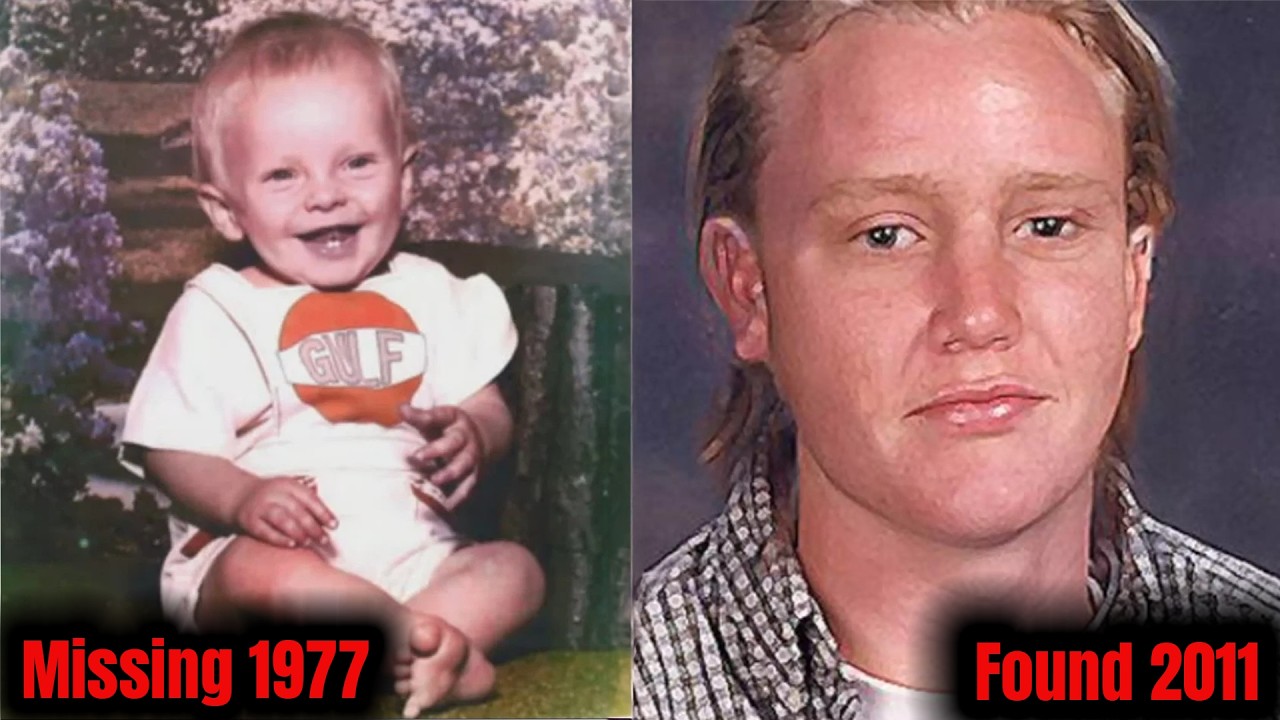
was born on January 16, 1977, in Hawaii, under the name Tenzen Amia. Adopted at four years old, he was plagued by questions about his real parents. One ordinary workday in Philadelphia, scrolling through news on his phone during lunch, a headline caught his attention. It told the story of Carlina White, an infant taken from a medical facility by a woman dressed in nursing attire.
Carlina grew up believing her kidnapper was her biological mother, unaware she was on the missing persons list. Decades later, she managed to solve her own case with the help of the National Center for Missing and Exploited Children. Steven had always been told he’d been abandoned and sent to an orphanage. In 1980, Steve Carter Sr.
, an army officer stationed in Hawaii, and his wife visited the orphanage and adopted three-year-old Tenzen. They were told he was half native Hawaiian, despite his golden blonde hair, pale skin, and dark blue eyes. They renamed him Steven Carter Jr. and moved to an upscale area in New Jersey.
His adoptive parents were open about his adoption, but as he grew older, questions arose that they couldn’t answer. In his thirties, a simple DNA test kit gifted on Christmas revealed he had Scandinavian heritage and zero trace of Hawaiian roots. Then he stumbled across the news piece about Carlina White, filled with dread that his own story might be similar. His curiosity got the better of him.
Looking through the missing persons database, he searched his original birth name, Tenzen Amia, but no records existed. When he punched in his real birth date, a name came up: Mark Panama Barnes. An artist’s rendition of what Mark would look like thirty years later resembled Steven so much it was almost like looking in a mirror. The Honolulu Police Department received his call, and only a DNA test could uncover the truth.
Eight months later, the results shattered Steven’s worldview. His real name was Mark Panama Barnes. The day he went missing, his birth mother, Charlotte, had been caught trespassing. She claimed her name was Jane Amia and that her son’s name was Tenzen, lying about his birth date.
Charlotte was admitted to a psychiatric ward. Six-month-old Tenzen was taken from her and sent to an orphanage. When Charlotte got out of the hospital, she never came looking for her son and vanished into thin air. The case was solved by its own victim.
Steven had solved one of the longest missing persons cases in American history. He reunited with his half-sister Jennifer, who had pushed to reopen the case in 2001, and with his father Mark, who was ecstatic to meet his long-lost son. As for his biological mother, she was never seen or heard from again. In 1991, Vasile Gorgos, a 63-year-old farmer in eastern Romania, informed his family he was going on a brief business venture to trade cattle.
He embarked by train, as he had countless times before, but this time he didn’t come back. His family immediately called the police, who found no evidence of a crime. The case grew cold. Three decades later, on August 29, 2021, a car stopped in front of Vasile’s family home.
A 93-year-old man emerged, confused and disoriented. It was Vasile. He was wearing the exact same attire he had worn when he disappeared, and his original train ticket was still in his pocket. The driver never left the car and sped away immediately, with neighbors failing to notice the license plate.
Vasile was determined to be in great health, but the past thirty years remained a complete blank in his memory. In late 2004, an unconscious man was found naked behind a Burger King dumpster in Richmond Hill, Georgia. He was swarmed by fire ants and appeared to be suffering from amnesia, unable to recall his name. He had no ID.
The man, dubbed the Burger King John Doe, managed to recall that his name was Benjamin and chose the last name Kyle. He had suffered repeated blows to the head. For the next decade, he pursued any fragment of his past. He recalled residing in Indianapolis and attending the University of Colorado, with a birthday of August 29, 1948.
Diagnosed with retrograde amnesia in 2007, his DNA and fingerprints produced no matches. In 2015, a genealogical match emerged. His real name was William Burgess Powell, a 67-year-old Indiana native born on the exact date he had recalled. He had two brothers, and Powell had gone missing in 1976.
His family had assumed he was dead. In 1976, Gabriel Naggie and his wife Pamela arrived in Sydney, Australia, with dreams of a perfect life. They had two children, Stefan and Jennifer. Gabriel, overwhelmed by the sudden responsibilities of family life, struggled.
On January 21, 1987, he called his wife saying he would be home for lunch. He never arrived. Two weeks later, the charred remains of his car were found. Investigators discovered he had withdrawn cash and purchased camping equipment in Newcastle.
Despite a manhunt, Gabriel was never found. More than two decades later, as a coroner prepared to declare him dead, a document revealed that a person with the same name had undergone eye surgery. The medical records belonged to a man named Ron Sanders, who lived in Mackay, nearly 3,000 miles away. When detectives reached him, Ron explained he didn’t recall much of the last two decades.
He had wandered aimlessly, living on the streets, until he found refuge at the River of Life Church. Shown photographs and letters from his family, memories began to rush back. He recalled buying camping equipment in Newcastle. He had crawled out of his wrecked car and aimlessly wandered for two decades.
He had adopted the name Ron Saunders after finding a beach that drew him in. After a flood of memories returned, he realized his real name was Gabriel Naggie. He was reunited with his overjoyed family and remained in constant touch with them. On a sunny day in 1977, nineteen-year-old Harold Wayne Lovell left his Chicago home for Aurora, Illinois, seeking an opportunity in the construction industry.
He never returned. His family feared the worst when news of John Wayne Gacy’s crimes came to light. Wayne disappeared during a period when Gacy was active, and detectives had found a piece of jewelry on an unidentified victim that Wayne’s mother said belonged to him. A composite sketch of a Gacy victim strongly resembled Wayne.
But DNA testing wasn’t widely available at the time, and the case went cold for nearly 34 years. In 2011, investigators requested DNA samples from families whose male relatives went missing in the late ’70s. When the results came in, none of the victims matched Wayne’s genetic profile. His family turned to the internet and discovered an online police booking photo of Harold Wayne Lovell, now 53 and residing in South Florida.
Despite three decades having passed, they immediately recognized him. Detectives located him. It turned out that in 1977, Wayne had run off after a heated spat with his stepfather, with just over $56 in his pocket. Recalling his sister’s tales of warm Florida, he bought a ticket and traveled there, spending 33 years working in ship building and landscaping.
He had no idea his family believed he had fallen prey to Gacy. Tragically, his mother died in 2001 without ever learning the truth. In 1984, Petra Pisa was a 24-year-old computer science student in Braunschweig, Germany. On July 26, she had a routine dentist appointment and was expected to join her family for her younger brother’s birthday celebration.
She never showed up. Her trail went cold at a lonely bus stop. Three years later, a convicted murderer claimed he had killed her and disposed of her body in a river, though her remains were never found. Petra was declared legally dead.
In September 2015, during a routine police investigation into a reported robbery, a 55-year-old woman with no official documents contacted police. She identified herself as Mrs. Schneider, but when pressed for documents, she revealed she was Petra Pisa. She admitted to orchestrating her own disappearance, meticulously planning and saving money for months.
She had been living in solitude for three decades, moving from place to place and financing her life through undisclosed illicit means. Authorities refrained from pressing charges. Petra refused to reconnect with her family or talk to the media, and her motives remain shrouded in secrecy. She still resides in Dorf, now using her real name.
Tanya Ryder and her husband Tom were a young couple juggling multiple jobs to make their dream of owning a home a reality. On September 20, 2007, Tanya finished a night shift at a supermarket in Maple Valley, Washington, and set off for home. Exhausted, her car drifted off the road and plunged into a 20-foot-deep ravine. She regained consciousness suspended upside down, wedged against the steering wheel, with fractured ribs and a numb leg.
Tom called the police when he couldn’t reach her, but the operator refused his request to file a missing persons report, saying she wasn’t at risk or a minor. Tom persisted until one operator agreed. For days, Tanya drifted in and out of consciousness, her phone always displaying Tom’s name. After being ruled out as a suspect through a polygraph, investigators tracked her cell phone signal to a tower along Highway 169.
A ground search found her in just 20 minutes. Tanya had been trapped for eight days, starved and severely dehydrated. She was airlifted to a hospital with severe injuries. She survived against all odds.
Tom never lost hope, trusting his unwavering belief in his wife. Michelle Whitaker was born on August 16, 1969, into a family of seven. When she turned 15, the family relocated to Gastonia, North Carolina. Clashes with her mother became regular, and Michelle rebelled.
After a short-lived marriage, she moved to Spartanburg, South Carolina, where she struggled as a part-time waitress. One fateful evening, a man named David offered her a ride home and brutally beat her, leaving her face battered. He was sentenced to eight years in prison. Michelle’s life spiraled into uncertainty and depression.
After an argument with her mother on August 5, 2002, she stormed out. She was reported missing on August 21. Police investigated, but leads went cold. In August 2005, an anonymous letter claimed to know where her body lay, but the search found nothing, and it was deemed a hoax.
Another suspect, Jonathan Vick, was convicted of kidnapping and murdering a local salon owner, but no concrete evidence connected him to Michelle. In August 2008, a shocking phone call revealed Michelle was alive and residing in Oregon. She had been living with mutual friends of the caller, who recognized her from a TV show and Michelle’s mother’s web page. When confronted, Michelle confirmed her identity, and a fingerprint test verified it.
She confessed she had grown weary of her nomadic life. After the argument with her mother, she had roamed from place to place, eventually making her way through Las Vegas and California to Oregon. She had been using her real name, oblivious to the frantic search. She expressed deep remorse and has since strengthened her bond with her family.
In 1984, Petra Pisa’s story remains a mystery. In 1976, Gabriel Naggie’s story had a happy reunion. In 2007, Tanya Ryder survived eight days in a ravine. These cases, spanning decades and continents, share a common thread: the inexplicable nature of human disappearance and the enduring hope of those left behind.
Some ended in reunion, others in tragedy, and many remain unsolved.