The Special Reconnaissance Regiment exists for a reason that almost nobody outside the intelligence community understands. Most people remember the famous special forces raids, the helicopters, the breach, the gunfight. But by the time a helicopter lands, by the time the assault force moves on a target, the most important work has already been done. That work belongs to the unit that barely anyone has heard of and that its own country rarely acknowledges.
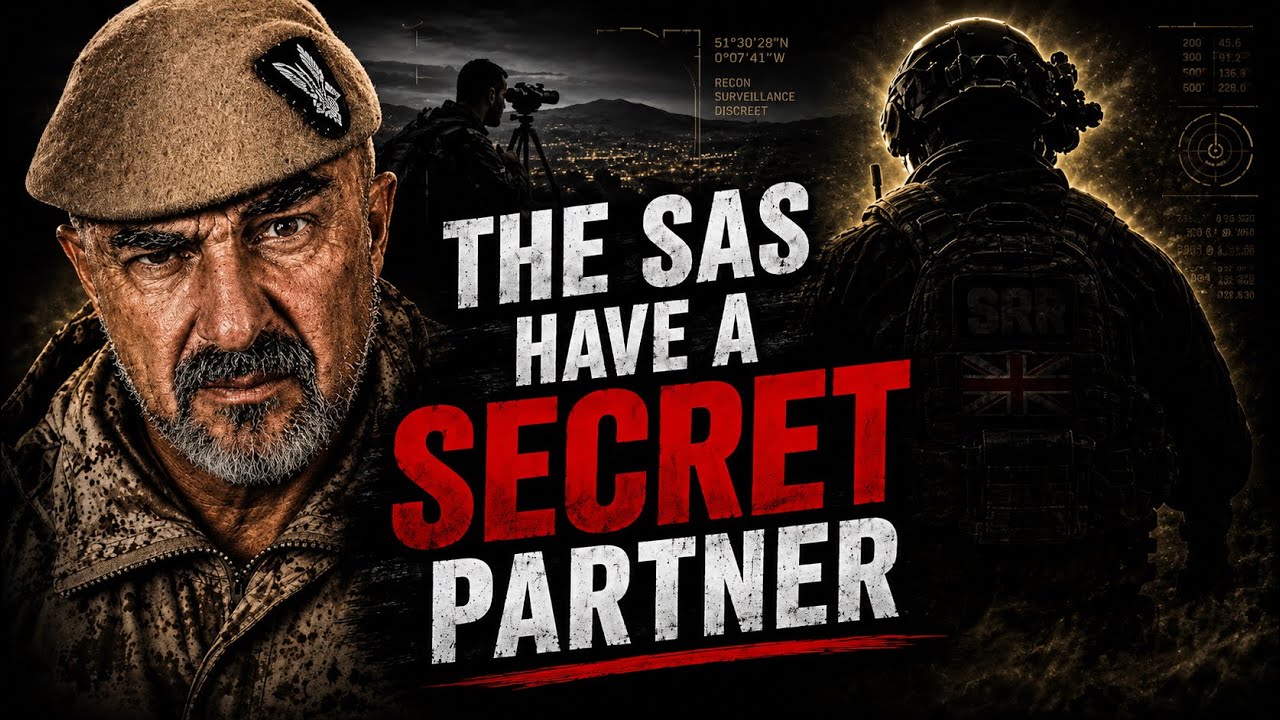
The Special Reconnaissance Regiment, or SRR, is one of the most secretive military units in Britain, and its job is not storming rooms. Its job is making sure those rooms are the right rooms. When people recall Operation Barras, the 2000 hostage rescue in Sierra Leone, they remember the helicopters and the firefight. They remember the assault on the West Side Boys.
What they do not remember is the long unnoticed effort that made the assault possible. Before anyone pulled a trigger, someone had to find the target, watch it, understand it, and tell the assault force exactly what they were walking into. That kind of work rarely appears in films. It takes days, sometimes weeks.
It is slow, uncomfortable, and painstaking. But without it, no amount of courage can save a mission, because courage does not replace intelligence. It only supports it. That need for quiet, dedicated surveillance is precisely why the Special Reconnaissance Regiment was created.
After the attacks of September 11, 2001, Western militaries were forced to rethink what war actually looked like. The battlefield was no longer two armies facing each other across open ground. The enemy had disappeared into cities, moved across borders, blended into ordinary life. An enemy who hides among civilians is harder to find than to fight.
Finding him became the central problem. Britain already had deep experience in covert surveillance, much of it developed during the troubles in Northern Ireland. Units like 14 Intelligence Company, known simply as the Det, spent years perfecting observation and tracking skills under difficult conditions. They watched, followed, and gathered intelligence without being detected.
That expertise did not disappear. It evolved. In 2005, the Special Reconnaissance Regiment was formally established, not because Britain wanted another special forces regiment, but because it needed a dedicated reconnaissance capability for a new kind of conflict. What the SRR actually does can be understood from its name.
Reconnaissance means finding the target. It means confirming who the enemy is, where they live, who they meet, how they move. If intelligence points to a terrorist cell operating somewhere in a major city, the first question is not whether to send in special forces. The first question is whether the right people have been identified at all.
If that identification is wrong, everything that follows is wrong. There is no second chance in intelligence work. Hollywood gets this almost entirely backward. Films favor explosions, firefights, helicopters, and rope descents.
The reality is that special operations are often extremely boring, and that boredom is a compliment. Success sometimes means spending twelve hours watching a single entrance. Sometimes it means following a person without being noticed. Sometimes it means going home without making an arrest, without firing a shot, without anyone ever knowing the operation happened, because something more valuable than a gunfight was gained.
Information. The source of that information is human judgment. Technology provides data, but skilled operators turn data into intelligence, and the gap between the two is enormous. Drones, artificial intelligence, cyber operations, foreign intelligence agencies, organized crime, terrorism, the actions of hostile states, all of it is becoming more complex.
Yet machines cannot replace the human ability to read behavior, understand situations, build relationships, and recognize when something is wrong. That is why reconnaissance will not become obsolete. It only becomes more valuable. There is a common question about whether the SRR is a second-tier unit compared to the SAS or the SBS.
The question itself misses the point. The obsession with tier-one, tier-two, elite, or super-elite labels is an internet invention. The real world does not work that way. Each capability exists for a reason.
The SAS has its role, the SBS has its role, and the SRR has its role. Comparing them is like asking whether a surgeon is better than an anesthetist. They are different functions. Neither can do the other’s job, and neither can succeed without the other.
Modern special forces operate as a team, with different capabilities working together. The SRR’s importance is only growing. Not because Britain wants more wars, but for the opposite reason. If threats can be understood earlier, if intelligence can be built more effectively, and if partners can be worked with more closely, some crises may never become wars at all.
And if that happens, the public will never hear about it. Success in reconnaissance rarely makes headlines. Nobody publishes a story saying that nothing happened today. But sometimes, nothing happening is exactly the success.
When people ask what makes special forces operations successful, they expect answers like courage, daring, firepower, and speed. Sometimes that is true. But more often, the answer is preparation, discipline, and patience. By the time an assault force moves, the hard work is complete.
The target is identified, the intelligence is confirmed, the risks are understood. The assault makes the headline. The reconnaissance wins the mission.
That is why the Special Reconnaissance Regiment, though almost unknown to the public, may be one of the most important units Britain has ever created.