In May 1945, Germany surrendered. Within five years, as many as 9,000 Nazi war criminals and collaborators had vanished from Europe. They did not hide in forests or bunkers. They escaped through secret routes called rat lines, run by bishops, bankers, spies, and presidents, carrying forged Red Cross papers and Swiss money.
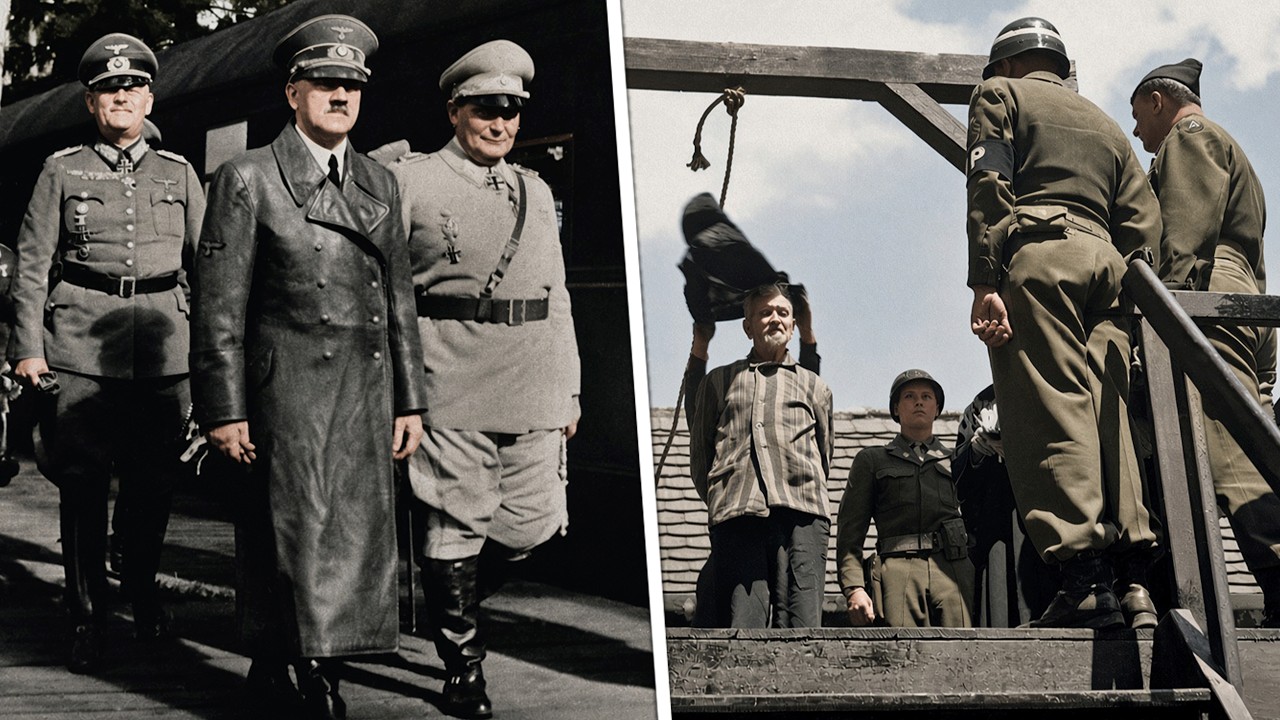
Some were even shielded by Washington. In 2025, a dozen forgotten boxes in Buenos Aires began revealing how deep it all went. The escape system took shape even before the war ended. In 1942, Cardinal Luigi Maglione, the Vatican Secretary of State, reportedly acting at the request of Pope Pius XII, contacted an Argentine ambassador in the city of Rome.
His question was whether Argentina would quickly accept European Catholic immigrants and allow them to live and work there. Around the same time, a German priest named Anton Weber traveled to Portugal, intending to reach Argentina, apparently to prepare the ground. By 1944, the first organized escape activity was centered in Francoist Spain, where some Catholic figures saw the Nazis as allies against a shared enemy, communism. Among the main organizers were Charles Leca, a French member of the far-right movement Action Française, and Pierre Daye, a Belgian with contacts inside the Spanish government.
That same year, a separate network formed in the far north. SS Major Alaric Bros built it from Nazis and pro-German Finns meant for an armed resistance against a Soviet occupation that never came. Instead, it became a smuggling operation. Safe houses operated under the cover of a company called the Great Fishing Cooperative, supported by a maritime transport crew of 50 to 70 men.
Boats carried passengers to secret loading bays near the Swedish town of Härnösand, while others crossed overland over the Torne River. From there, Swedish safe houses opened the way into Europe. Hundreds were helped in Sweden, and hundreds more were taken to Germany by boat after Finland broke with Germany in September 1944. In 1946, Finnish industrialist Peter Forström was convicted of treason for his part, which included buying motorboats for fleeing Nazis.
By 1946, hundreds of war criminals were living in Spain along with thousands of former Nazis and fascists. US Secretary of State James F. Byrnes complained that the Vatican’s cooperation in handing such people over had been negligible. Then the route to Argentina opened.
On January 18, 1946, Antonio Caggiano, the Argentine churchman who had helped the first escapees out of Spain, flew to Rome to be made a cardinal by Pope Pius XII. Soon after, he urged the Argentine consul in Rome to stamp tourist visas into the passports of eight Frenchmen, three of them confirmed war criminals, even though they lacked return tickets and health certificates. On May 28, 1946, the first documented French war criminal reached Buenos Aires. He was aircraft designer Émile Dewoitine, who had sailed first class alongside Caggiano.
Two years later, France sentenced him in absentia to 20 years of hard labor. By then, he was far beyond its reach. The most sophisticated route of all ran through the heart of Rome. One of the most important figures in the escape system wore the robes of a Catholic bishop.
Alois Hudal was an Austrian churchman and an open Nazi sympathizer. He served as rector of Santa Maria dell’Anima, a seminary for German and Austrian priests. In December 1944, the Allies allowed the Vatican to appoint a representative to visit German-speaking civilian internees held in Italy. The job went to Hudal.
After the war, that role opened the gates of camps across the country. Hudal used it to help some of Europe’s most wanted men disappear. Among them were Franz Stangl, commandant of the Treblinka extermination camp; Gustav Wagner, a commander at Sobibor; Alois Brunner; Dr. Erich Priebke, responsible for the Ardeatine massacre in Rome; and Adolf Eichmann, a chief organizer of the Holocaust.
The key document was a travel pass issued by the Rome office of the International Committee of the Red Cross, known as a laissez-passer. It allowed refugees to leave Italy, and South American countries accepted it as a passport. The papers were supposed to be signed for in person, but blank forms were within Hudal’s reach, and in a number of cases the Red Cross official’s signature was forged. In 1948, Hudal went further, writing directly to Argentine President Juan Perón to request 5,000 visas for fleeing Germans and Austrians.
Elsewhere in Rome, a second network operated with even greater precision. At the San Girolamo degli Illirici Seminary, a group of Croatian priests led by Father Krunoslav Draganović ran a rat line with links into Austria and an exit at the port of Genoa. It was built first for the Croatian fascist movement and its leader, Ante Pavelić. Father Vilim Cecelja, once deputy military vicar to the Ustasha, set up a Croatian Red Cross branch in Austria and used it to hand out new identities around Salzburg.
Father Dominik Mandić used his contacts in the Italian secret police to make the network’s identity cards pass as official. When passengers were ready, Draganović phoned Monsignor Karlo Petranović in Genoa with the number of berths needed on ships to South America. At the end of many of these lines, the same country was waiting. Argentina’s leaders had been making secret deals with Nazi Germany since 1943.
In May of that year, SS intelligence chief Walter Schellenberg secured a secret agreement with the Argentine military. Under its terms, Nazis would be protected from arrest in Argentina, and the two regimes would exchange sealed diplomatic pouches. The following month, Argentine nationalists staged a coup. It opened the path for a colonel named Juan Perón to rise to power.
Wealth looted from Holocaust victims was being deposited in a Reichsbank account under a false name, Max Heiliger. By 1944, it held millions of Reichsmarks. SS commando Otto Skorzeny helped move money out of the account, reportedly placing it in the name of Perón’s future wife, Eva. In 1946, Perón won the presidency, helped by campaign contributions from Nazi collaborators that Ludwig Freude had coordinated.
Perón appointed Santiago Peralta, an openly anti-Semitic anthropologist, as his immigration commissioner. Freude’s son, Rolf, became head of the country’s first intelligence bureau. Together, the two men smoothed the path to citizenship for European war criminals. Perón’s government worked directly with Draganović’s rat line in Rome.
It also spent at least one million Swiss francs, around $21. 5 million today, running additional routes through Scandinavia and Switzerland. As many as 5,000 Nazi war criminals escaped to Argentina, some as late as 1950. Perón made no secret of it.
He later said he had helped as many Nazi officials as he could because he considered the Nuremberg trials a disgrace. Argentina was not the only government helping wanted men escape. Another was the country that had helped defeat Hitler. By 1947, the Second World War had given way to the Cold War.
For American intelligence officers in occupied Austria, the most urgent enemy was no longer Nazi Germany. It was the Soviet Union. In mid-1947, the US Army instructed the 430th CIC detachment in Austria to use Draganović’s network in Rome to move people out of the country. The order covered people who had been in CIC custody and whose presence in the American zone had become both a security threat and a potential embarrassment because the Soviets had learned they were there and in some cases demanded their return.
Draganović handled everything once passengers reached Rome. He obtained Italian and South American documents, visas, and stamps. He did not work for free. According to the CIC, the priest charged $500 per child, $1,000 per adult, and $1,400 for a very important person.
Months earlier, an American agent had described Draganović’s seminary as a nest of Ustasha cells. Now the US Army was using it. The most notorious passenger was Klaus Barbie. As Gestapo chief in the French city of Lyon, he had earned the name the Butcher of Lyon.
From April 1947, the 430th CIC in Austria protected him. In return, Barbie gave the Americans information on the French occupation zone in Germany, the German Communist Party, and former SS officers. The American operation was given a code name: Operation Rat Line. In 1950, rumors spread that Barbie had worked for American intelligence in Germany, and France demanded his extradition.
The State Department claimed Barbie could not be found in the American zone of Austria. By 1951, he had been sent down Draganović’s route through Rome. He settled in Bolivia, where he lived for 33 years before his arrest. The CIC is estimated to have helped around 70 Soviet defectors and informants escape to South America through the same system.
For years, most of the fugitives lived undisturbed. That changed in 1960. Adolf Eichmann had been living in Argentina for a decade when he was captured and taken to Israel to stand trial. On June 1, 1962, he was executed.
No hiding place was completely safe. Josef Mengele, the SS doctor known as the Angel of Death, grew careless. He had entered Argentina in 1949 under a false name. But in the mid-1950s, he took back his real surname to marry his brother’s widow in Uruguay.
In 1959, he even applied for a passport under his own name at the West German embassy in Buenos Aires. That same year, West Germany requested his extradition. It failed. By 1960, Mengele had slipped into Paraguay.
He was never caught. He drowned in Brazil in 1979 after suffering a stroke, and his remains were not confirmed until DNA analysis in 1992. The 1980s and 1990s brought a new wave of arrests. In 1983, Bolivia sent Klaus Barbie to France, where he died in prison in 1991.
Andrija Artuković, an Ustasha official who had entered the United States as a tourist around 1948, was arrested in 1984 and extradited to Yugoslavia, where he died in prison. In 1994, Erich Priebke was arrested in Argentina 50 years after the Ardeatine massacre. He died in 2013 aged 100 under house arrest in Rome. Four years after Priebke’s arrest, Argentina caught Dinko Šakić, a former Ustasha official.
Extradited to Croatia, he was sentenced to 20 years in prison for war crimes and crimes against humanity. Many were never brought to justice. Alois Brunner vanished into Syria and may have lived until 2010. Walter Rauff fled to Ecuador and then Chile, where he was shielded by dictator Augusto Pinochet until his death in 1984.
The paper trail behind the fugitives was only beginning to surface. In 1992, Argentina declassified a large file on the Nazis who had escaped to its shores. A few years later, President Carlos Menem created a commission to investigate the country’s Nazi past. Its first report in 1998 claimed Argentina had received only 150 to 180 Nazi criminals.
The Simon Wiesenthal Center dismissed that figure as far too low, and it also pointed out that the report said nothing about Nazi gold allegedly deposited in Argentina’s central bank. The money trail led back to Switzerland. Beginning in 2020, the Simon Wiesenthal Center and businessman Ronald Lauder pressed UBS, the bank that now owns Credit Suisse, to reopen an investigation into accounts tied to the Nazis. In 2024, former federal prosecutor Neil Barofsky reported that he had found client documents showing a significant connection between Credit Suisse and one of the key escape routes.
The evidence concerned money needed to run the rat line, including bribes, false identity papers, and transportation. The investigation found some 890 Credit Suisse accounts used by Nazis. Argentine authorities had paid European officials around $22 million in today’s money to keep the routes running. Argentina was opening its own archives.
In April 2025, the government of President Javier Milei published 1,850 documents online. Reports on the files suggested the Nazis may have bribed Perón’s government with $200 million in gold, some of it allegedly delivered by boat. That same month, Argentina’s Supreme Court made an unexpected discovery. In its own archives, it found a dozen forgotten boxes.
They held thousands of Nazi party membership documents along with propaganda, passports, postcards, and photographs. By December 2025, around 6,000 documents were being restored and digitized for possible legal action and public access. The Buenos Aires Holocaust Museum was set to analyze part of the collection. The men who ran the rat lines are gone.
The bishops, the priests, the bankers, and the fugitives themselves have all passed into history. But the records they tried to bury have outlived them in bank vaults, court archives, and intelligence files. Eighty years after the war, the escape is still being traced.