In the winter of 1922, within the high walls of Beijing’s Forbidden City, the last emperor of China chose a bride. Puyi, just sixteen years old, was presented with photographs of five noble young women. He selected Wan Rong, the daughter of a former minister and one of the wealthiest men in China. It was a decision that bound an independent, artistic young woman to a life of imperial ritual she did not want, and set her on a path toward addiction, captivity, and ruin.
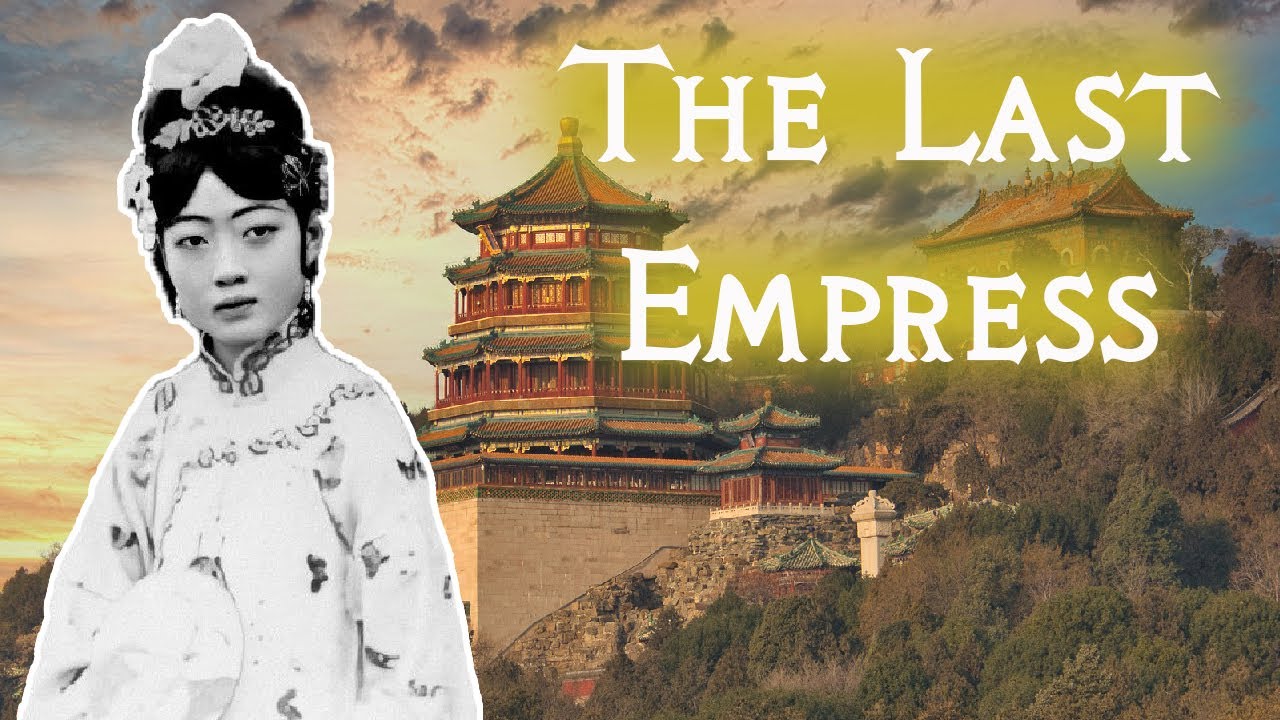
Wan Rong was born on November 13, 1906, into the Gobulo clan of the plain white banner, part of the upper class of Manchurian society. Her name meant “beautiful countenance. ” Her father, Rong Yuan, served as a minister for domestic affairs in the Qing government and was among China’s wealthiest individuals. Tragedy marked her earliest years.
Her mother, Hengxin, died from childbed fever shortly after giving birth. Wan Rong and her brother Ronglian were thereafter raised largely by their stepmother, Hengxiang, who also brought a son, Renqi, into the household. Her father was unusually progressive for the era and insisted that his daughter receive the same education as her brothers. Wan Rong was taught in Tianjin by an American missionary teacher, Isabel Ingram, who introduced her to the English language, to piano, and to painting.
Her childhood unfolded against a collapse of the Qing dynasty. From 1644 the Qing had ruled China, but by the nineteenth century European powers were forcing the empire open, and Britain had effectively turned China into a vast market for Indian opium. Japan’s rapid westernization and Russia’s expanding influence pressed China from the outside while internal unrest grew within. In 1908, just two years after Wan Rong’s birth, the Guangxu Emperor died and was succeeded by his two-year-old nephew, Puyi.
In October 1911 the Wuchang Uprising spread across fourteen of China’s fifteen provinces. Within weeks, the Qing dynasty was forced to abdicate, and the Republic of China was proclaimed. The infant emperor lost his throne, but the former imperial family was allowed to keep their titles and privileges. By 1922, Puyi was permitted to marry within the confines of the Forbidden City.
Wan Rong was the same age as the former emperor, and after considerable discussion among the palace elders, she was chosen from among the five candidates. The wedding took place on November 30, 1922. Wan Rong reportedly hesitated at the prospect of the marriage. She was a woman of independent mind, who enjoyed poetry, painting, and Western culture, and who had no desire to be confined within archaic palace traditions.
The marriage quickly soured. The couple had no children and for long periods barely engaged with one another. When famine struck China in 1923, Wan Rong donated a substantial sum to relief efforts and earned praise in the international press. But her remedy for an unhappy marriage was opium, which she began smoking perhaps to ease headaches and anxiety.
Her usage soon became habitual. In October 1924 the worsening civil war reached Beijing. Army commander Feng Yuxiang seized power and ordered the former emperor and his household expelled from the Forbidden City. They left the palace that night.
After a period in temporary quarters, they settled in Tianjin on the Yellow Sea coast. There, for a time, they adopted Westernized names, Henry and Elizabeth, and lived in a measure of harmony. Wan Rong’s addiction, however, continued to deteriorate. Her life changed drastically in September 1931 when the imperial Japanese army, exploiting China’s endless internal wars, invaded Manchuria, Wan Rong’s ancestral homeland.
Japan had controlled Korea since 1910 and now intended to absorb Manchuria into its empire. The military campaign was swift. By February 1932 Japan controlled the region, but instead of annexing it directly, the Japanese authorities decided to install a puppet regime. They approached Puyi and named him head of the new state of Manchukuo.
Early in 1934, Puyi and Wan Rong had their titles elevated, becoming emperor and empress of Manchukuo. Life behind the facade of imperial rule was one of close supervision. The Japanese authorities monitored and controlled the movements of the puppet emperor and empress. Puyi became a devout Buddhist, spending much of his time in meditation and reading.
Wan Rong turned to dogs, to dressmaking, and increasingly to opium, reportedly smoking two ounces per day. During an extended stay in Japan she carried on several affairs. One of them produced an illegitimate daughter. When the Japanese authorities learned that the child was not of pure Manchu blood, a decision was made to kill the infant despite Wan Rong’s pleas.
In the aftermath, her opium use increased further. She began to act erratically in the palace, binge eating and often appearing unsuitably at official functions. Contemporary records note that her father found it difficult even to visit her. The world was shown an emperor and empress, but behind closed doors their lives were collapsing.
The end came through forces far larger than their own. In 1939 war broke out in Europe. In late 1941 Japan attacked Pearl Harbor and found itself at war with the United States, Britain, France, and the Soviet Union. Japan was initially victorious but was pushed back steadily in the Pacific from 1943 onward.
The final blow came in August 1945. The United States dropped atomic bombs on Hiroshima and Nagasaki, and the Soviet Union invaded Manchukuo. Puyi fled, leaving Wan Rong behind. Now began the last desperate period of her life.
Early in 1946, while attempting to escape across the border to Korea, she was captured by the Chinese communists, who were seizing power across China in the postwar period. In the following months she was moved between several prisons in Jilin Province. Cut off from any supply of opium, she suffered severe withdrawal, accompanied by hallucinations and physical decline. Her condition worsened rapidly, and on June 20, 1946, at the age of thirty-nine, the first wife of the last emperor of China died from withdrawal and malnutrition.
Her body was never recovered. She was memorialized with the title Empress Xiaokemin, and the monument dedicated to her near Beijing remains a purely ceremonial tomb, since her remains are not interred there. Puyi was himself arrested shortly afterward and spent ten years in prison under the Chinese communists. He married four more times and published an autobiography in 1964.
That memoir later became the basis for Bernardo Bertolucci’s film The Last Emperor, which won nine Academy Awards in 1987 and carried the story of Puyi and Wan Rong into the wider world. The empress who had never wanted to marry into the palace ended her life in a communist prison cell, remembered less for the tragedy of her reign than for the ruin that surrounded it.