In January 1993, a recording that had sat unheard for more than two years finally reached the editors of two national newspapers. It had been captured in December 1989 by a radio scanner operator who intercepted a private mobile telephone call, at a time before digital encryption made such interception impossible. The caller had no idea she was being recorded, and the man on the other end of the line had no idea either. When the transcript ran across 41 paragraphs simultaneously in both papers on January 17th, it did more than expose a relationship that had been rumored for years.
It exposed the elaborate machinery of concealment that one woman had spent more than two decades building around herself, and the quiet, sustained cost of maintaining it. The woman was Camilla Parker Bowles, and the story that January morning dismantled had begun long before anyone knew her name. She was born Camilla Rosemary Shand on July 17th, 1947, at King’s College Hospital in London, the daughter of Major Bruce Shand, a decorated military officer and wine merchant whose social world ran through the cavalry regiments and country houses of southern England. Her maternal grandmother, Alice Keppel, had been the acknowledged companion of King Edward VII across the final years of his life, and the Keppel inheritance was not financial but behavioral: an understanding, absorbed early, of how proximity to power worked and what it cost.
Camilla was not academically driven, but she was socially brilliant and fearless on horseback, qualities that would serve her far longer than examination results. After finishing her education in Paris, she returned to London in 1966, fluent in French and entirely at ease in the circles she moved through. Around 1970 or 1971, at a polo match at Smith’s Lawn in Windsor Great Park, she met Andrew Parker Bowles, six years her senior, a captain in the Blues and Royals. The courtship was neither straightforward nor quick.
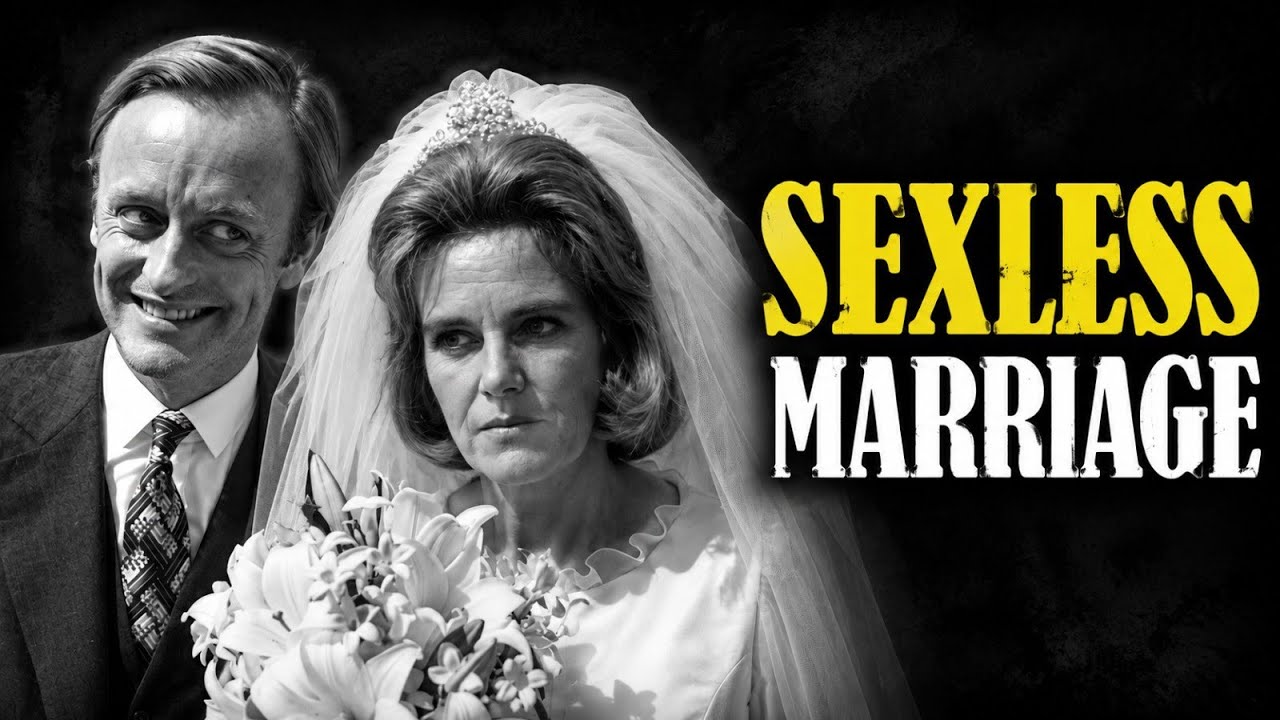
It was interrupted by his documented relationship with Princess Anne, by military postings, and by the particular uncertainty of two people wanting different things from the same connection. They married on July 4th, 1973, at the Guards’ Chapel in Wellington Barracks. The guest register was distinguished, the photographs show a young woman in a short-sleeved white gown with a contained smile, but the household waiting for her behind the gates of Bolehyde Manor, the Georgian property near Allington in Wiltshire that would become her primary residence for over two decades, had already been shaped by forces she had not been consulted about. Andrew Parker Bowles was a serving officer.
His schedule was the army schedule, and his absences were not domestic inconveniences but military requirements that could pull him to Northern Ireland, Germany, and New Zealand, sometimes for months without interruption. Bolehyde Manor itself contained one detail that appeared minor in the household inventory and mattered considerably in everything that followed: a telephone mounted directly on the exposed stone wall of the entrance hall, audible from the staircase above and from the sitting room to the left. No privacy, no alcove. Anyone in the house could hear both sides of any call made from that position.
She would spend 22 years making telephone calls from that wall. By 1974, a renewed connection between Camilla and the Prince of Wales, which had first registered around 1971 through mutual introductions at a polo gathering, had been noticed within the overlapping household staffs and shared social geographies where information was the primary currency and discretion was selectively applied. The evidence that she understood she was being watched is behavioral rather than textual. Those who visited Bolehyde in the mid-1970s recalled that she was careful in a way that did not announce itself as caution: warm in rooms, fluent in conversation, but brief on the telephone in the hall.
Her correspondence, which she produced in considerable volume, was organized in a way that separated the general from the personal with a deliberateness that was not administrative habit. Two categories of letters, kept separately from at least the middle of the decade. This required a continuous daily discipline maintained across a household with a housekeeper, a groom, and a nanny, ensuring that certain papers never occupied the same drawer as others. It was not the behavior of a woman who believed herself unobserved.
Thomas Parker Bowles arrived in December 1974, and Laura in January 1978. Two children in four years, while Andrew’s postings took him to Northern Ireland at the height of the Troubles and then to Germany and New Zealand. The letters Camilla sent during those absences have been described by those who read them as warm, precise, and entirely undemonstrative about the conditions she was managing. She was running a large property, raising two children with a part-time nanny, maintaining a social calendar that served as both genuine connection and protective cover, and routing her private correspondence through channels that kept it insulated from general circulation.
Across this same period, Andrew Parker Bowles maintained a parallel social life whose contours were visible enough within their shared world to be a matter of common knowledge. His relationships outside the household with Georgiana Russell and earlier with Princess Anne were absorbed by their circle in the language available to people of their background. The arrangement was described as modern, adult, mutual. None of those words described what it cost her.
The documented record does not preserve that cost, because she did not put it in accessible letters. What it preserves instead is the groom’s recollection that she began in the late 1970s going out to the far paddock in the early mornings, before the household woke, before the nanny came downstairs. Hooves on frost-hardened ground. No one watching.
By 1979, the social volume at Bolehyde had contracted in ways the record registers as absence rather than presence: fewer invitations accepted, fewer recorded visitors, outgoing correspondence reduced in frequency. A note sent from Bolehyde in late 1978 was referenced in a biographer’s private annotation as evidence that she already knew her outgoing correspondence was being read by someone before it reached its intended recipient. The note itself has never been produced. In February 1981, the engagement of the Prince of Wales to Lady Diana Spencer was announced from Buckingham Palace.
Camilla Parker Bowles was among those who had known it was coming, and she had time to prepare. What the preparation looked like from the outside was indistinguishable from her ordinary behavior: she attended functions, appeared at county events, smiled where smiling was required. But those who observed her in the weeks surrounding the announcement recalled something specific. She had reduced her surface area.
She spoke less. She moved through rooms with a new economy of presence, as if she had made a calculation about how much of herself to make visible and arrived at a number considerably smaller than before. The volume of contact between Camilla and the Prince of Wales was substantially reduced during the engagement period, not through any written directive, but through the self-enforcing architecture of their situation. She did not fight it.
There is no document suggesting protest. She went back to Bolehyde, rode, managed the household. A note described by a biographical source as very short and very careful left Bolehyde in the spring of 1981. No copy has entered the public record, and the recipient never confirmed its contents.
Highgrove House, purchased by the Prince of Wales in 1980, sat approximately 12 miles from Bolehyde by road. In a social world organized around hunting fixtures and families who had known each other across two generations, that was not a significant distance. The Beaufort Hunt was the structural mechanism. Its memberships assembled from exactly the social geography both households occupied, and the large, moving occasions offered the entirely natural possibility of a private word in a field corner without it requiring notation.
But the letters moving between Gloucestershire and Wiltshire during these years were not about hunting schedules. Multiple biographical accounts describe correspondence from this period as intimate in register and deliberately routed outside ordinary household channels. By 1986, the household at Bolehyde had arrived at the particular English condition of mutual acknowledgment without declaration. Andrew Parker Bowles was conducting a sustained relationship with Rosemary Pitman, confirmed in research and in the testimony of those within their immediate social circle.
Camilla knew. She absorbed it with the same composure she had applied to everything else at Bolehyde since 1973. There is not a single surviving document in which she registered complaint. Then came the recording.
The radio scanner that captured the conversation between Camilla Parker Bowles and the Prince of Wales in December 1989 ran for several minutes, intimate and explicit in the register of two people who believed they were speaking privately. Whoever made it held it for two years before it reached the editors of the Sunday Mirror and the People, and Camilla did not know it existed. On January 17th, 1993, both newspapers published the transcript simultaneously. The passages made unmistakably clear the nature and texture of a connection sustained across more than 15 years of managed distances, separate households, careful routing, and early mornings in a far Wiltshire paddock.
None of it had been enough, not because she had made errors, but because the technology she could not have anticipated had made her caution irrelevant. The scanner did not care how carefully she had organized her correspondence since 1975. It simply listened. The photographs taken outside a health club in Kensington in the weeks following the transcript’s publication show a woman attempting to steer a car through a physical wall of photographers.
Her face in those images shows the expression of someone whose interior has been made entirely exterior. Every system of compartmentalization she had been running since the mid-1970s had been exposed simultaneously, through a car window she could not roll up fast enough. She was 45 years old. For 20 years, she had organized her life around a single operational principle: the management of visibility.
Now the exterior was total, and it was coming at her through a camera lens from three feet away. Andrew and Camilla Parker Bowles separated formally in 1993, and the decree absolute was granted on January 3rd, 1995. The financial terms were not disclosed, and the proceedings moved with the brevity of two people who had been living by mutual adjustment well outside any original framework for years. She left Bolehyde for Middlewick House near Corsham in Wiltshire, which sat behind a line of mature trees on a lane that offered a degree of physical insulation from public roads.
She took her horses, her dogs, and a reduced household staff. The establishment contracted to match the actual dimensions of her life. Thomas was 20. Laura was 17.
Thomas Parker Bowles would spend the following two decades describing his mother in interviews with a consistency that is itself revealing: funny, direct, warm, constitutionally allergic to self-pity. At Middlewick, she rebuilt the structure of her daily life around her own preferences for the first time: early mornings, the stables before the household woke, the same rhythm she had used at Bolehyde, but now chosen rather than necessary. The kitchen became the center of her social life, with small dinners and conversations that ran past midnight with the tight circle whose connection to her predated all of the public history. When Jonathan Dimbleby’s authorized biography of the Prince of Wales, published in October 1994, addressed the relationship with Camilla in terms that surprised even those who had expected candor, Camilla watched the accompanying television interview.
People who were with her that evening confirmed to biographers that her immediate response was a silence, and then a practical question about what was being served for dinner. Not performance, not deflection. Reflex. The end product of 20 years of learning to keep her internal weather entirely off her visible face.
August 31st, 1997. Diana, Princess of Wales, died in the Pont de l’Alma tunnel in Paris. Camilla Parker Bowles maintained absolute public silence through the weeks that followed, not strategic silence, but the only possible silence given what that period required. The years between 1997 and 1999 at Middlewick were the quietest in her documented adult life.
A handwritten note circulated among close friends in autumn 1996 asked that correspondence be directed to an address different from the one listed in the county directory. No biographer has identified where it pointed. January 28th, 1999. The Ritz Hotel on Piccadilly.
A 50th birthday gathering for Camilla’s sister, Annabel Elliot. The event had been coordinated across households and advisers for months, and the photographers assembled outside in numbers suggesting the advance notice was not accidental. She came out in a navy jacket into the cold January air, dozens of cameras firing, her chin lifted at a specific angle, composed, prepared. A woman who had spent 26 years learning to make herself unreadable through a Wiltshire manor house, a monitored telephone on a stone wall, a far paddock in the frost, two categories of letters, a radio scanner she never knew existed, and a transcript published across 41 paragraphs while she was still inside the structure it destroyed, producing for the cameras exactly the expression she chose to produce.
The systems she had built at Bolehyde, the discretion, the compartmentalization, the ability to occupy a room fully while keeping her interior entirely to herself, did not fail her outside the Ritz. They were the only thing that got her there. The telephone on the stone wall in the entrance hall of Bolehyde Manor is still there, and the house still stands. The current owners have no reason to think about who once stood at that wall.
She moved on into the next chapter of her life, and carried nothing that showed.