Two mothers built the place so their own disabled children would be safe. It became the place that made certain no more children like theirs were ever born. Roughly 5,500 people were sterilized here, cataloged, and buried without a stone. Behind an old metal gate in Soma Valley, California, 1,400 people lie in unmarked ground.
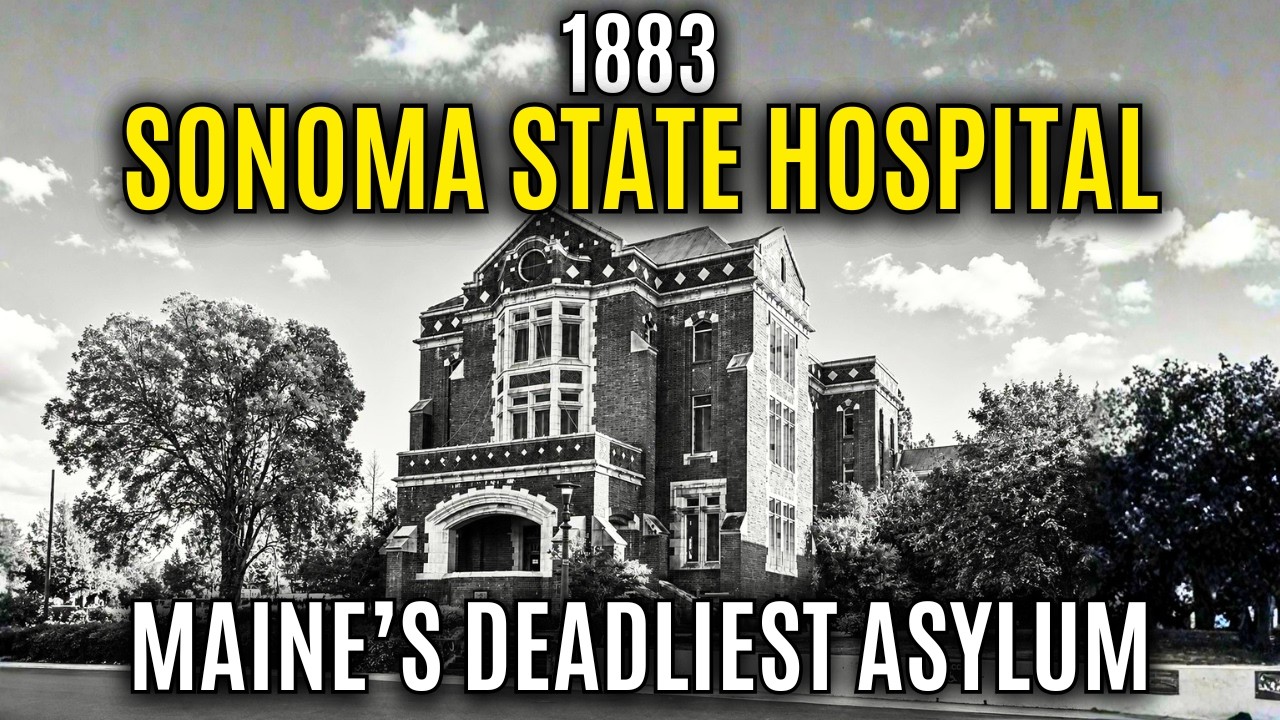
The story does not begin in 1909. It begins in 1883, when California had fewer than a million people and nowhere at all to put a disabled child. The nearest institution of its kind was 2,000 miles away in Iowa. Two women in San Francisco, Francis Bentley and Julia Judah, each had a child who needed more than they could manage at home.
They formed the California Association for the Care and Training of Feeble-minded Children, and wrote down its purpose: a school and asylum where such children might be trained to usefulness. The first home opened in May 1884 at White Sulfur Springs near Vallejo. The record describes it as beset by problems. It moved to a park in Alameda County, then the state took it over in 1885 and placed it on a 51-acre lot in Santa Clara.
That site was built to handle 20 residents. The law said it would take children aged 5 to 18 who were, in the statute’s own words, incapable of receiving instruction in the common schools. The record of those first homes is administrative ledgers and appropriations. No inspection report, no grand jury finding, no reformer’s account of what it was like inside.
The documentation is incomplete. What the record does prove is arithmetic. A state of nearly a million people had 20 beds, and the archives note only that the facilities proved inadequate. The legislature appointed a commission and appropriated $170,000 to buy land and build something permanent.
One of the commissioners was a retired sea captain named Oliver Eldridge. The town that grew up around the new institution took his name and still carries it. They chose Soma Valley for the reasons people still choose it: space, water, and distance. The superintendent writing in 1891 described orchards and vineyards below the building and foothills sweeping off in curves.
The air, he wrote, is ever mild. He called what the state had given these children an almost ideal reclusiveness, which is institutional language for out of sight. In 1889 the state bought a hill farm outside Glen Ellen, 1,660 acres for $50,000. Construction started the following year, and on the 24th of November 1891, 148 children arrived from Santa Clara on a specially hired Southern Pacific train.
A band was playing at the stop. The campus was laid out on the Kirkbride model, the leading asylum architecture of the century, which put every resident under a single long roof with farms and gardens attached. The theory was that light, air, and work were the treatment. As the numbers climbed, the state abandoned that plan for the cottage plan: small buildings scattered widely across the acreage.
It looked gentler. It meant they could fit more people in. The building that survives from the first years, Red Brick, still stands today and was placed on the National Register of Historic Places on the 6th of October 2000. Eventually there were two reservoirs, a water treatment plant, a farm, and a dairy.
Eldridge had its own zip code. The institution was not in the town. The institution was the town. The plan was a school.
It was not. Within 30 years of the doors opening, that refuge would be running the most aggressive sterilization program of any single institution in the world. Neither woman lived to see what her letters had built. In 1902, Governor Henry Gage ordered an investigation into Superintendent Dr.
William Lawler, who stood accused of cruel treatment of the patients in his care, children among them. The San Francisco Examiner covered it on the 8th of July and again on the 9th under a headline about a horrifying tale. The Chronicle followed on the 25th. What became of the investigation is not on the record that remains.
To understand what happened later in the operating room, you first have to understand the filing system. Everyone admitted to Soma was sorted. The case files used three main categories, clinical terms at the time: idiot, imbecile, and moron, the last split further into high and low grade. Placement on that ladder came from an intelligence test.
Those tests could be ordered by a probation officer, a social worker, or a school teacher, and they were administered in English to children whose families frequently did not speak it. That is the whole machine: a test in the wrong language and a word written on a card. Residents ranged in age from newborn to 102. In 1918, an influenza outbreak killed dozens of them, and the exact toll was never published.
The California State Archives holds 139 volumes from this institution covering 1884 to 1966. Almost none of it has been digitized. What survived is the research. A captive population is convenient.
In October of 1952, the local paper reported a live polio vaccine trial on 61 boys and girls who drank it in a glass of chocolate milk and treated it, the paper said, as an extra treat. The article stated that the parents gave permission. Between 1955 and 1960, children here were given irradiated milk and spinal taps from which, in the language of the later investigation, they received no direct benefit. In those same years, the brain of every child with cerebral palsy who died at Soma State Hospital was removed and studied without asking anyone.
A member of the presidential commission that examined American radiation experiments described what those researchers saw when they looked at these children: raw material. Now the numbers climb. 148 residents in 1891, about 450 by 1900 with hundreds more on a waiting list, 541 by 1904 with a staff of 70, already the largest employer in Soma County. By 1958 there were 3,200 residents and 1,300 staff.
By the 75th anniversary in 1966, the state’s own count put it at roughly 3,500 residents and 1,800 staff. Sources disagree on the true peak: 3,200, 3,500, or 3,700, depending on which state document you open. Take the lowest figure. From 148 to 3,200 is a 22-fold increase on a campus that never grew a single acre.
The buildings multiplied instead. The pressure came from the courts. Juvenile judges across California sent children they labeled defective delinquents, and the institution could not refuse them. A waiting list ran past a thousand names.
In 1909, California became the third state in the country to legalize compulsory sterilization. The statute was called the Asexualization Act, a word that was deliberate: it was broad enough to permit castration or the removal of a woman’s ovaries, not merely the tying of tubes. It passed the assembly unanimously with a single senator voting against. Governor James Gillett signed it, and it was strengthened in 1913 and again in 1917.
Here is the part that matters. The law permitted. It never required. Under that same statute, Soma’s Superintendent William Dawson performed either none at all or 12 operations in nearly a decade, depending on which account you trust.
Napa and Mendocino, working under the identical law, sterilized at a fraction of Soma’s rate. Then Dawson died in 1918, and his senior intern took the chair. Fred Butler raised sterilization at his first board meeting. Asked half a century later what he had wanted, he said the first thing was plenty of water because they were short of water.
The second was to start the program. Consider what it meant by 1935, the year you are 16. You ran away with a boyfriend. A probation officer gives you a test in a language your mother does not speak, and you score badly.
A judge commits you to Soma State Home. On arrival you are examined, and a doctor writes down the condition of your genitals. That was routine. Of 82 women admitted between January of 1918 and August of 1919, exactly half were recorded as having abnormal genitals.
22 were marked enlarged, which the medicine of the day read as a sign of overstimulation. A study of this institution found that nearly half the women inside had been classed as sexually delinquent. Three percent were accused of any actual crime. Then you are offered the arrangement.
You can stay on the work farm indefinitely, or you can sign, have the operation, and go home in a few weeks. Most people signed. About a quarter of the girls sterilized here were sent in for that purpose alone, kept only long enough in the surgeon’s own phrase to operate and instill a little discipline, and then returned. Every one of those requests needed approval from the state director of institutions.
A researcher who read them has said she has never seen a case where one of those officials said no. The youngest person recommended for sterilization at Soma was 7 years old. The oldest was 67. Women with Spanish surnames were 59 percent more likely to be recommended than other women.
Men with Spanish surnames, 23 percent more. Between 1919 and 1952, Soma processed 5,465 sterilization requests. Other state sources put the total closer to 5,530. That is one operation every 2.
2 days for 33 years. More than a quarter of every sterilization California performed happened on this one campus. Had Eldridge been a state of its own, it would have ranked fourth in the nation. In 2,984 of those operations on women, five of them died on the table.
Butler published that in a medical journal in 1951 and converted it into a figure: a loss of life expectation of 31 days per operation. That is what a human life came to, expressed as an average. In 1930 he told a professional journal that in his opinion they were not sterilizing fast enough. What stopped this was not what you would expect.
It was not the liberation of the camps; roughly a thousand more people were sterilized here after the war ended. It was not the Nuremberg code of 1947. It was not public outrage, because there was very little. What ended it was a line on a form.
In 1951, following litigation brought by a family named Garcia, California amended the law to require the authorization of the patient themselves. The documentation on that case is thin, but the surgeries collapsed almost immediately, and by 1952 the program was effectively finished. The law itself stood for another 27 years. Some of the people are known.
Rose Zavala was committed after a brother-in-law found her difficult to manage. She died on the operating table in 1939, a few days short of her 17th birthday. Her niece keeps her portrait on a piano in Hayward. Ruiz was 16 and fought.
She was sterilized on the 15th of June 1930. That November she sued for $150,000, naming Butler, three probation officers, and the judge who sent her. The local paper reported that despite her protests and outcries, she was forced into the operating room. What happened to her lawsuit is not on the record.
Juan Romero was a teenager from San Francisco. His father refused consent and went to a city health officer for help. That officer wrote to Butler in 1931 describing the father as an ignorant, unintelligent Spanish man who could not be convinced of the value of the operation. Butler applied anyway.
The state approved. Lucy Rodriguez was widowed in 1939 with nine children and no income. The state committed her, and she was sterilized on the 26th of May, one week after she arrived. Her file recorded an intelligence quotient of 41 and the words high imbecile.
A neighbor who knew her later remembered a woman who cooked like an angel and smelled of carnations. Mark Dal Molin arrived in 1958 aged three with cerebral palsy. He died in 1961. His sister spent 12 years looking for what happened to him and found two autopsy reports: one for his body, one for his brain.
This is the point in one of these stories where the reformer usually appears. Soma does not have one. The nearest thing is William Dawson, the superintendent who barely sterilized anybody. His reason was not mercy.
Dawson worried that sterilizing the women would remove the consequences and make them promiscuous. That is the man history has left us as the counterweight. And he trained the man who replaced him. Marian Rose White was 9 years old when her father died and her mother handed her to the state.
Sources give her age as 9 or 13. Her disability was mild. Contemporary accounts keep returning to her eyesight, which was very poor. She was sterilized at Soma.
There is no date in the record, no surgeon’s name, no consent form. She spent almost her entire life on this campus. She made dolls, dozens of them, possibly hundreds, oversized and splashed with color, sewn through entire nights with her face inches from the fabric behind thick glasses. A psychiatric technician who worked here for 20 years and became her closest friend has her own reading of the dolls: Marian wanted children and could not have them, and so she made them.
Marian loved Liberace and named her dog Bebe Liberace. She died in 2003. Follow the money and this place looks for most of its life like a farm. There was a dairy, apple and pear orchards, gardens, and what the state described as other industries providing work and food.
Residents tended the trees and helped care for the smaller children. An institution that documented the shape of a teenager’s genitals did not leave behind an accessible record of what it paid the people who picked its fruit. That absence is its own answer. What we do have is Butler’s arithmetic.
In a 1951 medical paper, he weighed the cost of the surgery against the cost of the child. A salpingectomy, he wrote, costs less than $150 and carries 31 days of mortality. Two vasectomies cost $50 and carry none. Either will probably prevent the birth of about nine-tenths of one feeble-minded child.
The net public health value of the procedure, he concluded, is obvious. $150. That was the price of the whole calculation. By 1966, this was the largest employer in Soma County, roughly 1,800 people.
Half a century later, with the population collapsed to under 400, it still employed 135 and was the largest employer in the valley. By 2015, the state was spending an average of $500,000 a year per resident and asking the legislature for $515 million to run three such centers. Two years earlier it had surrendered federal certification on four units, forfeiting $13 million a year. The state has paid the county $3.
5 million just to plan the site’s future. The current proposal for the core campus is 990 homes, 130,000 square feet of commercial space, and a 150-room hotel. Jack London wrote about this place. He lived a few miles away in Glen Ellen.
In 1914 he published a story narrated from inside an institution like this one by a young man who calls himself a high-grade feeb and says he prefers it in here. In 1982, CBS made a television film about Marian Rose White. Every synopsis of it still in circulation says the same thing: state law required the sterilization of all inmates. It did not.
The 1909 act permitted sterilization at the discretion of the superintendent, and Dawson used that discretion to do almost nothing for nine years. Napa and Mendocino under the identical law barely used it. The variable was never the statute. It was a man who put sterilization second on his list after water.
The myth attached to this place is not supernatural. It is political. It goes like this: Sonoma taught the Nazis to sterilize. That claim is bigger than the record and smaller than the truth.
No German document names this institution. No delegation from Berlin walked these grounds, and no letters between Eldridge and Germany have been found. What crossed the Atlantic was a book. A survey of California’s institutions, with Soma State Hospital listed first among the places studied, was published in 1929.
Their foundation shipped it worldwide. In 1936, a researcher reported that German sterilization leaders said repeatedly that their law had been drafted only after careful study of the California experiment as reported. And in 1933, the year Germany passed that law, the busiest sterilizing institution in the busiest state in the world’s leading sterilizing nation was this one: 388 operations in 12 months. Soma did not write the German statute.
It supplied the proof that the volume was possible. Within a year the traffic had reversed, and praise of the German law was appearing in an American journal. The ending, when it came, was not about eugenics at all. In the 1990s, a teenage boy was found injured in a pool of blood in a shower here, and the class action that followed accelerated the emptying of California’s institutions.
In 1999, a man died of an overdose the coroner could not classify, and a woman died of toxic levels of opiates. That same year, the local paper found the facility was investigating itself; its investigators worked for the people they investigated, and staff were too afraid to report anything. By 2000, inspectors had issued at least 15 citations carrying $142,800 in penalties. Federal officials moved to cut $3 million a month.
In April of 2002, a 14-year-old named Nicholas Turley collapsed here and died 37 hours later with nearly twice the safe level of phenobarbital in his blood. The chief deputy coroner said they did not have enough to pin it on homicide, accident, suicide, or natural causes, so it was recorded as undetermined. The investigation closed. In 2005, a 25-year-old man with cerebral palsy died after swabs punctured his esophagus and aorta.
The autopsy stated he was very unlikely to have put them there himself. The center was fined $90,000. His name has never been published. In September of 2012, an anonymous voicemail said a staff member was attacking patients with a stun gun.
Investigators found marks on 12 people that a forensic pathologist called strongly suggestive of electrical thermal burns. One of those patients said the word stun and said his name. He was fired and never charged with the assaults. He pleaded no contest to carrying a loaded firearm and paid $190.
That December, the state moved to strip the license covering 290 residents and remove the executive director and the clinical director. In 2015, investigators tied 13 deaths across California’s centers to abuse and neglect since 2002. Soma had eight death-linked citations. The smallest was $1,000 for a resident with hypothermia who did not get treated in time.
That May, the governor announced the closure. The last resident left on the 17th of December, 2018, and the staff signed out at the end of the month. In September of 2021, a psychiatric technician carried Marian Rose White back onto this campus in a decorative box. She had kept the ashes in her garage in Petaluma for 18 years because there was nowhere else for them to go.
The address is 15000 Arnold Drive, Eldridge, California. The buildings are empty. Fire crews and police units practice inside them, and conservation corps crews cut the weeds back from the doorways. On the 1st of January, 2024, roughly 700 acres of the surrounding open space passed to California State Parks.
The developed core, 180 acres, is being sold. In August of 2026, more than 250 people gathered on the grounds to object. The memorial was dedicated in 2024: a viewing platform above the cemetery and granite panels carrying more than 1,400 names. Compare that to the alternatives.
Patton State Hospital, which sterilized about 4,500 people and came second only to this place, is still open and still taking patients. Pacific Colony, built in the south specifically to take Soma’s overflow, closed in 2015. Agnes News moved out its last resident in 2009. As for the reckoning, California set aside money for survivors, and 573 people applied.
118 were approved. Roughly three quarters were turned down. Of the first 51 approvals granted, 48 went to people sterilized in prisons. Three came from the department that ran this place.
They called it a school. They called it a home. They called it a hospital. They called it a developmental center.
They called it, in the end, surplus property. The brick is still there, red and square and unmoved at the end of an avenue of palms. Behind it, a field of long yellow grass with no headstones in it, because the headstones were taken away and the record does not agree on when or why. Two mothers built a place so their children would be safe.
What does a state owe the people it decided should not exist when it has already lost their files, removed their stones, and sold the ground they are lying under? The brick does not answer. It simply stays.