Gary Busey, born William Gary Busey in Goose Creek, Texas, on June 29, 1944, learned early that a man’s worth was measured by his physical presence. His father designed construction projects; his mother held the household together. The family later moved to Tulsa, Oklahoma, where a culture of toughness and utility shaped the boy into a football star at Nathan Hale High School. By graduation in 1962, he had a scholarship to Pittsburgh State University, but a severe knee injury ended his athletic ambitions.
The loss of the gridiron forced a pivot. He transferred to Oklahoma State, drifted into the drama department, and discovered that the stage offered the same adrenaline as the kickoff. He dropped out one credit shy of graduation, restless for a louder arena. The noise he chased was music.
Before he was an actor, Busey was a musician. He started as a drummer, playing in gritty bands like the Rubber Band, then Karp, who signed to Epic Records. He even drummed in an early iteration of the Carpenters before they became a soft-pop phenomenon. But his real schooling came from the Tulsa sound, a swampy blend of blues and country rock.
Under the stage name Teddy Jack Eddie, he played alongside Leon Russell, Willie Nelson, and Kris Kristofferson. That musical foundation taught him rhythm, listening, and the exchange of energy between performer and crowd. Hollywood, meanwhile, was shifting toward gritty anti-heroes in the early 1970s. Busey’s unpolished looks and manic intensity fit the new aesthetic.
He made his film debut in 1971 with a biker movie, then worked the character-actor circuit in shows like Gunsmoke and Bonanza. Small roles in The Last American Hero and Thunderbolt and Lightfoot put him in the company of Jeff Bridges and Clint Eastwood, where he learned the economy of acting, how to do more with less. But he still lived paycheck to paycheck, a recognizable face without a name. His champion arrived in 1976 when Barbra Streisand cast him as Bobby Ritchie, the road manager in A Star Is Born.
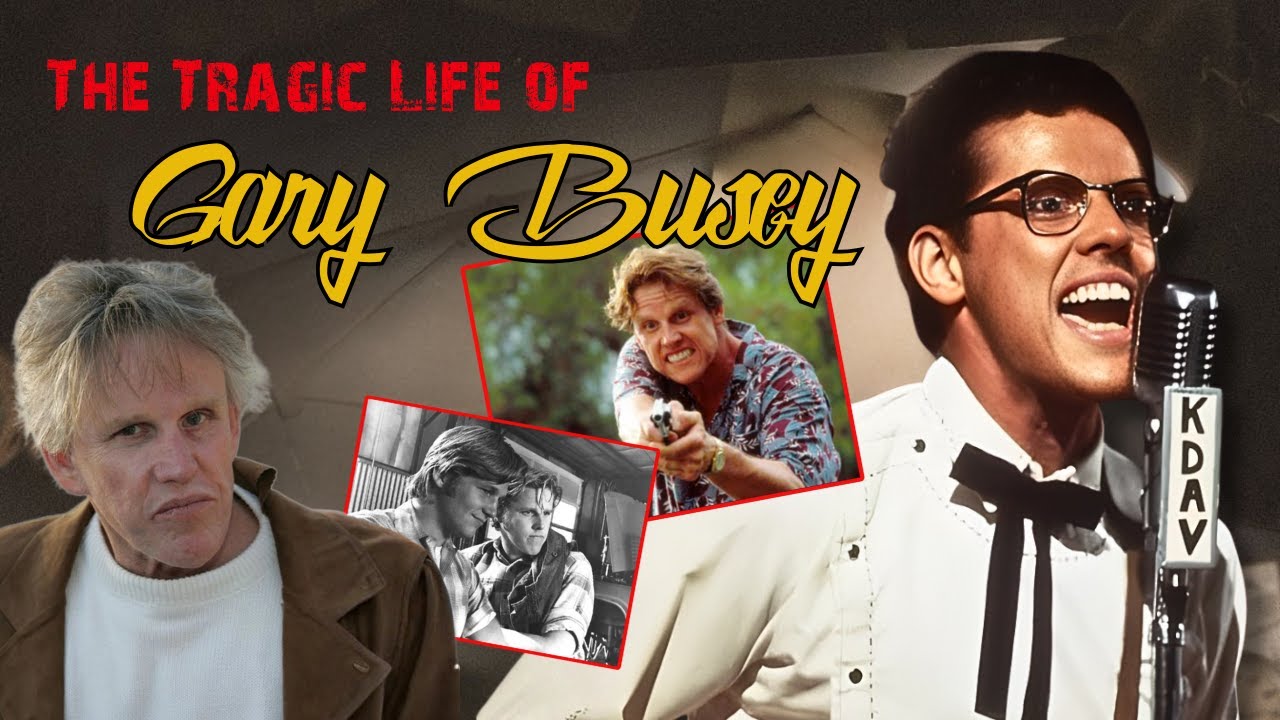
He knew that world intimately and brought texture to the role. The film was a massive financial success, and suddenly executives wanted to know who the blonde kid was. That question led to the role of a lifetime. In 1978, Hollywood was casting a biopic of Buddy Holly, the bespectacled rock pioneer who died in a 1959 plane crash.
Standard practice was to have an actor lip-sync to the original recordings. Busey refused. He insisted on singing every note and playing guitar live on camera. The studio hesitated, but he was relentless.
He dropped thirty pounds to match Holly’s gangly frame, adopted his Texas hiccup, and studied the master tapes until he could replicate every breath. When the cameras rolled, the performance was so convincing that critics and audiences alike felt Holly was in the room. The film earned rave reviews, Roger Ebert calling it one of the best rock movies ever made. Busey won Best Actor from the National Society of Film Critics, earned a Golden Globe nomination, and secured an Academy Award nomination.
At thirty-four, he stood at the summit of his career. The problem with playing an icon so perfectly is that the industry brands you by it. Busey fell into the biopic curse, struggling to be seen as anything other than Buddy Holly. He resisted the polished leading-man path, choosing instead jagged character roles.
In 1980’s Carney, he played a carnival insult artist, the antithesis of Holly. The intensity he brought to the part bled into his off-screen life, and the drug culture of the new decade pulled him into a storm of cocaine use. His filmography through the early 1980s became a scatter of cult classics and misfires, from Barbara to DC Cab to Silver Bullet. He worked steadily, but the prestige label faded, replaced by a reputation for being difficult and unpredictable.
Reinvention came in the form of Lethal Weapon in 1987. Director Richard Donner needed a villain who mirrored Mel Gibson’s chaotic hero, and Busey delivered Mr. Joshua as a chillingly calm professional soldier. In a now-famous improvised moment, he placed his forearm over a lighter flame and held it, unflinching, to demonstrate his character’s deadened soul.
The film was a juggernaut, and Busey was suddenly hotter than he had been in a decade. He wasn’t Buddy Holly anymore; he was the heavy, the man you called for danger. The success poured gasoline on his personal life. He moved through a haze of money and excess, feeling invincible.
Motorcycles had always been his escape, the only time his racing mind went quiet. He was a fixture at Bartell’s Harley-Davidson in Culver City, customizing bikes and arguing against helmet laws, believing in his own reflexes. On a Sunday in 1988, he picked up his bike from the shop and headed down Washington Boulevard. At an intersection, a car turned, or he maneuvered sharply to avoid a bus.
The exact choreography remains unclear, but the result does not. He was thrown from the motorcycle, helmetless, his head slamming against the curb. The impact crushed his skull and caused a subdural hematoma, bleeding between brain and skull. Rushed to Cedars-Sinai Medical Center, he underwent emergency surgery to relieve the pressure on his brain.
He hovered between life and death. Later, he described leaving his body, floating into a golden light, and choosing to return because his work was not done. Whether that was spiritual truth or a dying brain’s hallucination, the effect was real. He survived, but the man who opened his eyes was not the man who had revved his engine at that stoplight.
The damage to his frontal lobes was severe. Those regions govern executive function, planning, reasoning, and crucially, inhibition. The brake pedal was gone. He became more impulsive, prone to wild mood swings, and utterly free of social shame.
He looked the same, but his internal wiring had been scrambled. Hollywood, in its twisted logic, treated his lack of inhibition as a marketable asset rather than a medical crisis. Directors found that if they needed unhinged, they simply pointed the camera and let him go. In 1990, he stole scenes in Predator 2 as a government agent obsessed with the alien hunter.
In 1991’s Point Break, his explosive delivery of “You get me too” while holding two meatball subs became a genre legend. In 1992’s Under Siege, he played a psychopathic commander, reportedly improvising large chunks of his dialogue. From Lethal Weapon through The Firm and Drop Zone, he was the face of American intensity, making millions. But behind the scenes, the wheels were coming off.
The brain injury left him chasing a sense of normalcy his damaged mind could no longer produce. Cocaine, once recreational, became a biological imperative. His behavior on sets grew erratic, and the strange word associations known as Buseyisms crept into his daily speech. On May 4, 1995, alone in his Malibu home, he consumed a lethal cocktail of cocaine, psychedelic mushrooms, alcohol, and GHB.
His heart stopped. Paramedics revived him at Santa Monica Hospital. Later, he claimed he entered the spiritual realm again, surrounded by balls of light who told him he was on the wrong path. He woke with a profound terror and announced he was clean, declaring he had found Jesus.
He joined the Promise Keepers and began appearing on religious television, speaking of angels in the hospital room. The secular industry, which could handle addiction, had no idea what to do with a brain-damaged, born-again zealot. The big villain roles stopped coming. In 1997, doctors found a cancerous tumor in his sinus cavity, the size of a plum.
Invasive surgery and radiation left him gaunt and haunted. He had survived a crash, an overdose, and cancer, but his career was slipping away. In 2003, Comedy Central gave him a reality show called I’m with Busey, built entirely on the spectacle of his brain damage. A new generation saw not the Oscar-nominated artist but a living meme.
The mid-2000s brought reality television’s voyeurism, and Busey became a professional wildcard. In 2008, he joined Celebrity Rehab with Dr. Drew, where psychiatrist Dr. Charles Sophy publicly articulated what the public had not understood: the 1988 accident had destroyed his executive filters.
For the first time, many viewers saw him not as a joke but as a survivor of profound neurological trauma. In 2011, he was a chaotic disaster on Celebrity Apprentice, unable to follow linear logic, speaking in elaborate acronyms. The money, however, was not lasting. In 2012, he filed for Chapter 7 bankruptcy, listing assets under fifty thousand dollars against debts approaching a million, owed to lawyers, the IRS, and a storage facility.
Medical bills, divorces, and the financial mismanagement caused by his own condition had drained him. In 2014, he entered Celebrity Big Brother in the United Kingdom, where British audiences saw both his struggle and his gentleness. They voted to keep him week after week, and he won, the first American to do so, weeping at the redemption. In 2008, he met Stephanie Samson, a hypnotherapist who understood his unique frequency.
In 2010, at sixty-six, he became a father again. His son Luke became the center of his universe, and Busey spoke of wanting to live long enough to see the boy grow up. The redemption arc, however, was not the final chapter. Brain injury does not care about narratives.
In 2020, he starred in the bizarre Amazon series Gary Busey Pet Judge, a campy joke that reinforced his status as a caricature. He continued hustling at conventions for autograph fees. In August 2022, at Monster Mania Con in Cherry Hill, New Jersey, he was accused by multiple women of unwanted touching and inappropriate advances. Police charged him with two counts of fourth-degree criminal sexual contact, one count of attempted criminal sexual contact, and one count of harassment.
The lovable eccentric narrative shattered. In September 2023, a judge dismissed all charges because the accusers were no longer willing to participate in the proceedings. It was a legal victory but a moral gray area, with questions about his capacity and conduct left unanswered. William Gary Busey was, in the late 1970s, one of the finest actors of his generation, a vessel of pure talent who could make an audience believe he was a rock star.
His life remains a commentary on the fragility of the human instrument, how a single split second in 1988 fundamentally rewired a man. The talent is still there, buried beneath the noise. The engine still revs, but the steering wheel was sheared off decades ago. He survived addiction, cancer, and a cracked skull on the pavement of Washington Boulevard.
He is a brilliant musician, a fallen star, a beloved villain, and a troubled soul, all at once, still beating out a chaotic, impossible rhythm long after the rest of the band has gone home.