In war, women faced disadvantages that men did not, and the racial doctrines of Nazi Germany made that imbalance immeasurably worse. By dehumanizing entire populations, the regime instructed its soldiers to treat so-called non-humans without conscience, pity, or even discomfort. The consequences for women in occupied territories were brutal, systematic, and often fatal. The roots of this system stretched back to the nineteenth century, when German researchers studied the supposed connection between a soldier’s effectiveness in combat and his intimate satisfaction.
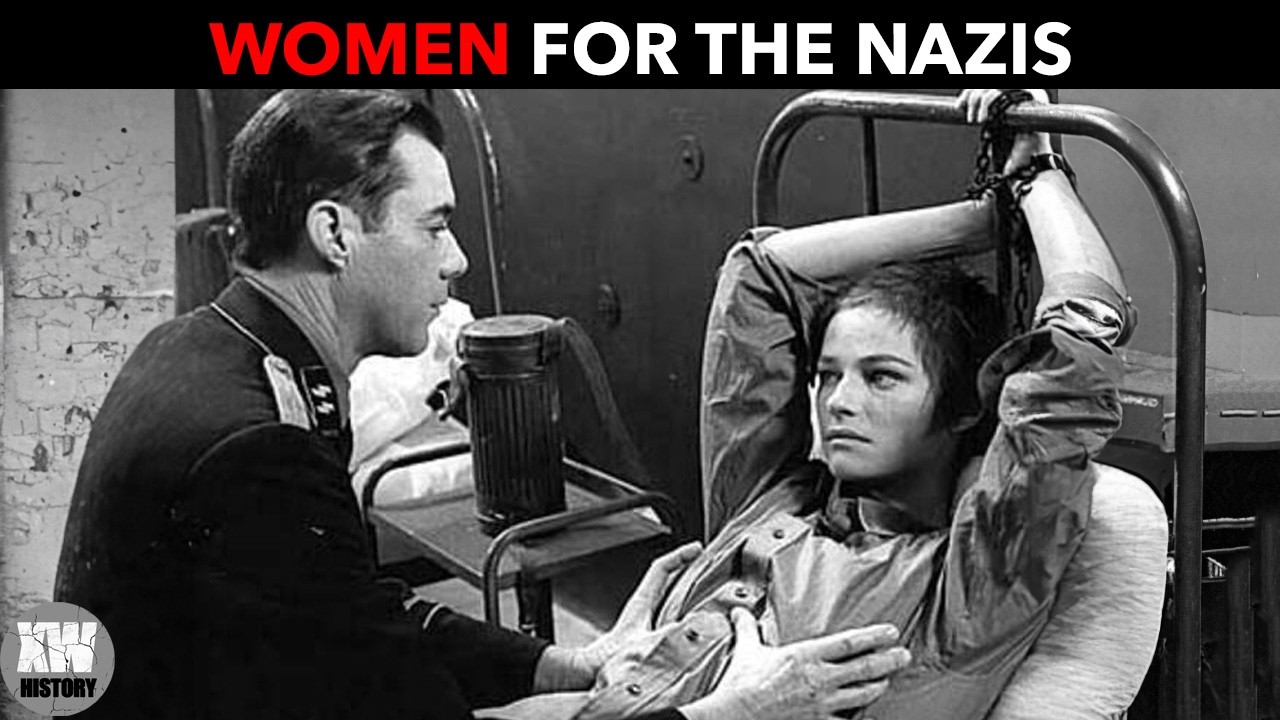
Military planners treated issues like the spread of venereal disease and the formation of “unhealthy” sexual preferences as serious frontline problems. Based on their findings, the Wehrmacht was to provide its men with regulated brothel services. Early establishments were staffed by German women under strict regulations, but the expanding German army quickly outgrew them. The brothels could not keep pace with the advancing troops.
Facing this shortage, the Nazis pragmatically turned to local girls in occupied territories. They attempted to run these operations hygienically, selecting residents according to physical criteria, ensuring they were adequately nourished, and monitoring their health. By 1942, there were roughly five hundred such establishments across German-occupied lands. In some places, women who had worked in Western and Central Europe before the occupation simply continued their services.
Those who failed to meet the required standards could be replaced, either willingly or by compulsion. In March 1942, the order came to establish institutions on occupied Soviet territory. In the city of Stalino, a brothel was set up in the Britain Hotel, staffed by a team of twenty-six people including management and technical personnel. In Koips and Narva, girls were forcibly brought from nearby villages to run the establishments.
Refusal to work or attempts to escape carried the penalty of execution. Still, there were never enough institutions to serve every soldier. Many followers of Hitler resorted to outright violence, or they forced desperate women into cohabitation through blackmail. Some women were threatened with persecution because a relative served at the front.
Others were threatened with deportation to Germany for forced labor. Still others were exploited through their poverty. Even when force was not directly applied, it was still rape. If the attacker was an SS man, the victim faced an additional danger: SS members were generally forbidden to associate with those they considered inferior, so the likelihood that the victim would be killed increased dramatically.
Soldiers and officers of the Wehrmacht were considered less bloodthirsty. Another method of compensating for the shortage was street prostitution without registration. The law required these women to register, yet many refused, even though unregistered prostitution carried severe punishment if they were caught. In Paris during the occupation, more than one hundred street women were involved in prostitution out of sheer necessity.
The SS selected the youngest and most attractive women from those sent to concentration camps for themselves. Army officers forced the mistresses of the houses where they were quartered to live with them. Pregnancies resulted from both consensual and non-consensual relationships. Women often sought abortions outside of medical facilities, and when children were born, they were frequently killed.
The writer Momm captured such a case in the novella The Unconquered in 1944. Some young women tried to protect themselves. To avoid being forcibly taken to brothels or harassed by Nazis, attractive girls deliberately neglected their hygiene, faked illnesses, and even resorted to self-harm, cutting and burning their faces to make themselves less desirable. Yet only victims of open violence received sympathy.
If a woman consented to live with the enemy, even when the choice appeared voluntary, she was scorned as a traitor. Neighbors could do terrible things to her. After the occupiers were expelled, such women were subjected to repression. In France, they were publicly beaten, had their heads shaved, and were tattooed with swastikas.
Intimate services were not all the Nazis wanted from the inhabitants of occupied lands. On conquered territory, the occupiers wanted to live comfortably, as their leaders had promised them. For that, they needed servants. If a Nazi was stationed in a house, its legitimate inhabitants were evicted to the basement, barn, or dugout.
But the women were obliged to continue running the household and fully serve the guests. An officer could call upon the young woman whose house he occupied to help him bathe. High-ranking officers and officials acquired a staff of servants. Labor exchanges were created for locals, sending them to work forcibly, and it was not easy for women to avoid such employment.
In the camps, guards recruited domestic slaves for themselves, both for intimate and regular services. If the women became annoying or failed to serve well, they were sent to the gas chambers. After the liberation of Belarus, a letter from fifteen-year-old Katya Suzana was found in the city of Loeva. The girl had been in the service of a high-ranking German family and intended to commit suicide because of the unbearable conditions.
There was also the separate issue of exporting women to Germany as “voluntary workers. ” Women were taken as forced labor somewhat more often than men, since prisoners of war were used for heavy manual labor. The exact number of these slaves is unknown, but estimates suggest that over the course of the war, a total of five million people were taken from the USSR and more than three million from Eastern Europe. Women made up slightly more than half of that number.
The age limit ranged from fourteen to thirty-five. But not all women were so intimidated, or so concerned about the fate of their relatives, that they endured all of this without protest. Many women’s names have been remembered in the history of the resistance movement across different countries. Yet fighting and protesting were neither easy nor enjoyable.
Women partisans walked under two swords at once. They could be exposed by the Nazis or misunderstood and condemned by their own friends and acquaintances. Sometimes, to fight the enemy effectively, they had to stay as close to them as possible, which looked like collaboration. Maria Bitsen, a Belarusian woman, was connected with the partisan detachment named after Katusha, but she legally lived and worked in the kitchen for the German military.
She was exposed, and during her arrest she witnessed the brutal beating of her two-year-old son. She was tortured and sent to a camp. Vera Aalen was taken to France as a child by her parents, white immigrants. During the war, this wealthy aristocrat established contact with the Free French organization, collected intelligence about the Atlantic Wall, and rescued captured Englishmen.
In December 1943, she was arrested. The woman was sentenced to death and executed by guillotine on August 4, 1944. Marina Shafirova was also an immigrant. She lived in Belgium, and after the occupation of the country, she immediately joined the resistance.
Marina had a radio receiver, translated summaries into French, and printed leaflets herself. On December 8, 1941, right on one of the squares of Brussels, she killed a Wehrmacht major with a knife when he tried to capture her. The authorities took hostages, promising to execute them if the culprit did not surrender. On the way to the commandant’s office, Marina again killed an army captain.
The Belgian Queen requested a pardon for the mother of two children, but Hitler rejected that request directly. Marina Shafirova was executed by guillotine on January 31, 1942. The German occupation system left women in conquered territories with few choices. They could submit, resist, or try to survive invisibly.
Each path carried the risk of violence, shame, or death. The women who joined the resistance knew that their own communities might condemn them as collaborators, and that the enemy might kill them as spies. Some escaped through suicide. Others were captured, tortured, and executed.
Their names survive in the records of the resistance, even when the systems that destroyed them were designed to leave no trace of their humanity.