In the summer of 1853, the slums of Glasgow were a world away from the city’s proud shipyards and grand cultural institutions. The Industrial Revolution had made Glasgow a powerhouse of trade and manufacturing, drawing thousands of people into its crowded tenements. For the working poor, life meant cramped rooms, shared walls, and the constant threat of disease. Cholera and other infections flourished in buildings without proper sanitation or clean water.
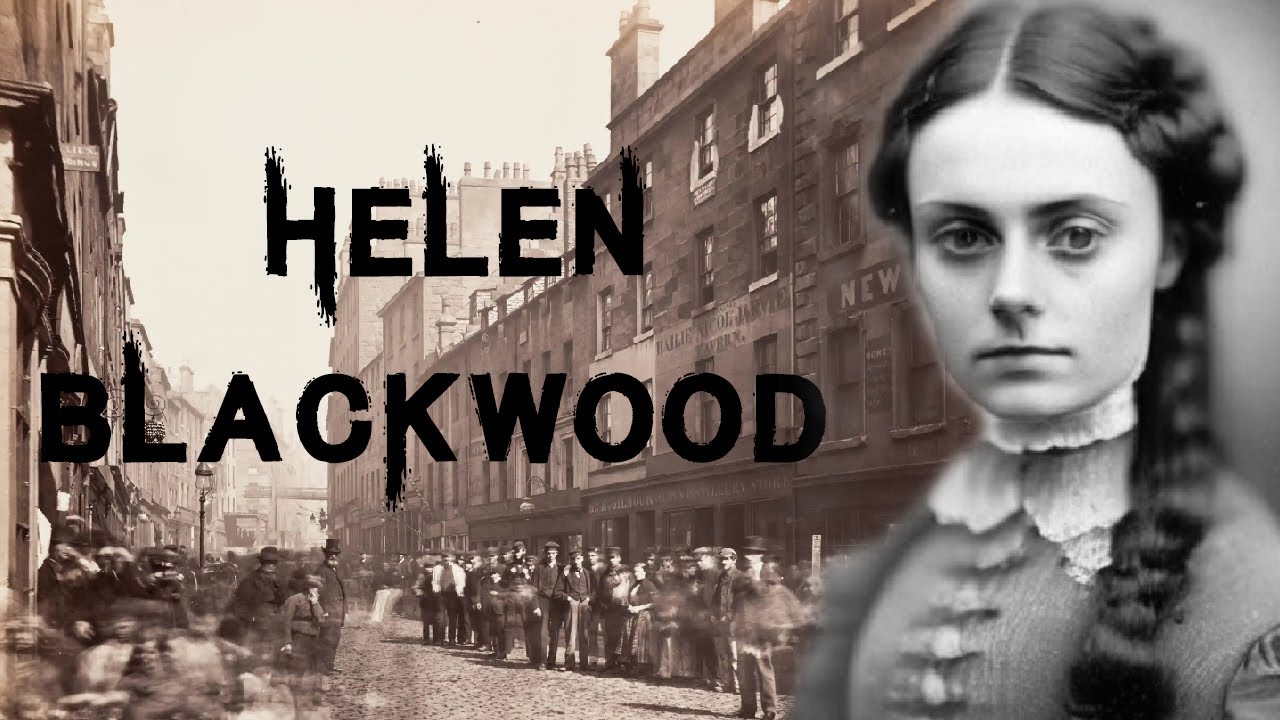
In such conditions, desperate people often turned to desperate measures. One such place was Crowley’s Lands, in the New Vennel area of the city, where a young woman named Helen Blackwood shared a single room with her lover, Hans Smith McFarland; two prostitutes, Mary Hamilton and Anne Marshall; and two young brothers, William and James Shillinglaw, aged eleven and nine. Their father was dead, and their mother lived in extreme poverty. Hans had taken pity on the boys and let them stay in the room, though it meant crowding an already small space even further.
Saturday, 11 June 1853, was a hot, sunny day in the middle of the Scottish summer. Mary Hamilton and Anne Marshall went into the city center to find clients, as they usually did on weekends. There they met two sailors from the Merchant Navy on leave, Alexander Boyd and James Law. Both men had been drinking heavily throughout the day.
The women joined them and suggested they return to the room in Crowley’s Lands, and the men, by now quite drunk, agreed. Mary Hamilton arrived first with James Law. Anne Marshall came a few minutes later with Alexander Boyd, who was so intoxicated he could barely take in his surroundings. Not long after, Helen Blackwood returned to the room with Hans Smith McFarland.
The atmosphere in the crowded space became tense. The two Shillinglaw boys lay tucked beneath Helen’s bed, their sleep disturbed by the noise. Sensing an opportunity, Helen took money from Alexander Boyd and went out to buy whiskey. When she came back, Mary put something into Boyd’s cup before pouring liquor from the newly acquired bottle into it.
The unsuspecting man drank it quickly. It only made his unsteady movements more erratic. He suddenly became aggressive, and in a drunken rage he swung a wild punch at Helen. It missed.
Helen Blackwood had grown up in harsh circumstances and knew how to defend herself. She grabbed the nearest object, a chamber pot, and struck Boyd over the head so hard the pot shattered. He fell to the floor, striking his head on a stone used as a stool. He lay there completely unconscious.
Helen wondered if he might already be dead. Instead of helping him, the group made a callous attempt to find money or valuables on his person. Helen and Anne stripped him down to his undergarments, finding little of worth. Then the evening took a strange and sudden turn.
For reasons the trial would never fully explain, Helen Blackwood, Hans Smith McFarland, and Anne Marshall decided to throw the man out of the window. They lived on the third floor. As Boyd dropped to the cobbles below, an eerie thud echoed around Crowley’s Lands. Realizing he was almost certainly dead, Helen rushed to the window and dramatically shouted that the man had gone to the window, fallen over, and died.
To reinforce the lie, she hastily discarded the shattered remnants of the chamber pot, making it look as though his death had been a tragic accident. The commotion drew neighbors to their windows and doors. A passing policeman responded to the disturbance, found the body on the cobbles, and ascertained that the man was dead. An investigation began.
Helen, Hans, Mary, and Anne fled the scene. Word spread quickly through the tight-knit community. Officers looked for witnesses, and local residents described what they had seen and heard. It was the two Shillinglaw boys, still concealed under Helen’s bed, who were able to tell the officers exactly what had happened.
They had been woken by the noise and had watched the whole gruesome sequence of events. The deceased man’s friend, James Law, also assisted the investigation. Helen Blackwood, Hans Smith McFarland, Mary Hamilton, and Anne Marshall were arrested the following day and charged with murder. The case went to trial at the High Court in Edinburgh on 21 July 1853, just six weeks after Boyd’s death.
The whole of Scotland seemed fascinated, and the press devoted many columns to the proceedings. The courtroom became a stage where the harsh realities of Glasgow’s slums were laid bare. The prosecution painted a vivid picture of the overcrowded tenement room through witness testimony and medical evidence. The Shillinglaw brothers took the stand, their small faces barely visible above the witness box, and recounted in trembling voices what they had witnessed from under Helen Blackwood’s bed.
William Shillinglaw told the court that the two men had come back with Miss Hamilton and Miss Marshall, that Boyd had given Helen money to buy whiskey, and that Mary had added something to the cup before Boyd drank it. He described the man gasping, then trying to strike Helen, and Helen hitting him with the chamber pot. He said it was Helen Blackwood’s idea to strip the man in search of money, and that once that was done, Hans McFarland shouted to throw him out the window. Helen, Hans, and Anne picked the man up and threw him head first to the cobbles below, while Mary Hamilton looked on.
After that, William said, the four adults left the room. Helen was last to leave, blowing out the candle and locking the door behind her. A teenage witness, Miss Jane Lee, said she had followed Mary Hamilton and Anne Marshall after seeing them with two men, and watched through cracks in the door. She described Helen striking Boyd with the chamber pot and the four residents throwing him from the window.
She also claimed to have heard Helen say they would get a shilling for his umbrella on Monday morning and something for his clothes. The doctors who performed the postmortem found no traces of arsenic, opium, or other substances in the deceased. The defense tried to challenge the credibility of the witnesses, pointing to the chaotic and intoxicated nature of the gathering, and casting the accused as victims of poverty. But the prosecution’s case remained formidable.
The medical experts explained how Boyd’s injuries matched a fall from a significant height, though they could not say whether he was already dead before he was thrown from the window. The jury deliberated for some time. They returned a verdict of guilty for Helen Blackwood, guilty for Hans Smith McFarland, and guilty for Anne Marshall. For Mary Hamilton, they returned a verdict of not proven, a distinct outcome in Scottish law that left a mixed reaction in the courtroom.
Some saw it as a concession to the uncertainties of the case; others, as an acknowledgment of her lesser involvement. The three convicted were taken back to the jail to await execution. In a surprising turn, Anne Marshall was recommended for mercy and spared from the gallows, sentenced instead to transportation to Australia. The decision sparked criticism and disbelief in the press, as many felt her level of culpability warranted a more severe punishment.
Inside the prison, Hans sought a small measure of normalcy by applying to marry Helen. The authorities denied the request, believing it inappropriate to allow such a union while both were awaiting death. Thursday, 11 August 1853, was the day of execution. Thousands of people gathered outside the new jail, drawn by the city’s fascination with public punishment.
The hangings were overseen by William Calcraft, a renowned executioner who had come from London. Even in the face of death, Helen and Hans found a fleeting moment of commitment. In a firm and unwavering voice, Hans declared, before God and the witnesses, that he took Helen Blackwood to be his wife. She consented.
He then declared that she had always been a true and faithful wife to him and that she would die an honest woman. The chaplain added amen. Under Scottish law of the time, the two were legally married on the scaffold. The impromptu marriage was quickly ended by the release of the trap, and the couple was hanged side by side.
The crowd dispersed carrying with them the tale of the marriage and the execution, and the newspapers filled more columns with the story of the couple married on the gallows. In the aftermath, Glasgow continued to confront its deep-rooted social problems. The case of Helen Blackwood and her companions became a tragic symbol of the hardship faced by the working class, many of them victims of circumstances beyond their control.
Some newspapers used the case to remind readers of the consequences of social neglect and the fragility of human life when pushed to its limits.