On a January morning in 1988, a sixty-five-year-old woman sat in a London flat and told a journalist she had never met that she was broke. She either wrote the book or sold the jewels, and she was sentimental about the jewels. A stroke had taken part of her face and the use of one arm fifteen months earlier. Her name was Ava Gardner, and she had spent a lifetime being sold.
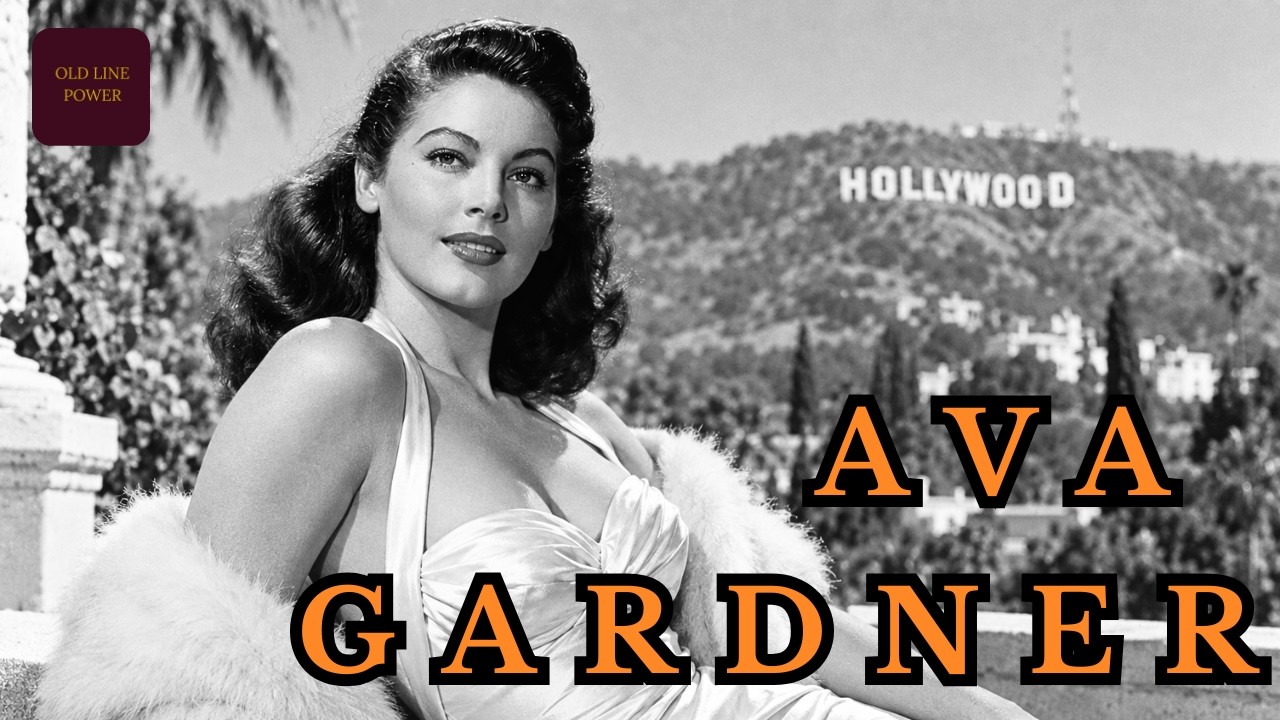
The first time was in the summer of 1946, down to the dollar. She was twenty-three and had been in Hollywood five years without saying much on screen. Universal paid Metro-Goldwyn-Mayer $7,000 to borrow her for seven weeks to appear in The Killers, a film based on a Hemingway short story. Over those same seven weeks, the studio that owned her contract paid her $200 a month.
The film that made her famous earned her roughly $350. A cheap picture nobody liked did the real work. A producer named Mark Hellinger saw her in it and cast her as Kitty Collins, the woman worth ruining a life over. The film opened in New York in the last days of August 1946, took 120,000 admissions in a fortnight, and brought in around two and a half million dollars.
Hemingway called it the only good picture ever made of one of his stories. Look magazine named her the most promising newcomer of the year. Metro’s response was immediate and entirely in character: they put her opposite Clark Gable in their next picture. Then they went on renting her out.
Other studios paid five or six times her salary for the loan, sometimes with a share of the takings on top. None of that money was hers. After the 1948 comedy, Metro raised her pay, and at twenty-five, she bought the first house she had ever owned. She had been born on Christmas Eve 1922 in Grab Town, North Carolina, the youngest of seven children.
Her father had bought land and lost it to the boll weevil and bad seasons, and the family stayed on as tenants. When Ava was old enough to remember any of it, they were renting ground they used to own. Her mother went to work running a boarding house for schoolteachers; after the Depression closed the school, they moved to Virginia and ran a boarding house for shipyard workers. Her father died there in the spring of 1938.
Ava enrolled in college on a secretarial course. She was going to be a secretary, and nothing anywhere suggests that was a reluctant plan. Then her sister’s husband put a portrait of her in his Fifth Avenue studio window. A man who habitually told girls he was a talent scout saw it, and the photographs went to Metro’s New York office.
She was put in front of a camera and told to walk toward it, turn, walk away, and rearrange some flowers. She was not asked to speak. Her Johnston County accent was considered unusable, so the sound was left off. The first professional assessment ever made of her was made with the volume down.
She signed in August 1941 at eighteen on a standard seven-year contract at $50 a week. The studio could lay her off for twelve weeks every year, during which the $50 became $35. Her own word for those years was wallpaper. She stood in the background of roughly twenty pictures between 1942 and 1945.
Then a voice coach took the accent off her, and took it off thoroughly. Ten years later, cast as a woman from the Mississippi in Show Boat, she had to be taught how to sound like herself again. The men in her life improved her, and the first one married her. She married Mickey Rooney in January 1942, aged nineteen, in a small church chosen because it was a long way from anywhere.
He was the biggest draw in America and Louis B. Mayer allowed the marriage only on condition it stayed quiet, because Andy Hardy could not have a wife. It lasted sixteen months. The divorce papers survive because they were sold at auction out of her estate: grievous mental suffering, extreme mental cruelty.
She took $25,000 and paid her own legal costs. Her mother died the same day. On one day in May, a twenty-year-old lost her marriage and the last parent she had left. Artie Shaw took her extremely seriously, and that turned out to be its own kind of problem.
He was thirty-five, had been married four times, and he educated her. He gave her reading lists, put her into university courses, and sent her to a psychoanalyst. She came out of it convinced she was stupid. He never really understood the damage he did by putting her down all the time, she wrote.
The marriage lasted one year and one week. Then came Frank Sinatra. Their affair became a national story after a photographer tried to take a picture in a Houston restaurant and Sinatra went for the camera. Within two years she would be married to him; within three, he had no recording contract, no agent, no film studio, and a tax bill he could not pay.
In April 1950, at the Copa Cabana, his voice gave out on stage: a submucosal hemorrhage of the throat. What followed was two years of collapse. Metro let him go. Columbia let the contract lapse.
His own agency dropped him. Her own account of those years has no self-pity at all: there was a very dark period, he said, around 1951, and he could hardly get himself a job. So she was the one with the contract, the money, and the pictures in production, and she stayed. They married in November 1951, at a private house outside Philadelphia, with the photographers kept outside on the front lawn.
The legend has it that Ava Gardner saved Frank Sinatra’s career by persuading the head of Columbia Pictures to give him the part of Maggio in From Here to Eternity. The story about the horse’s head was invented by a novelist in 1969: Mario Puzo wrote it into The Godfather, and Francis Ford Coppola put it on screen three years later. Before 1969, the story did not exist. The director Fred Zinnemann called it pure invention.
The screenwriter Daniel Taradash said the casting had nothing to do with any horse’s head. The flattering version does not survive contact with the paperwork either. The first choice for the part removed himself: Eli Wallach tested well, then asked for twice the standard fee, and went off to do a Tennessee Williams play he had already committed to. What Sinatra did was campaign.
He sent Harry Cohn a blizzard of telegrams signed Maggio, submitted to a screen test, flying back from the Kenya location where Ava was filming Mogambo to take it and then flying out again. He accepted $8,000 for the job. Seven years earlier, he had been paid $150,000 for a single picture. He won the supporting actor Oscar in March 1954, and the second act of his life started that night.
The marriage did not last eighteen months past it. In October 1953, Metro-Goldwyn-Mayer announced that Mr. and Mrs. Sinatra had separated.
Not the husband, not the wife: the studio that employed her told the world her marriage was over. They came back together and parted several times. She filed for divorce in June 1954 while she was in Spain, and it was finalized in 1957. Her explanation is the most quoted line she ever produced: they were always great in bed; the trouble usually started on the way to the bed.
What kept her in Spain was not a man. She based herself in Madrid from about 1955, took Spanish lessons every day, went to the bulls at Las Ventas, and drank at Chicote. In the 1950s, Spain was poor and isolated under Franco, and she had been among the first big American stars to work there. By the end of the decade, a handful of men had each explained what she was.
The Barefoot Contessa in 1954 fixed her public image for good, and the advertising line on that film followed her for the rest of her life: the world’s most beautiful animal. She hated the phrase. She said it would follow her until the end of time. Ernest Hemingway called her daughter from the start, and she called him papa.
Three of her films came out of his writing. The Killers made her a star in 1946; The Snows of Kilimanjaro in 1952; and The Sun Also Rises in 1957, for which Hemingway told the studio he wanted her as Lady Brett Ashley, the character he is usually said to have loved most. When the first screenplay arrived, she took it to him and made him go through it. His description of what followed is the best thing anybody ever wrote about him: when papa got mad, he would stand on something and make speeches.
She swam naked in his pool in Cuba, according to the story you have probably heard, after which he ordered the water never to be drained. The visit to the house outside Havana is real; the business about the water is not in the museum’s account or the scholarly material. It turns up on websites from about 2017 onwards. Two years after his sixtieth birthday party in Spain, Hemingway shot himself in Idaho.
Her career had its own peculiar cruelties. To play a woman from the Mississippi Delta in the 1951 Show Boat, she had to be taught her own accent back. She recorded the songs herself, worked with a singing teacher, and the numbers were in the can. Then the film previewed badly, and the studio hired a professional singer to dub over her.
Her own recordings went onto the soundtrack album, which had her name and face on the cover and went to the top of the American chart. The record you could buy was her. The picture you paid to see was somebody else. In the autumn of 1963, John Huston took a company to Mismaloya in Mexico, where there was no road, and built a village for them to live in.
The picture was The Night of the Iguana, and Ava played Maxine, the widow who runs the hotel. Huston, worried about the tempers he had assembled, gave every principal a gold-plated derringer engraved with their name and five bullets engraved with the names of the others. Mary Astor said he was a hell of a director and a hell of a man. Huston said her performance in that film was the greatest thing she had done on screen.
She worked when she needed the money and said so. An earthquake picture in 1974 turned out to be the biggest commercial hit she was ever in. In 1985, she did seven episodes of a prime-time soap opera at $50,000 an episode. Then in October 1986, she had a stroke.
It took part of her face and the use of an arm, and the work stopped that year and never started again. The book was her last negotiation. In the first week of January 1988, she rang the British journalist Peter Evans and asked him to ghost her memoirs. They worked at the flat and on the telephone, often very late and often after she had been drinking.
The material he got is unlike anything else in the literature about her because she was not performing. She was tired, funny, profane, and frequently unwilling. Then she found out about the lawsuit. Some years earlier, Frank Sinatra had sued Peter Evans for libel and won.
The subject of the remarks was how Sinatra had come by his part in From Here to Eternity. She ended the collaboration. The one story about her marriage that had been told, retold, and fought over in court for thirty years killed the book she was writing to pay her bills. She started again with another writer and recorded more than ninety tapes.
The manuscript was unfinished when she died, and a third writer completed it. Ava: My Story was published in the autumn of 1990. The Evans tapes were made into a play years later, performed by an actress in Manhattan who performs the recorded conversations of a woman who withdrew her permission for them to be used. On the morning of Thursday, January 25, 1990, she told her housekeeper she was tired and went back to bed.
The housekeeper went to warm a pillow for the arm that did not work and came back to find her gone. Bronchopneumonia was the cause on the certificate. She was sixty-seven. They buried her on the 29th at Sunset Memorial Park in Smithfield, North Carolina, beside her mother, her father, and her brother.
More than 2,000 people came to the cemetery. About sixty of them were family. Nobody from Hollywood came at all. She had arranged her estate four years earlier, the year of the stroke.
The money went first to her two surviving sisters. After them, it went out of the country entirely, to two English charities: one for animals, and a hospital in a small town in Sussex called East Grinstead. That hospital is the part of this that nobody expected. In October 1957, she was thrown from a horse near Seville, and a surgeon named Archibald McIndoe looked at the lump on her cheekbone.
He had spent the war rebuilding the faces and hands of air crew who had burned in their airplanes. She went down to see his clinic and met the men, and wrote afterwards that beside their injuries, her own could not have been less significant. In November 1958, he asked her to come and sell autographs at the hospital nurses’ fair, and she agreed. What she did not know was that he had quietly invited every newspaper in London.
The whole thing was a way of getting a woman who was frightened of her own damaged face back in front of the cameras. It worked. She never forgot it. And thirty-two years later, the money went to East Grinstead.
Over $2 million has gone out of that trust since she died, about £650,000 of it to the hospital in Sussex. Other people decided almost everything else: what she was called, what she was worth, who she was lent to, when her marriage was over, and finally what she had said and to whom. The one thing she got to decide was where the money went afterwards.
It went to a ward full of men who had been burned past recognizing, in a town that had agreed not to look.