The image of a small boy with his hands raised, captured on film during the Warsaw Ghetto uprising in 1943, would become one of the most recognized symbols of Nazi horror in the world. The man aiming a submachine gun at him in that photograph was Josef Blosche, a guard known inside the ghetto as “Frankenstein. ” He survived the war, hid in plain sight in East Germany for nearly two decades, and was only brought to justice in 1967, more than twenty years after the conflict had ended. His case was one of fifteen that would end in fifteen very different ways, ranging from death on the gallows to dying peacefully in old age without ever answering for what they had done.
Oskar Dirlewanger’s story began with a doctorate and military honors, but his path turned violently after the First World War. Wounded several times in combat, he earned the Iron Cross for advancing when others fell back, and his superiors noted his aggressiveness as a valuable military quality. In 1934, he was sentenced to two years in prison for abusing a minor, losing his job, his doctoral title, and his military honors, and was expelled from the Nazi party. A second arrest on a similar charge followed.
A man with such a public criminal record should have vanished from public life. Instead, senior SS officer Gottlob Berger saw in him the solution to a practical problem: the need for a unit made of convicted criminals who had nothing left to lose. Dirlewanger’s record was erased, his doctorate reinstated, and in 1940 he was given command of a unit of about three hundred former convicts with almost total freedom of action. In occupied Poland, the unit became known for looting and executions with no military justification.
Formal investigations were opened against him six times during the war, and all six times they were shut down by orders from above. In Belarus, the unit surrounded villages at dawn, shot the men, and locked the women and children inside barns that were then set on fire. Historical estimates point to tens of thousands of dead in that region alone. In August 1944, the brigade was sent to the Wola district of Warsaw with orders to eliminate the civilian population, and tens of thousands died within days.
Wounded in combat in February 1945, he fled in disguise when the war ended. He was captured by French troops in May, out of uniform, using a false name. Registered as an ordinary prisoner, he died in custody on June 7, 1945, with no trial and no proceedings. Karl Otto Koch commanded the Buchenwald concentration camp from 1937 to 1941.
Together with his wife Ilse, he used the camp to build a considerable personal fortune with parties, jewelry, and imported furniture paid for with goods confiscated from prisoners. The death toll climbed under his command, but what caught the attention of the SS leadership was not the mass death. It was the diverted money and jewelry that never reached the official coffers. In 1943, SS judge Georg Konrad Morgen was ordered to investigate.
On August 24, 1943, he had the Koch couple arrested. The investigation uncovered a systematic scheme for diverting confiscated goods and, far more serious, the murder of inmates to erase evidence, carried out on Koch’s direct orders without official authorization. On August 17, 1944, Morgen formalized the indictment. Koch was accused of embezzling at least 200,000 German marks and of ordering the murder of three inmates to keep them from testifying.
His wife was accused of receiving goods valued at 25,000 marks. None of the formal charges mentioned the mass deaths happening inside the camp every day. An SS tribunal sentenced Koch to death, not for the mass executions, but for dishonoring himself and the SS uniform. He was shot inside Buchenwald on April 5, 1945, one week before American troops liberated the camp.
His wife was acquitted by that same tribunal, but her story was only beginning. Christian Wirth was the son of a cooper who became a police officer before the war. He emerged from the Nazi euthanasia program, where he had helped develop methods of industrial-scale extermination. In December 1941, he became the first commandant of the Belzec camp in occupied Poland, spending months testing and refining the process of mass killing until it ran without visible flaws.
Within the SS staff, he was feared for his screaming and violence toward his own men. Prisoners nicknamed him “Christian the Terrible. ” On August 1, 1942, he was promoted to inspector of the three Aktion Reinhardt camps: Belzec, Sobibor, and Treblinka. His own final report, submitted in January 1944, showed that Aktion Reinhardt had brought in 178 million marks to the German Reich from goods confiscated from Jewish victims.
In November 1943, he personally commanded Operation Harvest Festival, the execution of all remaining Jews in the labor camps of the Lublin district. He was then transferred to Trieste, where he had a crematorium built inside a former rice mill used as a detention camp. On May 26, 1944, he was killed by Yugoslav partisans near Hrpelje-Kozina. He was buried with full military honors in a German cemetery in Italy, the most feared man of the entire operation laid to rest as a war hero.
Odilo Globocnik was born in Trieste in 1904, then part of the Austro-Hungarian Empire. He was Gauleiter of Vienna between 1938 and 1939, losing the post over proven corruption. Himmler nonetheless appointed him chief of SS and police for the Lublin district, where he designed the entire Aktion Reinhardt from scratch. He chose the locations of the three extermination camps, appointed Christian Wirth to run them, and recruited Franz Stangl.
An estimated one and a half million European Jews died in the camps he engineered between 1942 and 1943. In September 1943, Himmler transferred him back to Trieste, the city of his birth, as senior chief of SS and police for the Adriatic coastland. As the Allied advance closed in during 1945, Globocnik fled to the mountains of Austrian Carinthia and hid in an isolated cabin near Lake Wörthersee. A British armored cavalry unit located him on May 31, 1945.
Before interrogation could begin, he bit down on a hidden cyanide capsule and died instantly. A local priest refused to allow his body to be buried in consecrated ground. Amon Göth took command of the Płaszów labor camp in occupied Poland at the turn of 1943. His reputation for terror came from daily routine witnessed by hundreds.
He shot prisoners from the balcony of his own office for being too slow, and killed a cook because the soup was too hot. Two women who worked as his domestic servants, Helen Hirsch and Helen Jonas, lived in constant fear and later testified against him in detail. On September 3, 1943, Göth commanded the complete liquidation of the Tarnów Ghetto, which had been home to 25,000 Jews before the war. Witnesses said he personally shot between 30 and 90 women and children during that operation.
The survivors were taken by train to Auschwitz; less than half arrived alive. After the war, Göth was extradited to Poland and tried in Kraków in 1946 by the Polish Supreme National Tribunal. His defense was that every execution had the authorization of his superiors. The tribunal rejected the argument.
He was convicted of personally killing, mutilating, and torturing a substantial number of people, the first such conviction for personal homicide recorded in a war crimes trial anywhere in the world. He was sentenced to death by hanging on September 5, 1946, and hanged on September 13 at Montelupich Prison in Kraków, just a few miles from the camp he had commanded. Josef Blosche served as a guard at the Warsaw Ghetto from September 1941, responsible for the wooden bridge connecting the occupied city to the sealed Jewish area. Residents gave him the nickname “Frankenstein” because of his daily behavior.
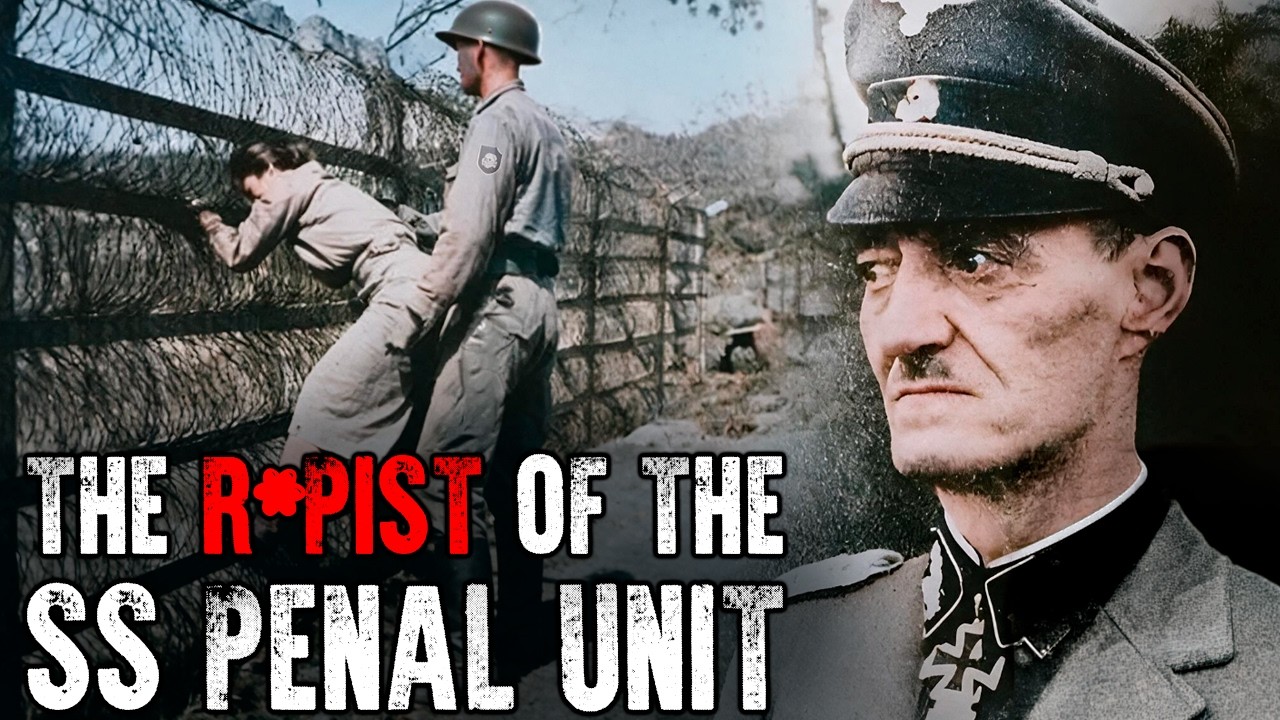
He beat and shot men and children for looking the wrong way. Survivors reported that he also sexually assaulted women inside the ghetto before killing them. During the ghetto uprising in April and May 1943, he was photographed pointing a submachine gun at surrendered civilians, including a small boy with raised hands. That image became a global symbol of Nazi horror.
In August 1946, a serious work accident permanently deformed part of his face, giving him unintentional protection, since the SS soldiers photographed at the uprising were being sought by their recognizable faces. He returned to his parents’ home, married, had two children, and lived an ordinary life in East Germany for nearly twenty years. In 1961, a former SS colleague on trial in Hamburg mentioned his name in testimony. The East German police opened an investigation, and the Stasi located and arrested him on January 11, 1967.
Tried in Erfurt, he was sentenced to death on April 30, 1969, found guilty of taking part in the deportation of 300,000 Jews and the direct murder of up to 2,000 people. The sentence was carried out in Leipzig on July 29, 1969, with a single shot. Friedrich Wilhelm Krüger was the son of a German army colonel killed in the First World War. On October 4, 1939, Himmler appointed him senior chief of SS and police for the General Government, the newly occupied Poland.
In that post, Krüger organized and oversaw the liquidation of Jewish ghettos, including the Warsaw Ghetto, where General Jürgen Stroop reported his daily updates to him first. In November 1943, Krüger lost his post, not because of his crimes, but because he fell victim to a power struggle with Hans Frank, the governor general, who wanted more administrative control. Krüger requested a transfer to a direct combat command. He went on to command Waffen-SS divisions, receiving the Knight’s Cross on Himmler’s personal recommendation in October 1944.
He died around May 9, 1945 in Austria, after the German war had already officially ended. He was never indicted, never arrested, and never answered for a single one of the deaths he had authorized. Maria Mandl arrived at Auschwitz-Birkenau on October 7, 1942, as head of the entire women’s camp. She formed a prisoner orchestra that played during morning roll calls, selections on the arrival ramp, and public hangings.
She personally signed a good portion of the selection lists that decided within seconds who would work and who would go straight to the gas chamber. One survivor testified that in a single selection of about 5,000 people, Mandl sent 90 percent straight to death, beating people with a whip as she organized the lines. Academic estimates based on the volume of lists she signed come close to 500,000 deaths. Arrested by the American army in August 1945, she was handed over to Poland and tried in 1947.
She confessed to signing most of the death lists. The tribunal convicted her of crimes against humanity on December 22, 1947. Her request for clemency was denied immediately. At Montelupich prison in Kraków, she spent her final weeks praying and learning Polish.
In the neighboring cell was Stanisława Rafałowska, an Auschwitz survivor Mandl had personally mistreated. Before she died, Mandl asked her for forgiveness. She was hanged on January 24, 1948 at 7:32 in the morning, aged 36, in the same round of executions as nine other defendants from the Auschwitz trial. Ilse Koch married Karl Koch in 1937.
Inside Buchenwald, she was known among prisoners for direct personal cruelty. Rumors circulated that she had inmates with interesting tattoos killed so their skin could be turned into objects like lampshades and book covers. Those specific accusations were never proven with concrete evidence. Years after the war, SS judge Konrad Morgen debunked the story, saying no proof ever supported it.
Even so, the nickname stuck, and she went down in history as the “Bitch of Buchenwald. ” Acquitted by the SS tribunal in 1944, she was arrested by the Americans in June 1945 and tried at Dachau in 1947, sentenced to life in prison, later reduced to four years. Released in October 1949, she was arrested again by West German authorities that same day. Tried in Augsburg, she was convicted again in 1951, sentenced to life for incitement to murder and serious bodily harm.
A psychiatrist described her as “a perverted nymphomaniac hysterical person hungry for power. ” She died at the women’s prison in Aichach on September 1, 1967, aged 60, leaving behind a note saying she could no longer go on that way. Herta Oberheuser earned a medical degree in dermatology and became the only female doctor to work inside Ravensbrück, the concentration camp dedicated exclusively to female prisoners. She took part in experiments that deliberately infected prisoners with bacteria, glass, and wood in their wounds to test experimental drugs.
After the war, she was the only woman among the defendants in the Doctors’ Trial in Nuremberg. Sentenced to 20 years for war crimes and crimes against humanity, the sentence was reduced to ten years in 1951, and she was released in April 1952 for good behavior after serving only five. She set herself up as a general practitioner in the village of Stocksee near Kiel, treating ordinary patients for four years, with nobody knowing about her past. In 1956, a Ravensbrück survivor personally recognized her inside her own medical office.
The news became a public scandal. In August 1958, following protests organized by former prisoners, the interior minister revoked her medical license. She lost her appeal in December 1960 after a twelve-hour hearing and never practiced medicine again. She died in January 1978, having spent 26 years free, most of them working as a real doctor caring for ordinary people.
Elfriede Rinkel was born in Leipzig in 1922. She worked as a guard at Ravensbrück between June 1944 and April 1945, using a dog trained by the SS to control prisoners. In September 1959, she immigrated to the United States and settled in San Francisco without mentioning her camp service on her visa application. There she met Fred William Rinkel, a German Jew who had survived the Holocaust after losing his entire family in the camps.
They married around 1962, and the marriage lasted more than 40 years. She never told him the truth. Fred Rinkel died in January 2004, never suspecting anything about his wife’s past. Only after his death did investigators from the United States Department of Justice take interest.
In September 2006, at age 84, she was deported back to Germany, the only woman among more than 100 Nazis deported from the United States. She signed an agreement admitting her service at Ravensbrück. All criminal proceedings opened in Germany were later closed. She was never formally tried for any crime.
She died at a nursing home in Germany in July 2018, having spent more than 40 years as the wife and later widow of a Holocaust survivor, attending Jewish ceremonies with nobody around her knowing the truth. Kurt Franz worked as a cook for a hotel chain before the war. Prisoners at Treblinka nicknamed him “Lalka” in Polish because of a face too young and too harmless looking to match what he did. He walked around the camp accompanied by a dog named Barry, trained to attack prisoners on his direct command.
He had a zoo and a recreation area built inside the extermination site for SS officers to relax between shifts. At the Düsseldorf trial in 1965, Franz denied having personally killed anyone, denied ever setting the dog loose, and said he had struck only one person a single time. Dozens of survivors testified to the opposite. On September 3, 1965, he was sentenced to life in prison for taking part in the collective murder of at least 300,000 people.
The tribunal’s ruling recorded that a great part of the blood and tears that flowed in that camp could be attributed to him alone. Franz was released in 1993 for health reasons after serving nearly 30 years. He lived five more years in freedom at an ordinary nursing home, dying July 4, 1998, at age 84. Josef Schwammberger commanded three forced labor camps in the Kraków district between 1942 and 1944.
In Rozwadów, he personally sought out and killed a local rabbi, a crime a judge would later call one of the most despicable of his career. On September 2, 1943, he organized a mass execution at the Przemyśl camp, where at least 500 Jewish prisoners were shot in a single day. Captured by French forces in 1945, he escaped custody in January 1948 and entered Argentina, living there under his own name. He obtained Argentine citizenship in 1965.
West Germany requested his extradition in 1973, but he lived freely for 14 more years. Argentine authorities finally located him in November 1987 after an informant came forward for a reward offered by the German government. After two years of legal dispute, he was extradited to Germany in May 1990. His trial in Stuttgart lasted nearly a year with almost 100 survivors testifying.
He denied guilt on almost everything. On May 18, 1992, he was convicted of seven personal murders and complicity in 32 others, receiving a life sentence. In 2002, a court denied parole, citing the unusual cruelty of his crimes. He died in prison on December 3, 2004, at age 92, after more than 40 years living free.
Franz Stangl came out of the Nazi euthanasia program. He took command of Sobibor in April 1942, then was transferred to command Treblinka, holding the post until August 1943. He habitually wore an all-white linen uniform, earning the nickname “White Death. ” His superior, Odilo Globocnik, described him as the best camp commandant he ever had.
Arrested at the end of the war, he was released two years later amid the administrative confusion of postwar Europe. He fled to Italy with church contacts tied to the Vatican, obtained a Red Cross passport under an altered identity, spent time in Syria, and boarded a ship to Brazil, arriving in 1951 with his entire family. For years he worked at the Volkswagen plant in São Paulo, registered under his own real name. An Austrian arrest warrant was not issued until 1961.
Tracked down by Nazi hunter Simon Wiesenthal through a paid informant, he was arrested by Brazilian federal police on February 28, 1967. Extradited to West Germany, he was tried in Düsseldorf for the deaths of approximately 900,000 people. His defense claimed his role had only been to oversee the collection of victims’ belongings. Sentenced to life in prison on October 22, 1970, he died of heart failure at Düsseldorf prison on June 28, 1971, only eight months later.
Before he died, he gave a series of long interviews to writer Gitta Sereny, later published in the book Into That Darkness. He was the only Nazi extermination camp commandant to be personally tried in Germany. Gustav Wagner was deputy commandant of Sobibor, nicknamed “the Beast” by surviving prisoners. After the war, he was sentenced to death in absentia in trials he never attended.
He fled to South America with Franz Stangl, becoming a permanent resident of Brazil in 1950, and received a passport under the false name Gunther Mendel. He lived quietly in the interior of São Paulo State, working as a farmer and later a bricklayer, married to a Brazilian widow who raised her own children as if they were his. In 1978, Simon Wiesenthal identified him from a photograph taken at a Hitler birthday party organized by Nazi sympathizers near Rio de Janeiro. Wagner turned himself into police on May 30 of that year, declaring he was the real Gustav Wagner.
Stanisław Szmajzner, a Sobibor survivor living in Brazil, saw the news on television and traveled to São Paulo to confront his executioner face to face. Israel, Austria, and Poland all requested his extradition; all were denied. In June 1979, the Federal Supreme Court also rejected West Germany’s request, ruling that the legal deadline had expired. In a BBC interview, Wagner said he felt nothing about his past, calling his work at Sobibor just another job.
Over the following months he attempted suicide at least five times. On October 3, 1980, he was found dead with a knife driven into his chest on a rural property, where he had been working as a caretaker. Police ruled out homicide. The next day he was buried at the local cemetery.
Only two people attended the funeral, and neither wanted their name revealed.