She was barely more than a child when enemy raiders tore her from everything she knew. Born in 1788 in the mountainous country along the border of Montana and Idaho, Sacagawea belonged to the Shoshone people. When she was about twelve, warriors of the Hidatsa tribe attacked her village. Several of her people were killed before her eyes.
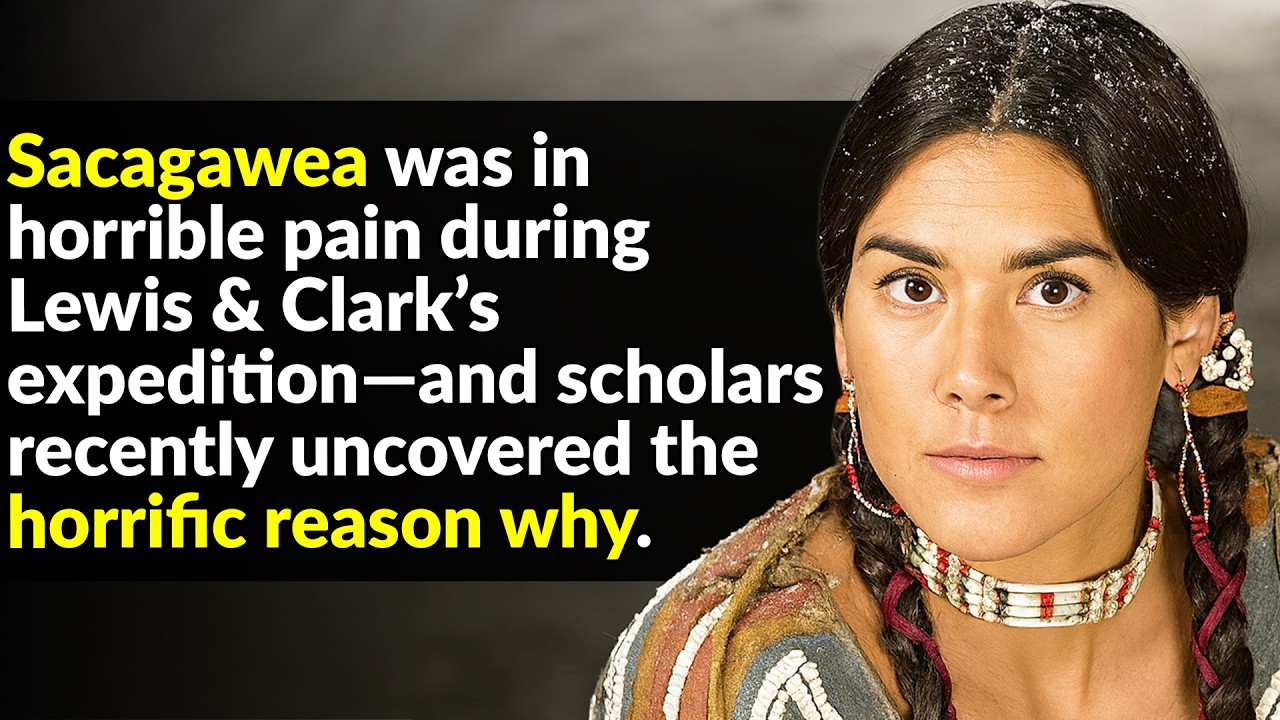
She was taken, carried off into captivity, and for three years she lived as little more than a servant in Hidatsa lands. When she turned sixteen, her captors decided she was worth more as a bride than as a drudge. They sold her to a French Canadian trader named Toussaint Charbonneau, a man roughly thirty years her senior who already had a Shoshone wife and a reputation for brutality toward women. He did not ask her permission.
The marriage was not hers to choose. In November 1804, shortly after that marriage, Meriwether Lewis and William Clark arrived in the Hidatsa villages. They were leading an expedition commissioned to explore the vast territory acquired in the Louisiana Purchase and to map the lands between the Mississippi River and the Pacific coast. They needed guides, hunters, and interpreters who could help them communicate with the tribes they would encounter along the way.
They were not impressed by Charbonneau, whom they regarded as timid and unreliable, but they knew his young wife spoke Shoshone, and that made her valuable. Sacagawea had just given birth to her first child, a boy named Jean Baptiste, when the expedition prepared to depart in the spring of 1805. Weeks after the delivery, she set out westward with the Corps of Discovery. She carried her infant strapped to her back the entire way.
Clark took an immediate liking to the boy and nicknamed him Pomp. More than a source of affection, the baby proved useful to the mission: the sight of a young woman nursing a child signaled to wary tribes that the expedition came in peace, not as a raiding party. Sacagawea worked as an interpreter and did far more. She gathered edible plants, prepared food, sewed clothing, and made herbal medicines.
She kept the camp running. When the expedition approached land she recognized as the country where she had been kidnapped years before, she showed no visible emotion, but she knew exactly where she was. On May 14, 1805, the expedition nearly lost everything. A sudden gust of wind caught one of the boats while Charbonneau was steering.
He panicked and nearly capsized the vessel. Papers, instruments, and vital supplies went overboard. As Charbonneau sat frozen, Sacagawea reached into the water and retrieved the documents and tools, saving the expedition’s records and equipment. Lewis later wrote that Charbonneau was of no peculiar merit and the most timid waterman in the world.
Charbonneau made her life miserable. A month after that rescue, Sacagawea fell dangerously ill, so sick that she lost her senses. Historians now believe she had contracted gonorrhea from her husband. Clark, watching her suffer, wrote plainly that if she died, it would be the fault of her husband.
She recovered, but not quickly, and not completely. When the expedition reached Shoshone territory, her composure finally broke. She sang and danced at the sight of her homeland, startling the seasoned explorers around her. Then she met a young woman who had also been captured years earlier by a rival tribe but had managed to escape and return home.
Sacagawea must have understood the life she herself had been denied. The deepest reunion came when the expedition met the Shoshone chief, Cameahwait. He was her brother. When she recognized him, she threw her blanket over him and wept.
Clark recorded that she danced for the joyful sight, and Lewis noted that everyone present was moved by the reunion. The two spent the night talking privately, and Sacagawea wept on and off through it. According to some accounts, one of the men she met that day was the Shoshone warrior her family had promised her to in childhood, before the Hidatsa raid scattered her family and destroyed that future. Charbonneau could not escape criticism even in the expedition’s official records.
In November 1804, Clark had written that Charbonneau had badly beaten his wife for speaking to another Indian woman and had to be severely reproved for his brutality. Charbonneau was not just an incompetent boatman. He was a violent one. The journey grew harder as autumn arrived.
At times the country was so barren that even Sacagawea, who could usually find food in any landscape, came back empty-handed. The party grew so hungry that they ate tallow to survive. Through it all, Lewis and Clark described her in consistently glowing terms. They called her plucky, determined, intelligent, cheerful, resourceful, tireless, and faithful.
Clark said simply that she inspired them. When the expedition finally reached the Pacific coast, Sacagawea made one of her few requests of the entire journey. She had heard that a beached whale had washed ashore, and she insisted on going to see it. She stood before the enormous creature and took in the sight of the ocean.
It was one of the last genuinely happy moments she would have. The return journey was long, and her infant son fell dangerously ill. The entire expedition pitched in to help the baby recover, and he survived. By late 1806 the mission was complete, and Sacagawea and her family prepared to return to the Hidatsa villages.
Clark had grown so attached to her son that he offered to raise the boy himself. For three years Sacagawea lived with the Hidatsa before accepting Clark’s invitation to settle in St. Louis. In 1809, she and Charbonneau made the painful decision to leave Jean Baptiste in St.
Louis with Clark. She recognized that Clark could offer her son an education and a future that she and Charbonneau could not. The boy stayed, attended school, and eventually became an explorer himself. Sacagawea was pregnant again when she parted from her son.
The pregnancy was difficult, and she was weak and ill through much of it. She gave birth to a daughter, Lizette, in 1812, but she would not live to see the girl grow up. In December of that year, she fell gravely ill. Historians believe the cause was a putrid fever or possibly typhus.
She died on December 20, 1812, at the age of twenty-four. Her story did not end cleanly there. In the early twentieth century, a scholar claimed that Sacagawea had actually lived until 1884 and died in Wyoming. After more than a century of investigation, most historians reject the claim, believing that woman to have been a different person, now known as the Wind River Sacagawea.
Charbonneau accepted Clark’s offer to formally adopt Lizette, then returned to the fur trade. He remarried repeatedly. His final marriage came when he was seventy years old, to a bride of fourteen. Lizette likely died in childhood.
Sacagawea left no written record of her own. Everything known about her comes from the journals of other people. Still, her role in mapping the nation became part of American memory. Her face appeared on United States currency, and the river where she saved the expedition’s documents from the water now bears her name.
Stories of a secret romance with Clark have persisted in books and films, but most historians agree the two cared for each other deeply without there being anything more. She was, by any account, born to be an adventurer. Her name, depending on the translation, means boat launcher or birdwoman.
Either way, she was meant to travel the world, and she did.