On the twenty-fifth of June, 1876, a scout’s warning raced through the sprawling encampment along the Little Bighorn River. The great village of the Sioux and Cheyenne, thousands of lodges stretching for miles through the Greasy Grass valley, had known for days that soldiers were coming. What no one knew was that the first shots would be fired not against the main columns, but at a ten-year-old boy gathering horses far from the center of camp. The boy’s name was Deeds.
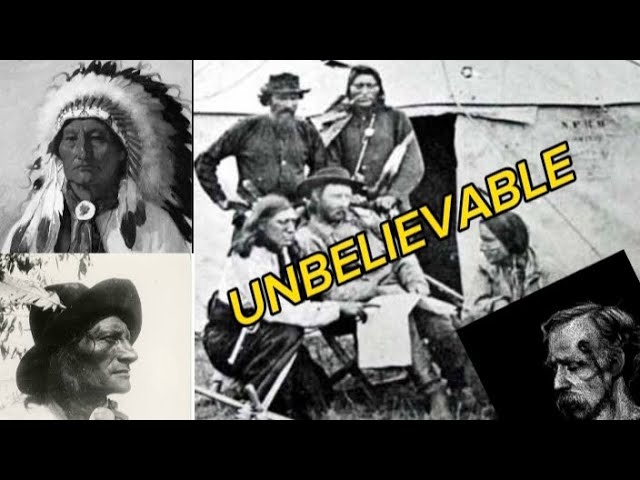
He was a Hunkpapa child, small and brown-skinned, born into a world that still moved with the buffalo herds. That morning, the camp had been heavy with grief. Just before dawn, his grandmother had died, and the death songs and scalp dances of the long night still hung in the air. His uncle, Sitting Bull, had gathered the family around the old woman’s bed and spoken gravely, saying her passing foreshadowed a great and terrible event, that perhaps his vision of enemy soldiers entering the camp was about to come true.
The older men, including Deeds’s weeping grandfather, Four Horns, nodded in understanding. Deeds had stared quietly at what remained of his grandmother and tried to accept a world without her. Deeds wore no warrior’s caution yet. He was too young for that.
So when his foot struck something hard in the dry grass, he stopped. It was a square, faded box, unlike anything he had ever encountered in the great camp. He knelt beside it in the morning heat, the sky clear and windless, the long drought turning the lodge-pole trails to dust. With an old bone-handled skinning knife drawn from its sheath at his thin brown side, he worked at the lid.
He hoped his older brother, Brownback, would come down from the hill soon with their grandfather’s ponies. Once the herd arrived, Deeds meant to pick his favorite horse and help drive the animals back to camp. Finally the lid gave way. Inside were crumbling pieces of hardtack, dry biscuits unlike the pan bread the Sioux women made.
Deeds brought a piece to his nose, inhaled deeply, and took a bite. He realized instinctively that he was tasting the white man’s bread for the first time. Then he heard hoofbeats. He looked up, expecting Brownback with the herd.
But the sound came from behind him. Three white soldiers were charging toward him, firing their rifles. One shouted, “He’s got the box! ” before the crack of gunfire shattered the still morning.
A bullet struck Deeds square in the chest before he could scream or run. He dropped to the ground. Brownback, still on his feet, rushed toward the gunfire. Close behind him came a young Oglala named Drags the Rope, who had been tracking down loose ponies that had wandered through the night.
A quick glance confirmed the worst. Deeds lay motionless, a terrible wound through his lungs. The soldiers, without dismounting, opened fire on the older boys as they advanced. One soldier, his sleeves marked with stripes, seemed to direct the other two.
Drags the Rope dodged the deadly rifle fire, grabbed his rope, and sought temporary cover, relying on his training as a warrior in training to make a quick decision. He worked his way through the grass to where Brownback crouched, frightened and unsure. He ordered the boy to flee to the village and raise the alarm. He would hold off the soldiers until Brownback was safe.
Once the boy was clear, Drags the Rope leaped to his feet and rushed down a fast zigzag course. If he could reach the distant grove of maple trees marking the head of Medicine Tail Coulee to the northwest, he could follow the dry watercourse to the river and cross directly into the camp. Then he might even lead a small party of warriors back to recover Deeds’s body. He braced for the whine of bullets with every step, an old Sioux war cry echoing in his mind, a day to die.
But the blue-coated soldiers did not pursue him, and he felt no rounds strike his body. Once he was beyond their range, they stopped firing altogether. Looking back, he saw the three soldiers reining their horses on the Lodge Pole Trail, the ancient Indian road crossing Wolf Mountain Pass from Rosebud Creek to Greasy Grass, the name the Sioux had given the Little Bighorn River. If they continued on their current path, they would inevitably encounter the southern edge of the immense village, where the tribesmen were gathered.
Drags the Rope now understood instinctively that these soldiers had just fired the first shots of what would become a pivotal struggle for both native peoples and white settlers. He returned to camp shortly after Brownback arrived, taking a wide route along the watershed, reaching the head of Tullock Creek before cutting overland toward the village at Medicine Tail Coulee. He crossed at the ford and entered the camp. He reported that he had seen only three white soldiers, which left the Oglala camp relatively unconcerned until the warning was raised minutes later.
At that moment, he joined Crazy Horse and fought alongside the great Oglala war leader for most of the fierce battle that followed. The encounter at the supply box was the spark. The three soldiers had stumbled upon the outer edge of an enormous encampment that the army had seriously underestimated. Days earlier, the same forces had clashed at the Battle of the Rosebud, when a Cheyenne war party of fifty-seven warriors had launched a sudden attack on soldiers at the Rosebud River bend, driving them back southward.
After that engagement, the Cheyenne had moved to Greasy Grass to ally with the Sioux under Sitting Bull, while the Cheyenne were led by two chiefs born under the moon. The grass had grown tall enough to feed the horses and restore their strength, and the tribes had resolved to move up the Tongue River hoping to join Sitting Bull in the Greasy Grass country. Now the soldiers had come. What followed was the annihilation of the Seventh Cavalry under Lieutenant Colonel George Armstrong Custer.
The village, far larger than any intelligence had suggested, poured forth in waves of warriors. Reno’s men, who had dismounted and taken positions in a skirmish line, were driven back across the river and up a steep bank toward a hill, some of the tribesmen pursuing the fleeing soldiers. One Cheyenne warrior, struck in the foot and shoulder, lay stunned on the ground until a friend recovered him, and together they joined the fight after it had nearly ended. The Indians surrounded the soldiers and eventually overwhelmed them.
That night, the tribes celebrated despite their losses. Seven Cheyenne warriors had fallen in the battle, and they took pride in having been among those who defeated Custer in that encounter. Later that evening, word spread that more soldiers were advancing along the Greasy Grass. The next morning, the wounded warrior joined his band across the river to face Reno’s men once more.
His foot was swollen and painful, bound with rope to ease the ache. Early in the afternoon, the camp was broken, and the people moved upriver toward the Bighorn Mountains. The battle was over, but the war was not.
Sitting Bull’s vision of soldiers entering the camp had come true, and the killing of a ten-year-old boy over a box of white man’s biscuits had opened one of the most consequential engagements in the history of the American frontier.