In January 1861, with the nation fracturing and southern states leaving the Union one after another, the mayor of New York City, Fernando Wood, made an extraordinary proposal. He urged the city to declare itself a free city, open to trade with both the North and the South. The suggestion reflected the unusual position of a metropolis whose prosperity was deeply tied to the very system now tearing the country apart. New York City was then the largest city in the United States, with a population of 816,000 by 1860.
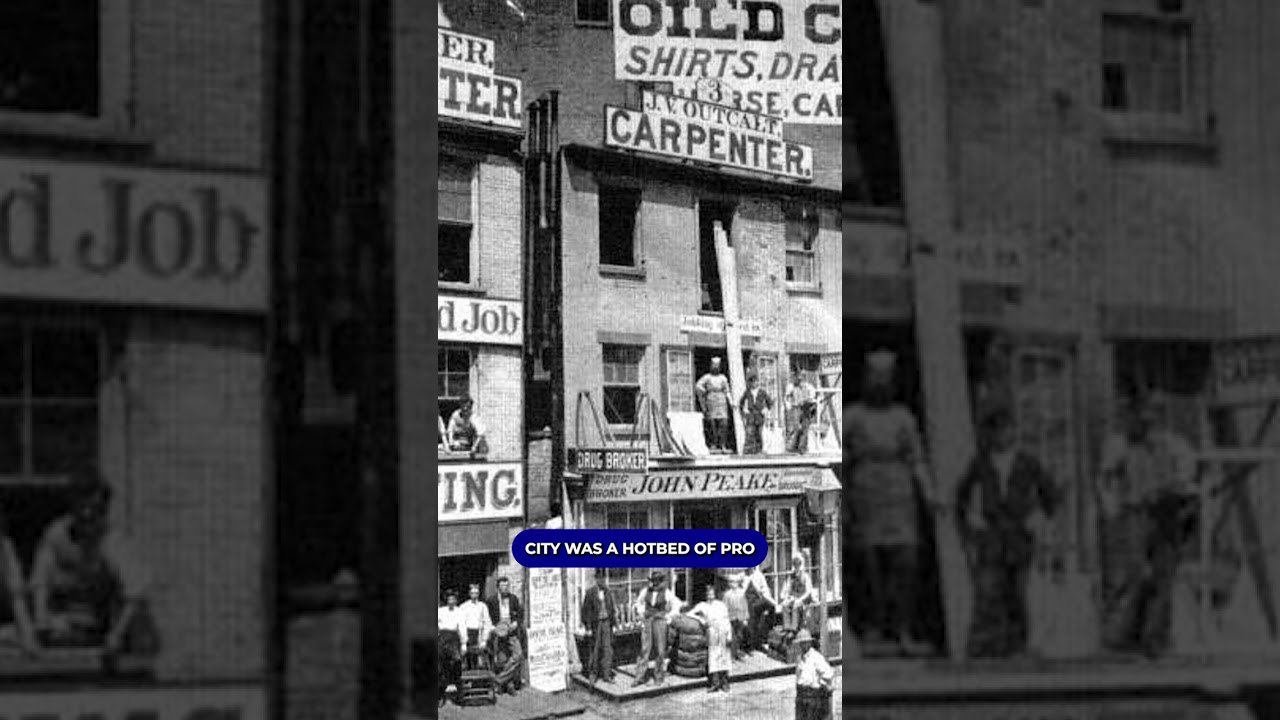
Wall Street operated openly as a middleman and banker for the South. A third of the nation’s exports and two-thirds of its imports passed through the city’s port, and more southern cotton moved through New York than through any other Atlantic harbor. Although the state of New York had abolished slavery, the city itself was a stronghold of pro-southern sentiment. Along Broadway, stretching four miles through the city, and in neighborhoods throughout New York, the Democratic Party held firm control.
Most of the city’s thirteen newspapers opposed Abraham Lincoln. That sentiment did not survive the first shots of the war. When Confederate forces opened fire on Fort Sumter in April 1861, everything changed. Lincoln called for troops to put down the rebellion, and New York City answered with remarkable speed.
By the end of that year, the city had organized more than fifty regiments for the Union cause. This came despite the widespread warnings that without southern cotton, the streets of New York would grow weeds. The prophesied economic ruin never came. Instead, the city became a vital engine of the Union war effort.
The economic relationship that had once bound New York to the South was transformed into a military and industrial commitment to the North. The same port that had moved cotton southward now moved troops, weapons, and supplies to the front. The merchant houses of Wall Street, which had profited from southern commerce, turned their financial machinery toward financing the war. The city’s workshops and factories shifted production to meet the demands of the Union armies.
The change was not merely practical; it was symbolic. A city that had been considered a potential ally of the South, even one whose mayor had suggested it might secede itself, rallied to the flag. The fear that the city would refuse the call to arms proved unfounded. When the president asked for volunteers, New Yorkers responded in numbers that surpassed expectations.
The regiments raised in the city during 1861 formed a substantial part of the early Union forces. The outbreak of war thus resolved a tension that had defined the city for years. New York’s commercial elite had developed deep ties with the cotton economy of the South, and many in the city shared or tolerated southern views on slavery. The attack on Fort Sumter forced a choice, and the city chose the Union.
The war brought hardship and loss, but it also brought prosperity. War contracts flowed through the city, and its banks, foundries, and shipping interests expanded to meet the needs of the federal government. In the years that followed, New York would continue to grow in wealth and influence, becoming the financial capital not only of the nation but increasingly of the world. The decision made in 1861, when the city stood at a crossroads between its profitable southern connections and its place in the Union, set it on that path.
The cotton trade never returned as it had been, but the city found a larger purpose in the war effort. By the end of 1861, New York had not only answered the call for soldiers, but had transformed itself into a central pillar of the northern war economy. The regiments raised in those first months of the war marched south carrying the flags of a Union that now included a city that had once considered neutrality or even separation. The streets that had been filled with talk of secession and cotton were filled instead with the sounds of drilling soldiers and the rush of war production.
The prophecy that the loss of southern cotton would ruin the city proved to be only a rumor. The city’s future lay not in the cotton fields of the South, but in the workshops, banks, and harbor of the North. By the time the war ended, the transformation was complete. New York had emerged as the undisputed center of American finance and industry, a position it would never relinquish.
The war had demanded enormous sacrifice, and the city’s regiments paid a heavy price on the battlefields. But the economic foundation laid during those years of conflict carried the city forward into the industrial age. The decision to support the Union, made in the urgency of 1861, proved to be the defining choice of the city’s history. The old ties with the southern cotton economy were severed, and a new order took their place, one built on war production, finance, and the growing power of the federal government.
The story of New York in 1861 is the story of a city forced by events to choose its future. It had prospered by serving both North and South, by moving cotton and capital, by remaining aloof from the moral and political battles of the era. The attack on Fort Sumter made that position untenable. The city threw its weight behind the Union, and in doing so, it changed its own destiny.
The free city that Fernando Wood had imagined never came to exist. Instead, New York became the great northern metropolis, the economic heart of the victorious Union, and the launching point for the industrial expansion that would define the following decades.