Most people know how the story ends: a small plane, a famous last name, and headlines about another Kennedy tragedy. What is less understood is what came before. Carolyn Bessette-Kennedy never asked to become a myth.
She was a Calvin Klein publicist who loved her job, her friends, and the idea of a normal life. She wasn't chasing fame. She was trying to survive it.
Born in White Plains, New York, in 1966, Carolyn was the youngest of three girls in a middle-class family. At school, she was remembered as funny, social, and quick with a sarcastic comment. She wasn't the cold, distant woman the tabloids later created.
She was the girl people liked to be around.
At Boston University, where she studied education, she ended up on the cover of a "Girls of BU" calendar. It wasn't because she was chasing fame. Friends pushed her into it, and she treated the whole thing as a joke.
After graduating in 1988, she stayed in the Boston area and tried different lives on for size. She worked in PR for a nightclub company and briefly tested the waters of modeling. But it never became a real career.
The real turning point came with a retail job that didn't look like a turning point at all. She took a sales position at the Calvin Klein store in the Chestnut Hill Mall. She was hired on the spot, partly because she fit the brand's clean, minimal look, and partly because she was good with people.
She was confident without being pushy, stylish without being intimidating.
Executives passing through the store noticed how she handled high-end clients. Her name was passed up the chain to New York. In Manhattan, Calvin Klein turned her from a store associate into a rising PR insider.
She went from the shop floor to handling important clients and show-related work, eventually taking on a senior publicity role.
Colleagues later described her as composed, capable, and extremely good at reading a room. She was the person you trusted to deal with actresses, anchors, and influential buyers without getting flustered. Even then, there were already two versions of Carolyn.
Off the clock, she laughed loudly, made stupid jokes, and went out with friends. On the clock, she became a different kind of quiet. Hair sleek, clothes simple, expression controlled.
That shift wasn't about being cold. It was about being professional, about drawing a line between herself and the world she had to manage. And it was inside that version of her, the disciplined Calvin Klein publicist who knew how to keep things neat and contained, that John F.
Kennedy Jr. first walked into her life.
By the time John F. Kennedy Jr. walked into her life, Carolyn knew exactly how to manage famous people.
At Calvin Klein, she was the one you sent in to deal with difficult clients. Always polite, never starstruck. Depending on which version you believe, they met at a Calvin Klein show in the early '90s, or through the same Manhattan fashion circle.
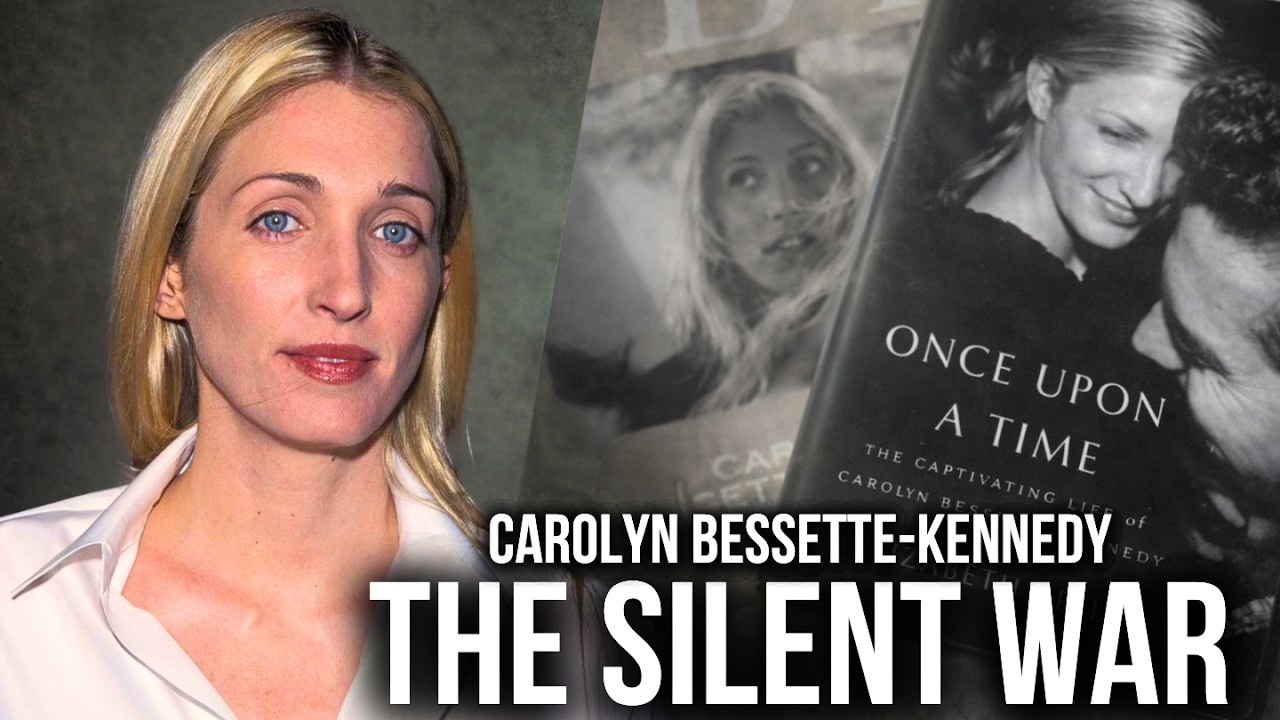
What everyone agrees on is the energy. He was used to being adored, and she was one of the few people who didn't immediately treat him like a legend. The anonymous Calvin Klein publicist quickly became the woman who beat out Madonna, Daryl Hannah, and Sarah Jessica Parker.
Headlines treated her like she had won a national competition.
Paparazzi started waiting outside his TriBeCa loft. Walking down the street together stopped being a normal thing couples do and became a daily photo op, whether they wanted it or not.
In July 1995, John proposed with a sapphire and diamond ring inspired by one his mother had worn. Jackie Kennedy had passed away the year before, in 1994, and Carolyn never got to meet her. That planted a seed of doubt in both of them.
By the time John realized Carolyn was the one, Jackie was already too sick. It was a loss that haunted them both.
For most people, an engagement is private. For them, it was fuel. What she wore, how she behaved, whether she smiled enough, everything was suddenly evidence in some larger story the press thought it was writing about America's first son.
When she lost her temper during a fight in Central Park and threw the ring at him, cameras caught it. The clip was everywhere. She was immediately recast as the hysterical woman making him miserable, long before anyone had heard her speak.
That's partly why the wedding had to be a secret. On September 21st, 1996, instead of a massive New York event, they slipped away to Cumberland Island off the coast of Georgia. A tiny wooden church, candlelight, a handful of guests.
Carolyn asked her friend Narciso Rodriguez to make her dress, a simple bias-cut silk gown that would quietly launch his career and permanently attach her name to minimalist bride mood boards for the next 20 years.
The images the public eventually saw told a perfect story. John kissing her hand as they left the chapel, her sleek dress glowing in the flash. The ultimate modern fairy tale.
What almost nobody saw was the panic before the ceremony, when the dress was too loose after she'd lost weight from the stress of keeping everything secret. Narciso Rodriguez had to resew it onto her body at the last minute. Even on her wedding day, she was still doing what she'd always done, trying to stay calm while everything around her became bigger, louder, and more dramatic than she ever wanted.
After the wedding, John stood on the steps outside their New York building and asked the press to give his wife some space as she adjusted to the Kennedy spotlight. The request was polite, reasonable, and mostly ignored. The fairy tale was now public property.
For the world, it was a glossy love story. For Carolyn, it was the moment her life stopped belonging only to her.
The problem with a fairy tale like that is that it doesn't end when you close the church doors. Once the wedding photos were out, the story had momentum of its own. For Carolyn, the reality of married life looked very different from the glossy narrative.
She woke up into a routine that wasn't really a routine at all. Photographers parked outside, lenses pointed at the door, shouts anytime she stepped onto the sidewalk. If she went out in sweatpants, it became a troubled photo set.
If she stayed home for days, that turned into speculation about what was wrong. There wasn't really a version of her day that didn't get turned into content for someone else.

At the same time, she was slowly giving up the part of her life that had always been hers. Work. Leaving Calvin Klein was supposed to make things easier, less stress, more flexibility, more time with John.
On paper, the idea made sense. In practice, it left her with too much empty space and no real way to fill it.
Inside the marriage, the pressure was more mundane and more exhausting than the tabloids ever showed. John was trying to build George into a serious political magazine. He worked long hours, canceled plans, obsessed over staff problems and advertisers.
Carolyn reportedly told his assistant, "I just want some normal married time. I'm exhausted."
Years later, friends would say the early years of the marriage were the hardest. Carolyn was frightened, trying not to disappoint John, trying to get comfortable in a world that never stopped watching.
On top of that, the public narrative around her got meaner. The tabloids were relentless, claiming she was having affairs, nervous breakdowns, struggling with cocaine addiction. None of it was true.
People who actually knew her said the same thing. She didn't have a drug habit. But when over a hundred people who knew her were later interviewed, they all confirmed what those close to her already knew.
The stories were fabricated.
She refused interviews, so there was no quote from her side, no correcting the record moment. Biographers later summed it up as a kind of campaign. The paparazzi and tabloids reacted to her reserve with harassment and vilification, turning her into the icy, vapid, drug-addicted princess they needed for their story.
As Rosemary Terenzio, John's former assistant, later wrote in her memoir, "The meaner the stories in the press, the more Carolyn retreated into herself. The more she hid at home, the sadder she got. The opposite of who she was."
From the outside, people saw a woman with everything. The husband, the apartment, the clothes. From the inside, it was starting to look like exactly what one of John's oldest friends called it later.
She was unhappy and frustrated, like a caged animal backed against a wall.
In those last months, nothing in Carolyn's life was simple anymore. Her marriage to John was in a rough phase, but they were still in it together. Still going to events, still trying, still tied to a dynasty that expected them to show up.
When Rory Kennedy's wedding in Hyannis Port came up, attendance wasn't optional. John wanted to fly them himself. He loved flying.
It was one of the few places he could be unrecognized. Just a man in a cockpit instead of a headline.
For Carolyn, the idea of another big Kennedy gathering, the staring, the whispers, the cameras waiting outside, felt heavy. Friends later said she was reluctant to go. In the end, her sister Lauren offered to come, too.

She had her own weekend plans at Martha's Vineyard and wanted to support them through a difficult time.
On the 16th of July, 1999, nothing about their day looked unusual. She changed her mind about going. He left his office.
They packed late. They ran behind schedule. The normal messy chaos of people trying to get out of the city on a Friday.
However, somewhere over the water, that ordinary plan slipped out of reach. The conditions were bad. Haze, darkness, no clear horizon.
At some point, the instruments and his senses stopped matching. A small plane being piloted by John F. Kennedy Jr.
was reported missing.
When the wreckage was finally found, the story was painfully straightforward. The plane had gone into the water fast, and there was no time to react. John, Carolyn, and Lauren passed away instantly.
She was only 33.
When the story hit the media, John was folded into a familiar narrative. The little boy who saluted his father's coffin, the handsome adult gone too soon, the latest line in a family saga the public felt entitled to grieve.
Carolyn didn't get the same softness. Even in those first days, the old caricature snapped back into place. Some outlets circled around the same easy clichés, the difficult wife, the unstable outsider, and clung to tiny details to make them fit.
One rumor about a pedicure appointment turned into a way to blame her for the timing of the flight, as if vanity, not weather and pilot error, had brought the plane down. Dead or alive, she was still something to project onto.
Even now, decades after her death, nothing has changed. Instagram pages repost her outfits. A photo of Carolyn in a black coat can still pull more engagement than a full campaign.
Her influence shows up everywhere now. Designers like The Row built entire brands around the aesthetic she lived in. The clean girl look, the old money aesthetic, every neutral cashmere coat on Instagram, they all trace back to her.
When Meghan Markle got married, she cited Carolyn's wedding dress as direct inspiration. The slip dress Narciso Rodriguez made for her in 1996 is still being copied 30 years later. She became the blueprint for an entire movement she never meant to start.
And that's what makes her story bigger than just one tragedy. What happened to her sits on the same line as what we still do now. Turning people into content before we understand what their life actually feels like.
The paparazzi don't stand outside one door anymore. They live in our phones.
We like to tell ourselves that we've learned from stories like hers. But the way we scroll, comment, and pile on doesn't always look that different from the crowd that waited outside her building. Behind the most copied quiet luxury wardrobe of the 90s was someone pushed past her limits by a pressure she never asked for.
The sad part is that almost nothing about that pressure feels outdated. Only the names and faces keep changing.