The wedding photograph was the only image to leave Cumberland Island. Taken by a friend, released on the couple’s terms, it ran on front pages across the world. Forty people had been present.
Nine days later, John F. Kennedy Jr. and Carolyn Bessette returned to New York, where photographers had already worked out the address of their Tribeca loft.
From that autumn until the summer of 1999, a woman who had never sought public attention could not carry groceries into her own building without being recorded.
Almost everything the public believes about the next thousand days was published after she was dead. The marriage was described in books by men she had not spoken to, sourced to friends who were never named. Some of it is supported by evidence; much of it is not.
The difference has mostly been ignored.
The wedding was planned as a containment operation. Cumberland Island, off the coast of Georgia, had no bridges, no through roads, and no reliable telephone service. Guests were told only to fly to Jacksonville, Florida; the location was not printed.
From there, they were driven to Fernandina Beach and taken across the water by boat. The ceremony was held at the First African Baptist Church, a one-room whitewashed building with no electricity, lit by candles and kerosene lamps. Around 40 guests attended, including Ted Kennedy and Carolyn’s sisters, Lauren and Lisa.
The dress was designed by Narciso Rodriguez, a friend from her years at Calvin Klein. Bias-cut silk crepe, long-sleeved, unadorned. It cost a fraction of what most people assumed.
Within two years, it had been copied at every price point in the American bridal market.
Dennis Reggie, a photojournalist related to the family by marriage, took one picture on the church steps: John Kennedy bending to kiss his wife’s hand. That was the arrangement, deliberate and controlled. Everything else stayed on the island.
Carolyn Bessette was born in White Plains, New York, in 1966, the third daughter of William Bessette and Anne Messina. Her parents divorced when she was around eight, and her mother remarried an orthopedic surgeon, moving the family to Greenwich, Connecticut. She attended Catholic school, went to Boston University, and graduated with a degree in elementary education.
She did not teach. She took a sales job at a Calvin Klein boutique outside Boston.
A senior executive spotted her handling customers and concluded she was in the wrong building. She was recruited to New York, where her role involved dressing people whose appearance was a public matter: actresses before awards ceremonies, network anchors, the wives of men in politics and finance. The job required absolute discretion.
She spent roughly five years being paid for silence about other people’s vanity.
Her own appearance was a matter of deliberate subtraction. Black, gray, white, navy, almost no jewelry, little makeup. Fashion writers later called it minimalism.
It was also refusal.
She met John Kennedy Jr. sometime in the early 1990s. The accounts do not agree.
By 1995, they were living together in the loft on North Moore Street. His mother, Jacqueline Kennedy Onassis, had died in May 1994. She had been the one person in the family with the standing to enforce a boundary, and the one whose long experience of surveillance made her an authority on how to survive it.
After her death, that knowledge left the household.
Carolyn was not naive about publicity. She had spent years watching famous women prepare to be photographed and had watched what the coverage did to them. She married him anyway.
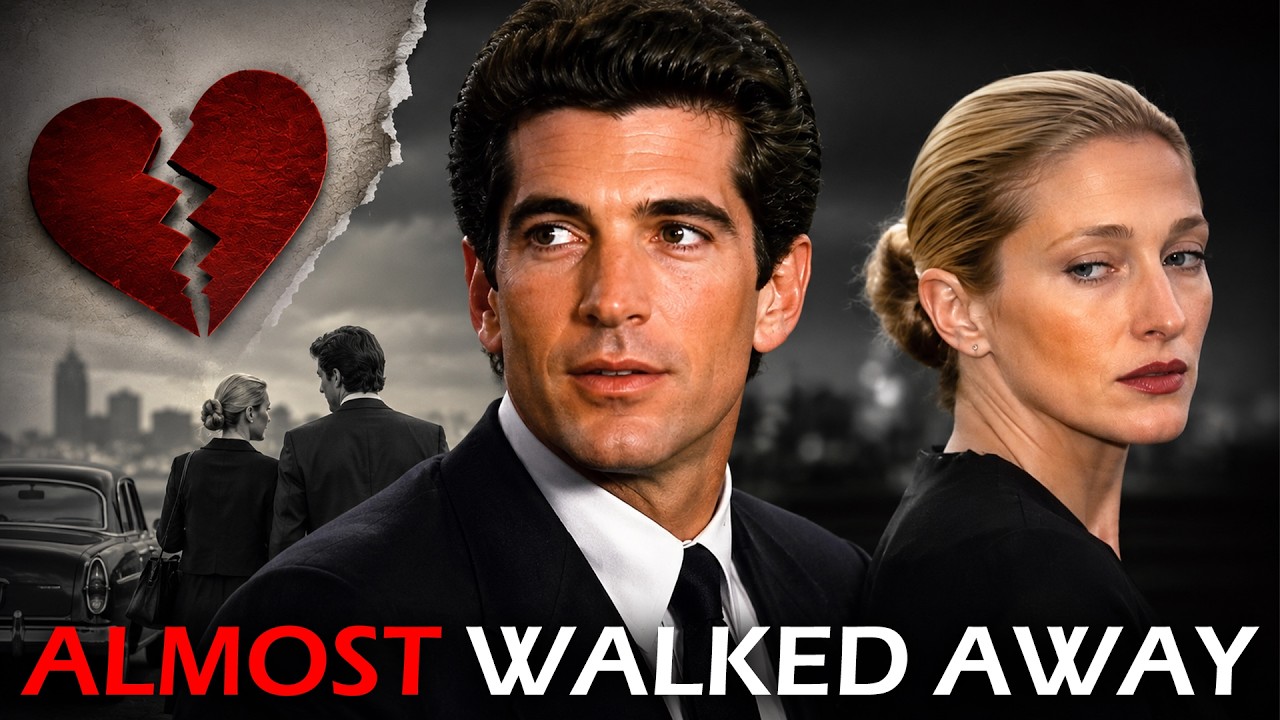
She left Calvin Klein shortly after the wedding. She was thirty years old. She never held another job.
The last stretch of relative quiet lasted about four months. On a Sunday afternoon in late February 1996, in Washington Square Park, they had an argument in public. A man with a camcorder recorded it for roughly twenty-five minutes.
The specific subject is not audible. She walks away; he follows. At one point she pulls a ring from her finger and pushes it at him.
She is crying. Near the end, they are sitting side by side. He puts an arm around her.
They kiss. They leave the park together.
The man sold the tape. The footage was broadcast in excerpt, then rebroadcast, then licensed onward. The reconciliation was always on the tape, but it was cut.
The version that sold was the version with the ending removed.
Seven months later, they were married on Cumberland Island. The elaborate secrecy reads differently once the tape is placed before it. By September 1996, they had a demonstrated case study of what the market would do with them.
The island was a security posture designed by two people who had recently learned what they were up against.
After the wedding, the photographers outside the loft became a fixed feature of daily life. The building at 20 North Moore Street had one entrance, opening directly onto a corner sidewalk. By the winter of 1996, that pavement had become a place of business.
The men who worked it arrived before six in the morning and stayed until the lights went out.
The economics were straightforward. A photograph of John Kennedy alone was worth a few hundred dollars. A shot of the two of them together was worth several thousand.
A shot of her crying or turning away with her hand up was worth considerably more. One good frame paid for a month of waiting. There was no economic reason for anyone to leave.
She was by 1998 among the most photographed women in the world, and she had never in her life sought a photograph. Her husband had a transactional relationship with the press; he needed coverage for his magazine, George, and he had been photographed since infancy. She had nothing to sell and nothing to gain.
She was pure supply.
Her response was a flat expression, a fast walk, a refusal to acknowledge the lens. The press read it as hostility. It was also the only rational response available.
A face that does not move produces interchangeable images, and interchangeable images are worth less. She was plausibly depressing her own market the only way she could. It did not work.
The comparison to her mother-in-law began before the wedding and never stopped. Every photograph of Carolyn was implicitly a photograph about Jackie. The comparison was structurally unwinnable.
Jacqueline Onassis had been a first lady, a widow of a national assassination, a figure of forty years’ standing. The woman being measured against her was a thirty-year-old former fashion executive who had been married for eighteen months.
The family itself was harder to document. The Kennedys of that generation were numerous, competitive, and organized around a set of rituals. New spouses were absorbed by participation.
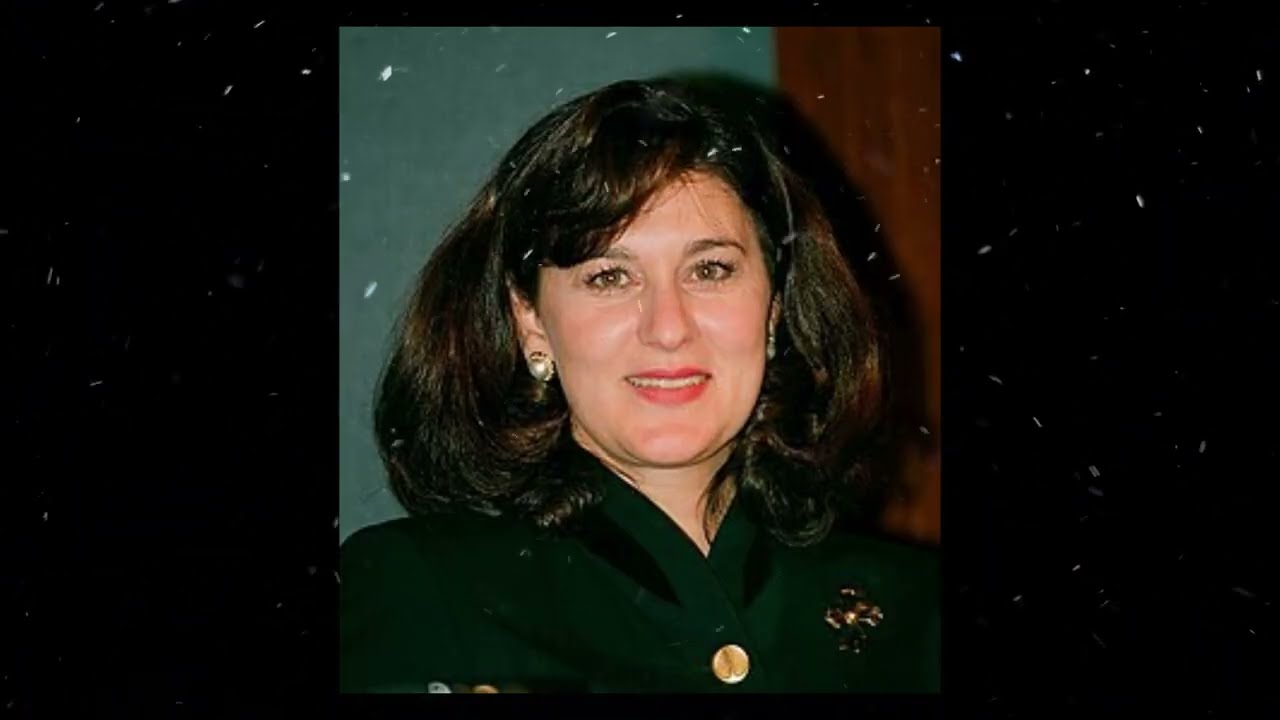
Multiple accounts describe her as not doing this well. She reportedly did not enjoy Hyannis Port and did not go often. Some cousins found her distant; others, notably, did not.
The absence of children was noted constantly. By 1998, the tabloids were openly speculating about whether she was pregnant, whether she wanted to be, whether the marriage was failing because she was not. The couple never addressed any of it.
By the spring of 1999, the pressures had a new source. George was in serious trouble. The magazine had launched in September 1995 to strong circulation, but advertising revenue declined through 1997 and 1998.
The losses ran into the millions annually. Through the first half of 1999, Kennedy took meetings with potential investors. In July, he met with Jack Welch’s people at General Electric.
The approach was in progress at the time of his death.
He was thirty-eight years old, spending his time trying to keep alive a business that carried his name. Colleagues described him as preoccupied, working long hours, traveling for meetings. He had obtained his private pilot’s license in April 1998.
In April 1999, he purchased a Piper Saratoga, a heavier, faster, more complex aircraft than the plane he had trained on. He was not instrument rated. On May 30, 1999, he broke his ankle in a paragliding accident.
The cast was removed only days before the crash.
There were reports that his wife was uneasy about his flying. What is documented is that she flew with him on July 16, and so did her sister.
The reports of marital difficulty in the spring of 1999 arise in this context. In April or May, by several accounts, they went to see a marriage counselor. The claim appeared first in the weeks after the crash, attributed to unnamed friends.
It has been repeated ever since.
Take the claim at its strongest. Assume it is true. What it establishes is that two people believed their marriage had problems serious enough to warrant help and that they sought it.
What it does not establish is a divorce. Marriage counseling is by definition an intervention undertaken by people who have not yet decided to leave.
Set against that is a different category of evidence. They were living together on July 16. They were flying together to a family wedding, which is not an event one attends alone if a separation is underway.
Her sister was traveling with them. They had social commitments booked into the autumn. There was no legal action of any kind.
No attorney has ever come forward. No filing existed. No separation agreement was in progress.
There is a further difficulty in the divorce narrative. She had no independent income and had not worked since 1996. A divorce would have removed her from the household without restoring anything she had given up.
And it would have generated the largest wave of coverage of her life, in which she would have been the woman who could not manage a marriage the whole world had watched.
The public appetite for the divorce story has always had a particular flavor. It requires her to have been unhappy, difficult, unstable, and on her way out. A marriage that was struggling and might have recovered is a story about two ordinary people under extraordinary pressure.
A marriage that was over is a story about a woman who failed at the only thing the public had assigned her to do.
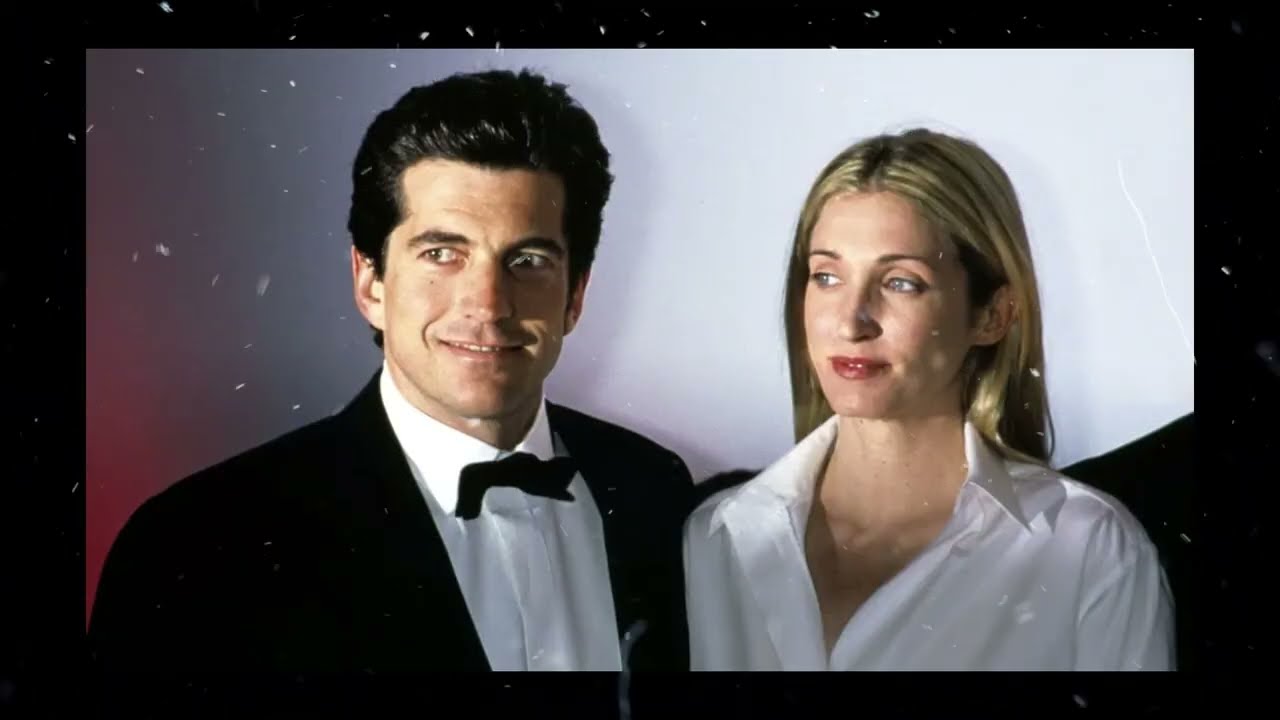
The final hours are documented in considerable detail because the National Transportation Safety Board investigated the crash. The aircraft was a Piper Saratoga, purchased that April. The pilot held a private certificate and had logged approximately 310 hours.
He had begun instrument training and had not completed it. His flight instructor later told investigators that he had offered to accompany him that evening and the offer had been declined.
The plan was to depart Essex County Airport in New Jersey, fly up the coast, land at Martha’s Vineyard to drop Lauren Bessette, then continue to Hyannis Port for Rory Kennedy’s wedding the following day. The departure slipped repeatedly. The aircraft lifted off at approximately 8:38 p.
m. Sunset was at 8:14.
The weather was legally acceptable for visual flight. What the reported figures did not capture was the condition over the water. There was haze along the southern New England coast that night.
Several pilots flying the same corridor later told investigators that conditions over Rhode Island Sound had been poor in a specific way: no discernible horizon.
The radar track shows the aircraft flying northeast at around 5,500 feet, then beginning a descent approximately thirty-four miles west of Martha’s Vineyard. The final returns show a rate of descent exceeding 4,000 feet per minute. The aircraft struck the water about seven miles southwest of Gay Head.
The impact was not survivable.
The NTSB’s probable cause was the pilot’s failure to maintain control during a descent over water at night, which was a result of spatial disorientation. Contributing factors were haze and the dark night. The wreckage was located on July 21 in about 120 feet of water.
All three bodies were found still within the aircraft. They were cremated, and the ashes were scattered at sea from the USS Briscoe on July 22.
There is nothing in the investigation that touches the marriage. The crash was a general aviation accident of a type that occurs regularly. A low-time visual-rated pilot at night over water in reduced visibility without an instrument rating.
There was nothing exotic about it except who was aboard.
Three weeks later, Anthony Radziwill died. He was Kennedy’s cousin and closest friend, and he had been dying of cancer for five years. His wife, Carol, was Carolyn’s closest friend.
The four of them had been largely each other’s world. Two of the four died within three weeks of each other in entirely unrelated ways.
The estate matters were settled quietly. The terms were not disclosed. Anne Freeman, who lost two of her three daughters in the same aircraft, said almost nothing then and since.
Lisa Bessette, the surviving twin, has given no interviews of substance in twenty-seven years.
The consequence of that silence is the thing that has shaped the record. The books came in 2003, 2004, and 2007 into an empty field. There was no one to correct them.
The version they established has been recycled through every subsequent article and anniversary piece until the assertions of unnamed friends acquired the texture of fact.
A woman who never gave a single interview has been explained continuously for a quarter of a century by people who had no obligation to be right. What remains that she made herself is remarkably thin. A wedding photograph she agreed to release.
A dress that was copied into every shopping mall in America. The absence of anything else.
The question of whether a divorce was imminent has an answer, and it is unsatisfying. There is no evidence that one was. There is credible evidence of a marriage in a bad period, including counseling in the spring of 1999, inside a household that was also facing a failing business, a dying friend, an injured husband, a wife with no work of her own, and a front door that had become a place of business for a dozen men.
Whether the marriage would have lasted is not knowable. Marriages in that condition sometimes recover and sometimes do not. This one left a wedding on the calendar for the following afternoon.